 Ferndale
 What Nooksack's Climate Does to Exterior Siding
Homes in and around Nooksack sit in one of the wetter, greener corners of Whatcom County, and that has real consequences for exterior siding. The combination of near-constant winter rain, humid air moving in off the Salish Sea, and long stretches of overcast, low-drying-potential weather means siding here almost never gets a real break to fully dry out between storms. Add a moss season that can stretch from fall through spring, and you have an environment that punishes any siding material with weak points at seams, fastener holes, or paint film.
Salt air is a factor too. While Nooksack itself is inland from the water, prevailing weather systems carry marine moisture and airborne salts well into Whatcom County's river valleys, and that salt-laden dampness accelerates corrosion on fasteners, trim, and any exposed metal flashing. Over years, this steady exposure is what separates siding that lasts two decades from siding that looks tired in eight or nine years.
None of this means Nooksack is an unusually hostile place to own a home — it means the siding and the installation have to be matched to the actual conditions, not to what happens to be cheapest or easiest to find at a supply house.
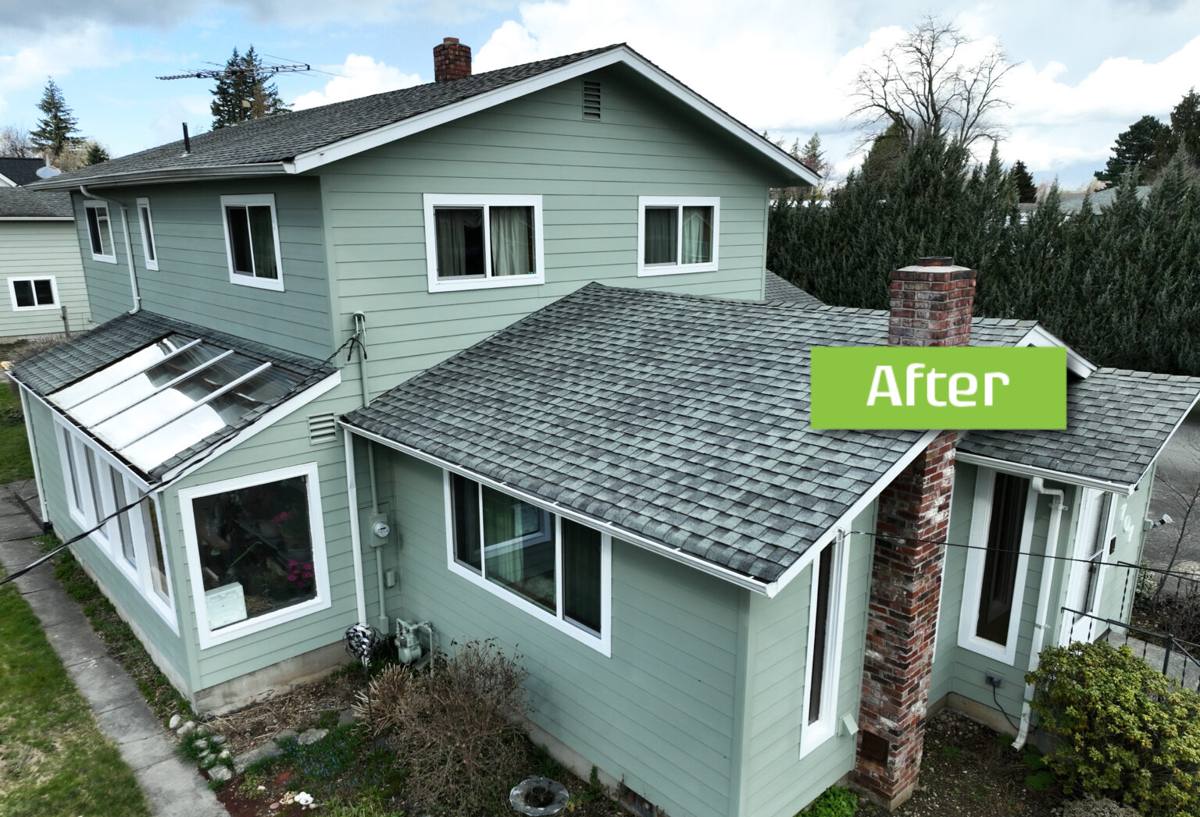
Signs a Nooksack Home Needs Siding Replacement, Not Just Repair
Not every problem calls for a full tear-off. But in a climate like this, small issues tend to compound quickly because trapped moisture has nowhere to go. Here's what typically tips a job from "patch it" to "replace it":
- Soft or spongy spots when you press on the siding, especially near the bottom courses and around window and door trim
- Paint that's peeling, bubbling, or chalking heavily rather than just fading
- Persistent moss or dark streaking that returns within weeks of cleaning
- Visible gaps, warping, or cupping in individual boards or panels
- Siding that was never caulked or flashed correctly at the original install and is now showing water staining below joints
- Interior signs — musty smells, discoloration on interior walls near exterior corners — that suggest moisture is already getting past the siding
If you're seeing two or more of these at once, it's usually cheaper in the long run to replace the affected sections (or the whole elevation) properly rather than chase repairs on a material that's already failing.
Why Damage Shows Up Faster in Some Spots Than Others
North- and west-facing walls in Nooksack tend to hold moisture and moss longer because they get less direct sun to dry them out. Areas under roof overhangs with poor gutter drainage, and lower courses closer to grade, also fail earlier because they take the most direct splash-back and standing dampness. A good inspection looks at these high-risk zones specifically, not just the siding as a whole.
Why Material Choice Matters More Here Than in Drier Climates
In a dry climate, a mediocre siding installation can coast for years before problems show up. In Whatcom County's wet, moss-prone environment, weak points get found fast. That's why the material itself — not just the workmanship — has to be able to handle sustained moisture exposure without swelling, delaminating, or feeding mold growth.
| Material | How It Handles Sustained Moisture | Long-Term Concern in This Climate |
|---|---|---|
| Vinyl siding | Sheds surface water but seams and J-channels can trap moisture behind the panel | Warps and fades under repeated wet/UV cycling; trapped moisture behind it goes unnoticed for years |
| LP SmartSide (engineered wood) | Treated to resist moisture, but any cut edge or fastener breach exposes wood substrate | Edge and seam swelling if caulking or paint maintenance lapses even briefly |
| Cedar | Naturally moisture-resistant but still an organic, absorbent material | Needs ongoing refinishing; feeds moss and mildew growth without diligent upkeep |
| Primed spruce | Relies entirely on the paint film for protection | Once the paint film fails, the wood beneath has no backup moisture defense |
| James Hardie fiber cement | Non-combustible, engineered cement composite that doesn't swell, rot, or delaminate from moisture | Requires correct installation (gaps, fastening, flashing) to perform to spec, but the material itself isn't the weak link |
We only install James Hardie fiber cement siding. We don't install vinyl, LP SmartSide, Cemplank, Allura, primed spruce, or cedar — not because those products have no merit anywhere, but because after years of doing exterior work in this specific climate, we've standardized on the one system whose material chemistry and factory-applied finish hold up consistently to Whatcom County's moisture load without depending on a homeowner's maintenance schedule to stay watertight.
Why We Install Only James Hardie Fiber Cement
James Hardie's fiber cement is a mix of cement, sand, and cellulose fibers, engineered specifically to resist moisture absorption, swelling, and pest damage. A few things matter specifically for a Nooksack-area home:
- ColorPlus factory finish — a baked-on finish applied under controlled conditions, which holds color and resists peeling far longer than field-applied paint exposed to wet application windows
- Climate-engineered HZ product lines — Hardie manufactures its boards to different moisture and freeze-thaw specifications by region, so the boards installed here are matched to Pacific Northwest conditions rather than a one-size-fits-all spec
- Non-combustible material — fiber cement doesn't contribute fuel to a fire the way wood-based products can
- Transferable warranty — a real, honored warranty structure that follows the home if it's sold, which matters for resale value in a region where buyers increasingly ask about siding condition and age
Fiber cement isn't magic — it still needs correct gapping, fastening, and flashing to perform as designed. But it removes the single biggest variable in a wet climate: a material that swells or rots the moment water gets past the surface.
What a Correct Siding Replacement Job Actually Involves
A siding replacement is only as good as what's underneath it. Rushing this stage is where most premature failures start, especially in a climate that doesn't give installation mistakes any grace period.
Tear-Off and Sheathing Inspection
Old siding comes off down to the sheathing, and the sheathing gets inspected for rot, soft spots, or prior water damage before anything new goes up. Skipping this step just buries an existing problem under new material.
Weather-Resistive Barrier
A properly lapped weather-resistive barrier goes over the sheathing, shingle-style, so any water that does get behind the siding drains down and out rather than pooling against the wall assembly.
Flashing at Every Penetration
Windows, doors, hose bibs, vents, and roof-to-wall transitions all need correct flashing detail. This is one of the most commonly shortcut steps in the trade, and it's usually where leaks originate years later — not from the siding panels themselves.
Fastening and Gapping to Manufacturer Spec
James Hardie specifies exact fastener types, spacing, and clearance gaps at joints, corners, and trim. Installed to spec, the boards can handle normal seasonal movement without opening seams. Installed loosely or with the wrong fasteners, the warranty and the performance both suffer.
Caulking and Touch-Up
Factory-finished ColorPlus boards need minimal field painting, but cut edges and any touch-up work should use Hardie-approved products so the finish behaves consistently over time.
Our Process, Start to Finish
- Free on-site inspection and assessment of current siding, sheathing condition, and problem areas
- Written estimate covering material, labor, tear-off, disposal, and any sheathing repair contingencies
- Scheduling built around weather windows — installation quality on a wet-climate job depends on not fighting active rain during critical steps
- Tear-off, sheathing inspection and repair as needed, weather barrier installation
- James Hardie siding installation to manufacturer spec, including flashing and trim work
- Final walkthrough with the homeowner before the job is considered complete
Cost Factors for a Nooksack-Area Siding Replacement
Every home is different, but the same handful of factors drive most of the cost variation we see on jobs in this area:
| Factor | Why It Affects Cost |
|---|---|
| Home size and wall complexity | More square footage and more corners, gables, and trim details mean more labor and material |
| Sheathing condition | Rot discovered during tear-off requires repair before new siding can go on — this is the most common source of mid-project cost changes |
| Siding profile chosen | Lap siding, shingle-style panels, and board-and-batten all price differently in labor and material |
| Trim and accessory work | Corner boards, window trim, and fascia replacement done at the same time adds cost but avoids mismatched materials later |
| Access and site conditions | Multi-story walls, tight lot lines, or landscaping that limits staging area affects labor time |
We give straightforward, itemized estimates rather than vague lump sums, so you can see exactly what's driving the number.
Why Hiring a Crew That Already Works in Nooksack Matters
A crew that regularly works Whatcom County jobs already knows how the local moisture cycle behaves through the seasons, how to sequence a project around realistic drying windows, and what permitting and inspection expectations look like in the county. That familiarity shows up in small decisions — how much clearance to leave at grade, how aggressively to flash a north-facing wall, when to push a start date back a few days for a drier stretch — that a crew unfamiliar with the region might not think twice about.
It also means we're not learning on your home. We've made the deliberate choice to install one siding system, to a consistent standard, on every job — which means the crew on your Nooksack home has done this exact installation many times before, not occasionally.
Maintaining Your New Siding
James Hardie siding is low-maintenance, not no-maintenance. A simple annual rinse to knock down moss and pollen buildup, prompt attention to any caulking that separates at trim joints, and keeping gutters clear so water isn't sheeting down the wall face will keep it performing for decades. None of this compares to the upkeep vinyl, wood, or engineered wood products demand in this climate.
If your Nooksack-area home is showing signs of siding wear, or you're planning ahead before a small problem becomes an expensive one, we're happy to take a look. Reach out for a free, no-pressure estimate using the form below.