 Ferndale
 Point Roberts Puts Vertical Siding Through a Lot
Point Roberts sits on a peninsula surrounded by the Strait of Georgia, which means most homes here face some combination of salt-laden marine air, wind-driven rain, and long stretches of overcast, damp weather that never quite dries out. That combination is hard on any exterior wall, but it's especially unforgiving on board and batten siding, where the vertical boards and narrow battens create dozens of extra seams and fastening points compared to a flat lap profile. Every one of those seams is a potential entry point for moisture if the material or the installation isn't up to the job.
Whatcom County's climate doesn't spare Point Roberts just because it's a smaller, quieter community. If anything, the peninsula's exposure to open water means salt air reaches the siding here more directly than it does a few miles inland. Add in the region's long moss season — mild, wet winters that let moss and algae get a foothold on north-facing walls and anything shaded by trees — and you've got a set of conditions that will find every weakness in a siding system within a few years, not a few decades.
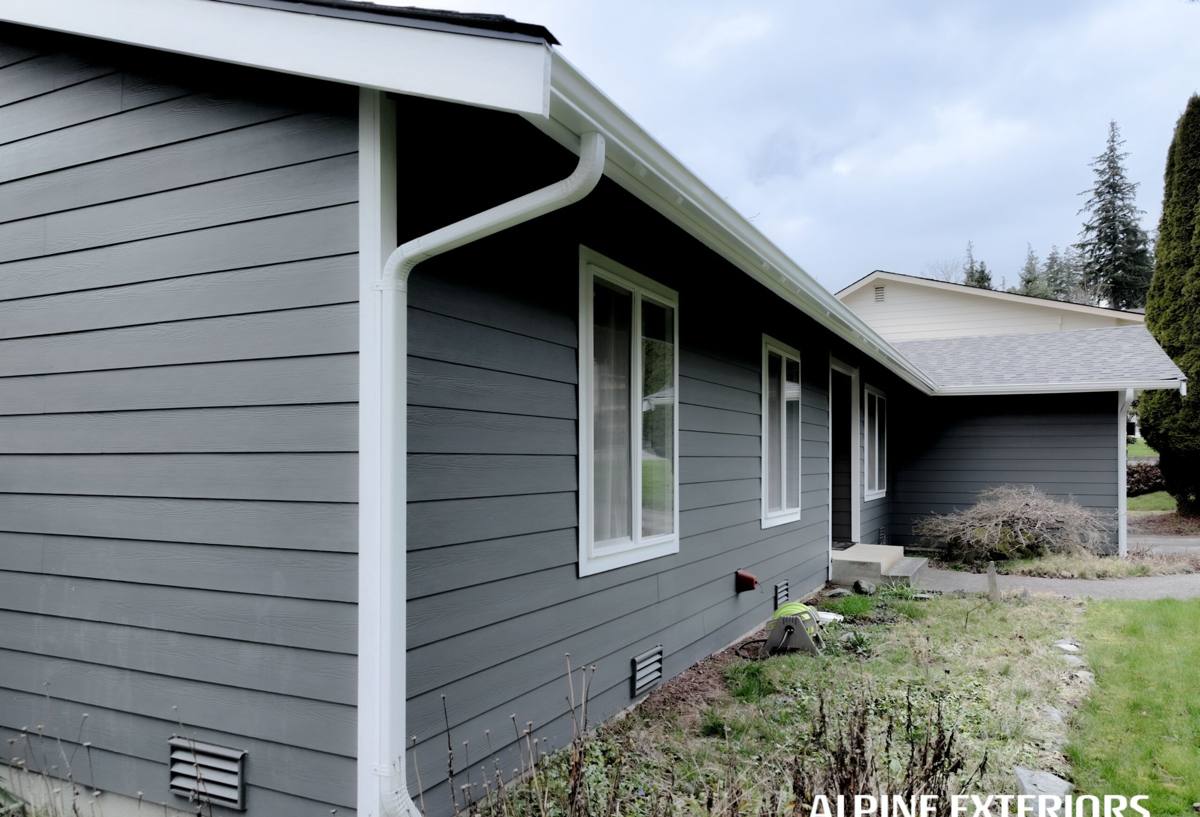
What Board and Batten Siding Actually Is
The Look
Board and batten is a vertical siding style built from wide flat boards or panels with narrower strips — the battens — covering the seams between them. It reads as clean, linear, and a little more architectural than standard horizontal lap siding, which is part of why it shows up so often on farmhouse-style homes, modern builds, and accent walls or gables paired with lap siding elsewhere on the house.
Why It Fits Homes Here
Beyond the look, vertical siding has a practical advantage in a wet climate: water runs down the face of the boards instead of pooling along horizontal laps. That's a real benefit, but it only holds up if the battens, fasteners, and flashing behind them are installed correctly. A board and batten wall with a weak installation can actually trap moisture behind the battens worse than a well-built lap siding wall would, so the installation details matter more here than they do with most other styles.
What a Correct Board and Batten Installation Involves
Drainage Plane and Flashing First
Before a single board goes up, the wall needs a continuous water-resistive barrier, properly lapped and taped at seams, with flashing integrated at every window, door, and penetration. On a board and batten wall, this layer is what actually keeps the house dry — the siding itself is the second line of defense, not the first. Skipping or rushing this step is the single most common cause of rot we find when we're called out to look at a failing board and batten wall.
Batten Spacing and Fastening
Battens need consistent spacing and a fastening pattern that accounts for the wider boards' natural expansion and contraction. Fasteners that are overdriven, under-driven, or placed too close to board edges create stress points that show up as cracking or popped nails within a few seasons, especially once the wood or fiber cement goes through repeated wet-dry cycles typical of a Point Roberts winter.
Corners, Trim, and Terminations
Outside corners, inside corners, and the bottom termination near the foundation are where board and batten siding most often fails first. Each needs its own flashing detail and a gap that lets water drain rather than wick upward into the siding. A crew that treats these as an afterthought is setting the wall up for problems that won't show themselves until years later, when the fix means pulling siding rather than caulking a gap.
Why We Install Only James Hardie for This Application
We standardized on James Hardie fiber cement for every job we do, and board and batten in a coastal, moss-prone climate is exactly the kind of application where that decision pays off. Hardie's siding is non-combustible, dimensionally stable, and manufactured in HardieZone HZ5 formulations engineered for regions with freeze-thaw cycles and sustained moisture — which describes the Pacific Northwest, and describes Point Roberts specifically given its direct water exposure.
Fiber cement doesn't absorb water the way solid wood board and batten does, which matters enormously in a climate where boards rarely get a long dry stretch to shed moisture they've taken on. It also won't support moss and algae growth the way some wood and engineered-wood products can once organic buildup sets in on a shaded wall. That combination — dimensional stability, moisture resistance, and a surface that doesn't feed biological growth — is why we don't offer alternatives for this style of siding in this climate. We'd rather install one product correctly than offer several and let a homeowner unknowingly pick the one that struggles here.
ColorPlus Factory Finish
Hardie's ColorPlus finish is baked on at the factory under controlled conditions, which gives it better fade and chip resistance than field-applied paint — and it comes backed by a real finish warranty. On a board and batten wall, where you've got far more painted edges and seams than a lap profile, starting with a factory finish that's already cured and consistent is a meaningful advantage over touch-up painting boards on site.
Comparing Board and Batten Material Options
Homeowners researching board and batten siding usually run into several material options. Here's how they hold up specifically against Point Roberts' salt air, rain, and moss exposure:
| Material | Moisture Behavior | Moss/Algae Resistance | Maintenance Burden |
|---|---|---|---|
| James Hardie fiber cement | Dimensionally stable, does not swell or rot | Does not feed organic growth; factory finish sheds it | Occasional wash; repaint not required for the life of the finish |
| Solid wood (cedar, primed spruce) | Absorbs moisture; prone to swelling, cupping, checking | Organic material; susceptible without diligent upkeep | Regular refinishing and caulk inspection |
| Engineered wood (LP-type products) | Better than solid wood but edge-sealing is critical | Moderate; depends on coating integrity over time | Field-applied finish needs monitoring at seams and cuts |
| Vinyl | Doesn't rot, but can warp/buckle and doesn't manage a drainage plane the same way | Low growth support, but seams and battens are harder to detail well | Low, but limited repair options if damaged |
The table isn't meant to declare every alternative unusable — plenty of homes wear wood or engineered board and batten for years with diligent upkeep. It's meant to show why, for our crew, fiber cement is the material we're willing to put our name behind in this specific climate and this specific siding style.
Our Process, Start to Finish
- On-site assessment: We look at existing wall condition, sheathing, and any current moisture damage before quoting anything.
- Drainage plane and flashing plan: We map out water-resistive barrier and flashing details for every window, door, and wall termination before boards go up.
- Board and batten layout: Spacing is planned to the wall's actual dimensions rather than forced to fit, which keeps corner and trim details clean.
- Installation: Fastening follows Hardie's published specifications for board and batten application, not generic siding practice.
- Finish and detail check: Corners, terminations, and penetrations get a final inspection before we call the job done.
Living With Board and Batten in a Moss-Prone, Salt-Air Climate
Even the right material and a correct installation still benefit from a little homeowner attention, particularly on walls that face open water or sit shaded under trees.
- Rinse salt residue and airborne grime off exterior walls once or twice a year, especially on sides facing the water.
- Keep gutters and downspouts clear so runoff isn't sheeting down the wall face during heavy rain.
- Trim back vegetation and tree cover that keeps a wall shaded and damp longer than the rest of the house.
- Check caulking at trim and penetrations annually — caulk is a maintenance item even on a low-maintenance siding system.
- Address any moss or algae spotting early with a gentle wash rather than letting it establish and spread.
Why Local Experience in Point Roberts Matters
Point Roberts' geography is unusual — it's a U.S. peninsula reached by road only through Canada, which affects material delivery scheduling and crew logistics in ways a contractor unfamiliar with the area won't anticipate. A crew that already works this community knows how to plan material staging and timing so a project isn't stalled waiting on a delivery. That kind of practical, unglamorous planning is often the difference between a siding job that stays on schedule and one that drags into an extra wet season with the wall partially open.
Local experience also means knowing how exposed a given wall really is. A house facing open water needs more attention to flashing and drainage detail than one tucked behind trees on the interior of the peninsula, and a crew that's worked the area has already seen both conditions play out over time.
If you're considering board and batten siding for a home in Point Roberts, we're glad to take a look and walk through what your specific wall exposure calls for. Reach out for a free, no-pressure estimate using the form below.