 Ferndale
 Point Roberts Is Its Own Climate Challenge — and Its Own Logistics Challenge
Point Roberts sits on a small peninsula bordered by water on three sides, with Boundary Bay and the Strait of Georgia driving the weather that reaches every wall of every house out there. It's also geographically separated from the rest of Washington State, connected to the mainland U.S. only by land through Canada. That combination — heavy marine exposure plus an unusual location — means siding work here has to account for two things most siding companies never think about: what the climate does to a wall over twenty years, and what it takes to actually get a crew and materials onto the peninsula and back off it without wasting a day.
We're based in Ferndale and work throughout Whatcom County, and Point Roberts is a community we already know how to serve. This page is about siding installation specifically for that area — what the exposure demands, what a correct installation actually involves, and why the logistics side of the job matters as much as the product on the wall.
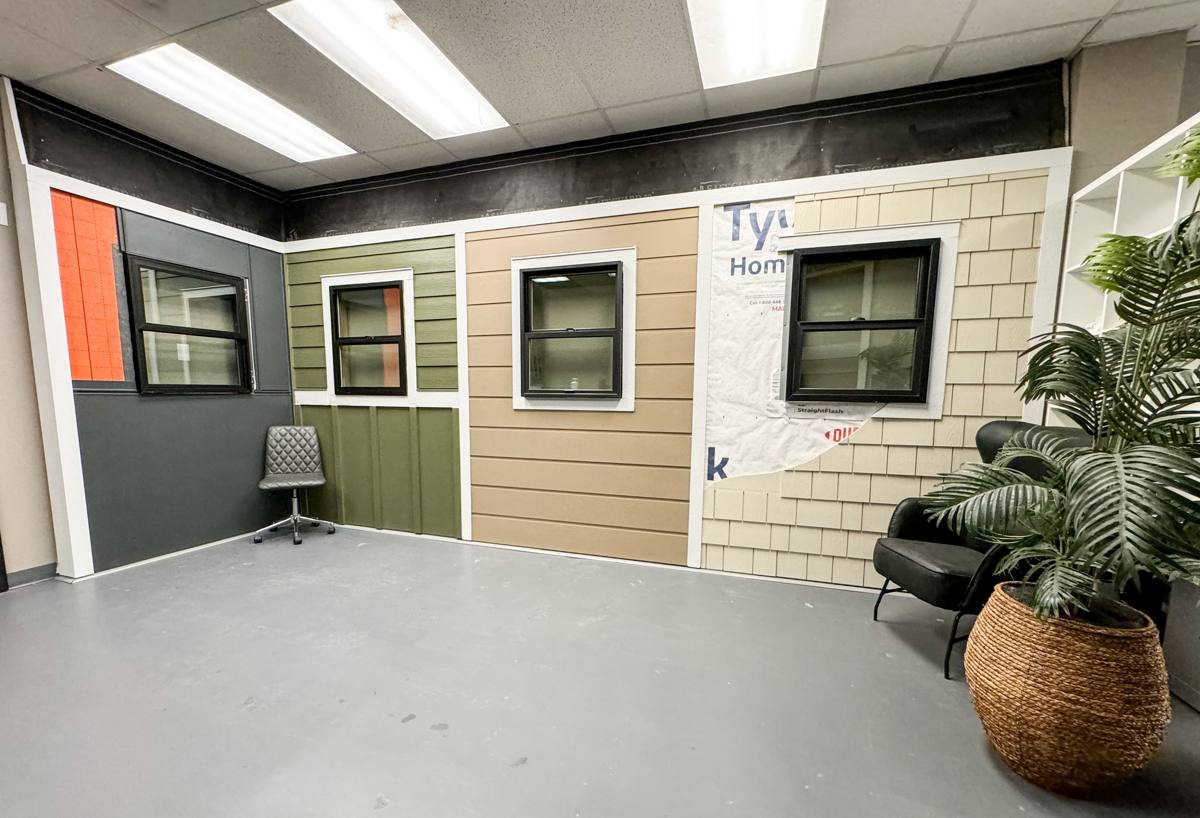
What the Climate Actually Does to Siding Out There
Salt Air and Corrosion
Homes close to open saltwater take on airborne salt continuously, not just during storms. Salt residue settles on siding, trim, and — critically — on the fasteners and metal flashing behind it. Over years, that accelerates corrosion in anything that isn't rated for it: standard fasteners can rust and stain the face of the siding, and corroded flashing eventually stops shedding water the way it's supposed to.
Driving, Wind-Driven Rain
Point Roberts gets rain the way the rest of Whatcom County does, but with less to break the wind coming off the water. Wind-driven rain doesn't just fall on siding — it gets pushed sideways and upward into laps, joints, and anywhere the water-resistive barrier behind the siding has a weak spot. A siding system that isn't detailed correctly for that kind of exposure will eventually let moisture behind the cladding, and that's where rot and hidden damage start.
A Long Moss and Algae Season
Cool, damp conditions for much of the year mean moss and algae have a long growing season on north-facing and shaded walls. Beyond looking bad, sustained moss growth holds moisture against the siding surface far longer than it would otherwise sit there, which is exactly the condition that degrades wood-based and poorly sealed products fastest.
Why We Install Only James Hardie Fiber Cement in This Environment
We don't install vinyl, LP SmartSide, primed wood, cedar, or the other fiber cement brands. That's a deliberate standard, not a lack of options, and in a marine environment like Point Roberts the reasoning holds up especially well.
Fiber cement is made from cement, sand, and cellulose fibers — it doesn't swell, warp, or feed rot the way wood-based siding can when it stays damp for extended periods. James Hardie's ColorPlus finish is baked on at the factory, so the color layer is engineered to resist fading and hold up against UV and salt exposure better than field-applied paint, which means fewer repaint cycles over the life of the siding. Hardie also engineers specific product lines by climate zone — the HZ5 line used throughout our region is built for the wetter, colder Pacific Northwest rather than a generic national spec. None of that means other products are junk; it means that for a wall facing this much sustained moisture and salt, we'd rather stand behind one system we can install to spec every time than offer several and hope the wrong one doesn't end up on the wrong house.
What a Correct Installation Actually Involves
The siding itself is only part of the system. In a high-moisture, salt-air location, the details behind and around the boards are what determine whether the wall performs for twenty-plus years or starts showing problems in five.
- Drainage plane and rain screen: a continuous water-resistive barrier with a gap behind the siding lets any moisture that does get past the cladding drain and dry out instead of sitting against the sheathing.
- Flashing and clearances: proper head flashing over windows and doors, and correct clearance between the bottom of the siding and grade, decks, or roofing, keep bulk water from tracking behind the wall.
- Corrosion-resistant fasteners: stainless steel or hot-dip galvanized fasteners, installed per Hardie's fastening schedule, matter far more here than on a home fifty miles inland.
- Sealed cut edges: factory edges are protected by ColorPlus, but any field cut needs to be sealed with the appropriate touch-up product so raw fiber cement isn't left exposed to weather.
- Joint and butt-seam treatment: caulked and backed correctly, or detailed with trim that sheds water instead of collecting it.
Skipping any one of these doesn't fail immediately — it fails quietly, three to seven years later, as moisture finds the one gap that was left.
How Common Siding Materials Hold Up in This Kind of Exposure
| Material | Behavior Under Salt Air & Sustained Moisture |
|---|---|
| James Hardie fiber cement | Doesn't absorb moisture and swell; factory finish resists salt-driven fading; engineered HZ5 line for this climate |
| Vinyl siding | Won't rot, but can become brittle and fade with UV and salt over time; seams and panels can allow water behind the wall if not detailed carefully |
| Wood or primed spruce | Requires consistent repainting and caulking; sustained moss and dampness shorten its service life without diligent maintenance |
| LP SmartSide (engineered wood) | Performs well when maintained, but is more sensitive to prolonged moisture exposure at cut edges and seams than fiber cement |
Our Process for Point Roberts Jobs
Because Point Roberts is accessible from the rest of Whatcom County only by driving through Canada, we plan these jobs differently than a job in Ferndale itself. That means grouping site visits, staging materials in fewer, larger trips instead of frequent small ones, and building the schedule around border crossing realities rather than assuming a crew can pop back to the yard mid-day for a forgotten part.
- Site visit and estimate: we assess the existing siding, look for signs of moisture or moss damage, and take real measurements — not a phone estimate.
- Material staging: Hardie boards, trim, fasteners, and flashing are ordered and staged in advance so the crossing is planned around a full trailer, not a partial one.
- Tear-off and inspection: once the old siding comes off, we check the sheathing and water-resistive barrier underneath for hidden rot or past moisture intrusion before anything new goes up.
- Installation to spec: flashing, drainage plane, fastening, and joint treatment are installed per Hardie's requirements for our climate zone — not shortcuts to save a border crossing.
- Final walkthrough: we review the finished job with the homeowner before we consider it done.
Why a Crew That Already Works Point Roberts Matters
A contractor who's never worked out there will underestimate the logistics — and that shows up as delays, incomplete trips, or corners cut to avoid another crossing. A crew that already knows the drill plans the job differently from day one: batching tasks, bringing enough material and the right tools on the first trip, and setting realistic timelines with the homeowner up front instead of discovering the problem mid-project.
- Do you regularly work in Point Roberts, or would this be an occasional trip for your crew?
- How do you plan material deliveries and crossings so the job doesn't stall waiting on supplies?
- Do you pull the correct permits through Whatcom County for work in this area?
- What fasteners and flashing do you use given the salt air exposure here?
- Can you show me how you'll detail the drainage plane and joints on this specific house?
Those are fair questions for any contractor bidding a Point Roberts siding job, not just us.
Cost Factors for a Point Roberts Siding Project
| Factor | Why It Matters Here |
|---|---|
| Home size and wall area | Drives material quantity and labor time the same as anywhere |
| Condition found at tear-off | Hidden moisture or rot behind old siding is more common on long-exposed marine walls and adds repair scope |
| Trim and architectural detail | More corners, windows, and transitions mean more flashing and cut-edge sealing work |
| Siding profile and accessories | Lap width, trim style, and accessory choices affect both material cost and install time |
| Logistics and scheduling | Efficient trip planning keeps labor costs predictable instead of inflated by repeat crossings |
Maintenance After Installation
Correctly installed Hardie siding is low-maintenance, not no-maintenance. In this environment we'd still recommend an annual walk-around: check caulked joints for cracking, keep gutters clear so roof runoff doesn't sheet down onto siding and feed moss growth, trim back vegetation that shades walls and keeps them damp, and rinse accumulated salt residue off the exterior periodically. None of that is heavy lifting, but skipping it for years is how a well-installed wall starts looking tired before its time.
If your siding is showing moss buildup, soft spots, peeling paint, or you're just planning ahead for a home on the peninsula, we're happy to take a look and put together a straightforward, no-pressure estimate — no obligation, just an honest read on what your house actually needs.