 Ferndale
 Siding That Has to Work in Sudden Valley's Conditions
Sudden Valley sits in the kind of Whatcom County terrain that's hard on exterior building materials: tree cover that keeps siding shaded and slow to dry, a long wet season, and the driving rain that comes off the water and through the trees during fall and winter storms. Add in the salt-tinged air that reaches inland across this part of the county, and you've got a combination that punishes any siding product with weak points in its finish or its moisture handling. Homes here don't fail because owners neglected them. They fail because the siding wasn't built, or installed, for what this specific area throws at it year after year.
We install James Hardie fiber cement siding exclusively, and we work in and around Sudden Valley regularly enough to know which details matter on this terrain and which corners get cut by crews who don't. This page covers what that actually looks like — the product, the install, and the reasoning behind both.
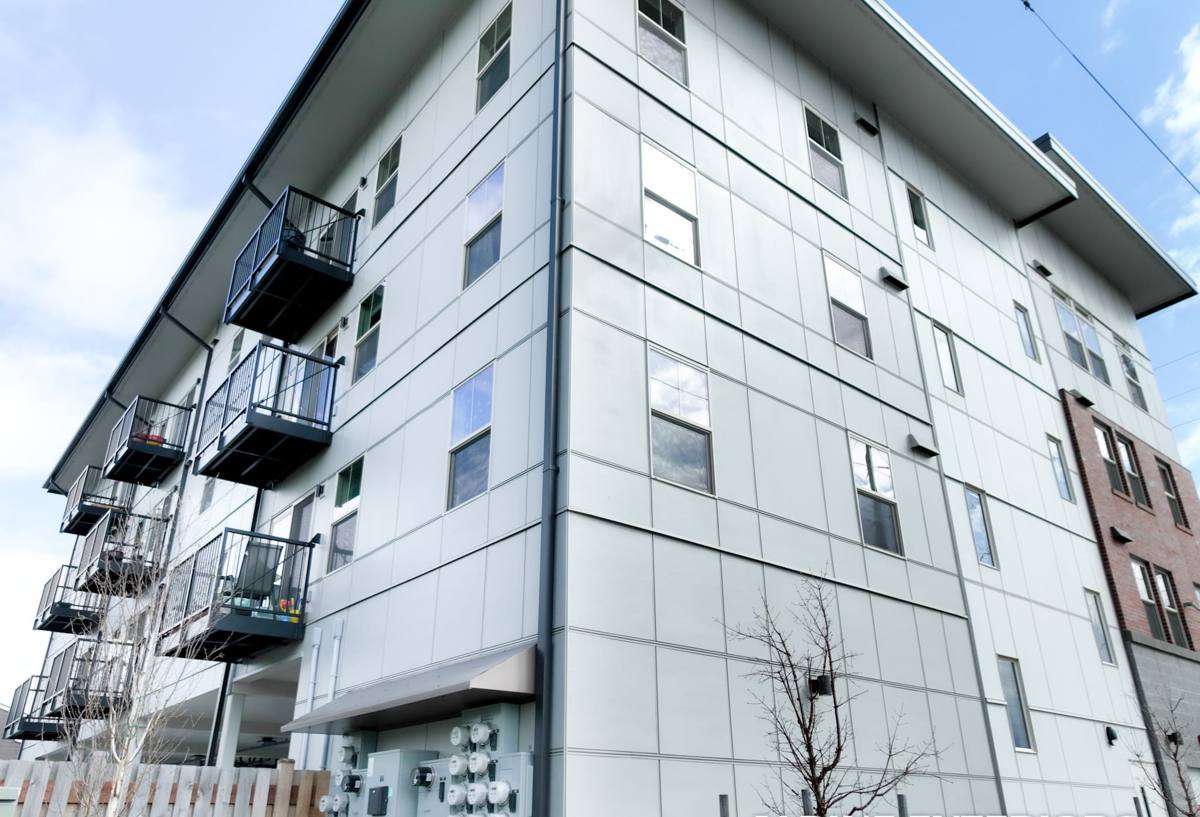
What This Climate Does to Siding Over Time
Shade and Moss
Heavy tree cover is common around Sudden Valley, and shaded siding stays damp longer after every rain. That's the exact environment moss, algae, and mildew need to take hold. On wood-based siding — cedar, primed spruce, or engineered wood products like LP SmartSide — sustained moisture at the surface eventually works its way into the substrate, especially at seams, butt joints, and anywhere caulking has started to fail. Once moisture gets behind or into a wood-based panel, the clock starts on swelling, soft spots, and eventual rot.
Driving Rain and Wind
Storm systems moving through Whatcom County bring rain that doesn't just fall straight down — it drives sideways into exposed walls, especially on homes with less tree buffer or more open exposure. That kind of wind-driven rain finds every gap in flashing, every under-caulked seam, and every place where siding wasn't lapped or fastened correctly. It's a good stress test, and it's one a lot of installs quietly fail for years before the damage becomes visible.
Salt Air's Slow Effect
Even away from the immediate waterfront, the broader Whatcom County area sits close enough to salt water that airborne salt plays a role in how exterior materials age. Salt air accelerates the breakdown of some paint films and can be harder on fasteners and trim components that aren't rated for it. It's rarely the single cause of a siding failure, but it's a constant background stressor that shortens the life of anything already vulnerable to moisture.
Why We Only Install James Hardie
We used to get asked why we don't offer vinyl, LP SmartSide, or one of the other fiber cement brands like Cemplank or Allura. The honest answer is that we standardized on James Hardie because it's the product we're comfortable putting our name behind in a climate like this one.
Vinyl is inexpensive and low-maintenance in mild, dry climates, but it expands and contracts more than fiber cement, can crack in the impact and temperature swings this region sees, and doesn't hold up visually against the moss and grime buildup common under heavy tree cover — it's harder to clean without damaging the surface. LP SmartSide is a wood-strand product with a real warranty and a legitimate place in the market, but it's still an engineered wood product at its core, meaning its cut edges and any breach in the factory coating are vulnerable to moisture intrusion in exactly the way this climate tests hardest. Other fiber cement brands compete on price but don't offer the same factory-applied ColorPlus finish or the same track record and warranty structure James Hardie has built over decades in wet, coastal-influenced climates like this one.
James Hardie fiber cement is non-combustible, doesn't swell or rot from moisture the way wood-based products can, and its ColorPlus finish is baked on at the factory under conditions a job-site paint job can't replicate — which matters directly in a region where UV exposure is lower but moisture exposure is constant. It's engineered specifically for climate zones like this one under Hardie's HZ product system, and it carries a strong, transferable warranty. That's the whole reason we build our business around one product instead of offering a menu of options.
James Hardie Product Lines We Use Locally
| Product | Best Use | Why It Fits Sudden Valley |
|---|---|---|
| HardiePlank lap siding | Most common wall application | Traditional lap profile sheds driving rain well; wide color and texture range |
| HardiePanel vertical siding | Accent walls, gables, modern styling | Clean lines for contemporary homes; pairs well with board-and-batten detailing |
| HardieShingle siding | Accent areas, shingle-style homes | Gives a cedar-shake look without the moisture vulnerability of real cedar shakes |
| HardieTrim boards | Corners, window and door trim, fascia | Matches siding durability so trim doesn't fail before the field does |
All of these are available in James Hardie's ColorPlus factory finishes, which matters more here than in drier climates — a consistent, baked-on finish resists the moss and mildew staining that shows up fastest on shaded, moisture-prone walls.
What a Correct Installation Actually Involves
Weather Barrier and Drainage Plane
Fiber cement siding is only as good as what's behind it. A correct install starts with a properly lapped weather-resistant barrier and, in most cases, a drainage gap that lets any moisture that does get behind the siding find its way back out instead of sitting against the wall sheathing. Skipping this step is invisible on installation day and expensive to discover later.
Flashing at Every Penetration
Windows, doors, hose bibs, light fixtures, and vents all break the plane of the wall, and every one of them needs proper flashing and integration with the weather barrier. In a climate with as much wind-driven rain as this one, flashing shortcuts are one of the most common causes of hidden water damage behind otherwise good-looking siding.
Fastening, Clearances, and Caulking
James Hardie publishes specific fastener spacing, nailing patterns, and clearance requirements — including ground clearance and clearance from roof lines and decks — and those specs exist for a reason. Under-fastened panels can pop loose in wind; wrong clearances trap moisture at the base of the wall. Manufacturer-approved caulking and sealants at joints and trim intersections matter just as much as the siding itself, since a failure there defeats an otherwise correct install.
Cut Edges and Field Sealing
Every cut edge of a Hardie board needs to be sealed per manufacturer specification before installation. Raw, unsealed cut edges are one of the few places moisture can get into fiber cement, and it's a step that takes extra time on-site — which is exactly why it's the first thing a rushed crew skips.
Cost Factors on a Sudden Valley Project
| Factor | Why It Affects Cost |
|---|---|
| Existing siding removal | Tear-off and disposal of old wood or vinyl siding adds labor and hauling |
| Wall condition underneath | Rot or water damage found once old siding comes off may need repair before new siding goes on |
| Home height and access | Multi-story walls, steep lots, and limited equipment access increase labor time |
| Product line and finish | Lap width, panel style, and specialty ColorPlus finishes vary in material cost |
| Trim and detail work | Homes with more corners, gables, and architectural detail take more trim work |
We give straightforward, itemized estimates rather than a single lump number, so you can see exactly what's driving the price on your home.
Our Process, Start to Finish
- On-site walkthrough to assess current siding, wall condition, and any moisture damage
- Written estimate with product recommendations and itemized scope
- Removal of old siding and inspection of sheathing for hidden damage
- Repair of any compromised sheathing before new siding goes on — never siding over a known problem
- Installation of weather barrier, flashing, and James Hardie siding to manufacturer spec
- Final walkthrough with the homeowner before we consider the job done
Maintaining James Hardie Siding in a Moss-Prone Climate
James Hardie siding is low-maintenance compared to wood, but "low-maintenance" doesn't mean "no maintenance" in an environment this wet and shaded. A little seasonal attention keeps it looking right for the long haul.
- Rinse siding gently once or twice a year to keep moss and algae from establishing, especially on shaded, north-facing walls
- Avoid high-pressure washing directly at seams and caulk lines — it can force water where it doesn't belong
- Keep gutters clear so overflow doesn't run down the siding face
- Trim back vegetation and tree limbs that keep specific wall sections in constant shade and dampness
- Inspect caulking at trim joints and penetrations every couple of years and re-seal as needed
- Watch for any paint or finish issues after storms and address them before the next wet season
Why It Matters That We Already Work in This Area
Every neighborhood in Whatcom County has its own quirks — how much shade the average lot gets, how exposed homes are to wind off the water, how the local terrain affects drainage around a foundation. A crew that's done work around Sudden Valley already knows what to expect before they show up, instead of learning it on your project. That familiarity shows up in small decisions: where extra flashing attention is worth it, which wall orientations need closer moisture management, and what a normal Hardie install looks like versus one that's cutting corners on prep work nobody will see once the siding is up.
If you're weighing a siding replacement or repair in Sudden Valley, we're happy to come take a look, walk the exterior with you, and give you a straightforward, no-pressure estimate for a correctly installed James Hardie system built for what this area's weather actually does to a home.