 Ferndale
 Roofing on Lummi Island Comes With Its Own Rules
Lummi Island sits out in the water, and that changes what a roof has to survive compared to a house a few miles inland in Ferndale or Bellingham. You're dealing with salt-laden air off the water, wind-driven rain that finds every weak seam, and a wet season that stretches long enough to grow a healthy crop of moss on anything north-facing or shaded by fir trees. A roof replacement out here isn't just "same job, longer ferry ride." The materials, fasteners, ventilation details, and even the schedule all need to account for the island's exposure.
We've worked on homes across Whatcom County long enough to know that a roof system built for a sheltered subdivision doesn't always hold up the same way on an island where wind comes off open water and salt spray settles on everything it touches over time. This page is about what actually matters when you're replacing a roof on Lummi Island, and how we approach that job.
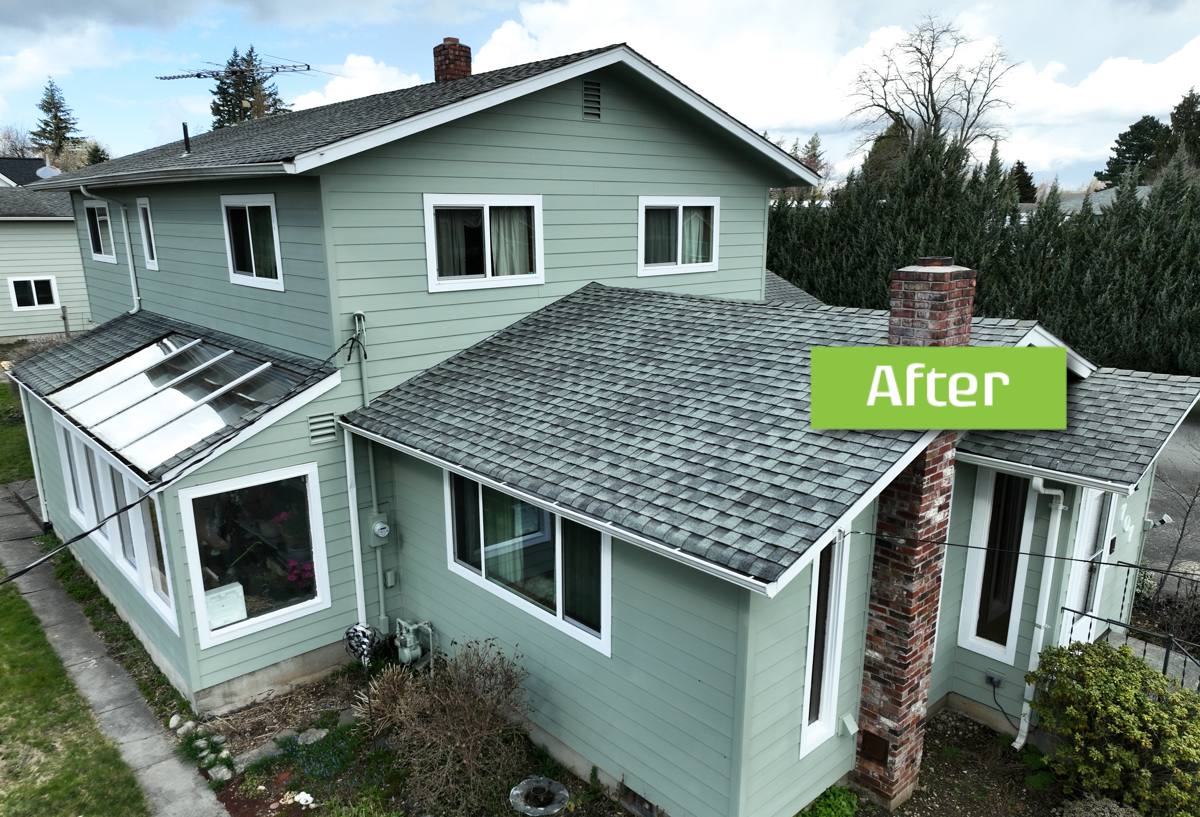
What the Local Climate Does to a Roof
Salt Air and Metal Fasteners
Salt in the air accelerates corrosion on anything metal — nail heads, flashing, gutters, vent caps, and screws. On the mainland, standard galvanized fasteners often do fine for decades. Closer to the water, that same hardware can start showing rust streaks well before the shingles themselves are worn out. We spec corrosion-resistant fasteners and flashing for island work as a matter of course, not as an upsell, because replacing a roof only to have the nails fail early defeats the purpose.
Driving Rain and Wind Uplift
Open water means fewer windbreaks. When a storm comes through, rain doesn't just fall — it drives sideways into fascia, soffits, and the lower courses of roofing. That kind of wind-driven rain finds gaps that would never leak on a calmer site. It also puts more uplift stress on shingles and their fastening pattern, which is why proper nailing and starter-course installation matter even more here than they would on a sheltered lot.
Moss, Shade, and Moisture
Whatcom County's long wet season is moss-friendly everywhere, but tree-shaded roofs on Lummi Island can hold moisture even longer because of the humid marine air. Moss isn't just cosmetic — it lifts shingle edges, holds water against the roof deck, and works its way into any weak spot in the roofing system. A roof replacement is the right time to address the conditions that let moss take hold in the first place, not just the moss itself.
Signs Your Lummi Island Roof Needs Replacing, Not Patching
- Granule loss showing bare, shiny patches on shingles, especially on south- and west-facing slopes exposed to weather
- Shingles that are cupping, curling at the edges, or cracking when you look closely from the ground
- Persistent moss growth that comes back within a season or two of cleaning
- Rusted or failing flashing around chimneys, vents, and roof-to-wall transitions
- Soft spots, sagging, or visible deck movement when walked on
- Water stains on interior ceilings or in the attic, particularly after a windy rainstorm
- A roof that's past 20-25 years old (asphalt) or showing widespread wear rather than isolated damage
If the damage is limited to one section — a single storm-damaged area or a localized leak — a repair can make sense. Once wear is spread across the roof, or the deck underneath is compromised, patching becomes a short-term fix that costs more in the long run than doing the job right once.
What a Correct Roof Replacement Actually Involves
Tear-Off and Deck Inspection
We remove the old roofing down to the deck rather than layering over it. That's the only way to actually see what's underneath — rot, soft spots, or old damage that's been hidden for years. On an island property exposed to persistent moisture, deck condition matters more than it does on a drier inland site, and any compromised sheathing gets replaced before anything new goes down.
Underlayment and Ice-and-Water Protection
A synthetic underlayment goes down as the roof's secondary line of defense, and we pay particular attention to self-adhered ice-and-water membrane at eaves, valleys, and any low-slope transitions — the spots where wind-driven rain is most likely to force water backward under the shingles. This detail matters more on an exposed island roof than it does in a calmer, more sheltered setting.
Flashing and Fasteners
All flashing — around chimneys, skylights, vent pipes, and wall transitions — gets replaced, not reused, and we use corrosion-resistant materials and fasteners suited to salt-air exposure. Reused flashing is one of the most common causes of "new roof, old leak" problems, and it's not worth the risk on a property this exposed.
Ventilation
Proper intake and exhaust ventilation keeps the attic dry and temperature-balanced, which reduces condensation buildup and helps prevent the kind of trapped moisture that speeds up moss growth and deck rot. On a shaded, humid island lot, ventilation is doing real work, not just satisfying code.
Final Installation
Shingles or panels go down with manufacturer-specified nailing patterns and exposure, with extra attention to starter courses, ridge caps, and any hip or valley work — the areas most vulnerable to wind uplift and driving rain.
Choosing Roofing Materials for an Island Property
| Material | How It Handles Salt Air & Wind | Moss Resistance | Typical Lifespan |
|---|---|---|---|
| Architectural asphalt shingles | Good with corrosion-resistant fasteners; solid wind rating when properly nailed | Moderate — benefits from good airflow and periodic cleaning | 25-30 years |
| Standing seam metal | Excellent wind performance; needs coated/corrosion-resistant fasteners near saltwater | High — sheds moisture quickly, little surface for moss to grip | 40-50+ years |
| Composite/synthetic shake | Good; lighter weight helps in high-wind installs | Moderate to good depending on product | 30-40 years |
| Cedar shake (untreated) | More maintenance-sensitive in wet, salty, shaded conditions | Lower — absorbs moisture, needs regular upkeep to resist moss | 20-30 years with upkeep |
There's no single "correct" material for every island home — it depends on your roof's slope, how much shade and tree cover it gets, your maintenance appetite, and your budget. We'll walk through the honest trade-offs for your specific roof rather than pushing one product across the board.
Cost Factors Specific to Lummi Island Work
| Factor | Why It Affects Cost |
|---|---|
| Ferry logistics | Material delivery and crew scheduling around ferry timing takes coordination and planning ahead |
| Roof access and slope | Steeper or harder-to-access roofs take longer and require more safety setup |
| Deck condition | Rot or moisture damage found during tear-off adds material and labor to the base estimate |
| Material choice | Metal and higher-end composites cost more upfront but often less over the life of the roof |
| Flashing and ventilation complexity | Chimneys, skylights, and multiple roof planes add labor and detail work |
We give real, itemized numbers after walking the roof — not a phone-quote guess. Ferry scheduling is a planning detail, not a reason for vague pricing.
How We Handle Scheduling and Logistics for Island Jobs
Working on Lummi Island means building the ferry schedule into the plan from day one — materials, dumpster or debris removal, and crew transport all have to line up with sailing times rather than being figured out on the fly. We plan deliveries and crew days around the ferry rather than treating it as an afterthought, and we build in a reasonable weather buffer given how quickly conditions can change out on the water. The goal is a job that runs on the timeline we give you, not one that gets stretched out by logistics we should have planned for upfront.
Our Process, Start to Finish
- Free on-site estimate — we walk the roof, check the attic and deck where accessible, and talk through material options for your specific exposure
- Written proposal — clear scope, materials, and pricing, no vague allowances
- Scheduling — planned around ferry logistics and a realistic weather window
- Tear-off and deck inspection — old roofing removed, deck checked and repaired as needed
- Underlayment, flashing, and ventilation — the details that determine whether the roof actually performs in island conditions
- Final installation and cleanup — shingles or panels installed to spec, site cleaned of debris and fasteners
- Walkthrough — we go over the finished roof with you before we consider the job done
Maintenance Checklist for Island Roofs
- Clear debris and needles from valleys and gutters at least twice a year
- Have moss growth treated or removed before it spreads, rather than after
- Check flashing and fastener heads periodically for early corrosion, especially near the shoreline
- Trim overhanging branches to reduce shade and moisture retention on the roof surface
- Inspect after major windstorms for lifted shingles or displaced flashing
Why Local Experience on Lummi Island Matters
A roofing crew that's only worked inland jobs can install a technically fine roof that still underperforms on an island because they didn't account for salt exposure, wind direction, or ferry-based scheduling. We work throughout Whatcom County, including Ferndale, Bellingham, and the surrounding water-exposed areas, so the details — corrosion-resistant hardware, wind-rated installation, moss-conscious ventilation — aren't an afterthought. They're built into how we bid and build the job from the start.
If you're weighing a roof replacement on Lummi Island, we're happy to come take a look, walk you through what we're seeing, and give you a straight answer on whether you need a full replacement or something less. Reach out for a free, no-pressure estimate using the form below.