 Ferndale
 Sandy Point's Location Is Hard on Windows
Sandy Point sits close enough to the water that homes here take on a different kind of weather than you'd get further inland in Whatcom County. Salt-laden air, wind-driven rain off the Strait, and long stretches of damp, low-sun weather all work on a window in ways that show up years before most homeowners expect. If you've replaced windows before at an inland house and figured this job would be about the same, it isn't quite — the exposure changes what "correct installation" actually means.
Salt Air and Hardware
Airborne salt accelerates corrosion on anything metal — hinges, locks, balance systems, screen frames, and especially lower-grade fasteners. On a standard inland install, cheaper hardware might last the life of the window. Near Sandy Point, it's often the first thing to fail, showing up as stiff cranks, locks that won't seat cleanly, or streaking corrosion stains below the hardware. This is a materials decision as much as an installation one.
Driving Rain and Water Intrusion
Wind off the water doesn't just fall — it drives rain sideways and up under trim, sills, and poorly lapped flashing. A window that would stay dry in a calm inland rain can take on water at Sandy Point if the flashing sequence or sill pan wasn't built for wind-driven exposure. Most window leaks we find aren't a bad window — they're a flashing detail that was fine for a gentler site and isn't fine here.
The Long Moss Season
Whatcom County's wet season runs long, and Sandy Point's shaded, moisture-holding microclimate keeps things damp even longer. Moss and algae don't just grow on roofs — they take hold in window tracks, on sills, and in corners where water sits instead of draining. Left alone, that growth holds moisture against wood trim and finish, which is where rot and paint failure actually start.
What "Custom" Actually Means for a Sandy Point Window Job
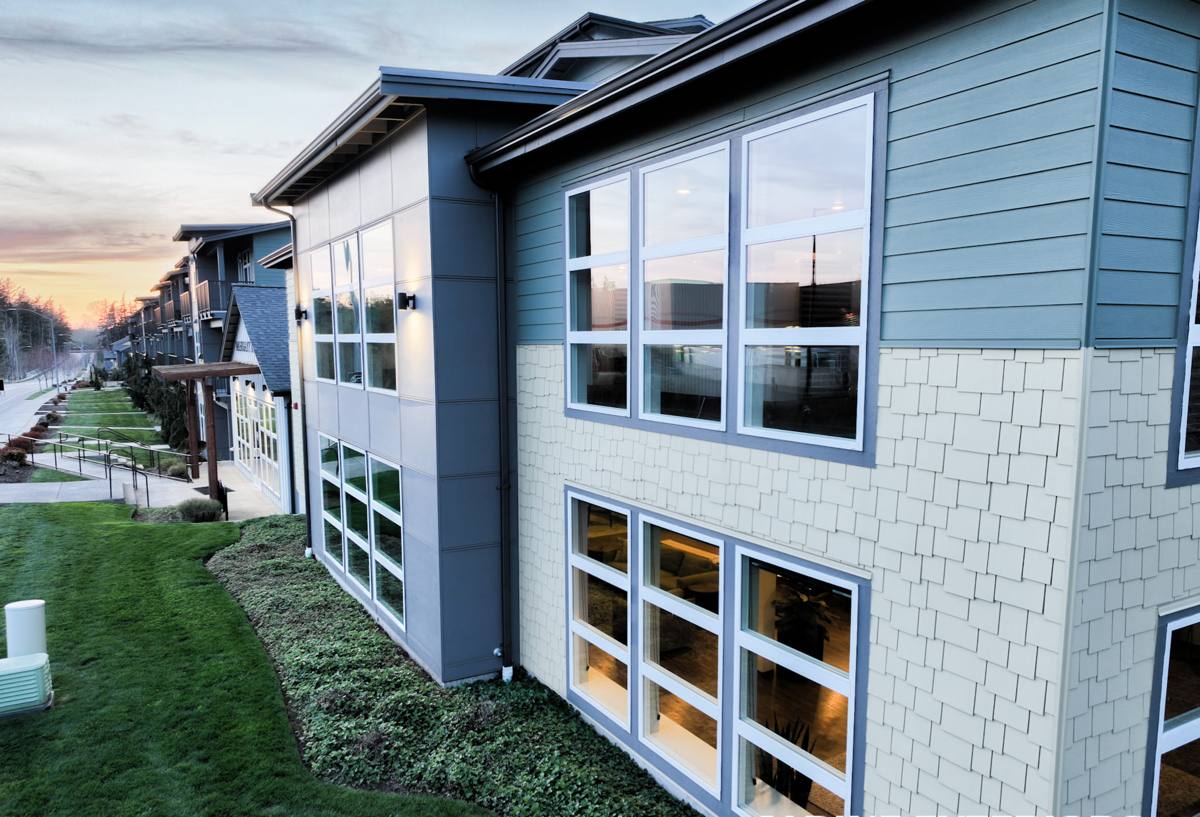
"Custom" doesn't have to mean unusual shapes or high-end finishes — though it can. For most homes here, it means the window is built and installed to match your specific opening, wall assembly, and exposure, rather than forced to fit a generic stock size. That matters more at Sandy Point than it would somewhere calmer, because an ill-fitting window is exactly where wind-driven rain and salt air find their way in.
Matching Older or Irregular Openings
A lot of homes in this area weren't built to today's standard rough-opening sizes. Custom sizing lets us fit the new window to the existing opening properly — correct shim space, correct sill pitch, correct clearance for flashing — instead of trimming the opening down or packing gaps with extra sealant to make a stock size work. Gaps that get "solved" with caulk alone are usually the first thing to fail once the salt air and rain get to work on it.
Material Choices for This Climate
Every window material handles marine exposure differently. None of them is wrong — but each comes with trade-offs worth knowing before you commit.
| Material | How It Handles Salt Air & Moisture | Maintenance | Trade-offs |
|---|---|---|---|
| Vinyl | Won't corrode or rot; handles damp exposure well | Low — occasional cleaning | Frame color/finish options more limited; can't be refinished |
| Fiberglass | Very stable in wet, salty conditions; low expansion/contraction | Low | Higher upfront cost than vinyl |
| Aluminum | Strong but prone to corrosion near salt air without proper coating | Moderate — coating and hardware need monitoring | Best reserved for coated/marine-rated products |
| Wood-clad | Exterior clad protects wood, but any breach lets moisture into the core | Higher — finish and seals need regular checking | Best interior look; most exposure-sensitive if detailing is off |
Our standard for Sandy Point jobs is to steer toward vinyl or fiberglass frames with corrosion-resistant hardware unless a homeowner specifically wants a wood-clad interior look — in which case we're extra deliberate about flashing and sealant detailing, since that's where wood-clad exposure risk actually lives.
Installation Details That Matter More Here Than Inland
Flashing and Sill Pans
A correctly flashed window sheds water down and out, never back into the wall. That means a sloped sill pan, properly lapped house wrap or weather-resistive barrier, and flashing tape sequenced so every layer overlaps the one below it — shingle-style, always working with gravity. On a wind-driven site like Sandy Point, we don't cut corners on this sequence, because it's the difference between a window that's fine in a light rain and one that's fine in a sideways one.
Sealant Selection and Placement
Sealant is a backup to good flashing, not a substitute for it. We use exterior-grade sealants rated for sustained UV and moisture exposure, and we leave the manufacturer-specified weep paths and drainage gaps open — sealing those shut to "be thorough" is a common mistake that traps water inside the frame instead of letting it drain.
Fasteners and Hardware Grade
Given the corrosion risk from salt air, we specify stainless or otherwise corrosion-resistant fasteners and hardware rather than standard-grade options. It costs a little more up front and saves you a hardware replacement call in a few years.
Our Process for a Sandy Point Custom Window Project
- On-site assessment — we check existing opening condition, sill pitch, current water damage or staining, and exposure direction (which walls take the brunt of wind-driven rain).
- Sizing and material selection — measurements are taken for the actual opening, not a catalog size, and we talk through frame material trade-offs for that specific wall's exposure.
- Removal and opening prep — old flashing and sealant are removed, framing is checked for hidden rot or moisture damage before anything new goes in.
- Sill pan and flashing installation — sloped sill pan, correctly lapped flashing tape, integrated with the existing weather barrier.
- Window installation and shimming — set plumb, level, and square, with proper shim spacing to allow for seasonal movement.
- Sealing and hardware finish — exterior sealant applied at the right joints only, weep paths left clear, hardware and locks tested.
- Final walkthrough — we check operation, look for any daylight gaps, and go over basic maintenance for the specific material installed.
Signs Your Current Windows Are Losing the Battle
- Stiff, corroded, or hard-to-turn cranks and locks
- Moss or dark green growth building up in the tracks or on the sill
- Soft or discolored trim/sill wood around the frame
- Fogging or condensation between panes (a sign the seal has failed)
- Drafts or a cold feeling near the frame even when the window is shut
- Visible daylight or a whistling sound during windy, wet weather
- Paint or finish peeling faster on window trim than elsewhere on the house
Any one of these on its own isn't an emergency, but a few together usually mean the window and its flashing are due for a real evaluation, not just a caulk touch-up.
Cost Factors Worth Understanding Before You Budget
| Factor | Why It Moves the Price |
|---|---|
| Frame material | Vinyl is typically the most budget-friendly; fiberglass and wood-clad cost more upfront |
| Opening condition | Hidden rot or framing damage found during removal adds repair work before the new window goes in |
| Custom sizing | Non-standard openings cost more to build to than stock sizes, but avoid weak-point gap-filling |
| Glass package | Upgraded glazing for energy performance or sound dampening adds cost but can be worth it in a wind-exposed home |
| Number of openings | Doing several windows at once is usually more cost-efficient per window than one at a time |
We're upfront that broad ranges only go so far — every Sandy Point property has a different exposure and opening condition, which is exactly why we walk the site before quoting rather than pricing off a phone call.
Maintenance That Actually Extends Window Life Here
Once the windows are in, a little seasonal upkeep goes a long way in this climate. Clear tracks and weep holes of moss and debris a couple times a year, especially heading into the wet season. Rinse salt residue off frames and hardware periodically if the home is close to the water. Keep an eye on exterior sealant lines for cracking or separation, and address it early rather than after water's already gotten behind it. None of this is heavy work, but skipping it is how a well-installed window still ends up with an early hardware or trim failure.
Why Local Installation Experience Matters at Sandy Point
A crew that mostly works drier, inland jobs isn't wrong about windows in general — they just haven't had to build habits around wind-driven rain, salt exposure, and a moss season that doesn't really end. Those habits show up in small decisions: which hardware grade gets specified, how the sill pan is sloped, which sealant joints get left open on purpose. We work this stretch of Whatcom County regularly enough that those decisions aren't an afterthought — they're just how we do it.
If you're weighing whether it's time to replace windows at your Sandy Point home, we're glad to take a look and give you a straightforward, no-pressure estimate — just fill out the form below.