 Ferndale
 Roofing in Sandy Point: A Different Kind of Job
Sandy Point sits right on the water in Whatcom County, close enough to the Strait that salt air is part of daily life for every roof in the neighborhood. That's a very different environment than roofing a few miles inland. Homes here deal with a steady mix of salt-laden wind, driving rain that comes in sideways off the water, and a moss season that can run most of the year in the shaded, damp lots that are common throughout the community. A roof that's correctly installed for Sandy Point isn't just "a roof" — it's a system chosen and detailed specifically to handle wind-driven water at the edges, resist corrosion on every metal component, and shed moss and moisture instead of trapping them.
When we install a new roof in Sandy Point, we're not just swapping old shingles for new ones. We're accounting for the exposure of the specific lot, the age and condition of the decking underneath, and the small details — flashing, fasteners, ventilation — that determine whether a roof lasts its full expected life or starts failing early because it was installed like it was going up somewhere thirty miles inland.
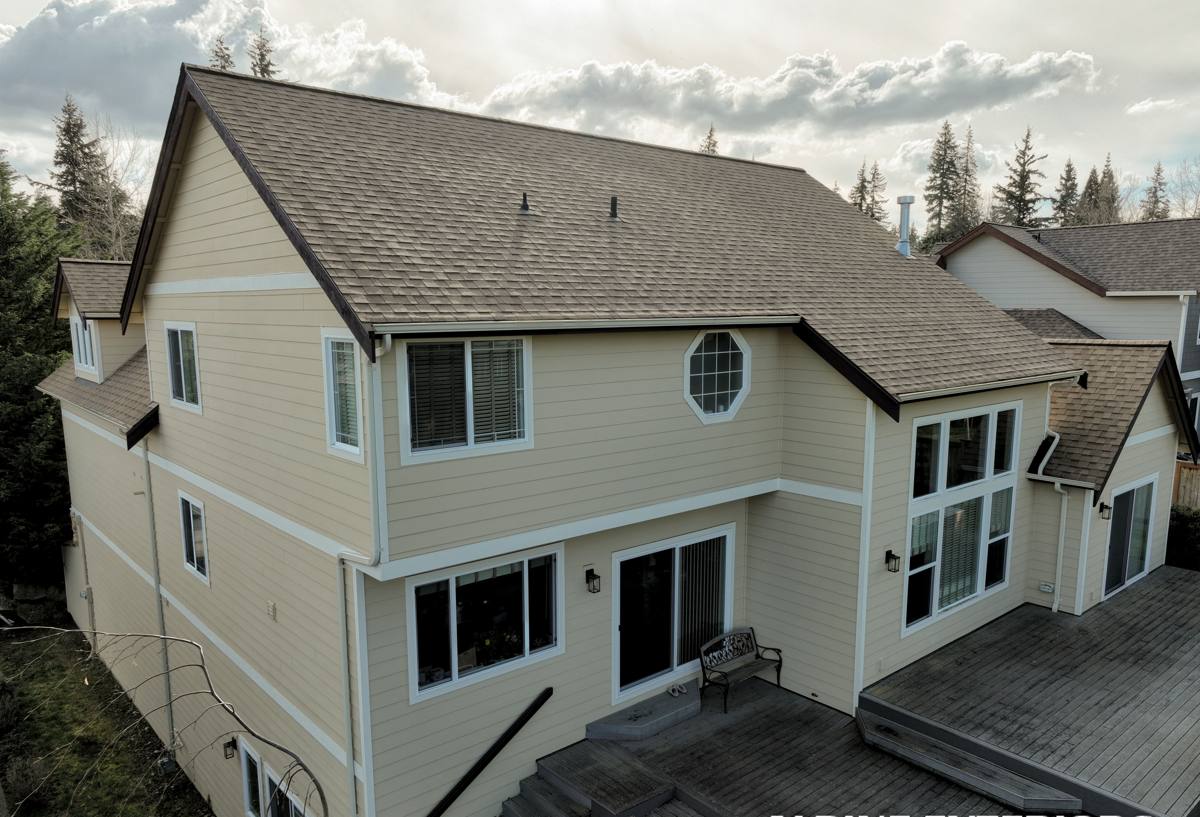
What Sandy Point's Climate Does to a Roof
Salt Air and Corrosion
Airborne salt accelerates corrosion on anything metal — nails, flashing, drip edge, valley metal, roof vents, and satellite mounts. Standard galvanized fasteners and flashing that would hold up fine further inland can start rusting and staining a Sandy Point roof years ahead of schedule. Once corrosion starts on a fastener or flashing seam, it's not just cosmetic — it's a path for water to get underneath the roofing material.
Wind-Driven Rain
Because Sandy Point is exposed to open water, rain doesn't just fall straight down here — it gets pushed sideways under eaves, into valleys, and up under shingle tabs and starter courses. A roof detailed for calmer, more sheltered sites can develop leaks at these pressure points even when every shingle is technically intact, because wind-driven water finds gaps that gravity alone would never reach.
Moss and Moisture
Whatcom County's damp, mild climate is moss-friendly everywhere, but shaded, tree-lined lots near the water hold moisture longer and grow moss faster. Moss holds water against the roofing surface, works into shingle edges, and can lift material over time. On older roofs we tear off in this area, moss buildup is one of the most common contributors to premature wear, especially on north-facing slopes and anywhere debris collects.
What a Correctly Installed Roof Needs Here
Given those conditions, a new roof installation in Sandy Point should include a specific set of choices, not just "whatever's standard." Here's what we build into every install in this area:
- Corrosion-resistant fasteners and flashing rated for coastal exposure, not standard galvanized hardware
- Fully sealed, properly lapped underlayment as a genuine water-resistant layer, not just a shingle backer
- Extra attention to valleys, eaves, and rake edges, where wind-driven rain is most likely to get pushed under the roofing material
- Ice-and-water shield or equivalent membrane at vulnerable transitions, even though this isn't a heavy-snow area — the same membrane stops wind-driven rain intrusion
- Balanced intake and exhaust ventilation so moisture from inside the home doesn't add to what the roof deck is already dealing with from outside
- Material and color choices that resist algae and moss growth where the site is shaded or has limited sun exposure
Choosing a Roofing Material for Sandy Point
There isn't one "correct" roofing material for every home in Sandy Point — it depends on the home's style, budget, and how exposed the site is to wind and salt air. What matters most is that whatever material goes on is installed with the coastal detailing above. Here's how the common options compare for this specific environment:
| Material | Performance in Salt Air | Moss Resistance | Maintenance |
|---|---|---|---|
| Architectural asphalt shingle | Good, with corrosion-resistant flashing and fasteners | Algae-resistant granules help; still needs periodic cleaning | Low to moderate |
| Standing seam metal | Very good when properly coated/finished for coastal use | Excellent — sheds moss and debris well due to smooth, steep surface | Low |
| Cedar shake | Fair — needs diligent maintenance near salt air | Poor without regular treatment; holds moisture | High |
| Composite/synthetic shingle | Good, consistent performance in coastal exposure | Good, depending on product | Low |
We'll walk through these trade-offs honestly during your estimate. Cedar shake, for example, can look great, but it demands a maintenance commitment that most homeowners in a high-moisture, salt-air environment like Sandy Point aren't excited to keep up with year after year. That's a maintenance-burden conversation, not a knock on the material itself.
Our Process for a Sandy Point Re-Roof
1. On-Site Assessment
We start by walking the roof and attic, not just eyeballing it from the ground. That means checking the decking for soft spots or moisture damage, evaluating current ventilation, and looking closely at how exposed the specific lot is to wind and salt air — a waterfront-facing slope needs more attention than a slope tucked behind trees or another structure.
2. Tear-Off and Deck Inspection
Once the old roofing is off, we inspect the full deck surface. Any rot, delamination, or soft plywood gets replaced before anything new goes down — installing new roofing over a compromised deck just guarantees a shorter lifespan and hides a problem instead of fixing it.
3. Underlayment and Flashing
This is where a coastal roof earns its keep. We install a fully sealed underlayment system and detail every flashing point — valleys, chimneys, vent penetrations, wall transitions — with corrosion-resistant materials and proper lapping so wind-driven rain has nowhere to get in.
4. Roofing Material Installation
Whatever material you've chosen goes on according to manufacturer spec, with fastening patterns and exposure adjusted for the wind conditions typical of an open, waterfront-adjacent site like Sandy Point.
5. Ventilation Check and Final Walkthrough
We confirm intake and exhaust venting are balanced, clean up the site thoroughly, and walk the finished roof with you so you know exactly what was done and why.
Roof Age, Warning Signs, and When to Replace
Not every roof problem in Sandy Point means a full replacement, but the coastal environment does shorten the window between "this is fine" and "this needs attention." Watch for these signs, especially if your home has direct water exposure or heavy shade:
- Granule loss showing up in gutters or downspouts
- Curling, cupping, or lifted shingle edges, particularly on wind-exposed slopes
- Rust staining running down from flashing, vents, or fasteners
- Persistent moss or algae growth that comes back quickly after cleaning
- Soft spots or sagging visible from the ground or in the attic
- Daylight visible through the roof deck from inside the attic
- Interior ceiling stains, especially near valleys or chimneys
If you're seeing more than one of these, it's worth getting an honest assessment before a small issue becomes a deck-replacement issue.
Cost Factors for a Sandy Point Roof
Every roof is different, so we won't quote a number without seeing the job, but the main factors that move the price on a Sandy Point install are worth understanding up front:
| Factor | Why It Matters Here |
|---|---|
| Roof size and complexity | More valleys, hips, and penetrations mean more flashing detail work, which matters more in a wind-driven-rain environment |
| Deck condition | Moss and moisture issues on older roofs sometimes mean deck repair is needed before new roofing goes on |
| Material choice | Metal and composite options generally cost more up front than asphalt but can reduce long-term maintenance in salt air |
| Site exposure | Homes directly facing open water may need extra flashing and fastener upgrades compared to more sheltered lots |
| Access and site conditions | Trees, narrow lots, and waterfront access can affect labor and staging time |
Why a Crew That Works Sandy Point Regularly Makes a Difference
A roofing crew that mostly works inland jobs can do a technically fine install and still leave a Sandy Point home under-protected, simply because they're not used to detailing for salt-air corrosion and wind-driven rain as a matter of routine. We work throughout Ferndale and the surrounding Whatcom County coastline, so the fastener upgrades, flashing details, and moss-resistant material choices described above aren't an afterthought for us — they're standard practice on every coastal install, including in Sandy Point specifically. That familiarity also means we know what tends to go wrong first on homes in this kind of exposure, which shapes where we spend extra attention during both the assessment and the install itself.
Get a Straightforward Estimate
If your Sandy Point roof is showing its age, or you just want an honest read on where it stands, we're happy to take a look. We'll give you a clear picture of the roof's condition, what a proper coastal installation involves for your specific home, and a straightforward estimate — no pressure, no upsell. Use the form below to request your free estimate.