 Ferndale
 Sandy Point's Waterfront Climate Is Hard on Siding
Sandy Point sits close to the water in northern Whatcom County, and that proximity shapes everything about how siding performs there. Homes here take on salt-laden air off the Strait, wind-driven rain that hits walls sideways instead of running straight down, and long stretches of shade and humidity that keep moss and algae growing on north- and west-facing walls for much of the year. None of that is unique to one street or one house — it's the baseline condition for exterior building materials anywhere near this stretch of the Whatcom County coastline, and it's why siding that performs fine forty miles inland can fail early here.
Salt air is corrosive to exposed metal fasteners and trim, and it accelerates the breakdown of coatings that aren't formulated to handle it. Driving rain finds every gap in flashing, caulking, or lap coverage that a fair-weather installer might get away with elsewhere. And moss doesn't just look bad — it holds moisture against the wall surface, which is exactly the condition that rots wood-based products and stains or degrades siding that isn't built to shed water fast. A siding installation in Sandy Point has to be planned around these three things from day one, not treated as an afterthought.
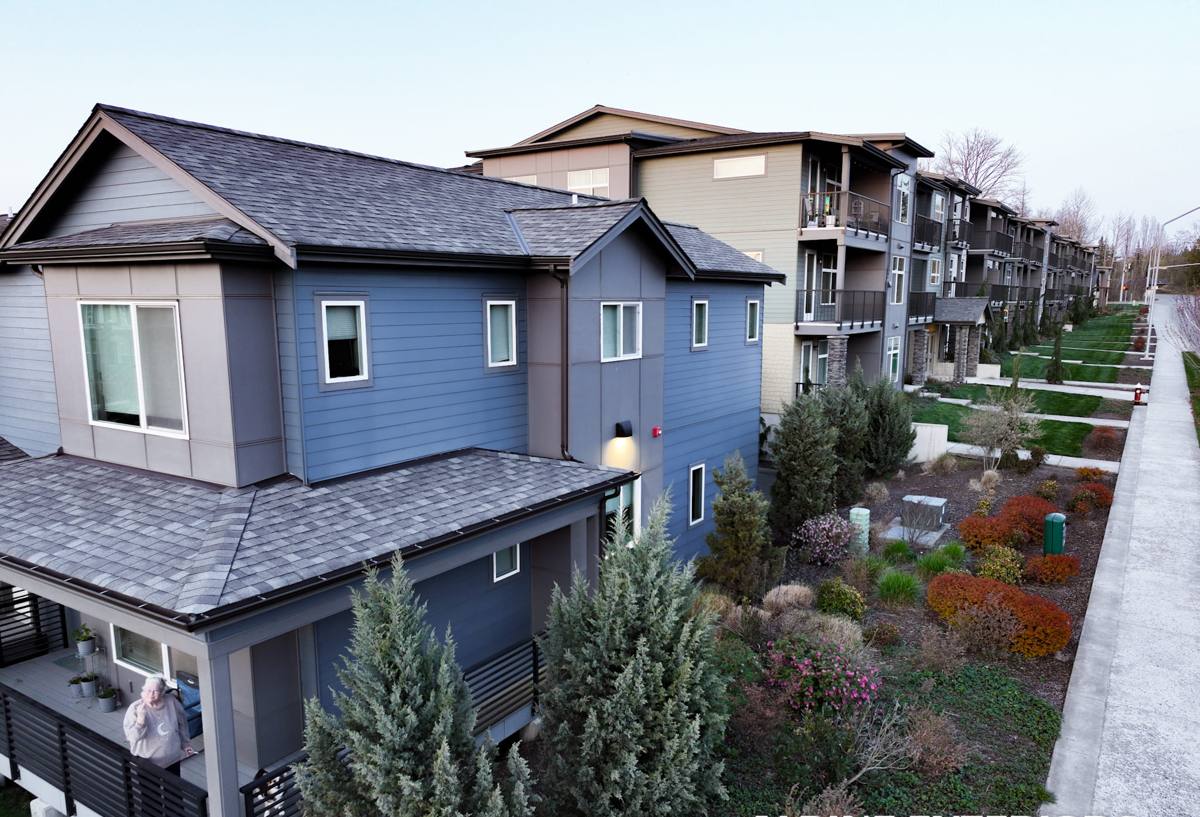
What "Correct" Siding Installation Actually Means Here
A lot of siding problems we get called out to inspect aren't material failures — they're installation shortcuts that don't show up until a few wet seasons have passed. In a marine climate like Sandy Point's, correct installation means getting the details right that most homeowners never see once the job is finished:
Water management behind the siding
Every wall needs a continuous weather-resistive barrier, properly lapped and taped at seams, with flashing integrated at every window, door, and penetration so water that gets past the siding has somewhere to go besides the sheathing. A rainscreen gap — a small air space between the siding and the wall — is worth the extra step on homes exposed to driving rain, because it lets any moisture that does get through dry out instead of sitting against the wall.
Fastener and trim choices that don't corrode
Standard fasteners can start showing rust streaks within a couple of years this close to salt air. Corrosion-resistant fasteners, and trim details that don't trap water at butt joints or inside corners, matter more here than they would on a home twenty miles inland.
Clearance and grading
Siding installed too close to grade, decking, or roof lines stays wet longer and is first in line for moss and rot. Proper clearance, along with kickout flashing where a roofline meets a wall, keeps water from being funneled straight into a seam.
Why We Install James Hardie Fiber Cement — and Not Vinyl, LP SmartSide, or Cedar
We standardized on James Hardie fiber cement siding for every job we take on, including in Sandy Point, because it's the product that holds up best against exactly the conditions this area produces. That's a deliberate decision, not a default, and it's worth explaining honestly.
Vinyl siding is affordable and low-maintenance in mild conditions, but it's a petroleum-based product that expands, contracts, and can become brittle with age and UV exposure. In wind-driven rain it relies heavily on correct lap and J-channel installation to keep water out, and it doesn't offer the impact resistance or fire performance that fiber cement does.
LP SmartSide is an engineered wood product with a resin-treated strand substrate. It performs well when installation and caulking are maintained on schedule, but it's still wood at its core — any breach in the factory coating or field-applied caulk lets moisture into the substrate, and a humid, moss-prone environment like Sandy Point's is not forgiving of maintenance gaps.
Cedar and primed spruce are traditional and attractive, but they're organic materials in a climate that stays wet and shaded for much of the year. They need ongoing refinishing, and moss and mildew take hold on wood surfaces faster than on non-organic ones. We won't put a product on a Sandy Point home that we know will demand that level of upkeep to avoid early failure.
James Hardie fiber cement is made from cement, sand, and cellulose fiber. It doesn't absorb water the way wood does, it doesn't expand and contract the way vinyl does, and it's non-combustible. Hardie's HZ5 product line is engineered for climates with freeze-thaw cycles and moisture exposure like the Pacific Northwest, and the factory-applied ColorPlus finish is baked on and warranted separately from the substrate, which matters in an environment that's hard on paint.
| Factor | James Hardie Fiber Cement | Vinyl | LP SmartSide | Cedar / Primed Spruce |
|---|---|---|---|---|
| Moisture behavior near salt air | Non-combustible, dimensionally stable, doesn't absorb water | Doesn't absorb water but can warp/distort in heat and wind | Wood-based; vulnerable if coating or caulk is breached | Organic; absorbs moisture, prone to rot |
| Moss/algae resistance | Hard, non-porous surface resists growth | Resists growth but can trap moisture behind panels | Textured wood surface holds moss more readily | Highly susceptible; needs regular cleaning/treatment |
| Finish/color durability | Factory ColorPlus finish, separately warranted | Color molded in but fades with UV over time | Factory-primed; needs field topcoat and upkeep | Needs repainting/staining every few years |
| Fire performance | Non-combustible | Combustible, can melt/deform | Combustible | Combustible |
| Typical maintenance | Occasional wash, caulk checks | Occasional wash; watch for cracking with age | Scheduled caulk and coating maintenance | Regular refinishing |
Our Installation Process for Sandy Point Homes
The process itself doesn't change dramatically from house to house, but the sequencing and attention to detail change based on what a home is up against. For a waterfront-adjacent home in Sandy Point, our process looks like this:
- Site and wall assessment — we look at existing siding, sheathing condition, moss and moisture staining patterns, and problem areas like north-facing walls or spots near downspouts and rooflines.
- Weather barrier and flashing — a continuous, properly lapped weather-resistive barrier goes on first, with flashing detailed at every window, door, and penetration before any siding goes up.
- Rainscreen consideration — on homes with significant rain exposure, we discuss a furring strip or rainscreen system that lets moisture that gets behind the siding dry out instead of sitting against the wall.
- Hardie installation to manufacturer spec — correct nailing pattern, gapping, and caulking at seams, following James Hardie's published installation requirements, which is also what keeps the manufacturer warranty intact.
- Trim and fastener selection — corrosion-resistant fasteners and trim details that shed water at corners and butt joints rather than trapping it.
- Final inspection and cleanup — a walk-through checking caulk lines, clearances, and finish before we consider the job done.
Cost Factors for Siding Installation in Sandy Point
Every home is different, so we won't quote a number without seeing the house, but the factors that move the price are consistent. Here's what typically drives cost up or down on a siding installation in this area:
| Factor | Why it affects cost |
|---|---|
| Existing siding removal | Tear-off and disposal of failing wood or old siding adds labor before new siding can go on |
| Sheathing/moisture damage found underneath | Rot or moisture damage discovered during tear-off has to be repaired before siding is installed |
| Wall complexity | Dormers, multiple gables, and cutouts around windows and trim take more time than flat wall runs |
| Rainscreen/furring addition | Adding an air gap behind the siding is extra material and labor, but pays off on exposed walls |
| Trim and accent choices | Board-and-batten accents, shakes, or custom trim profiles cost more than standard lap siding |
| Access and site conditions | Tree cover, tight lot lines, or difficult staging areas can slow the work |
Living With Hardie Siding in a Marine Climate
One of the reasons we recommend Hardie for homes in this area is how little ongoing work it asks for compared to wood or improperly installed alternatives. That said, "low-maintenance" isn't "no-maintenance," especially with the moss and salt exposure Sandy Point deals with.
- Rinse siding down once or twice a year, more often on shaded, moss-prone walls, using a garden hose and soft brush — avoid high-pressure washing directly into seams.
- Keep gutters and downspouts clear so water isn't overflowing onto siding below.
- Trim back tree branches and shrubs that keep walls shaded and damp, since that's what feeds moss growth.
- Check caulk lines at trim and window edges every year or two and have any cracked caulk replaced before it lets water in.
- Address any moss or algae growth early with a gentle wash rather than letting it build up over multiple seasons.
Before You Sign a Siding Contract: A Homeowner's Checklist
Whoever you hire, these are worth confirming before work starts:
- Ask what weather-resistive barrier and flashing details they'll use, and whether a rainscreen gap is part of the plan.
- Confirm they're following the manufacturer's published installation instructions for whatever siding product you choose — this is what keeps a manufacturer warranty valid.
- Ask about fastener type and corrosion resistance, specifically because of the salt air here.
- Get clarity on what happens if they find rot or moisture damage in the sheathing once old siding comes off.
- Check whether your community has an architectural review or exterior-change approval process, and confirm who's responsible for that paperwork.
- Ask for the manufacturer warranty terms in writing, separate from the contractor's workmanship warranty.
Why a Crew That Already Works in Sandy Point Matters
Siding installation isn't just about the product — it's about whether the crew understands the specific conditions a house is going to face. A contractor who's worked waterfront and near-waterfront homes in Whatcom County already knows to plan for driving rain angles off the water, to spot the wall sections that stay damp and mossy longest, and to detail flashing and clearances accordingly. That experience shows up in fewer callbacks and a longer-lasting install, not in anything you'd necessarily notice on installation day.
It also matters for practical reasons: familiarity with any local permitting or community approval steps, realistic scheduling around this area's wet stretches, and knowing which parts of a Sandy Point home tend to need extra attention before the first panel ever goes up.
If you're planning a siding project in Sandy Point or anywhere else around Ferndale, we're glad to take a look at your home, walk you through what correct installation involves, and give you a straightforward, no-pressure estimate.