 Ferndale
 Windows Built for Sandy Point's Shoreline Exposure
Sandy Point sits right up against the water, and that changes what a window has to survive compared to a house even a few miles inland. Salt-laden air moves through the neighborhood constantly, wind-driven rain hits window walls at angles that gutters and overhangs were never designed for, and Whatcom County's long, gray moss season keeps everything damp for months at a time. Windows that would hold up fine in a sheltered inland yard can fail early here — not because the glass is bad, but because the frame, sealant, and flashing weren't matched to this specific exposure.
We work on homes throughout Ferndale and the surrounding shoreline communities, and Sandy Point comes with its own short list of problems we watch for every time: corroded hardware, sashes that swell and stick from moisture cycling, sills that have soaked up water at the corners, and glazing seals that gave out years before they should have. None of that is a reason to panic about your windows — it's just the maintenance reality of living where salt air meets a wet climate, and it's exactly what a correctly specified, correctly installed window replacement is meant to solve.
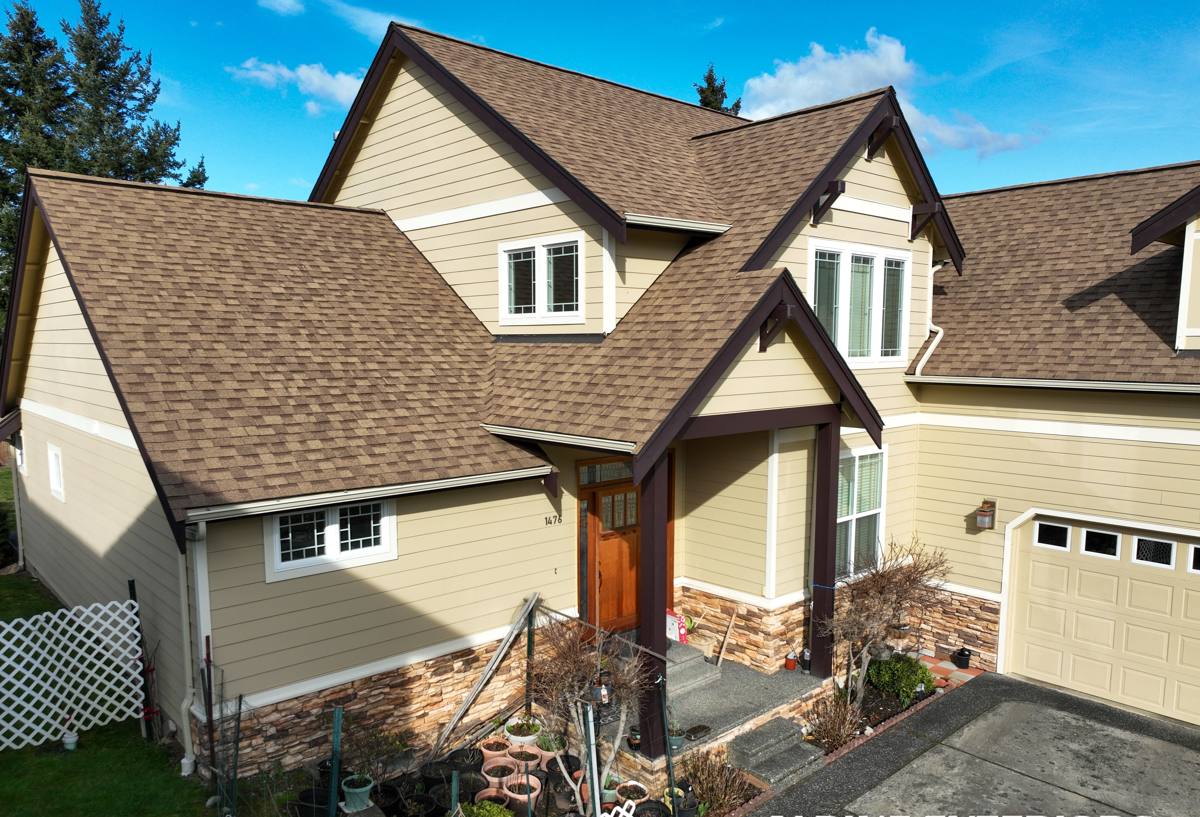
What Salt Air and Moisture Actually Do to a Window
Hardware and Fasteners
Cranks, hinges, locks, and screws are the first things to show wear near the water. Standard steel hardware corrodes faster in salt air, and once a lock or crank starts binding, homeowners often assume the whole window is failing when it's really just the hardware. Marine-grade or corrosion-resistant hardware costs a little more up front and saves you a service call in a few years.
Seals and Glazing
Every dual-pane or triple-pane window depends on a sealed edge to keep argon gas in and moisture out. Salt-laden humidity works on that seal faster than dry inland air does. When it fails, you'll see fog or a hazy ring between the panes — that's not cleanable, and it means the insulated glass unit needs replacing, not just the sash.
Frame Material and Wood Rot
Untreated or poorly sealed wood trim and sills absorb moisture at the corners first, where end grain is exposed. Combined with a moss season that keeps siding and trim damp for weeks on end, this is where we most often find soft spots during a window inspection. Vinyl and fiberglass frames don't rot, but they still need correctly installed flashing and sealant to keep water from tracking behind them into the wall.
Choosing the Right Window for a Sandy Point Home
There's no single "best" window brand for coastal Whatcom County — the right choice depends on your home's exposure, your budget, and how much upkeep you want to take on. What we won't do is install a window that looks right but isn't built for this environment, or one whose installation is so sensitive to technique that a small mistake voids the warranty. Here's how the common options stack up for a home this close to the water.
| Frame Material | Salt Air Performance | Maintenance | Typical Trade-offs |
|---|---|---|---|
| Vinyl | Good — won't corrode or rot | Low | Frame can flex over large spans; color choices are more limited |
| Fiberglass | Very good — dimensionally stable, resists corrosion | Low | Higher upfront cost than vinyl |
| Aluminum-clad wood | Fair to good — depends heavily on cladding quality and seal detail | Moderate | Interior wood still needs protection; installation sensitivity is higher |
| Bare wood | Poor in direct salt exposure without diligent upkeep | High | Best appearance option for some homeowners, but shortest service life here without regular maintenance |
For most Sandy Point homes with direct or semi-direct exposure to the water, we steer people toward vinyl or fiberglass for the actual window unit, sometimes with wood or wood-look trim on the interior where appearance matters most and moisture exposure is lowest. That's a professional recommendation based on how these materials behave in this climate, not a knock on any specific manufacturer — every material has a place, and we'll walk you through the honest trade-offs for your specific house.
Installation Details That Matter More Here Than Inland
A window replacement is only as good as the flashing and sealant work around it. This is where coastal homes separate good installs from ones that fail in three to five years.
- Correct flashing sequence — water needs a shingled path down and out, never a straight line into the wall cavity
- Sill pan installation — a sloped, sealed pan under the window catches and redirects any water that gets past the primary seal
- Compatible sealants — the wrong caulk or sealant chemistry can fail against certain cladding materials within a season
- Corrosion-resistant fasteners — standard fasteners in a salt-air environment can rust and stain siding within a couple of years
- Proper shimming and squaring — an out-of-square frame stresses the seal and the sash over time, even on a good window
- Interior and exterior air sealing — both sides need to be addressed, not just the exterior, to control condensation
Every one of these steps takes extra time on the job, and every one of them is the difference between a window that performs for decades near the water and one that needs attention again in a handful of years.
How We Handle a Sandy Point Window Replacement
1. On-Site Assessment
We look at each window opening individually — sill condition, framing, existing flashing, and how exposed that particular wall is to prevailing wind and rain. Not every window on a house needs the same treatment; a window on the water-facing wall often needs more attention to flashing and sealant than one tucked under a deep overhang on the lee side.
2. Honest Scope and Options
We'll tell you plainly if a window needs full frame replacement versus a sash or glass-only repair, and we'll explain the material and hardware options in terms of how they'll actually hold up at Sandy Point specifically, not just in general marketing terms.
3. Removal Without Collateral Damage
Old windows come out carefully, with attention to what's happening behind the trim — this is often when hidden rot or past water intrusion gets found and dealt with before it's sealed back up behind a new window.
4. Correct Flashing, Pan, and Sealant Install
This is the step described above, done to the same standard on every job regardless of whether the window faces the water or the road.
5. Final Check and Walkthrough
We test operation, check the seal by feel and by eye, and walk you through anything specific to your home's exposure — for example, hardware that may need occasional lubrication given the salt air.
What Drives the Cost of a Window Replacement Here
Costs for window replacement vary widely based on size, material, and how much of the surrounding wall needs to be opened up and repaired. Rather than quote a number that won't mean much without seeing your home, here's what actually moves the price.
| Factor | Why It Matters |
|---|---|
| Frame material | Vinyl is typically the most affordable; fiberglass and clad-wood cost more upfront but may reduce long-term upkeep |
| Window size and style | Larger units and operable styles like casements generally cost more than fixed or standard double-hung windows |
| Condition behind the old window | Rot or water damage found during removal adds repair scope before the new window can go in |
| Number of windows | Doing multiple openings in one visit typically reduces the per-window labor cost |
| Wall exposure | Water-facing openings may need extra flashing and sill pan work, adding some labor time |
We give a firm, itemized quote after seeing the actual openings — not a phone estimate — because guessing on a coastal home tends to be wrong in one direction or the other.
Signs Your Sandy Point Windows Need Attention
- Fogging or a hazy ring visible between the panes of glass
- Sashes that stick, bind, or are hard to lock, especially after wet weather
- Visible corrosion on cranks, hinges, or locking hardware
- Soft or discolored wood at the sill or lower corners of the frame
- Noticeable draft or cold spot near the window even when it's fully closed
- Paint or finish that's bubbling, peeling, or chalking faster than the rest of the trim
- Visible moss or algae buildup on the sill or surrounding trim that keeps returning
Any one of these on its own isn't necessarily urgent, but a few showing up together on the same window is usually a sign the seal or frame has moved past the point where repair makes more sense than replacement.
Why a Crew That Already Works Sandy Point Matters
Window replacement isn't a one-size-fits-all job, and a crew that's only ever worked drier, inland neighborhoods will make different assumptions than one that's used to Whatcom County's coastal conditions. Knowing to spec corrosion-resistant hardware without being asked, knowing which sealants actually hold up against salt-laden moisture, and knowing to check sill framing a little more carefully on water-facing walls — that's the kind of thing you only get consistently from a crew that's done this work in this specific area before. It's also why we don't treat every window the same way regardless of which wall it's on; the water-facing side of a Sandy Point home is simply a harder environment than the street-facing side, and the install should reflect that.
If you're seeing any of the signs above, or you'd just like a straight assessment of where your windows stand, we're happy to take a look. Reach out for a free, no-pressure estimate using the form below — we'll walk the exterior, check what's going on at the openings, and give you honest options for your home.