 Ferndale
 Roofing in Semiahmoo Isn't the Same as Roofing Inland
Semiahmoo sits right where Whatcom County meets the water, and that changes what a roof has to survive. Homes here deal with a combination most inland Ferndale properties don't face at the same intensity: salt-laden air coming off the bay, wind-driven rain that gets pushed sideways under normal flashing details, and a moss season that runs long because the shade, humidity, and mild temperatures rarely let roofs fully dry out. A shingle roof that would hold up fine in a drier, more sheltered part of the county can wear out faster here if it wasn't specified and installed with those conditions in mind.
That's really the whole point of this page. Asphalt shingle roofing is a proven, cost-effective system almost anywhere in the Pacific Northwest, but "correct for Whatcom County" and "correct for Semiahmoo" aren't always identical. The differences are in the details: which shingle line handles salt exposure without accelerated granule loss, how flashing is treated at wall and roof transitions facing the water, how ventilation is balanced to fight moss and mildew, and how fasteners and underlayment are chosen to resist corrosion. We install asphalt shingle roofs on homes in this area regularly, and this page walks through what we've learned matters most.
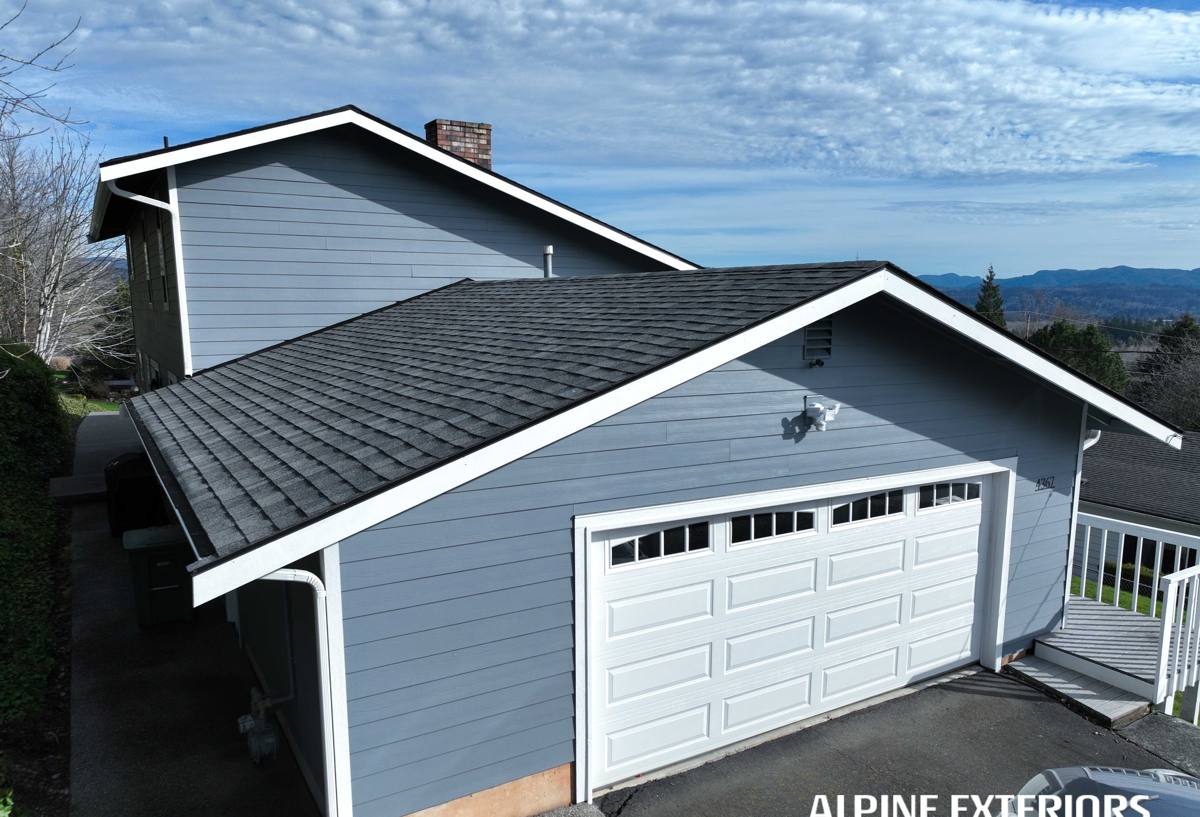
What Semiahmoo's Climate Actually Does to a Roof
Salt Air
Airborne salt from the bay settles on every exterior surface, including roofing. Over years, that salt can accelerate corrosion on exposed metal — nail heads, flashing edges, ridge vent hardware — faster than it would a few miles inland. It doesn't destroy asphalt shingles directly, but it does shorten the life of the metal components a shingle roof depends on if those components aren't rated and installed with corrosion resistance in mind.
Driving Rain
Storms coming off the water tend to arrive with wind, and wind-driven rain behaves differently than rain falling straight down. It gets pushed up under shingle tabs, sideways into wall-to-roof transitions, and into any flashing gap that would be a non-issue in calmer conditions. This is why flashing detail and underlayment coverage matter more here than the shingle brand printed on the wrapper.
Moss and Extended Shade Season
Whatcom County's mild, wet winters are moss-friendly everywhere, but roofs in Semiahmoo that sit under tree cover or face away from the sun for long stretches of the day dry out slower after rain. Moss doesn't just look bad — its root structure works into the shingle mat over time, and moss mats hold moisture against the roof surface far longer than a bare shingle would, which shortens the roof's effective life.
Choosing the Right Shingle for a Waterfront-Adjacent Property
Not every asphalt shingle product is a good fit this close to the water. We look at a few specific things before recommending a line for a Semiahmoo home:
- Algae resistance rating: shingles with copper-infused or algae-resistant granules resist the dark streaking that shows up faster in humid, shaded coastal conditions.
- Wind rating: higher wind-rated shingles with reinforced nailing zones hold up better to the gusts that often accompany driving rain off the bay.
- Granule adhesion quality: lower-grade shingles shed granules faster under sustained moisture exposure, which shortens UV protection and service life.
- Manufacturer warranty structure: we review what's actually covered — materials only versus materials plus labor — since coastal-exposure claims are sometimes handled differently than standard warranty language assumes.
We don't push a single "best" shingle for every home. A well-shaded lot with heavy moss history calls for different priorities than an exposed lot that takes the brunt of the wind. Part of our estimate visit is talking through which trade-offs matter most for your specific roof and orientation.
What a Correct Installation Looks Like Here
Underlayment and Ice-and-Water Protection
Given the driving-rain exposure, we treat underlayment as more than a formality. Synthetic underlayment across the full roof deck, with self-adhering ice-and-water membrane at eaves, valleys, and any wall-to-roof transition, gives the roof a real second line of defense if wind pushes water past the shingle surface — which it will, eventually, in any coastal storm.
Flashing at Every Transition
Step flashing at sidewalls, counterflashing where a roof meets siding or a chimney, and properly lapped valley flashing are the details that actually stop water intrusion. Corrosion-resistant metal — not just painted steel — is worth the modest upcharge on a property this close to salt air.
Ventilation Balanced for Moisture Control
Proper intake at the soffits paired with exhaust at the ridge keeps air moving under the roof deck, which reduces the trapped moisture that feeds both moss on the surface and mildew in the attic. Ventilation is often the most overlooked part of a reroof, but in a moss-prone area it's one of the highest-value details.
Fasteners and Hardware
We use corrosion-resistant nails and hardware rather than standard-grade fasteners, specifically because of the salt-air exposure. It's a small material cost difference that pays off over the life of the roof.
Comparing Shingle Options for a Semiahmoo Home
| Factor | Standard 3-Tab | Architectural / Laminate | Premium Coastal-Rated Laminate |
|---|---|---|---|
| Wind resistance | Lower | Moderate to good | Best available |
| Algae/moss resistance | Basic or none | Often included | Enhanced granule treatment |
| Typical lifespan (coastal exposure) | Shorter end of range | Mid-range | Longer end of range |
| Upfront cost | Lowest | Moderate | Highest |
| Best fit | Budget-driven, low-exposure sites | Most Semiahmoo homes | Direct wind/salt exposure, high-value roofs |
Most homes in this area land in the architectural/laminate middle tier — it's the practical balance of durability and cost for the conditions here. We reserve the premium coastal-rated tier for properties with direct, unshaded exposure to wind off the water.
Moss Prevention and Long-Term Roof Care
A good installation reduces moss growth, but it doesn't eliminate the need for basic upkeep in a climate like this. A few habits make a real difference in how long a Semiahmoo shingle roof performs:
- Keep gutters clear so water isn't backing up under the eave line during heavy rain.
- Trim back overhanging branches where possible to reduce shade and speed up drying time after storms.
- Have moss physically removed rather than pressure-washed — pressure washing strips granules and shortens shingle life.
- Schedule a roof check after major windstorms, since lifted or cracked shingles are easiest to fix before the next rain event finds them.
- Watch for granule buildup in gutters, which can signal a shingle surface that's wearing faster than expected.
Signs a Semiahmoo Roof Needs Attention
Because of the accelerated wear this climate can cause, it's worth knowing what to watch for between full inspections:
| What You See | What It Often Means |
|---|---|
| Dark streaking on north-facing slopes | Algae growth — cosmetic now, but a sign of moisture retention |
| Moss clumps along shaded ridges or valleys | Trapped moisture; left alone, it works into the shingle mat |
| Curling or lifted shingle edges | Age, heat cycling, or wind stress — a common entry point for driving rain |
| Rust streaks near flashing or vents | Corroding hardware — worth inspecting before it becomes a leak path |
| Granules collecting in gutters | Surface wear — normal in small amounts, a concern if it's heavy or increasing |
Our Process for a Semiahmoo Reroof
We keep the process straightforward because a reroof is disruptive enough without added confusion:
- On-site assessment: we walk the roof, check the deck condition, note shade patterns and exposure direction, and look at existing flashing and ventilation.
- Honest recommendation: we explain which shingle tier and details fit your home's specific exposure — not a one-size answer.
- Written estimate: clear scope, materials, and pricing, no vague allowances.
- Tear-off and deck check: we inspect the deck once old material is off, since hidden moisture damage is more common on coastal-exposed roofs.
- Installation: underlayment, ice-and-water protection, flashing, ventilation, and shingles installed to manufacturer spec and adjusted for local exposure.
- Final walkthrough: we go over the finished roof with you before we consider the job done.
Why a Crew That Already Works Semiahmoo Matters
Roofing crews unfamiliar with this specific stretch of coastline sometimes default to standard inland practices — standard fasteners, standard underlayment coverage, standard ventilation ratios — because that's what works most places. Those defaults aren't wrong in general, but they leave a roof under-built for salt air, driving rain, and a long moss season. Working in Semiahmoo regularly means we've seen which details actually fail first here and which ones hold up, and we build that into every estimate rather than treating it as an upsell.
We're a Ferndale-based crew, so this isn't a one-off trip for us — it's a neighborhood we already know, and a roof we're prepared to stand behind because we understand what it's up against year-round.
Get a Straight Answer on Your Roof
If your Semiahmoo home's roof is aging, showing moss, or you're just planning ahead, we're happy to take a look and give you a clear, honest assessment. Reach out for a free, no-pressure estimate using the form below — we'll tell you what we actually see, not just what sells a job.