 Ferndale
 Deck Repair on Semiahmoo: Why This Climate Wears Decks Down Fast
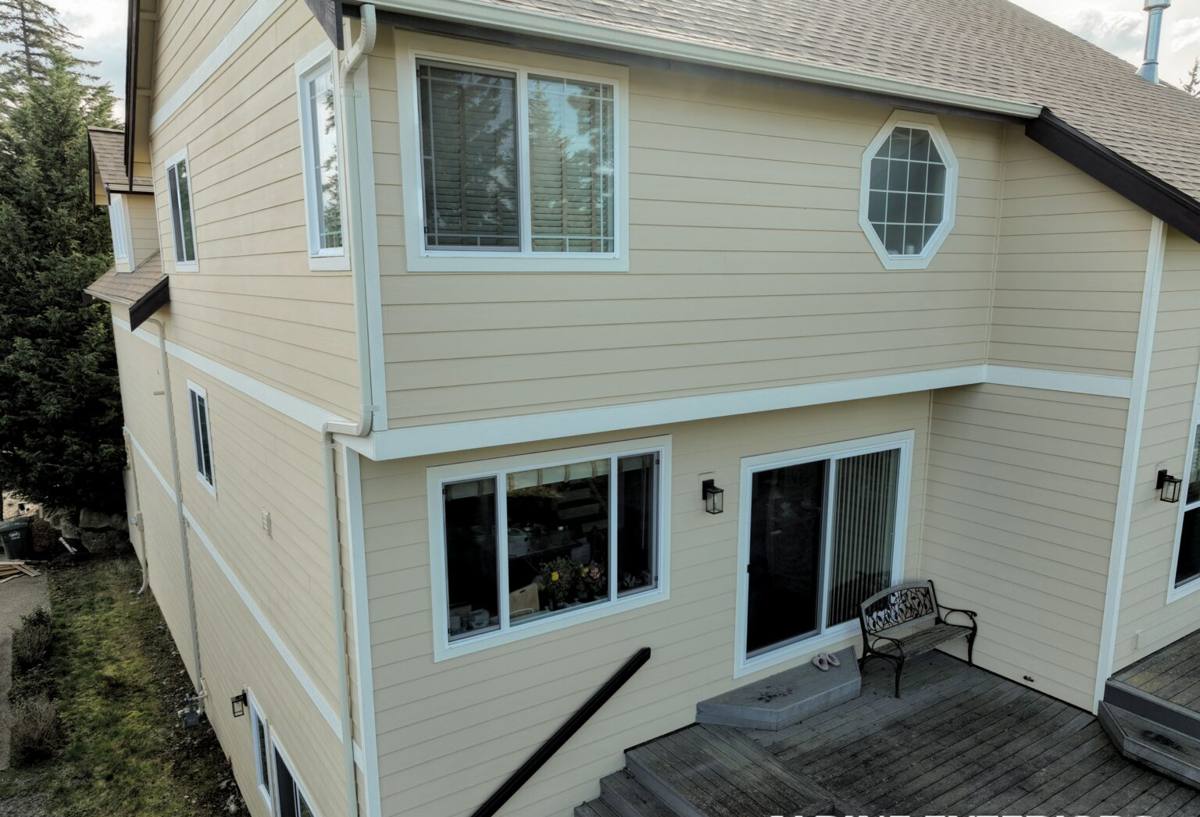
Semiahmoo sits out on a narrow spit between Semiahmoo Bay and Drayton Harbor, right at the edge of Blaine near the Canadian border. Water on more than one side and almost nothing to break the wind makes it one of the more exposed residential settings anywhere in Whatcom County, and a deck feels that exposure more than almost any other part of a house. It has no roof overhead, no wall behind it in most spots, and it sits directly in the path of whatever the weather off the water is doing that day.
That's why deck repair on Semiahmoo is its own specialty, not a smaller version of deck repair anywhere else. The same salt-laden air, wind-driven rain, and long moss season that wear down siding and roofing here work even faster on a horizontal wood or composite surface with fasteners and framing exposed underneath. This page covers what actually fails on a Semiahmoo deck, how to tell a cosmetic problem from a structural one, and what a repair done right for this specific climate involves.
What Salt Air, Rain, and Moss Actually Do to a Deck Here
Salt Air From Two Directions
Because Semiahmoo has water on more than one side, a deck out here takes salt-laden air from multiple directions instead of one prevailing exposure the way an inland property might. Salt speeds up corrosion in exposed metal — screws, joist hangers, post brackets, railing connectors — and a corroding fastener loses holding strength well before it looks obviously bad from the surface. On a structure people walk and stand on, and where kids or furniture put real point loads down, that's a safety issue as much as a cosmetic one.
Driving Rain and Open Wind
Storms coming off the water rarely fall straight down on the spit. Wind pushes rain sideways, driving it up under railings, into the ledger connection where the deck ties into the house, and between boards that were never gapped correctly to begin with. That sideways-driven moisture finds its way into places a calmer, more sheltered site would never see it reach, which is exactly why ledger flashing and framing connections fail here more often, and sooner, than they do a few miles inland.
A Moss Season That Runs Most of the Year
Mild temperatures and near-constant humidity give moss and algae a growing season across much of the year in this part of Whatcom County, and a horizontal deck surface holds water longer than a vertical wall does, which makes it an easy target. Shaded decks and north-facing surfaces are usually first to show it. Beyond the appearance issue, a moss-covered deck surface gets slick fast, and moss trapped in board gaps or fastener heads holds moisture against the wood or composite far longer than an open, well-drained surface would.
Common Deck Problems We Find on Semiahmoo Homes
Most of the repair calls we get on this stretch of coastline fall into a handful of recurring categories. None of these are unique to Semiahmoo, but the frequency and speed at which they show up here is higher than in more sheltered parts of the county.
Structural Issues
Soft or spongy joists, a ledger board pulling away from the house, posts that have started to lean or rock, and railing connections that have loosened enough to flex under a hand. These are the problems that matter most, because they affect whether the deck is safe to use, not just how it looks.
Surface and Cosmetic Issues
Graying or checking wood, moss and algae staining, cupped or warped boards, and fastener heads that have started to corrode and streak the surface around them. These are usually the first things a homeowner notices, even when they're not the most urgent problem on the deck.
Hardware and Connection Issues
Rusting joist hangers, corroded screws backing out of their holes, railing posts with loosening bolts, and stair stringers with connections that have started to work loose from repeated wet-dry cycling. Hardware failure is often the quiet cause behind a deck that "just feels a little off" underfoot.
Repair or Replace? How We Make That Call
Not every deck problem on Semiahmoo means a full rebuild, and not every deck that looks rough on the surface is actually in bad structural shape. The honest answer depends on where the damage is and how far it's spread, which is why we look at the framing and connections before quoting anything, not just the visible surface.
| What We Find | Usually Means | Typical Approach |
|---|---|---|
| A few soft or damaged boards, sound framing underneath | Isolated surface damage | Board-by-board repair or replacement |
| Corroded fasteners, but framing lumber still solid | Hardware failure ahead of structural failure | Full re-fastening with corrosion-resistant hardware |
| Soft or rotted joists, sound ledger and posts | Localized framing damage | Sistering or replacing affected framing members |
| Ledger board separation or water staining at the house wall | Moisture intrusion at the ledger connection | Ledger removal, flashing correction, and reattachment |
| Widespread rot, multiple failed posts, or a deck original to an older home | Framing has reached the end of its useful life | Full or substructure replacement |
As a general rule, a repair that only addresses what's visible on the surface without checking the framing underneath isn't a real repair — it's a patch that hides the problem until it resurfaces, usually at a worse point than where it started.
What a Correct Deck Repair Involves
A repair that actually holds up on Semiahmoo has to account for the same exposure that caused the damage in the first place, not just replace what failed with more of the same. A repair done right here typically includes:
- Removing and inspecting decking around any suspected damage rather than fastening a new board over a framing problem
- Stainless steel or other corrosion-resistant fasteners and hardware throughout the repair, not standard galvanized hardware that starts corroding again within a few seasons in this salt air
- Correcting ledger board flashing where the deck ties into the house if that connection shows any sign of water intrusion, since it's one of the most common failure points on an older deck out here
- Sistering or fully replacing any joist, beam, or post that's soft, cracked, or showing rot, rather than leaving a weakened member in place because it's "probably fine"
- Re-establishing correct board gapping for drainage and material movement if the original spacing was too tight or has closed up over time
- Checking and correcting grading or ventilation under the deck so moisture doesn't sit against the framing between storms
- Matching new material to existing decking as closely as the product allows, or advising honestly when a full resurface makes more sense than a visible patch
Skipping any of these still leaves a deck that looks repaired. The difference shows up a season or two later, when the same corrosion or moisture pattern reappears somewhere new.
Matching Materials When Repairing an Existing Deck
One of the more common questions on a repair job is what to do about matching the original decking material, since most products change slightly from one production run to the next and older lines get discontinued. How we handle that depends on what's already there.
Wood Decks
Pressure-treated lumber and cedar are the easiest to patch board-by-board, since new lumber is straightforward to source and finish to blend reasonably well. The tradeoff is that wood needs regular sealing or staining to hold up against Semiahmoo's moisture load, and a deck that's been neglected for a few seasons often has more soft framing underneath than the surface suggests.
Capped Composite
Capped composite is more durable against moisture and moss than wood, but exact color matches get harder once a product line is a few years old, since manufacturers update their formulations and color runs over time. We're upfront when a perfect match isn't realistic and lay out the honest options — a close match, an accent-board approach, or in some cases a full resurface if the existing boards are widely discolored or aging unevenly.
Cellular PVC
PVC decking holds its color and resists moisture absorption better than composite over the long run, which often means less color-matching trouble on a repair years down the line. It's also less forgiving to patch invisibly at a cut edge, so repairs tend to look cleanest when done at natural board boundaries rather than mid-span.
Our Deck Repair Process
We start with an on-site inspection that goes beyond the visible surface — checking framing, ledger connection, post condition, and hardware, not just the boards a homeowner can see from standing on the deck. From there we walk through exactly what we found, what's cosmetic versus structural, and what repair approach actually addresses it, before any pricing or scope gets put in writing.
Costs on deck repair vary widely depending on scope. An isolated board or hardware repair is a modest job; a ledger flashing correction or partial framing replacement runs higher; a deck with widespread rot or multiple failed structural members starts approaching what a partial or full rebuild would cost, at which point we'll say so plainly rather than stack small repairs on a substructure that's not worth saving. We'll always give you the honest comparison rather than default to the more expensive option.
Once the scope is agreed, the work follows the sequence that matters most for this climate: address framing and hardware issues first, correct any flashing or drainage problems at the source, then handle the visible decking surface. We finish with a walkthrough covering what the repaired areas — and the deck as a whole — actually need going forward given the materials involved.
Keeping a Repaired Deck Healthy in This Climate
A repair holds up longest when it's followed by some routine attention, especially on an exposed property like this. A few habits worth keeping up:
- Rinse the deck surface periodically to clear salt residue and organic buildup before it works into the wood grain or composite cap
- Keep gaps between boards clear of leaves, needles, and debris so water and airflow can move through as intended
- Check railing posts, hardware, and stair connections once a year, particularly heading into the wet season, for early corrosion or loosening
- Re-seal or re-stain wood decking on the schedule the product actually needs here, not the schedule a drier climate would allow
- Trim back overhanging branches or plants holding moisture against the deck or blocking sun and airflow across the surface
- Call about any soft framing, spongy decking, or standing water underneath right away — that's a structural issue, not a cosmetic one, and it doesn't improve on its own
Why It Matters That We Already Work Semiahmoo
A contractor who mostly repairs decks further inland can still do competent work, but a Semiahmoo repair has variables that don't come up as often elsewhere in Whatcom County — corrosion-grade fastener requirements from salt exposure on more than one side, wind-driven rain patterns that push moisture into places a sheltered lot never sees, and a moss season that runs longer here than it does even a few miles inland in Blaine proper. Working this stretch of coastline regularly means we're not guessing at those conditions on your repair. We've seen which fastener grades hold up, which ledger details fail first, and which cosmetic problems are actually hiding a structural one underneath.
That familiarity shows up in smaller judgment calls too — knowing which side of a deck stays wettest longest through the winter, or being straightforward with a homeowner about when a repair is the right call versus when it's just delaying a rebuild that's coming either way.
Get a Free, No-Pressure Estimate
If your Semiahmoo deck has soft boards, corroding hardware, moss buildup that keeps coming back, or a ledger connection you're not sure about, we're glad to take a look and give you a straightforward, honest read on what it actually needs. Reach out using the form below to schedule a free estimate — no pressure, no upsell script.