 Ferndale
 Semiahmoo Roofs Take a Different Kind of Beating
Semiahmoo sits out on the water, which means the roofs out there deal with a combination of stresses that inland Whatcom County homes mostly avoid. Wind comes off the water with fewer trees to break it up. Driving rain gets pushed sideways under normal flashing details instead of falling straight down. And the salt-laden air that keeps the views nice is slowly working on every exposed metal fastener, vent, and flashing edge on the roof. Add in a moss season that runs long and wet most of the year in this part of Washington, and you've got a roof that ages differently than one a few miles inland in Ferndale or Bellingham.
Storm damage repair out here isn't just about patching whatever blew off during the last windstorm. It's about recognizing that the storm usually didn't create a new problem — it exposed one that was already forming underneath moss, salt corrosion, or a flashing detail that was never quite right for this kind of exposure.
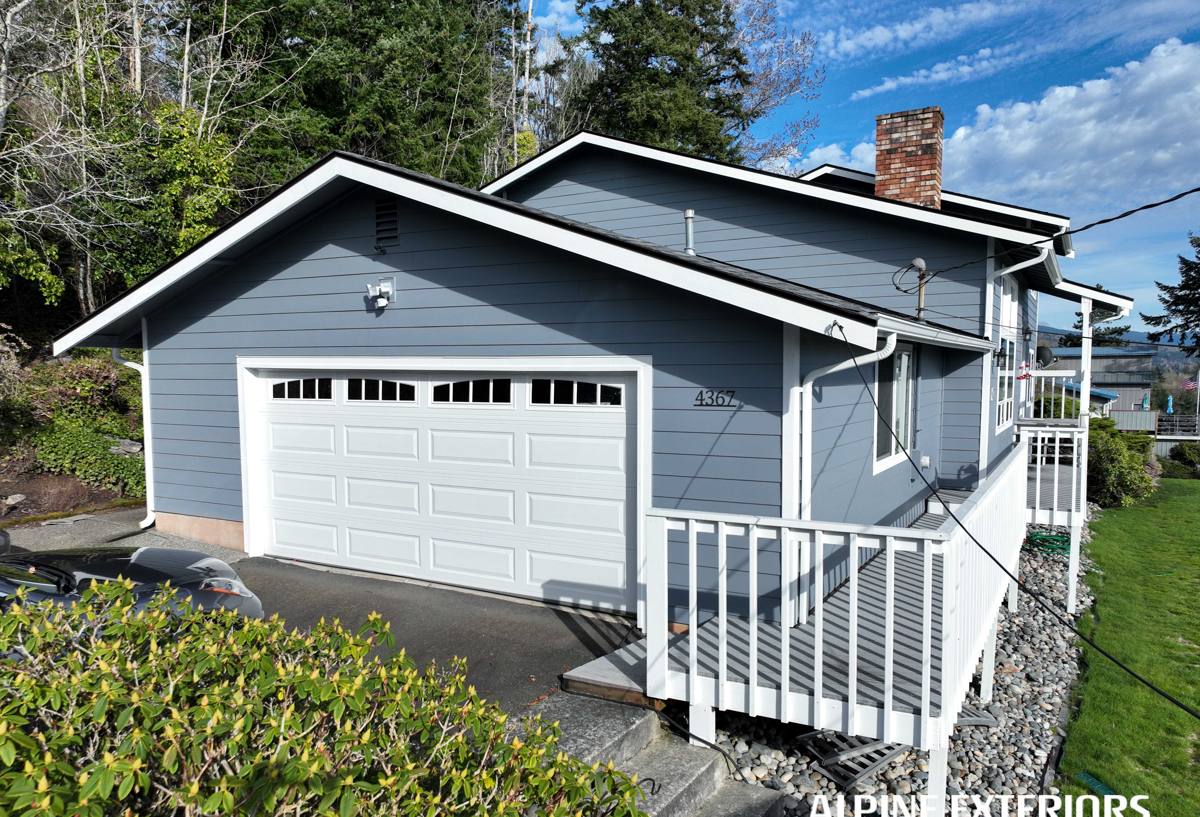
What Actually Counts as Storm Damage
Homeowners often think of storm damage as the dramatic stuff — a tree limb through the roof, a whole section of shingles peeled back overnight. That happens, but most of the storm damage we deal with in coastal Whatcom County is quieter and easier to miss:
- Shingles lifted at the tabs or edges by wind, then re-settled but no longer sealed
- Granule loss on composition shingles from wind-driven rain, leaving bare spots that wear faster
- Flashing around chimneys, skylights, and roof-to-wall joints worked loose by repeated wind uplift
- Fastener backout on metal roofing or trim, often accelerated by salt corrosion
- Debris impact damage — small branches, gravel from neighboring roofs, or anything wind-carried
- Ridge cap and hip damage, since these are the highest-exposure points on any roof
Individually, most of these look minor from the ground. Together, or left unaddressed through a second or third storm, they're how a roof develops an active leak.
The Damage Homeowners Usually Miss
Flashing and Valleys
Flashing is where the roof deck is interrupted — chimneys, skylights, valleys, wall intersections — and it's almost always the first thing to fail in a wind-driven rain event. A shingle can lift and re-seat itself without letting water in. A flashing seam that's been bent or separated by wind usually doesn't reseal on its own, and it won't show as a leak until the water finds a path down into the framing.
Moss and Trapped Moisture
Semiahmoo's moss season runs long because the air stays damp and shaded areas rarely dry out fully between rain events. Moss doesn't just look bad — it holds water against the shingle surface and lifts tabs as it grows under the edges. After a storm, moss-covered sections are exactly where wind gets the most leverage to peel shingles back, because the moss has already broken the seal.
Salt Air Corrosion on Metal
Anything metal on a Semiahmoo roof — flashing, fasteners, vent caps, gutter hardware — corrodes faster than the same materials would a few miles inland. Corroded fasteners lose their grip on the roof deck, and corroded flashing gets brittle and cracks instead of flexing with the wind. A storm often just finishes the job that salt air started months or years earlier.
What a Correct Storm Repair Actually Involves
A rushed storm repair is easy to spot a year later: mismatched shingles, exposed nail heads, sealant globbed over a flashing joint instead of the flashing being properly replaced. A correct repair starts with actually finding out how far the damage extends, not just patching what's visible from the ground or a quick look from a ladder.
That means checking the roof deck itself where damage is more than surface-level, matching shingle type, color, and exposure to what's already on the roof so the repair doesn't stand out or create a new weak seam, and replacing flashing rather than just resealing it when it's been bent, corroded, or separated. It also means checking the areas around the repair — the storm rarely damages just one isolated spot, and a repair that ignores the surrounding moss buildup or aging shingles is a repair that gets redone in a year or two.
Our Process From Call to Completed Repair
- Inspection. We look at the whole roof, not just the obvious damage, including flashing, valleys, and any moss-affected areas that may have contributed.
- Honest assessment. We tell you what's storm damage, what's pre-existing wear, and what can wait — not everything found during an inspection needs to be fixed today.
- Written scope and estimate. You know exactly what's being repaired, with what materials, before any work starts.
- Repair. Matching materials, proper flashing work, and attention to the surrounding roof so the repair holds up under the next storm, not just this one.
- Walkthrough. We show you what was done and flag anything worth keeping an eye on going forward.
Repair or Replace? What Actually Drives That Decision
Not every storm-damaged roof needs full replacement, and not every roof that "just needs a patch" is actually a good repair candidate. The honest answer depends on a few factors working together, not any single one.
| Factor | Points Toward Repair | Points Toward Replacement |
|---|---|---|
| Roof age | Under 12–15 years, otherwise in good condition | Nearing or past the end of expected shingle life |
| Extent of damage | Isolated to one section or a few areas | Widespread across multiple roof planes |
| Moss/algae condition | Minor, surface-level, treatable | Heavy, longstanding, with visible shingle degradation underneath |
| Decking condition | Solid, no rot or soft spots found | Soft decking or signs of long-term water intrusion |
| Material availability | Matching shingles still obtainable | Discontinued product, repair would be visibly mismatched |
We'll tell you honestly where your roof falls on this. A repair that's really just delaying an inevitable replacement isn't a good use of your money, but plenty of storm damage genuinely is repairable and doesn't need to turn into a bigger project.
Insurance and Storm Damage Claims
Many storm repairs on the water get filed as insurance claims, and it's worth understanding a few basics before that process starts. Insurers generally want documentation of the damage and its likely cause, tied to an actual storm event where possible. A written, itemized estimate that separates storm-caused damage from pre-existing wear helps that process go smoother — and it's also just the honest way to do it. We're glad to provide documentation and photos to support a claim, but we don't inflate scopes or claim unrelated wear as storm damage. That's not a service worth offering, and it tends to cause problems for homeowners down the road.
What To Do Right After a Storm
- Check for visible shingle debris in the yard or gutters — a sign of wind damage even if the roof looks fine from below
- Look inside at ceilings and attic spaces for new staining, even faint, especially after driving rain
- Note the date and general weather conditions of the storm for any future insurance documentation
- Avoid getting on the roof yourself, especially on a wet or moss-covered surface
- Get an inspection before the next storm, not after — small issues get worse fast with repeated wind and rain
- Don't rely on a quick visual check alone; flashing and valley damage often isn't visible from the ground
Why It Matters to Hire a Crew That Already Works Semiahmoo
A roof repair that works fine on a typical inland Whatcom County home can fail fast on a property that gets this much wind, salt exposure, and moss buildup. Flashing details that would be adequate elsewhere aren't always enough here. Fastener choices that hold up a few miles from the water can corrode faster right on it. A crew that's done storm repairs on this stretch of coastline already knows where the recurring problem spots are — which flashing details need extra attention, which roof orientations take the worst of the wind, and how aggressive the moss really gets between visits. That's not something you get from a general contractor doing a one-off job in the area; it comes from actually working these roofs season after season.
Get an Honest Look at Your Roof
If your Semiahmoo roof took a hit in a recent storm — or you're not sure whether what you're seeing is storm damage, moss-related wear, or just normal aging — we're happy to come take a look. We'll give you a straight assessment of what we find and what it would take to fix it right, no pressure either way. Use the form below to request a free estimate.