 Ferndale
 Siding Repair in Custer: A Different Set of Conditions
Custer sits in the coastal stretch of Whatcom County between Ferndale and the Canadian border, and homes out here take on weather that inland neighborhoods simply don't see as much of. Salt-laden air off the water, driving rain that comes in sideways during winter storms, and a moss season that can stretch from October through May all work on siding year after year. A repair job that ignores those conditions tends to fail again within a couple of seasons. One that accounts for them can add another decade or more of service life to siding that's otherwise sound.
This page is specifically about siding repair for Custer properties — not a full replacement, and not a generic "siding services" rundown. If your siding is fundamentally healthy but has damage, rot, or wear in specific spots, this is what that job should look like and why the details matter more here than they would somewhere drier and further from the water.
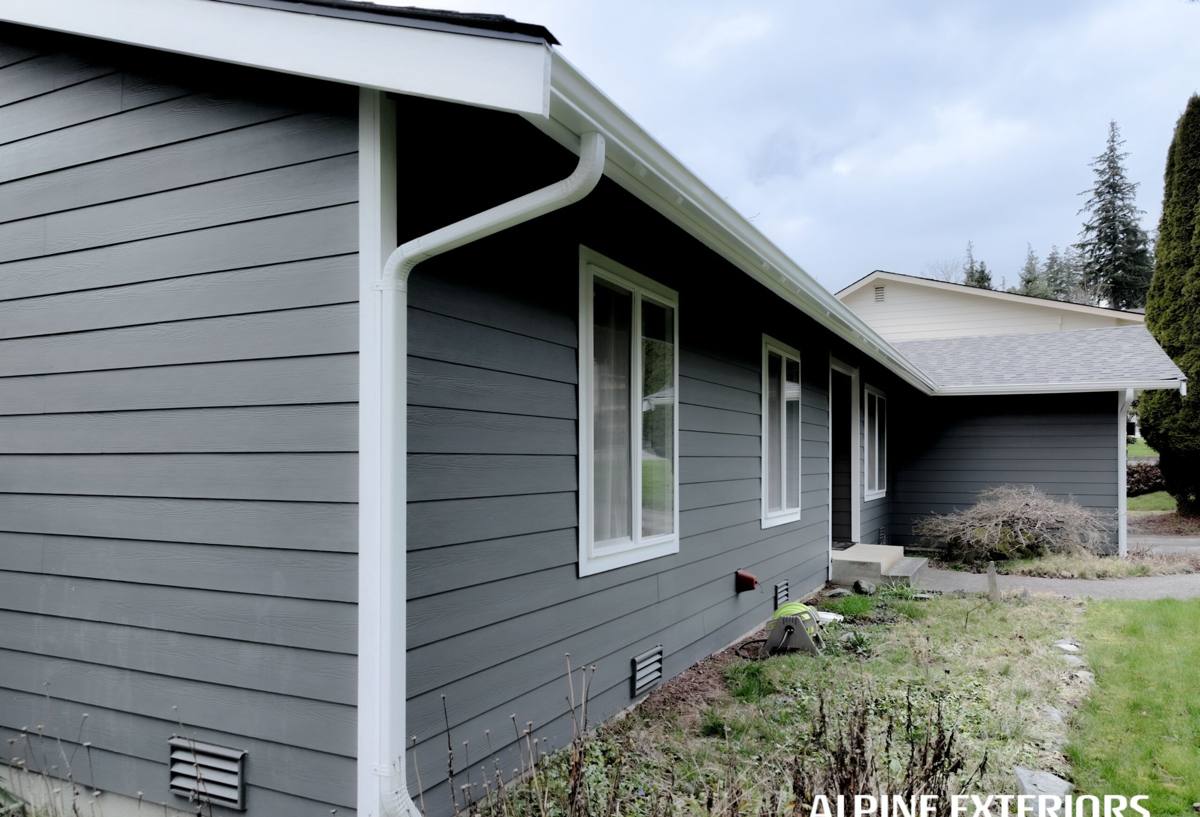
Signs Your Siding Needs Repair, Not Replacement
Most siding problems show up as isolated issues before they become whole-house problems. Catching them early is what keeps a repair a repair instead of turning into a replacement.
- Soft or spongy spots when you press on a board, especially near the bottom courses or under windows
- Visible cracking, splitting, or buckling in a handful of boards rather than across the whole elevation
- Gaps opening up at seams, corners, or trim where caulking has failed
- Persistent moss or algae staining concentrated in one shaded or north-facing section
- Paint or finish that's peeling or bubbling only in certain areas, often near downspouts or roof valleys
- Small areas of impact damage — a fallen branch, a ladder mishap, a lawn equipment strike
If damage is scattered across most of the house, or if the underlying sheathing and house wrap have been compromised over a wide area, replacement usually makes more sense than patch after patch. Part of our job on the first visit is telling you honestly which situation you're in.
Why Coastal Exposure and Moss Season Change the Repair Approach
Salt Air
Airborne salt accelerates corrosion on fasteners, flashing, and any exposed metal trim. A repair that reuses corroded nails or skips new corrosion-resistant fasteners is a repair that starts failing again almost immediately. We treat fastener selection as part of the repair, not an afterthought.
Driving Rain
Wind-driven rain doesn't just fall on siding, it gets pushed into laps, seams, and butt joints. If the original installation had marginal flashing or caulking, that's usually where repair needs show up first. Fixing the visible board without correcting the water path behind it just delays the next failure.
Long Moss Season
Moss and algae need moisture and shade to establish, and Custer's damp, overcast stretches give them plenty of both. Moss holds water against the siding surface far longer than open air would, which is exactly the condition that leads to soft boards and coating breakdown. A repair in a moss-prone area should include cleaning the surrounding surface and addressing whatever is keeping that spot wet — overhanging vegetation, poor drainage, lack of sun exposure — not just replacing the damaged board and leaving the same conditions in place.
What a Correct Siding Repair Actually Involves
A proper repair is more than swapping a damaged board for a new one. It's a short sequence of checks and steps, and skipping any of them is usually why a "fixed" spot fails again.
- Diagnose the cause, not just the symptom. Water stains, soft boards, and paint failure are usually downstream of something else — a flashing gap, a clogged gutter, a grading issue pushing splashback onto the wall.
- Open it up and check what's behind the siding. House wrap, sheathing, and framing need to be inspected wherever there's been sustained moisture intrusion. Replacing siding over compromised sheathing just hides a bigger problem.
- Address the water path. Re-flash, re-caulk, or correct drainage as needed before any new siding goes back on.
- Match the replacement material correctly. Profile, reveal, and finish need to match the surrounding siding closely enough that the repair doesn't stand out and doesn't create a new failure point at the seam.
- Fasten and seal to spec. Corrosion-resistant fasteners, correct nailing pattern, and manufacturer-approved sealants — especially important given the salt exposure here.
- Finish and blend. Paint or factory-finish matching so the repaired section reads as part of the house, not a patch.
Repair vs. Replace: How We Make the Call
Every house is different, but these are the general factors that push a decision one way or the other.
| Factor | Leans Toward Repair | Leans Toward Replacement |
|---|---|---|
| Extent of damage | Isolated boards or sections | Widespread across multiple elevations |
| Underlying sheathing | Dry, sound when opened up | Rot or moisture damage found behind siding |
| Age of existing siding | Recently installed or well-maintained | Near or past expected service life |
| Material match | Current siding still available or closely matchable | Discontinued profile, poor match possible |
| Root cause | Localized (impact, one bad flashing detail) | Systemic (original install issues, wrong product for the site) |
We'll walk you through where your house falls on this before recommending anything — there's no upside for us in replacing siding that a repair would genuinely fix.
Our Siding Repair Process for Custer Homes
The process is the same one we use across our service area, but the details we pay closest attention to shift based on what a coastal, moss-heavy site like Custer actually needs.
1. On-Site Assessment
We walk the exterior, check every reported problem area, and look for damage that hasn't been noticed yet — particularly in shaded, low-airflow spots where moss and moisture tend to concentrate.
2. Honest Scope and Estimate
You get a clear explanation of what's damaged, what's causing it, and what fixing it correctly involves — including whether it's a repair job or something that would be better served by replacement.
3. The Repair Itself
Damaged material comes off, the structure underneath gets inspected and corrected if needed, water management details get fixed, and new material goes on fastened and sealed to spec.
4. Finish and Cleanup
Repaired sections are finished to match, debris is cleared, and we walk the job with you before calling it done.
Why We Repair With James Hardie Fiber Cement — and Only Hardie
We install and repair James Hardie fiber cement siding exclusively. We don't install LP SmartSide, vinyl, Cemplank, Allura, primed spruce, or cedar, and that standard applies to repair work too. When we patch or extend siding, we want the material going in to hold up the same way the surrounding siding does — non-combustible, engineered for wet Pacific Northwest climates in Hardie's HZ5 product line, and finished with a factory ColorPlus coating that resists the fading and peeling that field-applied paint struggles with in salty, damp air.
That consistency matters more in a repair than in new construction. A patch made from a mismatched or lower-grade material becomes the weak point in the wall — it moves differently, absorbs moisture differently, and ages differently than what's around it. Keeping repairs on the Hardie system, with Hardie-compatible fasteners and trim, means the fixed section performs the way the rest of your siding does instead of becoming next year's problem area.
Why a Crew That Already Works Custer Matters
Siding repair done wrong is expensive twice — once for the labor, and again when it fails and has to be redone. A crew that regularly works this stretch of Whatcom County has already seen how driving rain finds gaps in local homes' flashing details, where moss tends to establish on shaded north walls, and how fast corroded fasteners show up on houses close to the water. That's not something you can fully substitute with general siding experience from a drier or more sheltered area.
It also means faster, more accurate diagnosis. Instead of guessing at what's causing a soft spot or a stain, a crew familiar with local conditions can usually narrow the cause down quickly and confirm it once the siding is opened up — which keeps the job efficient and keeps your cost from ballooning on unnecessary exploratory work.
Before You Hire: A Quick Checklist
- Do they inspect what's behind the siding, or just replace the visible board?
- Do they explain the likely cause of the damage, not just the fix?
- Do they use corrosion-resistant fasteners appropriate for coastal exposure?
- Will the repair material and finish actually match your existing siding?
- Are they willing to tell you honestly if repair isn't the right call and replacement is?
- Do they carry manufacturer backing for the materials they're installing?
Siding repair in Custer isn't complicated, but it does need to account for the salt air, wind-driven rain, and long moss season that define this part of Whatcom County. Done right, a repair extends the life of siding that's otherwise sound. Done wrong, it just delays a bigger fix. If you've got soft spots, stained boards, or damage you're not sure about, we're glad to take a look and give you a straight answer — reach out below for a free, no-pressure estimate.