 Ferndale
 Why Siding Repair Looks Different in Sumas
Sumas sits at the northern edge of Whatcom County, close enough to the Nooksack River valley and the Canadian border that its weather has its own personality even within a county known for wet winters. The same Pacific Northwest weather pattern that brings driving rain and salt-tinged marine air off the coast doesn't stop at the shoreline — it moves inland through the river valleys, bringing long stretches of damp, gray weather and a moss season that can run most of the year on shaded siding. Add in colder overnight temperatures and sharper freeze-thaw swings than you'll find closer to the water, and you get a climate that's just as hard on exterior siding as anywhere else in the county, just in a slightly different way.
That matters when something goes wrong with a home's siding. A repair that only addresses what's visible on the surface — a cracked board, a stain, a gap in the caulk — without accounting for how moisture and temperature actually move through this climate tends to fail again within a season or two. A repair done right the first time accounts for where water actually goes once it gets past the surface, not just what it looks like from the driveway.
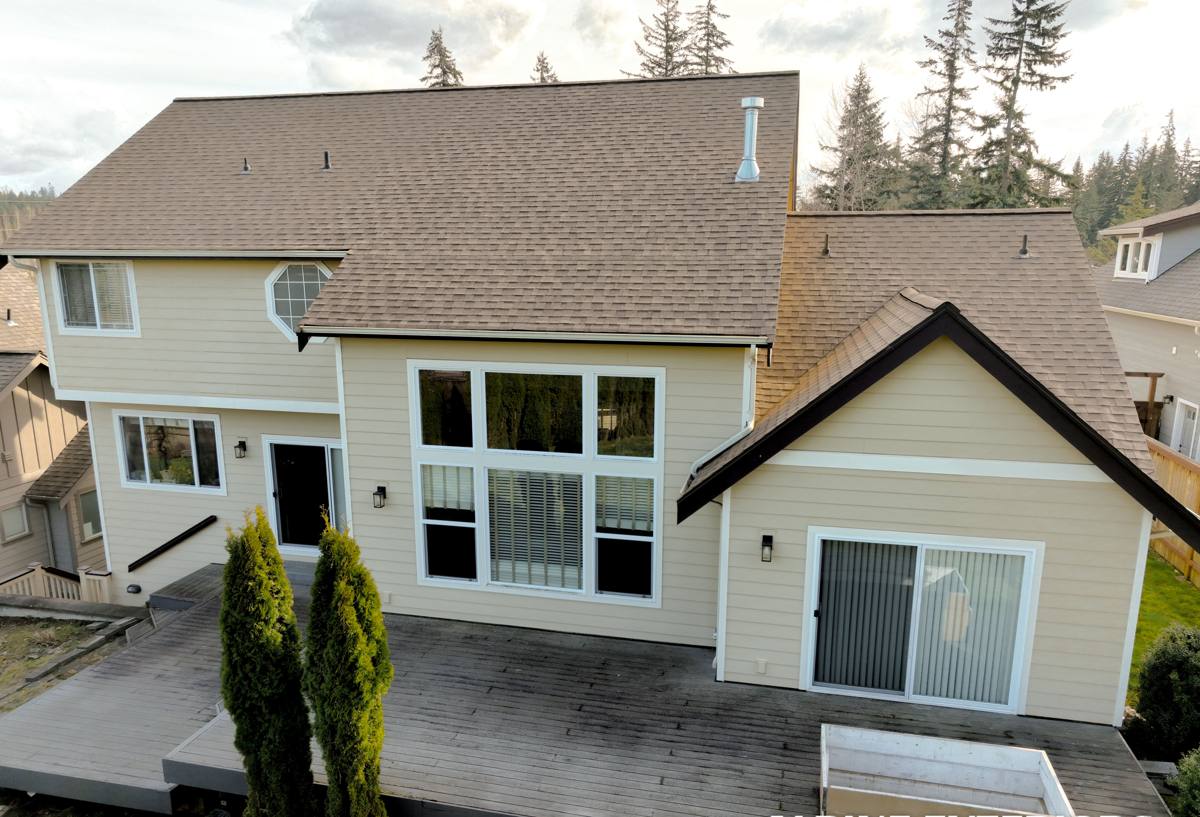
What Whatcom County's Climate Does to Siding Over Time
Moisture That Finds Its Way Behind the Boards
Most siding repairs aren't really about the siding — they're about water that got behind it. Driving rain during fall and winter storms pushes moisture into any gap it can find: a failed caulk joint, a nail that's backed out, a corner where two pieces of trim no longer meet tightly. Once water is behind the siding, it can sit against the sheathing and framing for months at a time in a climate that doesn't get many dry stretches to let things fully dry out. By the time a stain or soft spot shows up on the outside, there's often more damage behind the wall than is visible from the surface.
Moss, Algae, and a Season That Never Really Ends
On shaded walls and north-facing elevations, moss and algae growth can start early in fall and hang on well into summer. Beyond the cosmetic staining, moss holds moisture directly against the siding surface far longer than open air would, which accelerates any existing damage and makes it harder to spot early warning signs like cracking or delamination underneath the growth.
Freeze-Thaw Cycling Near the Border
Sumas tends to see colder nights and sharper temperature swings than areas right on the water. Water that has worked its way into a crack or seam expands when it freezes and pries the damage wider each time it thaws and refreezes. Over a few winters, a hairline crack that started as a cosmetic issue can turn into a real entry point for water.
Common Siding Repair Issues We See Around Sumas Homes
Most of the repair calls we get in this part of Whatcom County fall into a handful of categories: rot at the butt joints where two boards meet end to end, damage around window and door trim where flashing wasn't done correctly the first time, fastener heads that have backed out or rusted and let a board pull loose, and caulk joints that have shrunk, cracked, or come away from the wall entirely after a few years of sun and rain cycling. We also see damage from pests — carpenter ants and other moisture-loving insects that move into siding and trim once it has stayed wet long enough to soften.
A lot of these issues start small and stay hidden for a while, which is part of why a proper inspection matters more than a quick visual check from the driveway. What looks like a single cracked board is sometimes the visible edge of a bigger moisture problem that has been developing behind the wall for a season or two.
What a Correct Repair Actually Involves
Diagnosing the Real Cause, Not Just the Symptom
A repair that's done right starts with figuring out how water got in, not just where it shows up. That means checking flashing at windows, doors, and any place where a deck, porch roof, or utility penetration meets the siding — these transition points fail more often than open wall sections do. It also means opening up the affected area enough to see whether the sheathing or house wrap behind the siding has been compromised, rather than just swapping the visible board and closing things back up.
Matching Material and Finish Properly
Repairs also need to match the existing siding in profile, exposure, and finish — not just in a general sense, but closely enough that the patch doesn't stand out or create a new water path at the seam. This is one reason we standardized on a single product line rather than working across several brands: it's much easier to get a clean, lasting match on a home when the repair crew knows exactly how that specific product is engineered, fastened, and finished.
| Repair Approach | What It Involves | Typical Lifespan of the Fix | Best Used When |
|---|---|---|---|
| Caulk and seal touch-up | Re-sealing joints, trim, and penetrations without removing siding | A few years before it should be rechecked | Sealant has failed but the boards and structure underneath are still sound |
| Board or panel replacement | Removing and replacing individual damaged boards, matched to the existing profile and finish | As long as the surrounding siding, if installed correctly | Damage is isolated to a few boards from impact, rot, or age |
| Section or elevation repair | Replacing siding, trim, and house wrap across a wall or corner where water has tracked behind multiple boards | As long as the rest of the installation | Moisture has spread behind the surface, not just showing at one spot |
Repair or Replace: How to Read the Signs
Signs a Repair Will Hold
- Damage is limited to one or two boards, or a single section of trim
- The sheathing behind the affected area is still solid once opened up
- The rest of the siding is in good shape structurally, even if it needs cleaning
- The cause — a failed seal, a damaged board, a flashing gap — is clear and fixable
Signs It's Time to Talk Replacement Instead
- Soft or rotted sheathing shows up in more than one spot once we open the wall
- The same area has already been patched once or twice in the past few years
- Damage is spread across multiple walls rather than one exposed elevation
- The siding is original to an older home and is nearing the end of its practical service life
We'll always tell you honestly which category a repair falls into. A patch that's likely to fail again in a year or two isn't a favor to a homeowner, even if it looks like the cheaper option up front.
Why We Repair — and Install — Only James Hardie Fiber Cement
We made a decision early on to work with one siding system rather than offer repairs and installs across vinyl, LP SmartSide, cedar, and fiber cement alike. Each of those products has real strengths, but each also comes with trade-offs that show up specifically in a climate like this one: vinyl can warp and crack with temperature swings and won't hold paint if you ever want to change its color; cedar needs ongoing maintenance to resist the rot and moss growth that Whatcom County's damp climate practically guarantees; engineered wood products like LP SmartSide perform well when installed and maintained correctly, but they're more sensitive to sustained moisture exposure at cut edges and seams than fiber cement is.
James Hardie fiber cement is non-combustible, holds its factory-applied ColorPlus finish far longer than field-applied paint, and is engineered specifically for wet climates like ours through its HZ5 product line. Just as important for repair work: because we install it exclusively, our crews know its fastening patterns, clearances, and finish system in detail, which means a repaired section blends in and performs the same as the surrounding siding — not just on the day we finish, but years down the road.
Our Siding Repair Process in Sumas
- An on-site inspection where we look at the visible damage and check surrounding areas — flashing, trim, corners, and penetrations — for related issues
- An honest assessment of whether a repair will hold long-term or whether the underlying damage points toward replacement
- A clear, written estimate before any work starts, with the scope of the repair spelled out
- The repair itself: removing compromised material, addressing the moisture source, and installing matched James Hardie siding and trim
- A final walk-through so you understand exactly what was done and why
We don't upsell repairs into replacements that aren't needed, and we don't quietly patch over a moisture problem that's going to resurface. You get a straight read on the condition of your siding either way.
Why Hire a Crew That Already Works in Sumas
A repair crew that already works this part of Whatcom County has seen how this specific climate — the rain patterns, the moss, the colder nights near the border — actually plays out on real homes over years, not just what a product spec sheet says it should do. That experience shows up in small but important ways: knowing which elevations tend to hold moisture longest, which trim details tend to fail first in this weather, and how to sequence a repair so it isn't undone by the next storm system moving through the valley. It also means a faster response and follow-up if something needs a second look after the repair is complete.
Get a Straight Answer on Your Sumas Siding
If you're seeing cracked boards, persistent moss staining, or a soft spot on your siding, it's worth getting an honest look before the damage spreads further behind the wall. We offer free, no-pressure estimates for siding repair in Sumas and throughout the Ferndale area — use the form below to get a straight answer on what your home actually needs.