 Ferndale
 Storm Damage Roof Repair for Bellingham Homes
Bellingham sits close enough to the water that homes here deal with a specific combination of weather stress: salt-laden air off Bellingham Bay, wind-driven rain that comes in sideways off the Strait, and a moss season that runs most of the year in the shaded, tree-heavy neighborhoods common around town. When a windstorm or heavy rain event damages a roof here, the repair has to account for all three, not just patch the obvious hole. We work on roofs throughout Whatcom County, and Bellingham's mix of older homes, wooded lots, and coastal exposure is a big part of that work.
This page covers what storm damage actually looks like on a Bellingham roof, what a correct repair involves, and how we handle the job from first call to final walkthrough.
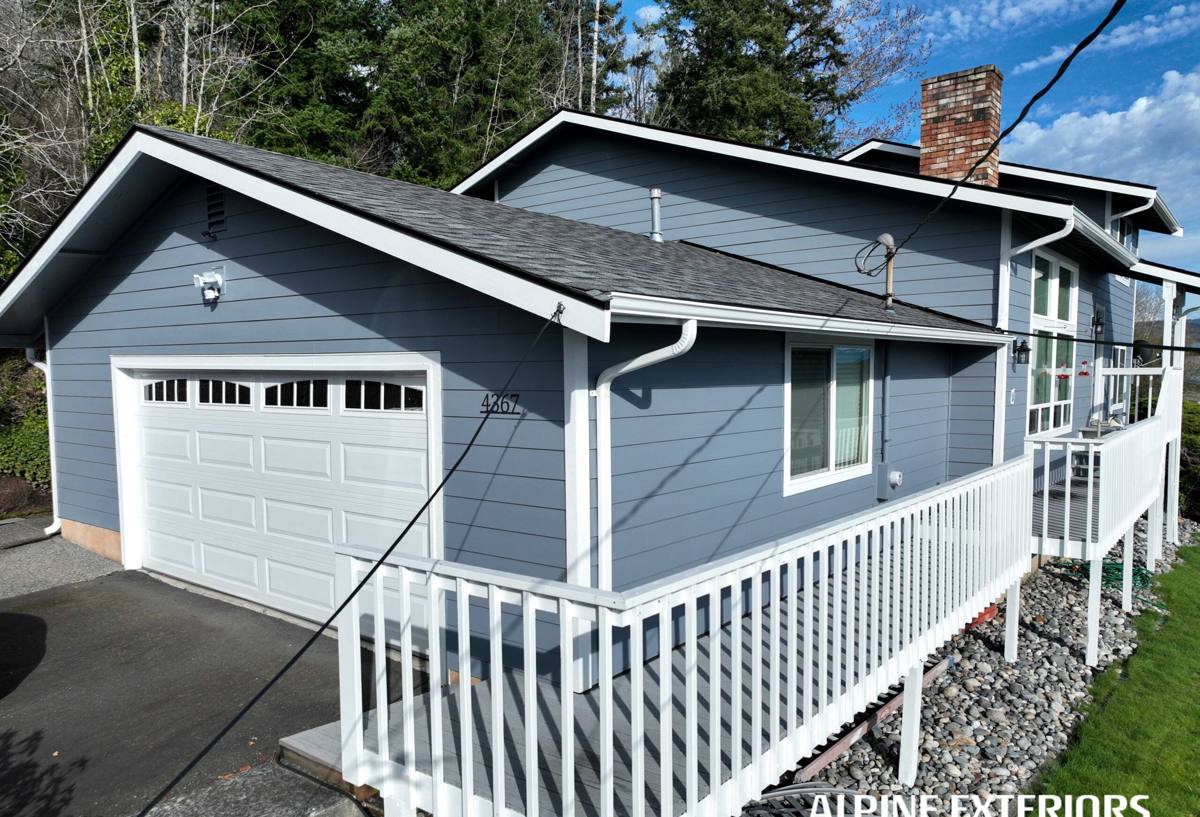
Why Storm Damage Here Isn't Generic
Salt Air Accelerates Metal Corrosion
Homes within a few miles of Bellingham Bay see faster corrosion on exposed fasteners, flashing, and metal roof panels than homes further inland. A storm that lifts a few shingles or dents a ridge cap doesn't just create an open spot for water — it also exposes bare metal edges that start corroding faster than they would in a drier, inland climate. Repairs need corrosion-resistant fasteners and flashing from the start, not standard hardware that looks fine on installation day and fails in three years.
Driving Rain Finds Sideways Entry Points
Whatcom County storms frequently bring wind-driven rain rather than straight-down rain. That matters because water gets pushed sideways and upward under shingle edges, around vents, and along step flashing that would otherwise stay dry in calmer weather. A repair that only addresses the visible damage but ignores the surrounding flashing and underlayment often leaks again in the next windstorm, even though the original "hole" is fixed.
Moss and Debris Load Change How Damage Shows Up
Bellingham's tree cover means moss growth and needle/leaf debris build up on roofs faster here than in more open, sunnier areas. Moss holds moisture against shingles and can mask storm damage — a lifted shingle edge or cracked tab is easy to miss under a mat of moss until it's already let water in. Storm inspections here need to include moss and debris clearing as part of the process, not as an afterthought.
What Counts as Storm Damage
Not all storm damage is dramatic. Some of it is easy to spot; some of it only shows up as a slow leak weeks later. Common categories we see after Whatcom County wind and rain events:
- Wind-lifted or torn-off shingles, especially along ridges, edges, and roof planes facing prevailing wind
- Cracked, bent, or dislodged flashing around chimneys, vents, skylights, and roof-to-wall transitions
- Impact damage from falling branches or debris — punctures, bruised shingles, cracked sheathing
- Displaced or clogged gutters that overflow and push water back under the roof edge
- Granule loss on asphalt shingles from wind-driven rain and hail, which shortens shingle life even without a visible hole
- Soft spots or staining on interior ceilings that trace back to a small, hard-to-see roof opening
What a Correct Repair Involves
Inspection Before Patching
We start by inspecting the full roof plane around the damaged area, not just the spot that's obviously broken. Wind damage rarely stays contained to one shingle — surrounding shingles are often loosened or cracked even if they haven't moved yet. We also check attic sheathing and insulation for moisture, since a leak can travel along the underside of the roof deck before it shows up as a ceiling stain.
Matching Materials, Not Just Covering the Hole
A patch that doesn't match the surrounding roofing in material, color, and manufacturer creates a visible seam and, worse, can create a weak transition point where water intrudes. Where an exact match isn't available — common on older roofs — we'll tell you honestly and discuss whether a larger section replacement makes more sense than a mismatched patch.
Flashing and Underlayment Get Checked, Not Assumed
Given how often driving rain exploits flashing rather than open shingle damage, we check step flashing, valley flashing, and vent boots as part of any storm repair in this area, even if they weren't the obvious point of damage. Underlayment that's been wet or compromised gets replaced, not left in place under new shingles.
Corrosion-Resistant Hardware Near the Water
For homes closer to the bay, we use fasteners and flashing rated for coastal exposure. It costs a little more up front than standard hardware but avoids repeat repairs from corrosion a few years down the line.
Our Process for a Bellingham Storm Repair
- Initial call and scheduling — we ask what you noticed (visible damage, a leak, a sound during the storm) and get a repair scheduled, prioritizing active leaks.
- On-site inspection — we walk the roof and check the attic where accessible, looking beyond the obvious damage point.
- Written scope and estimate — you get a clear explanation of what's damaged, what needs replacing versus patching, and an honest cost range before any work starts.
- Repair — matched materials where possible, corrosion-resistant hardware, and a check of surrounding flashing and underlayment.
- Debris and moss clearing — since moss and organic debris are part of what caused or masked the damage, we clear the work area as part of the job.
- Final walkthrough — we show you what was done and flag anything else on the roof worth watching, even if it wasn't part of this repair.
Cost Factors for Storm Roof Repair
Every roof and every storm event is different, so we won't quote a number without seeing the damage. But the main factors that move the price up or down are consistent:
| Factor | Why It Matters |
|---|---|
| Extent of damage | A single lifted shingle costs far less to fix than a section with multiple damaged courses and exposed sheathing |
| Roofing material | Asphalt shingle repairs are typically the most straightforward; metal or specialty materials take more time and matching effort |
| Flashing involvement | Repairs that require reworking chimney, valley, or vent flashing take longer than a shingle-only patch |
| Roof access and pitch | Steep or hard-to-access roof planes require more setup time and safety equipment |
| Water intrusion depth | If water reached the sheathing or insulation, that material needs replacement, not just the roofing surface |
| Moss and debris buildup | Heavier buildup adds cleanup time before the actual repair can even be assessed accurately |
What to Check After a Storm Passes
Homeowners in Bellingham can catch a lot of storm damage early with a quick, safe visual check. From the ground, not on the roof:
- Look for shingles in the yard, gutters, or driveway after high wind
- Check gutters for granules (a sign of shingle wear) or for sagging/pulled-away sections
- Look up at roof edges and ridges for anything that looks lifted, curled, or missing
- Check ceilings and upper closets for new water stains or a musty smell
- Note any branches that fell near or on the roof, even if no damage is visible from the ground
- If you have safe attic access, look for daylight through the roof deck or damp insulation
If anything looks off, it's worth getting an inspection soon rather than waiting for the next storm to make it worse — small leaks in this climate don't stay small for long.
Why Local Experience with Bellingham Roofs Matters
A crew that only occasionally works this area might treat a storm repair as a standard patch job. A crew that regularly works Whatcom County roofs knows to check for salt-air corrosion on a bayside home, to expect moss masking damage on a shaded lot, and to assume wind-driven rain has probably tested every flashing point near the damage, not just the spot that failed. That difference shows up in whether the repair holds through the next storm season or needs a second visit in a year.
We're based in Ferndale and work throughout Whatcom County, including Bellingham, so we're not learning the local climate patterns on your roof — we already account for them before we start.
Get a Free, No-Pressure Estimate
If your roof took damage in a recent storm, or you just want a second set of eyes on something you noticed, we're happy to take a look. There's no cost and no pressure to move forward — just a straight assessment of what's actually going on and what it would take to fix it right. The form below gets you started.