 Ferndale
 Siding Repair in Sudden Valley: A Different Job Than It Looks Like
Homeowners in Sudden Valley usually call us about one thing they can see — a cracked panel, a stain spreading under a window, a section that's gone soft when they press on it. What they don't always realize is that the visible damage is rarely the whole story. In Whatcom County's marine climate, siding damage almost always starts behind the surface, months or years before it shows up on the outside. Salt-laced air moving in off the water, driving rain for a good stretch of the year, and shaded, tree-covered lots that stay damp long after a storm has passed — all of it works on a home's siding continuously, not just during the wet months.
That's why a repair job done right in this area looks different from a quick patch job. It means understanding not just what failed, but why it failed here, in this climate, on this type of home — and fixing the cause, not just the symptom.
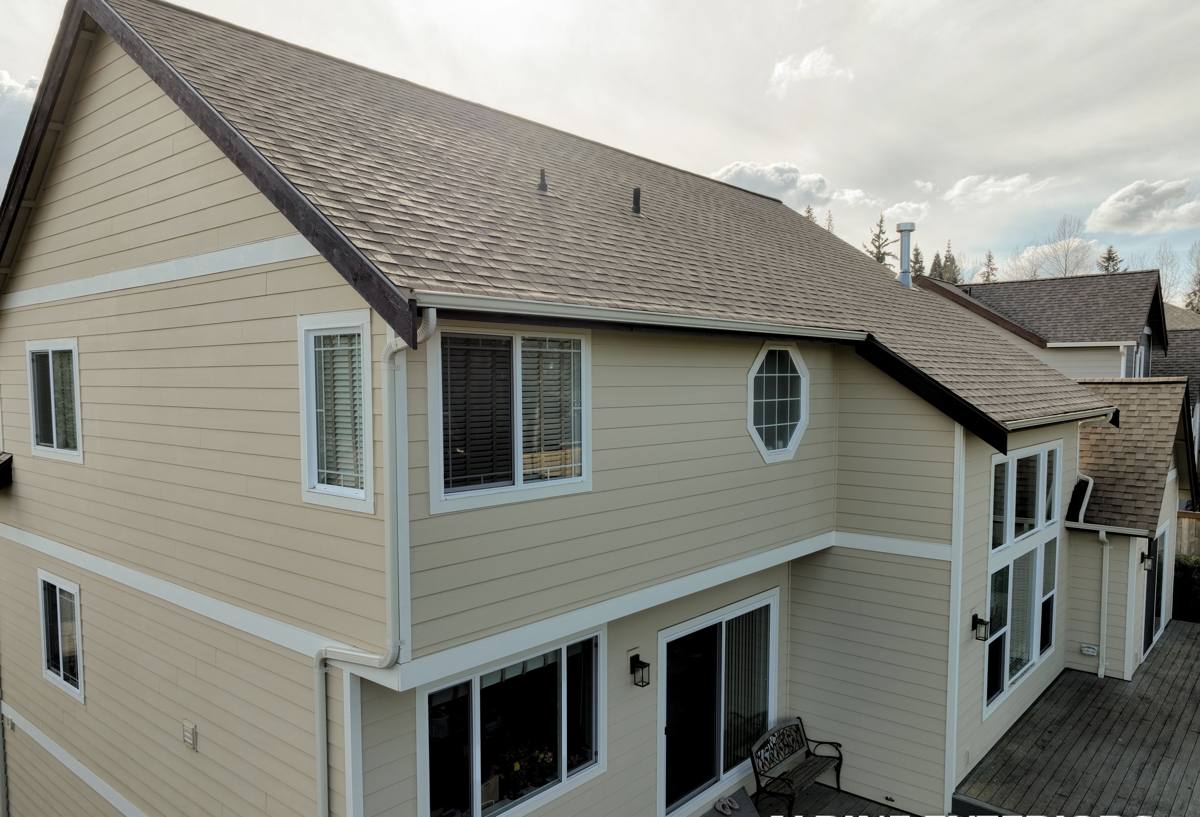
What Sudden Valley's Climate Does to Siding Over Time
A few conditions come up again and again on repair calls in this part of Whatcom County:
Moss and algae growth
Long, mild, wet winters with limited direct sun on many lots create ideal conditions for moss and algae to take hold on siding, trim, and especially north-facing walls or areas shaded by mature trees. Beyond the cosmetic issue, moss holds moisture directly against the siding surface for extended periods, which accelerates rot in wood-based products and can degrade caulking and paint film over time.
Driving rain and wind-driven moisture
Storms coming off the water don't just fall straight down — wind pushes rain sideways into seams, laps, and any gap where flashing or caulking has started to fail. Over years, this is how water finds its way behind siding that looks fine from the street.
Salt air and coastal exposure
Even a few miles inland, salt-laden air corrodes exposed fasteners, degrades caulk faster than it would in a dry climate, and accelerates the breakdown of anything not built to handle it. Homes closer to the water see this most, but it's a factor countywide.
Freeze-thaw cycling
It doesn't get brutally cold in this part of Washington, but it doesn't need to. Repeated freeze-thaw cycles in already-moist material — wood trim, damaged panel edges, compromised caulk joints — is enough to widen small cracks into serious ones season after season.
Common Repair Calls We See in This Area
- Soft or spongy siding near the bottom courses, often from long-term splash-back or gutter overflow
- Cracked or buckled panels where caulking failed and moisture got behind the material
- Persistent moss or black streaking that keeps coming back after cleaning
- Rot or staining at butt joints, corners, and window/door trim
- Nail pops and fastener corrosion, especially on older installations
- Gaps or separation at flashing details above windows and where siding meets the roofline
- Paint or finish failure that exposes the substrate underneath to the elements
Any one of these can look minor from the driveway. Whether it actually is minor depends entirely on what's happening behind the panel — which is why inspection matters more than the visible symptom.
What a Correct Repair Actually Involves
A repair that only addresses the surface is a repair that fails again within a season or two. Done correctly, siding repair in a climate like this includes:
Removing more than just the damaged piece
We pull back siding well beyond the visibly damaged area to check the condition of the water-resistive barrier (house wrap), sheathing, and framing underneath. If moisture has already reached the sheathing, patching the siding alone leaves the real problem in place.
Checking flashing and drainage details
A huge share of siding failures in this region trace back to flashing that was missing, undersized, or improperly lapped — at windows, doors, decks, and roof-to-wall transitions. Repairing the siding without correcting the flashing underneath it just resets the clock on the same failure.
Matching material correctly
Patched-in siding that doesn't match the existing panel's profile, thickness, or factory finish stands out immediately and can create its own water-shedding problems at the seams. Matching matters both for appearance and function.
Addressing the moisture source, not just the damage
Sometimes the real fix isn't more caulk — it's redirecting a downspout, correcting grading, trimming back vegetation that's kept a wall shaded and damp, or improving ventilation behind the cladding. We flag these when we see them, because a repair without addressing the cause is a short-term fix.
Repair or Replace? How We Help You Decide
Not every siding problem in Sudden Valley calls for a full replacement, and not every problem is fixable with a patch. The right call usually comes down to a few factors:
| Factor | Favors Repair | Favors Replacement |
|---|---|---|
| Extent of damage | Isolated to one wall or a few panels | Recurring across multiple elevations |
| Underlying moisture | Sheathing and framing test dry | Rot or moisture found in sheathing/framing |
| Material condition | Remaining siding is sound, finish intact | Widespread cracking, warping, or finish failure |
| Age of existing siding | Well within expected service life | At or past the end of its practical life |
| Material match available | Existing profile/color can be matched | Discontinued profile or badly faded existing siding |
We'll always tell you honestly which side of that table your home falls on. If a repair will genuinely hold up, we recommend the repair — a full re-side isn't the answer to every problem, and we're not going to sell you one.
Our Process for Sudden Valley Repair Calls
- On-site inspection. We look at the full exterior, not just the spot you called about — related problems often show up nearby once we're looking closely.
- Diagnosis. We identify whether the damage is surface-level or whether moisture has reached the structure behind it, and explain what we find in plain terms.
- Written scope and estimate. You get a clear explanation of what needs to happen, why, and what it costs — no vague line items.
- The repair itself. This includes correcting the underlying cause (flashing, drainage, ventilation) wherever one is found, not just swapping panels.
- Finish and cleanup. Matched material, proper caulking and fastening, and a site left clean when we're done.
Why Material Choice Still Matters, Even for a Repair
We install and repair James Hardie fiber cement siding exclusively — we don't work with vinyl, LP SmartSide, primed wood, cedar, or other fiber cement brands. That standard applies to repairs, too, because the material we patch into an existing wall has to hold up to the same conditions as everything around it.
Fiber cement handles this region's combination of constant moisture, moss exposure, and salt air better than wood-based or vinyl alternatives over the long run — it doesn't rot, it doesn't support moss growth in the material itself the way wood substrates can, and James Hardie's factory-applied ColorPlus finish holds its color and seal far longer than field-applied paint on a patched repair. When we're matching into existing Hardie siding, that's a straightforward job. When a home has different siding entirely, we'll be honest with you about what a durable, well-matched repair looks like versus when it makes more sense to plan for a future re-side in a single, longer-lasting material.
What to Look For When Hiring a Siding Repair Contractor Here
Siding repair work is easy to do poorly and have it look fine for a year or two before failing again. A few things worth checking before you hire anyone in this area:
- Do they inspect behind the damaged siding, or only quote based on what's visible?
- Do they check and correct flashing, or just replace panels and re-caulk?
- Can they explain, in plain language, what caused the damage in the first place?
- Are they licensed and insured for exterior work in Washington?
- Do they have direct, ongoing experience with homes in this specific climate — coastal Whatcom County moisture, moss, and salt exposure — rather than general contracting experience only?
- Will they give you a written scope before starting, not just a verbal price?
After the Repair: Keeping It From Happening Again
A good repair buys you years, but a few habits extend that further in this climate:
Stay ahead of moss
Soft-washing siding periodically, rather than letting moss establish and spread, prevents the moisture-holding buildup that leads to the next round of damage.
Keep gutters and downspouts clear
Overflow at the roofline is one of the most common causes of the water damage we repair — clear gutters are one of the cheapest ways to protect siding.
Watch vegetation clearance
Trees and shrubs pressed close against a wall keep it shaded and damp far longer after rain. A little clearance goes a long way in a climate this wet.
Recheck caulking annually
Caulk is the first line of defense at seams and trim, and it has the shortest service life of any material on the wall. A quick annual check catches failures before water gets behind the siding.
If you're seeing a stain, a soft spot, or persistent moss on your Sudden Valley home and aren't sure whether it's a small fix or something bigger, we're happy to take a look. Reach out for a free, no-pressure estimate — we'll tell you honestly what we find and what it actually needs.