 Ferndale
 Why Bellingham Roofs Wear Out Faster Than the Warranty Suggests
A roof in Bellingham doesn't age the same way a roof in a drier, inland climate does. Whatcom County sits right where Puget Sound weather meets the foothills, and that combination is hard on shingles, flashing, and fasteners. Homes near Bellingham Bay get a steady dose of salt-laden air that speeds up corrosion on metal flashing and nail heads. Add in months of driving, wind-blown rain that hits roofs at an angle instead of falling straight down, and a moss season that can run from October well into spring, and you've got a roof that's under near-constant stress even when nothing looks obviously wrong.
Most of the roof repair calls we get in this area aren't from one dramatic failure. They're from small weak points — a cracked pipe boot, a flashing seam that's been wicking water for a season, moss holding moisture against shingles longer than it should sit there — that finally caught up with the house. Catching those early is cheaper and less disruptive than waiting for a ceiling stain to tell you.
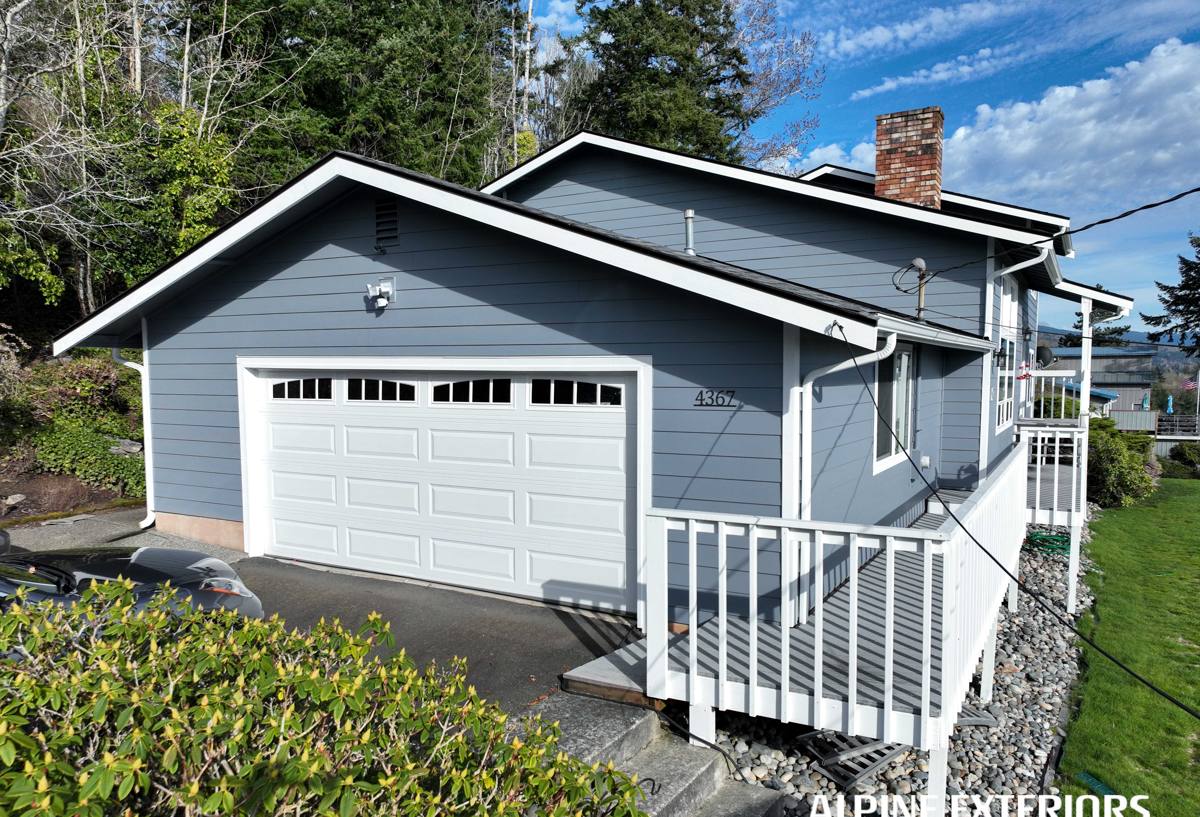
Signs a Bellingham Roof Needs Repair, Not Full Replacement
Most roofs don't need to be torn off. They need the right section fixed correctly. Here's what we look for when we're deciding whether a repair will actually hold.
Signs you can usually see from the ground or attic
- Moss or algae buildup concentrated on north-facing slopes or shaded valleys
- Granules collecting in gutters or at downspout outlets
- Lifted, curled, or missing shingles after a windy stretch
- Rust streaking below nail heads or flashing edges
- Soft or discolored soffit and fascia boards near the roofline
Signs that show up inside the house
- A ceiling stain that grows or reappears after heavy rain
- Musty smell in an upstairs closet or attic space
- Daylight visible around a chimney, skylight, or vent pipe from the attic
If damage is limited to one slope, one flashing detail, or one penetration, a repair is usually the right call. If the roof is showing widespread granule loss, multiple leak points, or the underlayment itself is failing, that's a different conversation — and we'll tell you honestly which situation you're in.
What a Proper Roof Repair Actually Involves
There's a difference between a repair that lasts and one that just hides a symptom for a season. A rushed repair caulks over a gap and calls it done. A correct one finds why water is getting in, not just where it's showing up inside.
That means pulling back shingles to check the underlayment condition, not just the surface layer. It means checking flashing at every transition point — chimneys, skylights, dormers, and especially where the roof meets a sidewall, since that's one of the most common failure points on this type of home. It means matching shingle color and profile as closely as possible so a spot repair doesn't stand out like a patch. And it means checking fastener condition, since salt air corrosion can weaken nails and screws well before the shingle itself fails.
Common Bellingham Roof Repairs We Handle
| Repair Type | Typical Cause Locally | What the Fix Involves |
|---|---|---|
| Flashing repair or replacement | Salt air corrosion plus driving rain working seams open over time | Removing failed flashing, checking underlayment beneath it, installing new flashing sealed and lapped correctly |
| Moss and algae remediation | Extended wet season, shade, north-facing slopes that stay damp | Careful removal without damaging granules, treatment to slow regrowth, checking for moisture that soaked in underneath |
| Spot shingle replacement | Wind lift, granule loss, isolated storm damage | Matching shingle type and color, replacing damaged courses, resealing tabs |
| Roof-to-wall (step) flashing | The transition where roof meets siding, a frequent leak point | Correcting step flashing and kickout flashing so water is directed into the gutter, not behind the siding |
| Soffit and fascia repair | Moisture wicking along the roof edge over time | Replacing rotted material, confirming ventilation isn't trapping moisture behind it |
| Gutter apron and drip edge | Wind-driven rain overshooting gutters at the roof edge | Installing or correcting drip edge so water sheds into the gutter instead of behind the fascia |
Our Roof Repair Process
- Inspection. We look at the roof surface, flashing details, attic (if accessible), and the areas where roofing meets siding or trim.
- Honest diagnosis. We explain what's actually causing the problem, not just where you're seeing symptoms.
- Written scope. You get a clear explanation of what needs to happen and why, with straightforward pricing — no vague line items.
- Matched materials. We source shingles, flashing, and trim that match your existing roof as closely as possible.
- The repair itself. Done to the same standard as new work, not a shortcut version of it.
- Cleanup and walkthrough. We clear debris and show you what was done before we consider the job finished.
Repair or Replace? How We Help You Decide
Homeowners often assume any leak means a new roof. That's rarely true, but it's also true that some roofs are past the point where repair makes sense. Here's the honest breakdown of how we think about it.
| Factor | Repair Usually Makes Sense | Replacement Usually Makes Sense |
|---|---|---|
| Age of roof | Roof is within its expected service life | Roof is near or past its expected lifespan for the material |
| Extent of damage | Isolated to one slope, penetration, or flashing detail | Multiple leak points or widespread granule loss across the roof |
| Underlayment condition | Still intact where checked | Deteriorated or failing in multiple areas |
| Moss/algae history | First occurrence, caught early | Repeated buildup has damaged the shingle surface underneath |
| Long-term plan | Planning to stay several more years, roof otherwise sound | Roof condition is a recurring maintenance burden regardless of repairs |
We'll never push a full replacement when a repair will genuinely hold, and we'll tell you plainly if a repair is just delaying an inevitable replacement so you can plan accordingly.
The Roof-Siding Connection
Because we work on the full exterior envelope, not just the roof deck, we see something roofing-only crews sometimes miss: a lot of "roof leaks" actually start at the point where the roof meets the siding, not on the roof field itself. Step flashing, kickout flashing at the bottom of a roof-to-wall run, and the J-channel or trim where siding terminates against a roofline are all places where water intrusion shows up as a roof problem but is really a siding-and-roof interface problem.
A crew that only thinks about shingles can fix the roof side of that joint and still leave the siding side letting water in behind it. Because we install and repair siding on the same houses we repair roofs on, we check both sides of that transition as a matter of course. That's not a sales pitch — it's just how the water actually moves on a real house.
Why Hire a Crew That Already Works in Bellingham
Roofing details that work in a dry climate don't always hold up here. A crew that already works Whatcom County homes knows how much slope and drainage matters when driving rain is the norm, why moss removal has to be done without stripping granules, and why flashing near the water tends to fail faster than the manufacturer's spec sheet implies. That local experience shows up in the small decisions — flashing overlap, fastener choice, how tight to seal a joint versus letting it breathe — that determine whether a repair lasts five years or fifteen.
It also matters for response time. When a leak shows up during a storm, you want a crew that's already local, not one driving in from out of the area after the damage has spread.
Maintenance Checklist Between Repairs
A few habits go a long way toward keeping a Bellingham roof out of repair territory in the first place.
- Clear moss buildup before it spreads across a full slope, using methods that don't strip granules
- Keep gutters and downspouts clear so water isn't backing up under the roof edge
- Trim back tree limbs that keep a section of roof shaded and damp longer than the rest
- Check gutters periodically for granule buildup, which signals shingle wear
- Look at flashing around chimneys, skylights, and vents once a year for gaps or rust
- Have a professional check the roof-to-siding transition, not just the roof field, during any inspection
None of this replaces a proper inspection, but it can catch a small problem before it becomes a repair call.
If you're seeing signs of a roof problem, or just want an honest read on where your roof actually stands, we're glad to take a look. We offer free, no-pressure estimates for Bellingham homeowners — you'll get a straight answer about what needs attention and what can wait, no upsell involved. The estimate form below is the easiest way to get started.