 Ferndale
 Why Blaine's Exterior Walls Wear Out Faster Than Most
Blaine sits about as close to salt water and the Canadian border as a Whatcom County home can get, and that combination shows up on siding faster than homeowners expect. You've got marine air carrying salt inland off the Strait, wind-driven rain that hits walls sideways instead of just running off a roof, and a wet season that stretches long enough for moss and algae to get a real foothold on north- and west-facing walls. None of that is unique to Blaine, but the concentration of it is. A siding product that performs fine forty miles inland can fail early here simply because it's exposed to more cumulative moisture and salt cycling per year.
We install fiber cement siding on homes throughout the Ferndale and greater Whatcom County area, and Blaine jobs get evaluated with that exposure in mind from the first walk-around. The product choice, the water management details, and the fastening schedule all get adjusted for a house that's going to spend its life a short distance from salt water.
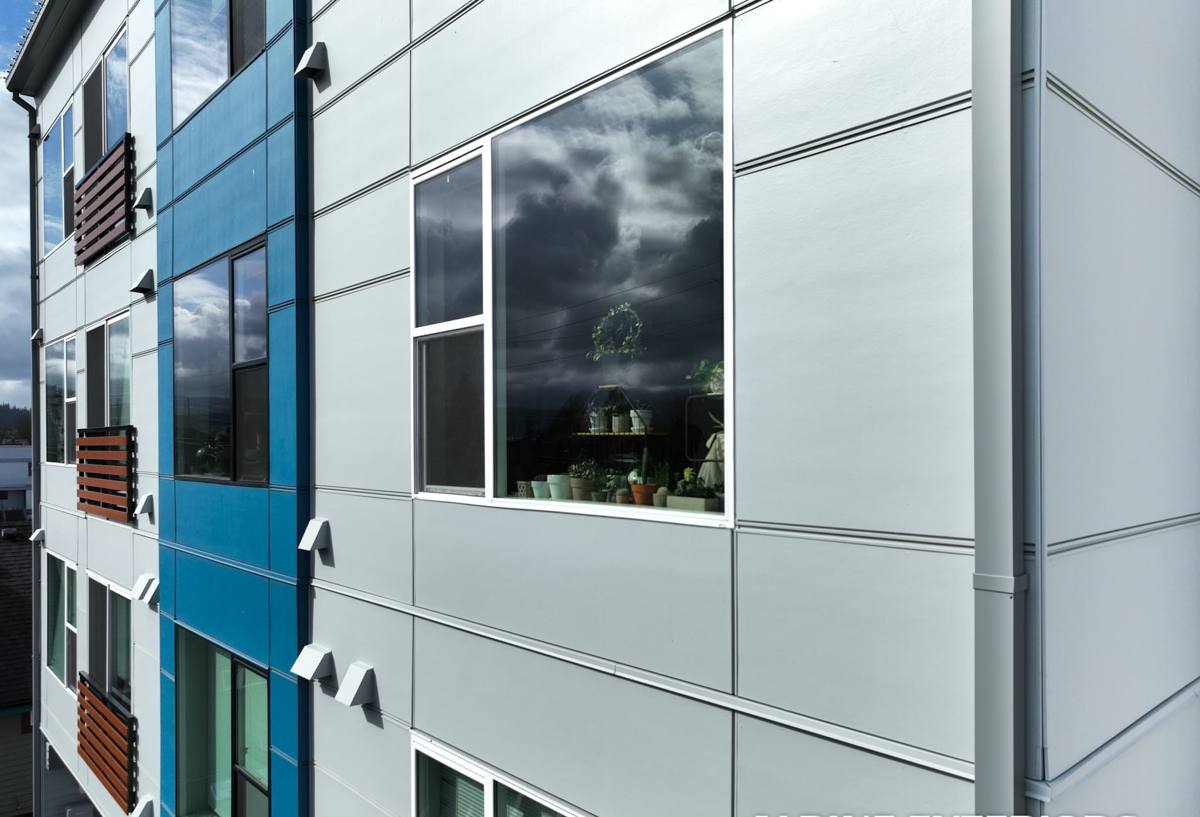
What Salt Air Actually Does to a Home's Exterior
Salt air doesn't just sit on a wall and look bad — it's a slow chemical and physical process that adds up over years.
- Corrosion of fasteners and trim hardware: Uncoated or poorly coated nails, screws, and metal trim pieces corrode faster near the coast, and a corroding fastener eventually loses its grip on the siding.
- Accelerated finish breakdown: Paint and factory finishes that aren't formulated for coastal exposure chalk, fade, and lose adhesion sooner than the same product would inland.
- Moisture that doesn't fully dry: Salt is hygroscopic — it holds onto moisture — so surfaces exposed to salt-laden air can stay damp longer after a rain, which extends the window for wood rot, mold, and coating failure.
- Faster wear on caulking and sealants: Joints and penetrations that rely on sealant alone (rather than proper flashing) break down quicker under repeated salt and moisture cycling.
This is exactly why we don't treat every siding job in the county the same way. A house a block or two from open water needs finish, fastener, and detailing choices that a house on the east side of Ferndale may not.
Why We Only Install James Hardie Fiber Cement
We standardized on James Hardie for every siding job we take on, coastal or not, and the reasoning matters more in a place like Blaine, not less. Fiber cement itself is a cement, sand, and cellulose fiber composite — it doesn't rot, it isn't attractive to insects, and it's non-combustible. That's a fundamentally different material than wood-based or vinyl products, and it holds up to sustained moisture exposure in a way those alternatives generally don't.
Hardie's ColorPlus factory-applied finish is the other half of why we like it here specifically. It's baked on in a controlled factory environment rather than field-applied, which gives it more consistent coverage and better long-term adhesion than a job-site paint job — something that matters a lot when the finish is going to be fighting salt air and UV for the next couple decades. Hardie also builds climate-specific HZ product formulations, and their fiber cement carries a strong transferable warranty backed by a company that's been making this exact product category for a long time.
We get asked why we don't also offer vinyl, LP SmartSide, or other fiber cement brands. The honest answer: those products all have real strengths, but for a coastal Whatcom County climate we'd rather stand behind one system we trust completely than offer several and let a homeowner unknowingly pick the one that's a poor fit for their exposure. Vinyl can warp and its seams are a long-term weak point against driving rain. Wood-based composite siding depends heavily on field-applied coatings and edge sealing staying intact — miss a spot near the coast and moisture finds it fast. We'd rather install one product correctly than several products with caveats.
How Hardie's Product Lines Fit a Blaine Home
| Product | Typical Use | Why It Fits Coastal Exposure |
|---|---|---|
| HardiePlank lap siding | Primary wall cladding | Most common choice; ColorPlus finish resists salt-driven fading and chalking |
| HardieShingle | Accent gables, dormers | Adds texture without introducing a different, less durable material |
| HardieTrim | Corners, window and door casing | Matches the wall field's moisture performance instead of using a weaker wood trim |
| HardiePanel | Vertical siding, porch ceilings | Useful on modern or mixed-material facades common in newer Blaine builds |
What a Correct Fiber Cement Install Looks Like Here
Fiber cement performs as well as its installation. A rushed or generic install on a coastal home shortens the lifespan of even a top-tier product, so the details below aren't optional add-ons — they're what makes the material live up to its warranty in this specific climate.
Water Management Before a Single Board Goes Up
Wind-driven rain in Blaine doesn't just hit a wall — it can push moisture up and under laps if the wall assembly isn't built to shed it. We install a code-compliant weather-resistive barrier, proper window and door flashing integrated with that barrier (not just caulked on top of it), and rainscreen or drainage-gap detailing where the assembly calls for it. This gives incidental moisture that gets past the siding a way to drain and dry instead of sitting against sheathing.
Fastening and Clearances
We follow Hardie's fastening specifications for the exposure category, use corrosion-resistant fasteners appropriate for coastal conditions, and keep the bottom edge of siding at the manufacturer's recommended clearance above grade, decks, and roof lines — a detail that gets skipped more often than it should and leads directly to trapped moisture and premature rot at the wall base.
Joints, Caulking, and Trim Details
Butt joints and trim transitions are where a lot of coastal siding failures start. We follow Hardie's joint treatment guidance, use sealants rated for the exposure, and avoid relying on caulk alone anywhere flashing should be doing the real work.
Our Process on a Blaine Job
- On-site assessment: We look at the home's orientation to weather and salt exposure, existing siding and sheathing condition, and any moisture damage already present.
- Product and detailing plan: We select the appropriate Hardie product line, trim package, and color, and map out flashing and drainage details specific to that wall's exposure.
- Removal and inspection: Old siding comes off and we inspect sheathing and framing for hidden rot or moisture damage before anything new goes up — this is often where coastal homes reveal problems that weren't visible from outside.
- Weather barrier and flashing installation: This step gets done to spec, not shortcut, since it's the layer doing the real water management work.
- Siding installation: Installed per Hardie's fastening schedule and clearance requirements for the site's exposure category.
- Final detailing and walkthrough: Trim, caulking, and touch-up finish work, followed by a walkthrough so you know what was done and why.
Moss, Algae, and the Long Wet Season
Whatcom County's wet season gives moss and algae a long runway on any shaded or north-facing wall, and Blaine's proximity to the water adds humidity on top of that. Fiber cement doesn't feed mold and moss the way wood-based products can, and Hardie's factory finish resists the surface staining that lets algae get a grip in the first place. Good roof and gutter drainage, proper siding clearance, and trimmed-back vegetation near walls all help too — a correct install reduces the problem, but keeping downspouts clear and foliage off the siding does the rest.
Cost Factors for a Blaine Fiber Cement Job
| Factor | Why It Affects Cost |
|---|---|
| Existing siding removal | Tear-off and disposal of old material adds labor and haul-away costs |
| Sheathing repair | Rot or moisture damage found underneath old siding needs to be repaired before new siding goes up |
| Product line and profile | Lap width, shingle accents, and trim complexity all affect material and labor cost |
| Home size and wall complexity | More corners, gables, and penetrations mean more cutting, flashing, and labor time |
| Color and finish | Factory ColorPlus finishes vs. field-painted primed product affect both cost and long-term maintenance |
We give homeowners a real number after seeing the actual house — broad national averages don't account for what's under your existing siding or how exposed your particular walls are.
A Quick Checklist Before You Hire Anyone for This Job
- Ask whether the crew is a certified or experienced Hardie installer, not just "familiar" with fiber cement in general
- Confirm they'll inspect and repair sheathing before installing new siding, not just cover over what's there
- Ask specifically how they'll handle flashing and drainage detailing for a coastal-exposure wall
- Get the fastener and clearance specifications in writing, not just verbally
- Confirm what warranty coverage applies — both material and labor — and who backs it
Why a Crew That Already Works This Area Matters
A contractor who works Blaine and the surrounding Whatcom County coastline regularly has already seen what salt air and driving rain do to walls that weren't detailed for it. That's not a marketing point — it changes real decisions on the job, like which walls get extra flashing attention, where drainage gaps matter most, and which fastener spec actually holds up here long-term. A crew installing fiber cement for the first time in a coastal setting is learning those lessons on your house. We'd rather you not be the one they learn on.
If you're planning a siding replacement or new build in Blaine, we're happy to take a look at your home and walk you through what we'd recommend and why. Reach out for a free, no-pressure estimate using the form below.