 Ferndale
 Why Bellingham Roofs Take a Beating
Bellingham sits close enough to the water that homes here deal with a different mix of weather than roofs even twenty miles inland. Salt-laden air off the bay accelerates corrosion on exposed metal fasteners, flashing, and vent stacks. Driving rain, pushed sideways by wind off the Salish Sea, finds every weak seam and undersized flashing detail a roof has. And Whatcom County's long, wet moss season — often eight or nine months of the year — means organic growth has far more time to take hold here than it does in drier parts of the state.
None of these factors are dramatic on their own. The problem is that they compound. A roof that would last 25 years in a dry inland climate might start showing real trouble at 15 or 18 here if it wasn't built with this specific climate in mind. A roof designed with generic, one-size-fits-all specs — the kind you'd see on a tract-home development in a dry climate — simply wasn't engineered for the number of wet-dry cycles, wind loads, and organic growth pressure a coastal Whatcom County roof deals with every year. That's the gap a correct roof replacement is meant to close.
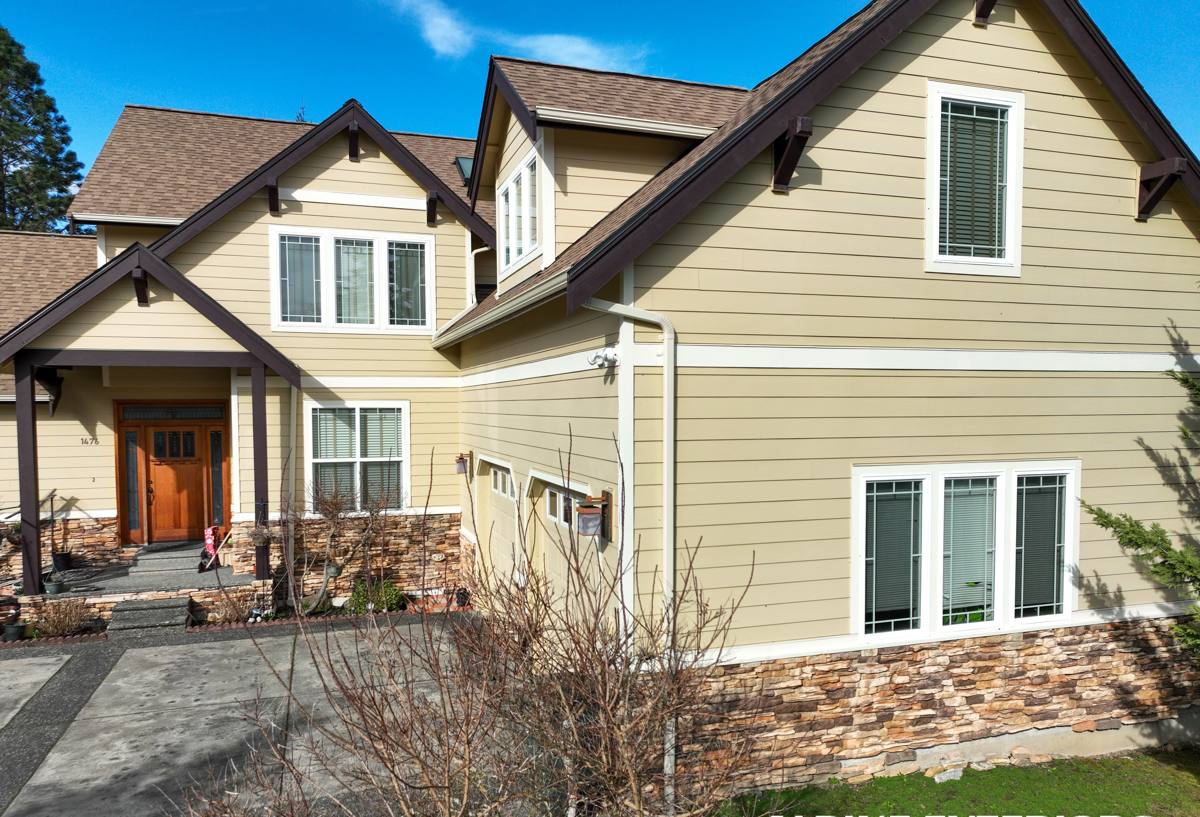
Signs Your Roof Has Reached the End of Its Service Life
Homeowners in the Bellingham area often ask whether a problem area can just be patched. Sometimes it can. Other times, a repair is a temporary fix on a roof that's already failing in more places than the one you can see. Some signs point toward replacement rather than repair:
- Granule loss heavy enough that you're finding grit in gutters and downspouts every time it rains
- Shingles that are cupping, curling at the edges, or cracking when you look closely from the ground
- Moss or algae mats that have worked under the shingle tabs rather than just sitting on the surface
- Soft spots in the decking, felt underlayment visible through worn shingles, or daylight showing through the attic
- Repeated leaks around the same valley, chimney, or vent — a sign the flashing detail itself has failed
- A roof that's already had two or more repair visits in the last few years for different issues
- Musty odors or visible staining in the attic, especially after a stretch of heavy rain
If you're only dealing with one isolated issue on a roof that's otherwise sound, repair is usually the honest answer and that's what we'll recommend. Replacement makes sense once the underlying materials — decking, underlayment, flashing — are failing broadly rather than in one spot.
What a Correct Roof Replacement Actually Involves
A roof replacement is more than swapping old shingles for new ones. Done right, it's a rebuild of every layer that protects the house, and in a climate like this one, each layer matters more than it might somewhere drier.
Tear-Off and Deck Inspection
We remove the old roofing down to the decking rather than layering over it. That's the only way to actually see what's underneath — soft or delaminated plywood, old water staining, or framing that's been quietly absorbing moisture for years. Any compromised decking gets replaced before anything new goes down. Skipping this step is the single most common shortcut that leads to early failure, and it's also the only point in the project where corroded fasteners and hidden salt-air damage to the deck itself can actually be caught and corrected.
Underlayment and Moisture Protection
With the amount of driving rain Whatcom County gets, underlayment is not a place to cut corners. We use synthetic underlayment as the general water-resistant layer, with self-adhering ice-and-water membrane at the vulnerable spots — eaves, valleys, and around penetrations — where wind-driven rain is most likely to force its way under the shingle field.
Ventilation
A roof needs to breathe. Balanced intake and exhaust ventilation keeps the attic dry and temperature-regulated, which does two things for a home near the coast: it reduces the condensation that feeds mold and rot, and it helps prevent the kind of trapped moisture that gives moss and algae an easier foothold from the underside as well as the surface.
Flashing and Valleys
Most roof leaks trace back to flashing, not the shingle field itself. Chimneys, skylights, sidewalls, and valleys all need properly formed and sequenced metal flashing — not just a bead of sealant — to shed water in a storm coming from any direction. We form and install flashing to handle sideways rain, not just water running straight down, and we favor corrosion-resistant flashing metals and fasteners given how much salt air this coastal stretch of Whatcom County sees.
Choosing Roofing Materials for This Climate
There's no single "best" roofing material for every home — it depends on your roof's pitch, your budget, and how much long-term maintenance you're willing to take on. Here's an honest comparison of the options we install most often for homes in this region:
| Material | Moss & Algae Resistance | Typical Lifespan | Relative Cost |
|---|---|---|---|
| Standard 3-tab asphalt shingle | Lower — needs regular cleaning to stay ahead of growth | 15–20 years | $ |
| Architectural (laminate) asphalt shingle | Moderate; algae-resistant granule options available | 25–30 years | $$ |
| Algae-resistant architectural shingle | Good — copper or zinc granules slow regrowth | 25–30 years | $$ |
| Standing-seam metal | Very good — smooth surface sheds moss and debris | 40–50+ years | $$$ |
For most Bellingham-area homes, an algae-resistant architectural shingle is the practical middle ground: meaningfully better moss resistance than a standard shingle, without the upfront cost jump of metal. Homes with heavy tree cover or persistent shade — where moss pressure is highest — are where we most often steer homeowners toward metal or at minimum toward algae-resistant shingles rather than standard ones. Whatever material you choose, pay attention to the manufacturer's warranty terms around algae staining specifically, since standard warranties often don't cover it the same way they cover material defects.
Our Process, Start to Finish
We keep the process straightforward and try to remove the guesswork for homeowners who haven't been through a roof replacement before:
- On-site inspection and honest assessment of whether you need a repair or a full replacement
- Written estimate covering materials, labor, decking allowance, and a clear timeline
- Material selection — we walk through the trade-offs so you're choosing based on your roof and budget, not a sales pitch
- Tear-off, deck inspection, and replacement of any compromised sheathing
- Underlayment, ice-and-water membrane, and flashing installed at all vulnerable points
- New roofing installed to manufacturer specification, including proper ventilation
- Full site cleanup, including a magnetic sweep for stray nails
- Final walkthrough so you can see the finished work before we consider the job done
We also try to work around Whatcom County's wetter stretches when scheduling, since a roof torn off ahead of a multi-day rain system is a problem nobody wants. Good scheduling is as much a part of a clean install as good materials.
Living With Moss and Salt Air After Your New Roof
A correctly installed roof will hold up far better here than one that wasn't built for this climate, but no roof in Whatcom County is maintenance-free. A little routine attention keeps you from paying for problems that were preventable:
- Keep gutters clear so water isn't sitting against the eaves during long rain stretches
- Trim back overhanging branches to cut down on shade and debris — both feed moss growth
- Have moss treated or gently removed before it works under shingle tabs, not after
- Avoid pressure washing shingles directly; it strips granules and shortens the roof's life
- Have flashing and sealant points checked periodically, especially after a hard windstorm
- Rinse accumulated salt residue off metal flashing and vents during a dry stretch if your home is close to the water
- Schedule a quick visual inspection every couple of years, even if nothing seems wrong
Why a Local Ferndale Crew Matters for Bellingham Homes
A roofing crew that works this area regularly builds a different kind of judgment than one that doesn't. We know how fast moss reestablishes on a north-facing slope near the water versus a sun-exposed one, which flashing details actually hold up against wind-driven rain off the bay, and which materials are worth the upfront cost for homes exposed to salt air. We're also familiar with the permitting expectations for Whatcom County jurisdictions, so there aren't surprises mid-project.
Being based in Ferndale also means we're not driving a crew in from out of the area for a single job and disappearing afterward. If a question comes up after the work is done, we're close by and easy to reach, and we're around to stand behind the workmanship warranty in a way an out-of-town crew simply isn't.
What Affects the Cost of a Roof Replacement
Every roof is different, so we don't quote sight-unseen, but a few factors consistently move the price up or down: the total square footage and roof pitch, how many layers of old roofing need to come off, how much decking replacement turns out to be necessary once we're under the old material, the complexity of the roof line (valleys, dormers, chimneys), and which material you choose. A simple, low-pitch roof in good condition underneath will always cost less than a steep, complex roof with hidden decking damage — which is exactly why the on-site inspection matters more than a quick estimate over the phone.
If your Bellingham-area home is showing signs of an aging roof, or you'd simply like an honest opinion on whether repair or replacement makes more sense, we're happy to take a look. Use the form below to request a free, no-pressure estimate.