 Ferndale
 Why Birch Bay Decks Take More Punishment Than Most
Birch Bay sits right on the water, and that changes what a deck has to survive. Salt-laden air moves inland with the marine wind off the strait, settling on every exposed surface — fasteners, flashing, railing hardware, and the decking itself. Add Whatcom County's long wet season, where shaded and north-facing decks can stay damp for weeks at a stretch, and you get a climate that's genuinely harder on outdoor structures than most inland neighborhoods around Ferndale.
The combination of salt exposure, driving rain, and moss growth doesn't just affect how a deck looks. It affects how fast fasteners corrode, how quickly a board surface loses its grip underfoot, and how much maintenance a homeowner ends up doing every spring just to keep things safe and presentable. A deck built without that in mind will show it within a few seasons — not decades.
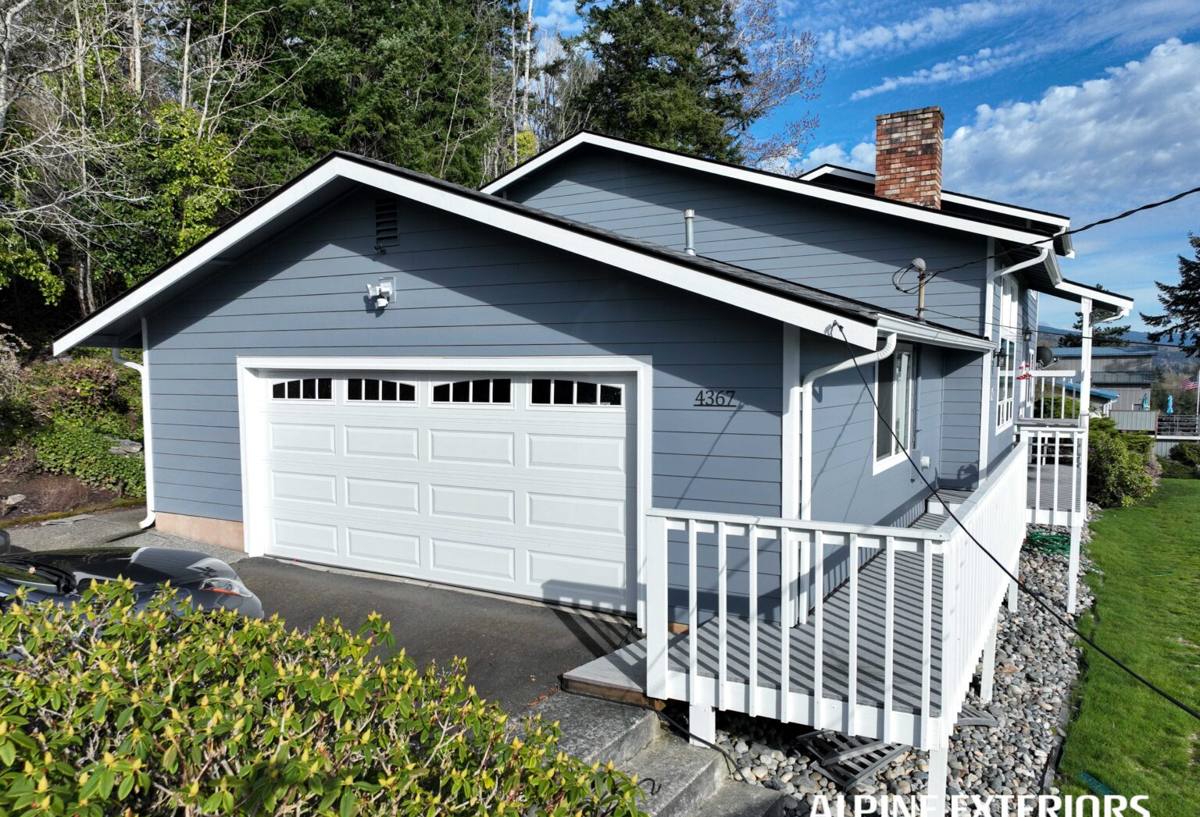
Why We Steer Birch Bay Clients Toward Composite
Wood decking can absolutely work in this area, but it demands a maintenance schedule most homeowners don't keep up with — annual cleaning, re-sealing, and watching for the soft spots that salt-driven moisture and moss create over time. Skip a year or two and a wood deck starts losing ground fast in a coastal environment like this.
Composite decking shifts that equation. A quality capped composite board doesn't absorb moisture the way wood fibers do, doesn't need annual staining, and holds up better against the freeze-thaw and wet-dry cycling that's common near the water. That's not a claim that composite is maintenance-free — it isn't — but the maintenance burden is lighter and more predictable, which matters when a home is exposed to salt air for most of the year.
Where Wood Still Makes Sense
We're honest with clients: if budget is the primary driver, or if the goal is a natural look with the understanding that upkeep will be part of the deal, wood is still a legitimate option. Our job is to lay out the real trade-offs — install cost, lifetime maintenance, and how the material behaves in this specific climate — and let the homeowner decide with full information.
What Correct Composite Installation Looks Like Here
Composite boards are only as good as what's underneath them and how they're fastened. In a salt-air environment, the details that get skipped on a rushed job are exactly the details that fail first.
Framing and Fasteners
Standard galvanized hardware corrodes faster near the coast than it does further inland. For Birch Bay installs, we spec stainless steel or coated fasteners rated for coastal or ACQ-treated lumber use, and we use joist tape or a comparable barrier on framing members to slow moisture wicking into the substructure. Cutting corners here is the single most common cause of premature deck failure we see in coastal Whatcom County — not the decking surface itself, but what's holding it up.
Ledger Attachment and Flashing
Where the deck ties into the house, proper flashing keeps wind-driven rain from finding its way behind siding and into the ledger board. This is a spot inspectors look at closely, and it's a spot that causes real water damage when it's done wrong — regardless of how good the decking above it looks.
Airflow Underneath
Composite decking needs ventilation beneath the boards to let moisture escape rather than sit and promote mold or mildew growth in the substructure. Low-clearance decks near grade need extra attention here, since Birch Bay's wet season keeps ground moisture elevated for long stretches.
Board Selection: What Actually Matters
Not all composite decking is built the same, and the differences matter more in a coastal climate than they would somewhere drier.
- Capped composite — a protective outer shell resists staining, fading, and moisture absorption better than uncapped composite; this is what we recommend for anything within a few miles of the water.
- Color and heat — darker boards absorb more heat and can accelerate fading over time; lighter and mid-tone colors tend to hold up more evenly under UV and salt exposure.
- Surface texture — a textured, slip-resistant grain matters more here than in a dry inland yard, since moss spores and algae find damp composite surfaces just as readily as they find wood.
- Board profile — grooved-edge boards with hidden fastener systems reduce the number of exposed screw heads, which is one less place for corrosion or water intrusion to start.
Our Process for a Birch Bay Deck Project
- On-site assessment — we look at sun and wind exposure, existing framing condition, drainage around the footprint, and how close the site sits to salt spray.
- Design and material selection — board color, railing style, and layout are worked out with the homeowner, with honest input on what holds up best given the site's exposure.
- Permitting — most deck projects in Whatcom County and the City of Ferndale require a building permit, especially for elevated decks or anything attached to the house. We handle that process rather than leaving it to the homeowner.
- Demolition or prep — removal of any failing existing structure, with a check of the ledger and foundation points before new framing goes in.
- Framing — coastal-rated fasteners, proper joist spacing for the chosen board, and moisture barriers where framing meets composite decking.
- Decking and railing install — boards, fascia, and railing go in to manufacturer spec, since composite systems have specific gapping and fastening requirements that affect the warranty.
- Final walkthrough — we cover basic care and answer questions before calling the job done.
Moss, Mildew, and the Realistic Maintenance Picture
No decking material in this part of Whatcom County is maintenance-free, composite included. What changes is the type and frequency of upkeep. Composite doesn't need staining or sealing, but it does need periodic cleaning to keep moss and algae from taking hold, especially on shaded sections of a deck or areas that don't get much direct sun during the wet months.
A Simple Seasonal Checklist
- Sweep debris and standing organic matter off the deck surface regularly, especially in fall and winter
- Rinse with plain water and a soft-bristle brush a few times a year to interrupt moss and algae growth before it sets in
- Check that gaps between boards stay clear so water drains rather than pools
- Inspect railing posts and fastener points annually for any sign of corrosion or movement
- Confirm under-deck ventilation isn't blocked by storage, planters, or overgrown landscaping
Skipping this doesn't cause the same structural risk that neglecting a wood deck does, but it does mean moss and grime build up faster near the water than they would a few miles inland.
What Drives the Cost of a Composite Deck Project
| Factor | Why It Matters in Birch Bay |
|---|---|
| Deck size and footprint | More square footage means more board, framing, and labor cost, straightforward across any location |
| Height and access | Elevated decks need stairs, additional railing, and stronger footings, which adds cost and complexity near sloped coastal lots |
| Fastener and hardware grade | Coastal-rated stainless or coated hardware costs more than standard galvanized but is essential this close to salt air |
| Board tier | Capped composite costs more upfront than uncapped or basic composite but resists coastal wear far better over time |
| Existing structure condition | Older framing near the water often needs partial or full replacement due to accelerated corrosion or rot |
| Permitting and inspection | Required for most attached or elevated decks in Ferndale and unincorporated Whatcom County, adding time but protecting the homeowner |
Exact numbers depend on the site, but homeowners should expect coastal-grade hardware and capped composite board to sit above the cheapest available materials — that difference is what buys the extra years of performance this environment demands.
Why Hiring a Crew That Already Works Birch Bay Matters
A contractor who mostly builds decks inland doesn't always think to spec coastal-rated fasteners or plan for the ventilation and drainage details that matter this close to the water. A crew that regularly works Birch Bay and the rest of the Ferndale coastline already knows which corners can't be cut here — because they've seen what happens when they are.
That local familiarity also means a faster, more accurate read on permitting requirements, realistic timelines around this area's wet-season weather windows, and material choices that are proven, not theoretical, for this specific stretch of coastline.
Ready to Talk Through Your Deck Project?
If you're planning a new composite deck or replacing an aging one in Birch Bay, we're happy to walk the site, look at what you're working with, and give you straight answers about what it'll take to build something that holds up to the salt air and moss season here. Use the form below to request a free, no-pressure estimate.