 Ferndale
 Building Decks for an Island Climate, Not a Generic One
A deck built to a mainland spec doesn't always hold up the same way on Lummi Island. The island sits out in the marine air of Whatcom County, which means homes here deal with a combination that inland Ferndale properties see less of: salt-laden wind off the water, long stretches of driving rain through the fall and winter, and a moss season that can run most of the year in shaded spots. Add in that many island lots are exposed, sloped, or close to the water, and a deck here needs to be built with all of that in mind from the footings up.
We're not telling you this to scare you off wood or composite decking — either can perform well on Lummi Island for years. The point is that the details that don't matter much on a sheltered inland lot matter a lot here: fastener metal, gap spacing, footing drainage, and how the structure breathes underneath. Get those right and a deck will handle the island's weather without becoming a maintenance project. Get them wrong and you'll be dealing with rust streaks, soft boards, and slick moss within a few seasons.
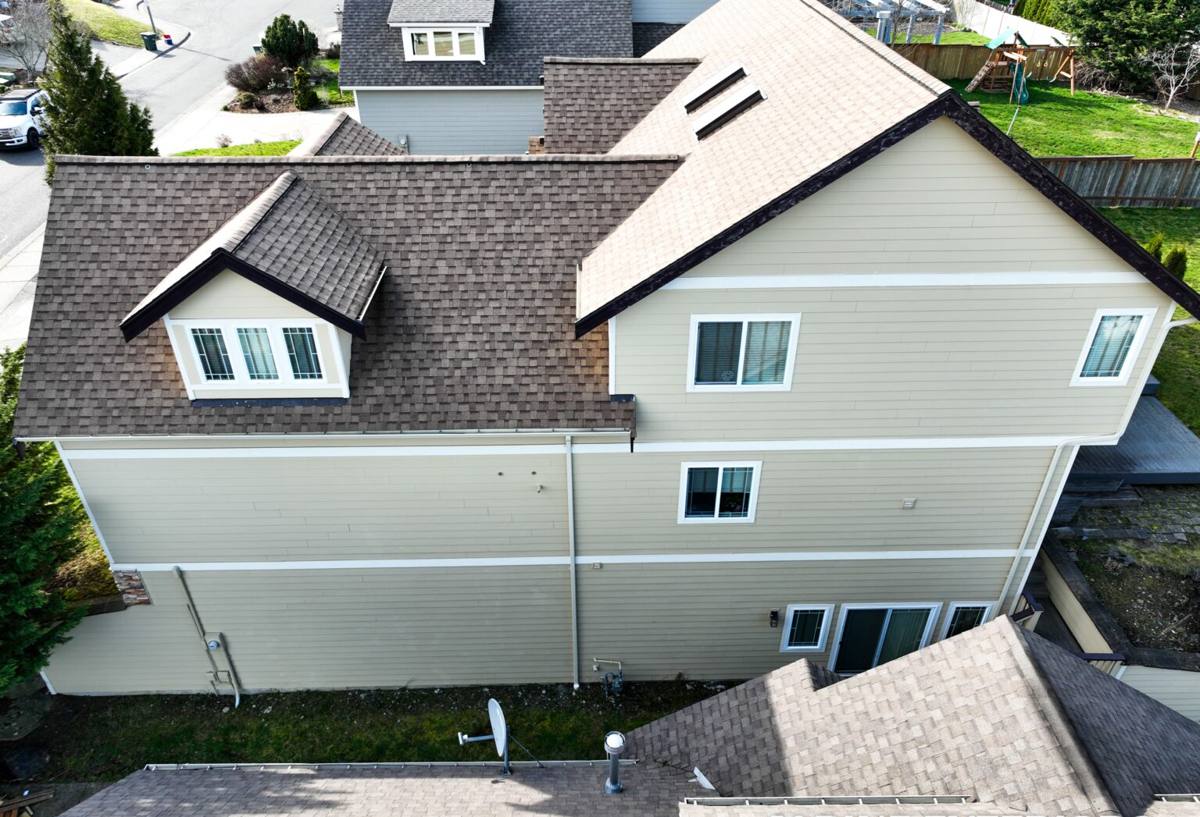
What Salt Air, Rain, and Moss Actually Do to a Deck
Salt Air
Airborne salt doesn't just affect waterfront lots directly on the shoreline — it travels on the wind and settles on anything exposed, including decks set back from the water. Salt accelerates corrosion in standard steel fasteners and hardware, and it can dull or discolor some finishes faster than a manufacturer's warranty assumes. This is the single biggest reason we don't cut corners on fastener and hardware specification for island jobs.
Driving Rain
Wind-driven rain finds its way into joints, end grain, and fastener holes that would stay dry in a calmer setting. Over time, water that gets in and can't get back out is what causes rot, delamination in some composite cores, and failure at connection points — not the rain itself, but rain that's trapped.
Moss and Constant Damp
Shaded decks, north-facing decks, and decks under tree cover on Lummi Island stay damp longer than an equivalent deck in full sun. That extended damp period is exactly what moss and algae need to establish. Beyond looking unkempt, a mossy deck surface gets genuinely slick and can accelerate surface wear on wood decking in particular.
Choosing a Decking Material for This Environment
There's no single "best" decking material for every Lummi Island home — it depends on your budget, how much upkeep you want to do, and how exposed the site is. Here's how the common options actually compare once salt air and moss are part of the equation.
| Material | Salt Air Behavior | Moss/Moisture Resistance | Upkeep |
|---|---|---|---|
| Pressure-treated fir/pine | Good with stainless fasteners | Needs regular cleaning and sealing | Highest — annual attention recommended |
| Cedar | Naturally decent resistance | Still needs cleaning; can gray and stain | Moderate to high |
| Composite decking | Very good, no rust risk in the board itself | Surface can still grow moss/algae if shaded and damp | Low — periodic washing |
| Tropical hardwoods (e.g. ipe) | Excellent natural durability | Good, but still benefits from cleaning | Low to moderate, higher upfront cost |
Composite decking tends to be the easiest option for exposed or shaded island lots simply because there's no wood fiber in the wear layer to rot. That said, we've built plenty of good cedar and hardwood decks on Lummi Island for homeowners who want the natural look — the material choice matters less than getting the structure, fasteners, and drainage right underneath it.
A Note on Framing Lumber
Whatever decking you choose on top, the framing underneath should be rated for the exposure it's actually getting. On a covered, sheltered deck we can spec differently than on an open, wind-exposed one — we walk every site before recommending a framing package rather than defaulting to one spec for every job.
The Parts of a Deck You Don't See — and Why They Matter Most Here
Fasteners and Hardware
This is the detail that separates a deck that lasts on Lummi Island from one that doesn't. Standard galvanized fasteners can start showing corrosion within a few seasons of salt exposure. We spec stainless steel or marine-grade coated fasteners and hardware for island work, particularly at ledger connections, post bases, and joist hangers — the points where a failure actually matters structurally, not just cosmetically.
Footings and Post Bases
Sloped and rocky lots are common on the island, and footing work needs to account for drainage around the footing itself so water isn't sitting against concrete or steel post bases year-round. We also keep post bases elevated off the deck surface and off grade so wood posts aren't sitting in standing water after a heavy rain.
Ledger Attachment and Flashing
Where a deck attaches to the house is the most common source of hidden water damage on any deck, anywhere — but it matters more here because of how much rain the island sees. Proper flashing, correct fastener spacing, and a ledger detail that sheds water away from the house band board are non-negotiable on every deck we attach to a structure.
Drainage, Airflow, and Keeping Moss Off the Surface
Moss control starts with design, not chemicals. A few things we build in on every Lummi Island deck:
- Consistent board spacing that lets water drain through instead of pooling on the surface
- Open framing underneath where possible, so air can move and the underside can dry out between rains
- Joist tape or an equivalent protective layer on framing members to keep water off bare, unprotected wood
- Drainage grading away from footings so water doesn't collect and sit against the structure
- Material and finish choices that don't trap moisture against the board surface
None of this eliminates the need for occasional cleaning — even a well-built deck on a shaded island lot will benefit from a seasonal wash. But good drainage and airflow mean that cleaning stays a light maintenance task instead of a fight against established moss and soft, saturated wood.
Permits, Setbacks, and Code on Lummi Island
Deck work on Lummi Island falls under Whatcom County's permitting and building code requirements, and depending on the lot, there can be additional considerations for shoreline setbacks or critical areas if the property is close to the water. We handle the permit process as part of the job — pulling the right permit, building to the guardrail height, baluster spacing, and structural requirements the code calls for, and scheduling inspections at the right points in the build. If your lot has any shoreline or critical-area overlay, we'll flag that up front during the estimate rather than surprise you with it mid-project.
Working Around Island Access
Building on Lummi Island means planning around ferry schedules for material deliveries and crew access, which is different from a typical mainland Ferndale job where a crew can come and go freely all day. We plan material orders and crew scheduling around the ferry in advance so a job doesn't stall out because a delivery missed a sailing or a crew got stuck waiting on the mainland side. This is a logistics problem more than a building problem, but it's one that trips up crews who don't regularly work the island.
Our Process for a Lummi Island Deck Project
Every project starts with a site visit, not a phone estimate — footings, drainage, sun exposure, and access all affect the plan, and we want to see the actual lot before we spec materials or price the job.
- On-site consultation to assess exposure, slope, drainage, and access
- Material and design recommendation based on your budget and how much upkeep you want to take on
- Permit pulled and submitted through Whatcom County before any work begins
- Ferry-aware scheduling for material delivery and crew days
- Framing with corrosion-resistant hardware and fasteners throughout
- Decking installation with proper spacing, ventilation, and flashing details
- Final walkthrough and inspection sign-off
Why Hiring a Crew That Already Works Lummi Island Matters
A contractor who mostly builds decks in sheltered inland neighborhoods isn't necessarily going to think about stainless fasteners, footing drainage, or ferry-dependent scheduling unless they've been burned by skipping them. We work Ferndale and the surrounding Whatcom County area regularly, including Lummi Island, so these aren't afterthoughts — they're just part of how we spec and schedule every island job from the start. That experience tends to show up less in what a deck looks like on day one and more in how it holds up five and ten years in, which is really what you're paying for.
If you're planning a new deck or replacing one that's showing its age on Lummi Island, we're happy to come take a look and put together a straightforward, no-pressure estimate — just use the form below to get started.