 Ferndale
 Why Birch Bay Homes Ask More of Their Siding
Birch Bay sits close enough to the water that homes there deal with a different set of conditions than siding a few miles inland in Ferndale or elsewhere in Whatcom County. Salt-laden air off the bay works on fasteners, caulk, and paint film in ways that inland exposure doesn't. Driving rain off the water pushes moisture sideways into seams and laps that would stay dry in a calmer setting. And the long stretch of grey, damp months that defines this part of Western Washington keeps siding surfaces wet enough, long enough, for moss and algae to take hold and stay there for most of the year.
None of that is unusual for the Pacific Northwest coast, but it does mean siding choices that hold up fine in drier climates can fall short here. Paint film chalks and fades faster with salt exposure. Wood-based products absorb and hold moisture instead of shedding it. Seams and fastener heads that aren't detailed correctly become the entry point for water that then has nowhere to dry out. A siding job in Birch Bay has to be judged by how it performs after a decade of this weather, not by how it looks on installation day.
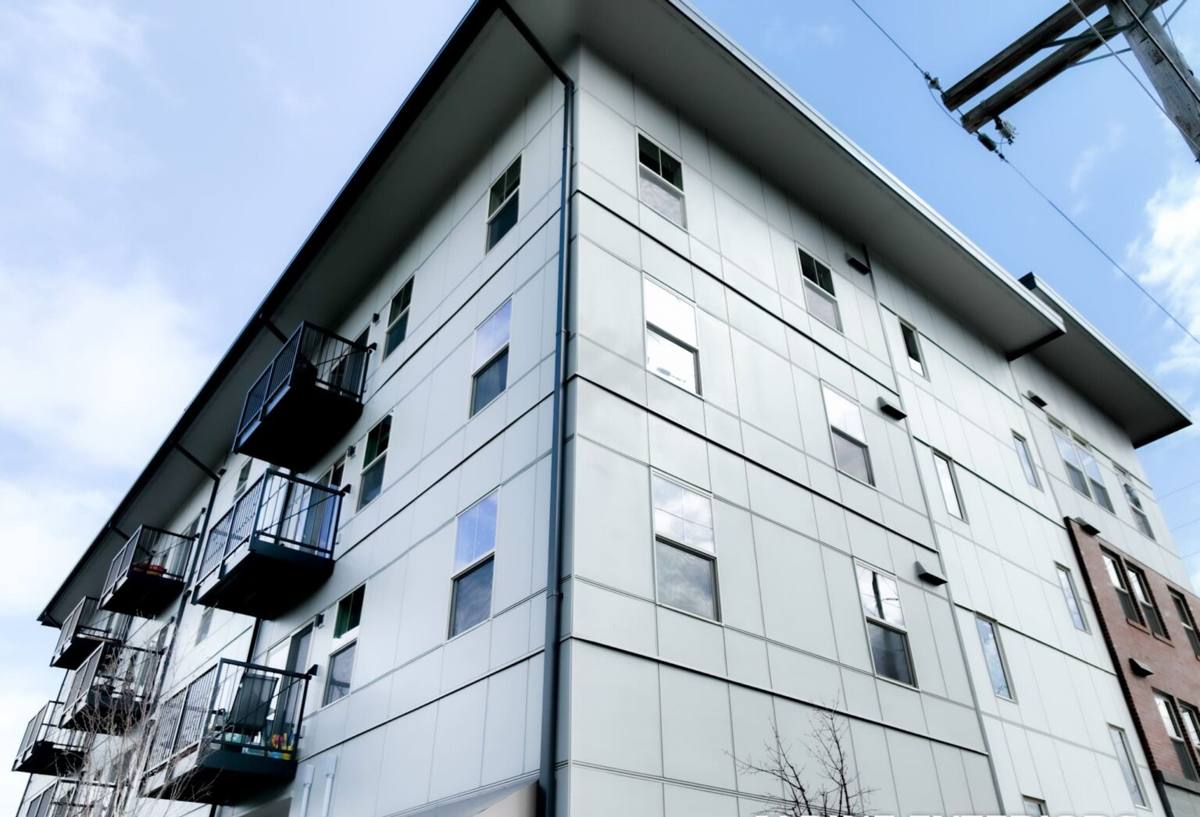
What Correct Fiber Cement Siding Looks Like Here
Fiber cement is the right base material for this exposure because it's dimensionally stable and doesn't absorb water the way wood, wood composite, or engineered wood products do. But the material alone doesn't make a job correct — the installation details are what determine whether that resistance actually holds up on a house near the water.
Climate-Matched Product Selection
James Hardie formulates its siding differently depending on the climate it's going into, and we install the formulation engineered for the wetter, milder conditions of Western Washington rather than a generic version. The factory-applied ColorPlus finish matters just as much here as the substrate — it's baked on under controlled conditions and holds color and adhesion far longer under salt air and constant damp than a field-applied paint job would.
Water Management Behind the Cladding
On a coastal-exposed home, what's happening behind the siding is as important as the siding itself. That means a properly lapped weather-resistive barrier, correctly flashed windows, doors, and penetrations, and a drainage plane that lets any moisture that does get past the cladding find its way back out instead of sitting against the sheathing. Skipping or rushing this layer is the single most common reason a siding job fails early in a wet climate, regardless of what material is on the outside.
James Hardie Compared to Other Siding Materials
Homeowners in Birch Bay often ask why we don't offer vinyl, cedar, or engineered wood siding as options. Here's an honest look at how they compare for this specific exposure:
| Material | How It Handles Salt Air & Driving Rain | How It Handles Moss Season |
|---|---|---|
| Vinyl | Doesn't rot, but can warp or fade under UV and temperature swings; seams and panels can loosen over time | Moss and algae still grow on the surface; smooth finish makes staining more visible |
| Cedar / natural wood | Absorbs moisture readily; salt air accelerates finish breakdown and grain-raising | Highly prone to moss and mildew without frequent refinishing |
| Engineered wood (e.g., LP SmartSide) | Wood-based core is more moisture-sensitive than fiber cement; edges and cuts need diligent sealing | Susceptible to moss growth and edge swelling if maintenance lapses |
| James Hardie fiber cement | Non-combustible, dimensionally stable, factory finish resists salt-air fading | Doesn't feed moss growth the way wood fiber does; surface cleans without damaging the material |
This isn't a claim that other materials are unusable — plenty of homes are sided in vinyl or wood and get by fine in drier parts of the state. It's why, for this climate specifically, we standardized on one product system we can stand behind rather than installing several and hoping each one holds up.
How We Approach a Fiber Cement Job in Birch Bay
Assessment Before Anything Goes on the Wall
We start by looking at what's underneath the existing siding — sheathing condition, any signs of past water intrusion around windows or trim, and how the house is currently oriented to wind and rain exposure. A house closer to open water gets more attention on windward-facing walls than one tucked behind trees or other structures.
Fastening and Joint Detail
Fiber cement has to be fastened and jointed correctly to perform — proper nail placement, correct gapping at butt joints, and sealed transitions at trim and penetrations. In a driving-rain environment, a joint that's slightly off spec is exactly where water finds its way in over time. This is where installer experience shows up: the material is forgiving of weather during installation, but not forgiving of shortcuts in the details.
Finish and Trim Integration
We integrate trim, corner boards, and flashing so water sheds away from the wall assembly rather than running behind it. On a home exposed to bay winds, this detailing at corners and around openings does more to determine long-term performance than the field siding itself.
Maintenance Homeowners Should Expect Living Near the Bay
One of the real advantages of fiber cement over wood-based siding is how little upkeep it demands — but "little" isn't "none," especially with a long moss season working against you. A realistic maintenance routine for a Birch Bay home looks like:
- An annual rinse-down to clear salt residue, pollen, and early moss or algae buildup before it takes hold
- Checking caulking at trim joints, window and door surrounds, and penetrations for cracking or separation once a year
- Keeping vegetation and sprinklers from holding constant moisture against the siding surface
- Watching gutters and downspouts so overflow isn't running down the siding face during heavy rain events
- A visual check after major windstorms for any loosened trim, fasteners, or caulk lines
None of this is heavy labor, and it's far less than a wood or wood-composite exterior would demand in the same conditions. But skipping it entirely lets moss and moisture problems get a foothold that's harder to reverse later.
What Drives the Cost of a Fiber Cement Project in Birch Bay
Every home is different, so we don't quote a number without seeing the house, but the same handful of factors move the price on most jobs in this area:
| Cost Factor | Why It Matters |
|---|---|
| Square footage and home height | More wall area and multi-story access both add material and labor time |
| Condition of existing sheathing | Water damage found once old siding comes off can require repair before new siding goes on |
| Trim complexity and architectural detail | Multiple corners, dormers, and window surrounds take more cutting and detail work than a simple rectangular wall |
| Siding profile chosen | Lap siding, panel siding, and shingle-style products differ in material and labor cost |
| Wind/rain exposure of the site | Homes with more direct exposure to the bay often warrant extra attention to flashing and drainage detail |
We walk every project through these factors on site so the estimate reflects the actual house, not a generic per-square-foot guess.
Why It Matters That We Already Work Birch Bay
A crew that's worked in Birch Bay and along the rest of the Whatcom County coastline knows which walls on a given lot take the brunt of the weather and which don't, how local permitting works, and what's actually reasonable to expect from a siding job in this climate versus what's marketing. That local pattern recognition shows up in small decisions — where to add extra flashing attention, how to sequence work around the wetter months, what detailing has held up on similar homes nearby — that a crew unfamiliar with this specific exposure wouldn't know to prioritize.
It also means we're not guessing about how James Hardie siding performs here — we're installing the same system, in the same conditions, on a regular basis, and standing behind the results.
Warranty and Long-Term Value
James Hardie backs its fiber cement siding with a long, transferable limited warranty on the material itself, and ColorPlus finishes carry their own separate factory-finish warranty covering fading and film integrity. That's a meaningfully different position than field-applied paint, which depends entirely on prep, product choice, and reapplication schedule to hold up. Because we install this system exclusively, we know its warranty terms and installation requirements in detail rather than juggling the fine print of several different manufacturers.
If you're weighing a siding replacement or repair in Birch Bay, we're happy to walk your home, point out what your specific exposure calls for, and give you a straightforward, no-pressure estimate — just fill out the form below.