 Ferndale
 Why Blaine Homes Wear Out Siding Faster Than Most
Blaine sits about as close to salt water and the Canadian border as a Washington town can get, and that location shapes everything about how siding ages here. Homes near Semiahmoo Bay and Drayton Harbor take on salt-laden air that settles into paint film, fasteners, and any seam that isn't sealed correctly. Add Whatcom County's long, wet winters — driving rain that comes in sideways off the Strait of Georgia — and you get siding that stays damp for days at a stretch during the fall and winter months. That combination is hard on wood-based products in particular, and it's a big part of why we've standardized on one material for every replacement job we do in this area.
Moss is the other quiet problem. Shaded north walls, tree-lined lots, and the region's mild, moisture-heavy climate give moss and algae months at a time to establish themselves on a wall surface. Once it takes hold, it holds water against the siding and finish, which accelerates whatever damage the salt air and rain have already started. A siding system that can't shed water fast and resist that kind of biological growth is fighting a losing battle in Blaine, no matter how well it was installed.
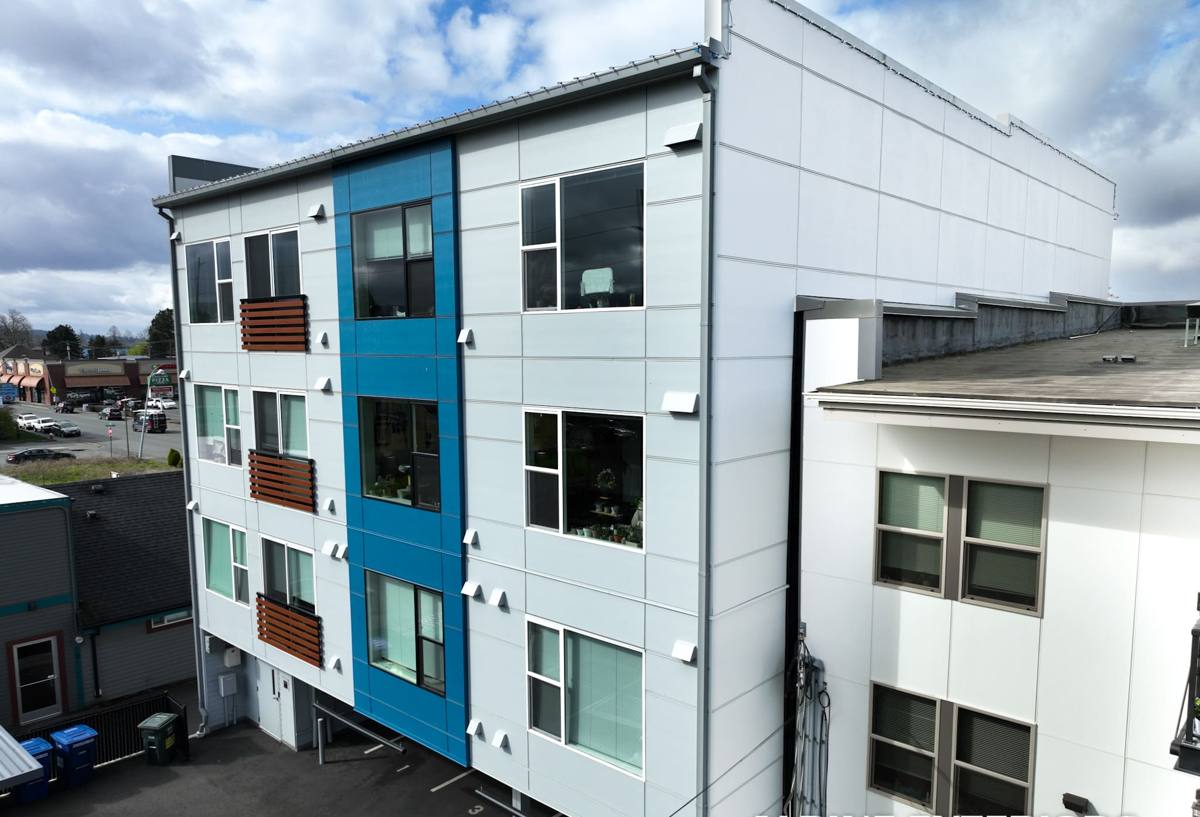
Signs Your Siding Has Reached the End of Its Life
Most homeowners don't replace siding on a schedule — they replace it when it starts failing, and by then some of the damage is usually hidden. Here's what we look for during an inspection, and what you can check yourself before calling anyone:
- Soft or spongy spots when you press on the siding, especially near the bottom courses and around window and door trim
- Paint that's peeling, bubbling, or needing repainting far more often than it used to
- Visible warping, cupping, or boards separating at the seams
- Persistent moss or algae staining that comes back within a season of cleaning
- Gaps opening up around windows, doors, or corner trim where caulking has failed
- A musty smell or visible staining on interior walls that share an exterior wall with a suspect area
Any one of these can be a minor fix. Several together, especially on a home that's twenty or more years old, usually means the siding system itself — not just the surface — has reached the point where patching stops making financial sense.
What a Correct Siding Replacement Actually Involves
It Starts Underneath the Siding, Not With It
The siding itself is the part everyone sees, but the work that determines whether it lasts happens underneath. A proper replacement means stripping the old siding down to the sheathing, checking for rot or moisture damage in the framing, and repairing anything compromised before a single new board goes up. Skipping this step to save time is the single most common reason siding jobs fail early in a climate like Blaine's.
Water Management Is the Whole Job
Once the sheathing is sound, a weather-resistant barrier goes on, followed by properly lapped and sealed flashing at every window, door, and roofline intersection — the places water actually gets in. In a coastal, high-rainfall town, this detail work matters more than the siding brand on the invoice. We build in drainage gaps where the product calls for them and make sure every penetration (vents, hose bibs, light fixtures) is flashed and sealed rather than just caulked over.
Installation to Manufacturer Spec
Fastener spacing, nailing patterns, board overlap, and clearance from grade, decks, and roof lines all have to match manufacturer specifications — not just for warranty coverage, but because those specs exist specifically to handle wind-driven rain and moisture cycling. A beautiful-looking install with the wrong fastener spacing or missing clearances will show problems within a few wet seasons.
Why We Only Install James Hardie Fiber Cement
We don't install vinyl, LP SmartSide, primed wood, or cedar on Blaine homes, and it's worth explaining why. Vinyl expands and contracts with temperature swings and can crack in a hard freeze, which this region does get on occasion. Wood-based and engineered wood products need their factory coatings and edges kept intact to resist moisture — a single scratch or unsealed cut edge near salt air and driving rain is an opening for rot to start. Cedar looks great but demands ongoing maintenance (staining, sealing, moss treatment) that most homeowners underestimate when they choose it.
James Hardie fiber cement is non-combustible, doesn't feed moss and mold the way wood does, and holds its factory-applied ColorPlus finish far longer than field-painted alternatives — which matters directly here, since repainting siding on a two-story coastal home isn't cheap. Hardie's HZ5 product line is engineered for exactly this kind of climate: freeze-thaw cycling, sustained moisture exposure, and coastal conditions. It carries a strong transferable warranty backed by a manufacturer with decades in the fiber cement business. When we say we standardized on one product, this is why — it's the material that holds up to what Blaine's weather actually does to a house, not just what it looks like in a showroom.
Our Process, Start to Finish
Every job follows the same sequence, whether it's a full tear-off or a partial replacement on a section of wall:
- On-site inspection and estimate — we walk the exterior, check for hidden moisture damage where possible, and give you an honest scope and price
- Material selection — Hardie plank, panel, or shingle profile, and ColorPlus color, chosen for your home's style and exposure
- Tear-off and substrate repair — old siding removed, sheathing inspected, any rot addressed before moving forward
- Weather barrier and flashing — house wrap, window and door flashing, and drainage details installed per code and manufacturer spec
- Siding installation — fastened and spaced to manufacturer requirements, with attention to corners, trim, and penetrations
- Final walkthrough — we go over the finished work with you before calling the job done
Because we're already working in and around Blaine regularly, scheduling and material delivery for this area don't add the delays or travel costs that come with a crew that's unfamiliar with the town.
What Drives Cost on a Blaine Siding Job
Every home is different, and we won't quote a number without seeing the house, but these are the main factors that move a project up or down in price:
| Factor | Why It Matters |
|---|---|
| Amount of hidden damage found at tear-off | Rot repair to sheathing or framing adds labor and material before new siding can go on |
| Home size and wall complexity | More corners, gables, and trim details mean more cutting, fitting, and flashing work |
| Siding profile chosen | Lap plank, shingle-style, and panel products differ in material and labor cost |
| Story height and access | Two-story coastal homes often need more scaffolding and safety setup than single-story homes |
| Trim and accessory work | New trim boards, soffit, or fascia done alongside siding adds scope but avoids a mismatched look later |
| Full replacement vs. partial | Replacing one damaged wall section costs less than a full exterior, but full replacement resets your maintenance clock evenly |
Why a Crew That Already Works Blaine Matters
Coastal Whatcom County towns aren't identical to inland siding jobs, and a crew that only occasionally works this close to the water can miss details that matter here — how far to hold trim off grade given local drainage patterns, which wall exposures need extra attention to moss and algae, how flashing details need to be tightened up for wind-driven rain off the water. A crew based out of nearby Ferndale that regularly works Blaine homes has already seen how this specific stretch of coastline treats a house over a few winters, and builds that into how the job gets done — not as an afterthought, but from the first nail.
There's also a practical side: local crews know the permitting expectations for the area, can get to a callback quickly if something needs attention after the job, and aren't factoring long travel time into your quote.
Simple Maintenance Once Your New Siding Is Up
Fiber cement siding is low-maintenance, not no-maintenance. A little attention keeps it looking new for decades:
- Rinse the exterior with a garden hose once or twice a year to clear salt residue and grime, especially on walls facing open water
- Check and clear gutters before the fall rains start so water isn't overflowing onto wall sections
- Keep landscaping trimmed back from siding to maintain airflow and reduce shade that encourages moss
- Re-caulk trim joints if you notice gaps opening up, rather than waiting for water intrusion
- Address any moss growth early with a gentle wash rather than letting it establish
If you're weighing a siding replacement for a Blaine property, we're happy to take a look and give you a straightforward, no-pressure estimate — just fill out the form below and we'll get in touch.