 Ferndale
 Deck Repair Built for Lummi Island's Marine Climate
Lummi Island sits right in the path of Puget Sound's weather — salt-laden wind off the water, driving rain that comes in sideways during winter storms, and a moss season that can run from October clear through April. Decks out here take a different kind of beating than a deck in a sheltered inland yard, and repairs that don't account for that end up failing again in a season or two. We repair decks across Whatcom County, and Lummi Island jobs get the same attention to salt exposure and moisture management that we'd give a waterfront property anywhere on the coast.
A deck repair here isn't just patching a soft board. It's understanding why that board went soft — usually water that had nowhere to drain, fasteners that corroded faster than the wood around them, or moss holding moisture against the surface long after a storm has passed — and fixing the actual cause, not just the symptom.
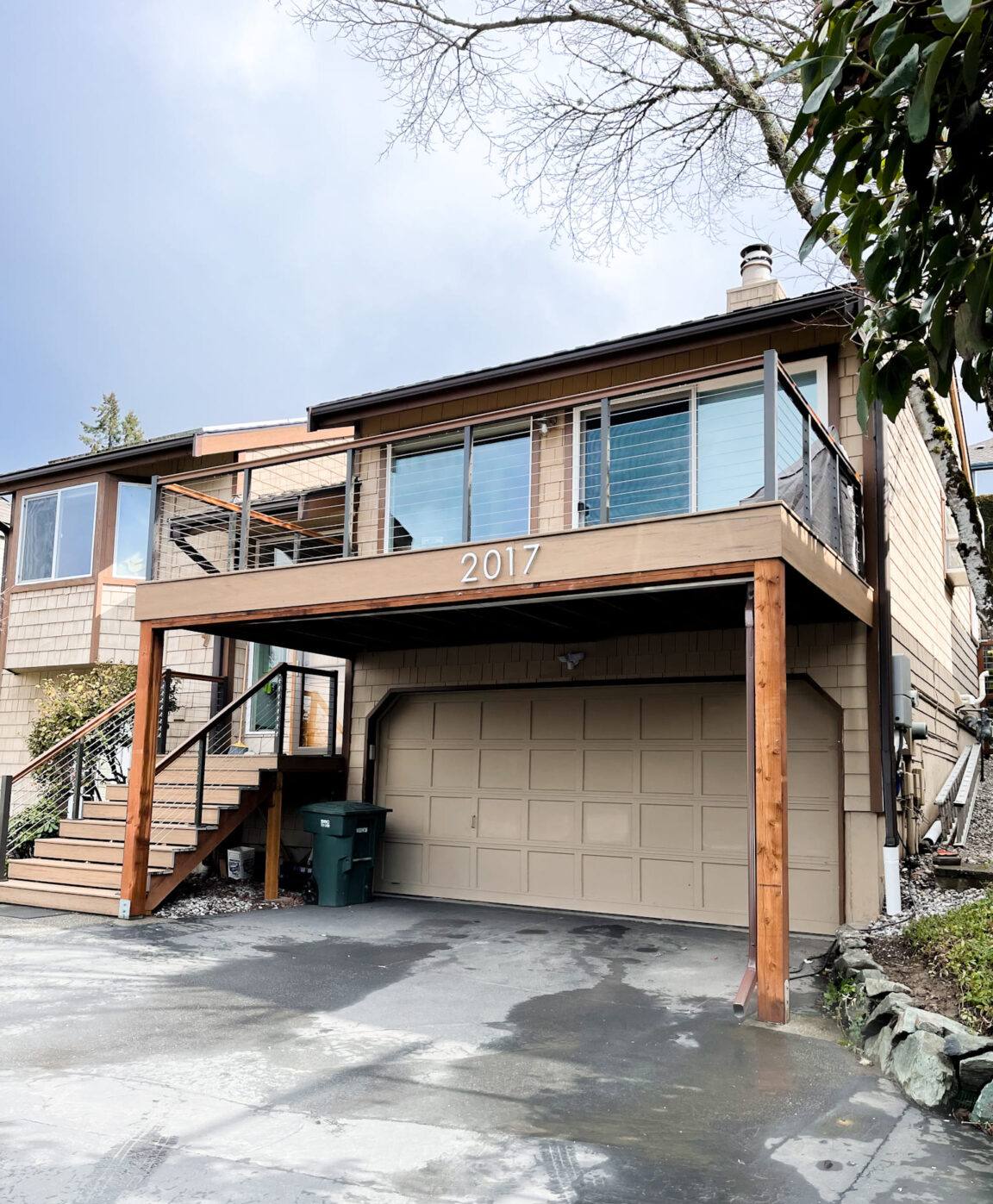
What Salt Air and Driving Rain Do to a Deck
Corrosion Moves Faster Near the Water
Standard fasteners and hardware corrode noticeably faster in a salt-air environment than they would a few miles inland. Once a nail, screw, or joist hanger starts rusting, it loses holding strength long before the surrounding wood looks bad — which means a deck can look fine on top while its connections are quietly weakening underneath. This is one of the most common things we find on island and near-water properties that isn't visible during a quick walk-around.
Driving Rain Finds the Gaps
Rain that comes in at an angle, which is common with the wind patterns around Lummi Island, gets pushed into places a straight-down rain never would — under flashing, behind ledger boards, into the end grain of boards that butt up against the house. Once water gets past the surface and into end grain or a fastener hole, it doesn't dry out quickly in our climate, and that's where rot starts.
Moss Holds Moisture Against the Wood
A long moss season means more months where a deck surface stays damp even between rain events. Moss and algae hold water against boards, block airflow, and make the surface slick and slippery — a safety issue as much as a wood-longevity issue. Shaded sections of a deck, or areas under overhangs that don't get direct sun, are usually the worst affected.
Signs a Lummi Island Deck Needs Repair
- Boards that feel spongy, springy, or noticeably softer underfoot in one area
- Visible rust streaks around screws, nails, or joist hangers
- Gaps or separation where the deck meets the house (ledger board area)
- Persistent green or black staining that doesn't clean off with a simple wash
- Railings or posts that wiggle more than they used to
- Stairs that feel less solid, or treads that flex
- Standing water that takes more than a day to drain after rain
- Fasteners backing out or heads that have corroded flush with the wood
Any one of these on its own might be minor. Several together, especially combined with the age of the structure, usually mean it's worth having someone look underneath before deciding what's actually needed.
What a Correct Repair Actually Involves
Diagnosis Before Demo
We start by getting underneath the deck, not just walking the surface. Soft or damaged boards are a symptom — the real question is whether the framing, ledger connection, and support posts are still sound. Probing for rot at joist ends, checking ledger flashing, and inspecting post bases where they meet concrete or grade tells us whether we're looking at a board-level repair or something structural.
Structural Repairs Come First
If joists, beams, ledger connections, or posts are compromised, those get addressed before any surface work happens. There's no point installing new decking over framing that won't support it for long. This is also where corroded fasteners and hardware typically get replaced with better-suited hardware for our climate, not just swapped one-for-one with whatever's cheapest.
Surface and Cosmetic Work
Once the structure is sound, damaged boards get replaced, railings get re-secured or rebuilt, and stairs get tightened up. We match materials as closely as practical to the existing deck, and we pay attention to spacing and drainage so water sheds the way it's supposed to instead of pooling in the same spot that caused the original problem.
Drainage and Airflow Get Fixed, Not Just the Symptom
If a section stayed wet because of poor drainage or blocked airflow underneath, we address that as part of the repair. Otherwise the new boards will just fail the same way the old ones did, on the same timeline.
Repair vs. Replace: How We Help You Decide
| Factor | Leans Toward Repair | Leans Toward Replacement |
|---|---|---|
| Framing/structure condition | Solid, only isolated soft spots | Widespread rot at joists, beams, or ledger |
| Age of the deck | Under 15-20 years, built to a reasonable standard | Well past typical service life, outdated construction |
| Extent of damage | Localized — a few boards, one railing section | Spread across most of the surface and supports |
| Fastener/hardware corrosion | Isolated, easily replaced | Widespread rust affecting multiple connections |
| Code/safety concerns | None beyond the specific repair | Undersized framing, missing structural connections |
| Budget goal | Extend life at lower cost now | One-time investment, longer runway ahead |
Most decks we look at on the island fall somewhere in between, which is why we walk the whole structure before recommending a direction rather than pricing off a phone description.
Our Process for Lummi Island Jobs
Lummi Island is reached by ferry, which is a real scheduling factor for any contractor working out there — and it's exactly why we plan these jobs the way we do. We batch trips so materials, tools, and crew time are used efficiently, and we scope the job thoroughly on the first visit so there aren't multiple return trips for things that could have been caught up front. That planning keeps costs reasonable and keeps the timeline predictable for the homeowner.
- Free on-site evaluation, including getting underneath the deck to check framing and connections
- Clear explanation of what's causing the problem, not just what's visibly damaged
- Written estimate outlining repair scope, materials, and timeline
- Scheduled repair work, planned around ferry logistics to minimize disruption
- Final walkthrough so you know what was fixed and why
Materials and Hardware Suited to Salt Air
What holds up a few miles inland doesn't always hold up the same way this close to the water. For repairs on Lummi Island and other exposed Whatcom County properties, we lean toward:
- Stainless steel or hot-dip galvanized fasteners in place of standard coated screws, especially anywhere the fastener is exposed to weather or salt spray
- Properly rated joist hangers and structural hardware matched to the corrosion resistance the location actually needs
- Pressure-treated lumber rated for ground contact where posts or framing are near or in contact with soil or concrete
- Composite or capped decking as an option in high-moisture, high-moss areas where reduced maintenance matters more to the homeowner than matching a traditional wood look
We'll walk through the trade-offs with you rather than defaulting to one material. Wood is often the right call for matching an existing deck and keeping cost down; composite makes more sense in shaded, moss-prone sections where maintenance is the bigger long-term concern. Either way, the fasteners and hardware holding it together matter as much as the decking itself.
Maintenance That Extends the Life of a Repair
A good repair buys you time, but a few habits stretch that time further in a climate like ours:
- Sweep debris and standing moisture off the deck regularly during fall and winter
- Keep gutters and downspouts clear so runoff isn't dumping onto or under the deck
- Treat moss and algae growth early, before it spreads across shaded sections
- Check fasteners and hardware for rust or loosening once a year
- Reseal or re-stain wood decking on the manufacturer's recommended cycle, not just when it looks worn
- Trim back vegetation that's shading the deck and keeping it damp longer than it needs to be
Why It Matters That We Already Work Out There
A contractor who's already familiar with Lummi Island's ferry schedule, weather exposure, and the general character of construction out there isn't starting from scratch on your project. We know what salt air and a long wet season typically do to a deck's framing and hardware before we even get underneath it, which means a faster, more accurate diagnosis and fewer surprises once work is underway. We're a Ferndale-based crew serving Whatcom County, and Lummi Island repairs get planned with the same care as any waterfront job — accounting for access, weather windows, and the materials that actually hold up here.
If your deck is showing soft spots, corrosion, moss buildup, or just doesn't feel as solid as it used to, we're happy to take a look. We'll get underneath it, tell you honestly what we find, and give you a straightforward, no-pressure estimate for what it would take to fix it right — with no obligation to move forward. The form below is the easiest way to get that started.