 Ferndale
 Why Board & Batten Holds Up Differently in Custer
Custer sits close enough to the water and open farmland north of Ferndale that homes here take a steadier beating than siding manuals assume. You've got salt-laden air drifting in off the Strait, wind-driven rain that finds every gap in a wall system, and a moss season that can run eight or nine months out of the year on shaded, tree-lined lots. Board and batten siding — with its raised vertical battens and exposed seams — has more places for water, salt, and organic growth to collect than a flat lap profile does. That's not a reason to avoid the look. It's a reason to be picky about what material goes up and how it's installed.
A lot of the board and batten siding on older homes in this area was never built for this climate to begin with. It was installed because it was available, or cheap, or because a crew wanted a fast job. We see the results of that on tear-offs regularly: swollen battens, delaminated panel faces, and moss creeping up from the bottom courses where moisture sits longest.
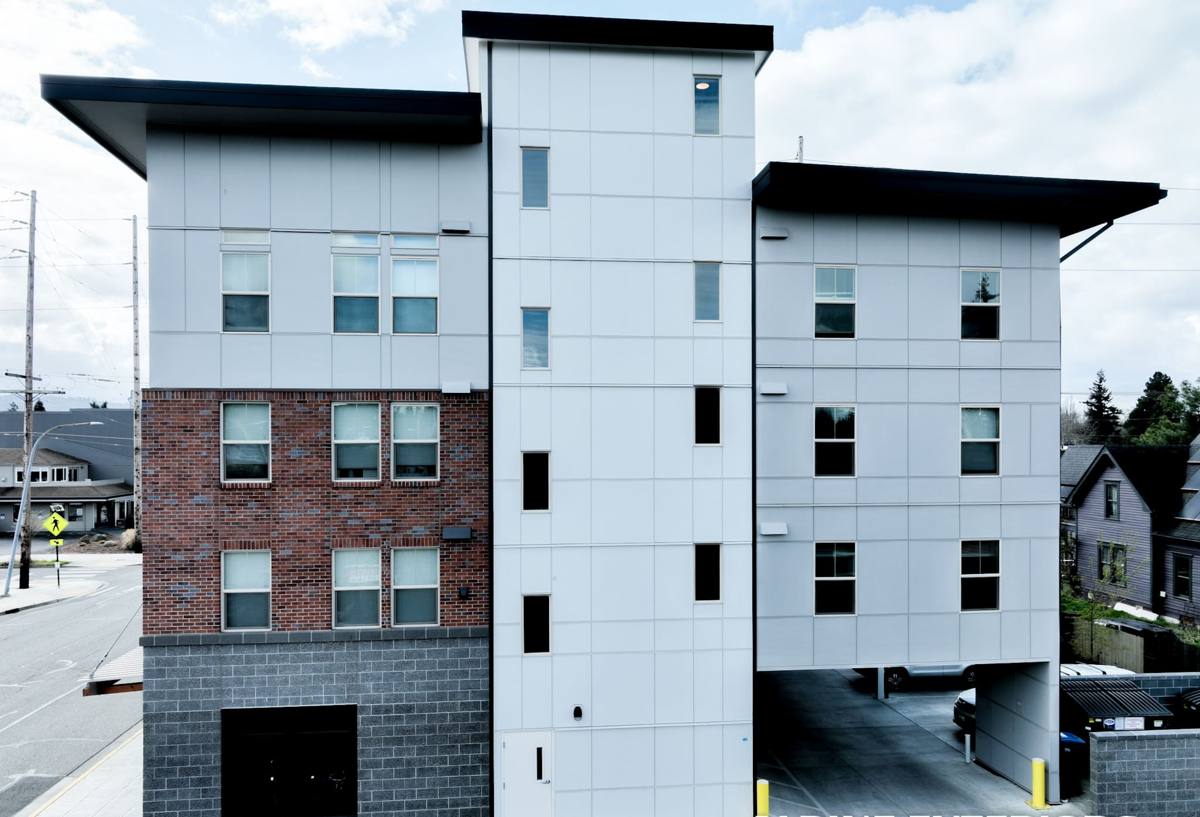
What Makes Board & Batten a Good Fit for Custer Properties
Board and batten reads as clean, vertical, and a little more rural-modern or farmhouse than standard lap siding — which suits a lot of the acreage and semi-rural lots common around Custer. It also does something practical: the vertical lines shed water downward faster than a horizontal profile can, when the material and installation are right. That's a real advantage in a location that gets sustained, sideways rain off open fields and water.
The trade-off is that every batten seam is a joint, and every joint is a place where the wrong material or the wrong fastening will fail years before it should. That's the part homeowners don't see when they're comparing photos of finished siding.
Where It Works Best
- Full-facade statements on newer or remodeled homes wanting a modern-farmhouse look
- Accent gables, dormers, and entry features paired with standard lap siding elsewhere
- Outbuildings, shops, and detached garages that want to match the main house
- Homes on more open or elevated Custer lots where the vertical line reads well from the road
Why We Install Board & Batten Only in James Hardie Fiber Cement
We get asked why we won't do board and batten in cedar, engineered wood, or vinyl, since all three are sold as "board and batten" options. Here's the honest breakdown.
Cedar Board & Batten
Real cedar looks great on day one. But raw or lightly finished cedar in a marine climate needs re-staining or re-sealing every few years, and the battens — narrow strips with end grain exposed at trim and corners — are exactly where wood siding fails first. In a location with Custer's rain volume and moss pressure, that maintenance schedule is aggressive, and skipping a cycle shows up fast as graying, cupping, or rot at the batten ends.
Engineered Wood (LP SmartSide)
Engineered wood siding is wood-based with a resin-treated strand core, and it depends entirely on an intact factory coating to keep moisture out. Cut edges, fastener penetrations, and batten seams all need field-sealing to spec, and once moisture gets into the substrate, swelling follows. On a profile that's nothing but seams, that's a lot of vulnerable edges. We don't install it.
Vinyl Board & Batten
Vinyl board and batten panels are thin, they expand and contract more than fiber cement in temperature swings, and they can't be painted to refresh a color years down the road. In coastal air, vinyl also tends to chalk and fade unevenly over time. It's the lowest-cost option, and it looks like it.
James Hardie Fiber Cement
Hardie board and batten panels are non-combustible, dimensionally stable fiber cement with a factory-baked ColorPlus finish, engineered in an HZ5 formulation for this region's wet-cold cycle. The panels don't absorb water the way wood or engineered wood do, they hold paint and factory color far longer than cedar, and the batten strips are the same fiber cement material — not a different, weaker trim product. That consistency matters most exactly where board and batten is most vulnerable: the seams.
What a Correct Installation Actually Involves
Board and batten done right is not "nail boards to the wall." The board and batten look depends on what's underneath being right, because every batten line is a fastening point through the weather barrier.
Behind the Panels
- A code-compliant water-resistive barrier, lapped correctly at every seam and penetration
- A rain screen gap (vertical furring) so incidental moisture behind the panels can drain and dry instead of sitting against the sheathing
- Properly flashed windows, doors, and any horizontal trim transitions before panels go up
The Panel & Batten Work Itself
- Hardie panel sheets installed per manufacturer fastening schedule — correct nail type, spacing, and edge distance
- Battens fastened into framing wherever possible, not just into sheathing
- Consistent batten spacing and reveal, checked against the plan before the crew commits to a layout
- Factory-caulked or backer-rod joints at seams that need sealant, using a sealant compatible with ColorPlus finish
- Proper clearance at grade, roofing, and decks — Hardie's minimum clearances exist specifically to keep splash-back and standing moisture off the panel bottom edge
Skip any one of these and you get a board and batten wall that looks right for a few years and then starts showing streaking, staining, or panel movement at the seams — right when Custer's wet season is doing its worst.
Our Process on Custer Jobs
1. Site Walk and Wall Assessment
We look at existing siding condition, sheathing, current flashing details, and how exposed the walls are to prevailing wind and rain direction. Custer properties vary a lot — open farmland exposure is different from a lot with mature tree cover — so the assessment isn't generic.
2. Tear-Off and Sheathing Check
Old siding comes off and we inspect the sheathing underneath before anything new goes up. If there's rot or water damage from a prior installation, it gets addressed, not covered over.
3. Weather Barrier and Rain Screen
New WRB, correctly lapped, with furring strips installed to create the drainage gap behind the Hardie panels.
4. Panel and Batten Installation
Panels and battens go up to Hardie's fastening spec, with layout planned in advance so batten spacing is even across elevations, corners, and around openings.
5. Trim, Flashing, and Final Detailing
Corners, window and door trim, and any transitions to other siding profiles get finished and sealed.
6. Walkthrough
We go over the finished job with you before calling it done.
Comparing Board & Batten Material Options
| Material | Moisture Behavior in Marine Climate | Maintenance Cycle | Typical Lifespan |
|---|---|---|---|
| James Hardie Fiber Cement | Does not absorb/swell; engineered for wet-cold regions | Occasional wash; no re-coating needed | 30+ years to factory finish life, often longer with care |
| Cedar | Absorbs moisture; vulnerable at batten end grain | Re-stain/re-seal every 3-5 years | 15-25 years with diligent upkeep |
| Engineered Wood (LP SmartSide) | Coating-dependent; swells if edges/seams compromise | Field-seal cut edges; monitor seams | Manufacturer-warranted, but seam-sensitive |
| Vinyl | Doesn't rot, but expands/contracts more; can trap moisture behind panel | Low, but can't be refreshed once faded | 20-30 years, fading/chalking common in coastal air |
Keeping Board & Batten Siding Looking Right in This Climate
Even the right material benefits from basic upkeep in an area with this much moss pressure and salt exposure. This is the maintenance list we give Custer homeowners after a board and batten install.
- Rinse the siding once or twice a year, focusing on north-facing and shaded walls where moss and mildew take hold first
- Keep gutters clear so overflow doesn't run down the batten seams repeatedly
- Trim back vegetation and tree branches that keep walls shaded and damp longer than they need to be
- Check caulked joints every couple of years and have any cracked sealant redone before winter rains
- Watch grade lines and landscaping beds — soil or mulch piled against the bottom panel edge traps moisture against the siding
Why Local Experience with Custer Homes Matters
Custer isn't a subdivision with one wall orientation and one exposure profile — it's a mix of open farmland, tree-covered lots, and properties close enough to the water to catch salt spray on a windy day. A crew that already works this specific stretch of Whatcom County knows which walls need extra flashing attention, which lots hold moisture longest, and how the wind actually hits a house here versus a generic installation guide. That local pattern recognition is the difference between a board and batten job that's still tight in fifteen years and one that needs seam repairs in five.
We install James Hardie exclusively because we've seen what happens to the alternatives in this specific climate — not in a lab, but on real Whatcom County homes. Board and batten's seam-heavy design just makes that material choice matter more, not less.
If you're considering board and batten siding for a home in Custer, we're glad to walk the property, look at your current siding condition, and put together a straightforward, no-pressure estimate for what a correct James Hardie installation would look like on your walls.