 Ferndale
 Building a Deck That Actually Holds Up in Everson
Everson sits inland from Ferndale along the Nooksack River valley, which gives it a slightly different weather pattern than the coast — more fog, more standing moisture in low spots, and long stretches of shade under mature trees on a lot of rural and semi-rural properties. Add in the marine air that rolls up from Bellingham Bay and the Strait of Georgia, and a deck built here has to deal with a mix of damp valley air, driving winter rain, and a moss season that can run from October through May. A deck that's framed and finished for a drier climate simply doesn't last as long out here, and we've replaced plenty of decks that were built to a generic spec instead of a Whatcom County one.
This page is about one thing: what it actually takes to build a custom deck in Everson that stays solid, safe, and good-looking for decades instead of years. Not a sales pitch — a straight look at materials, structure, and process.
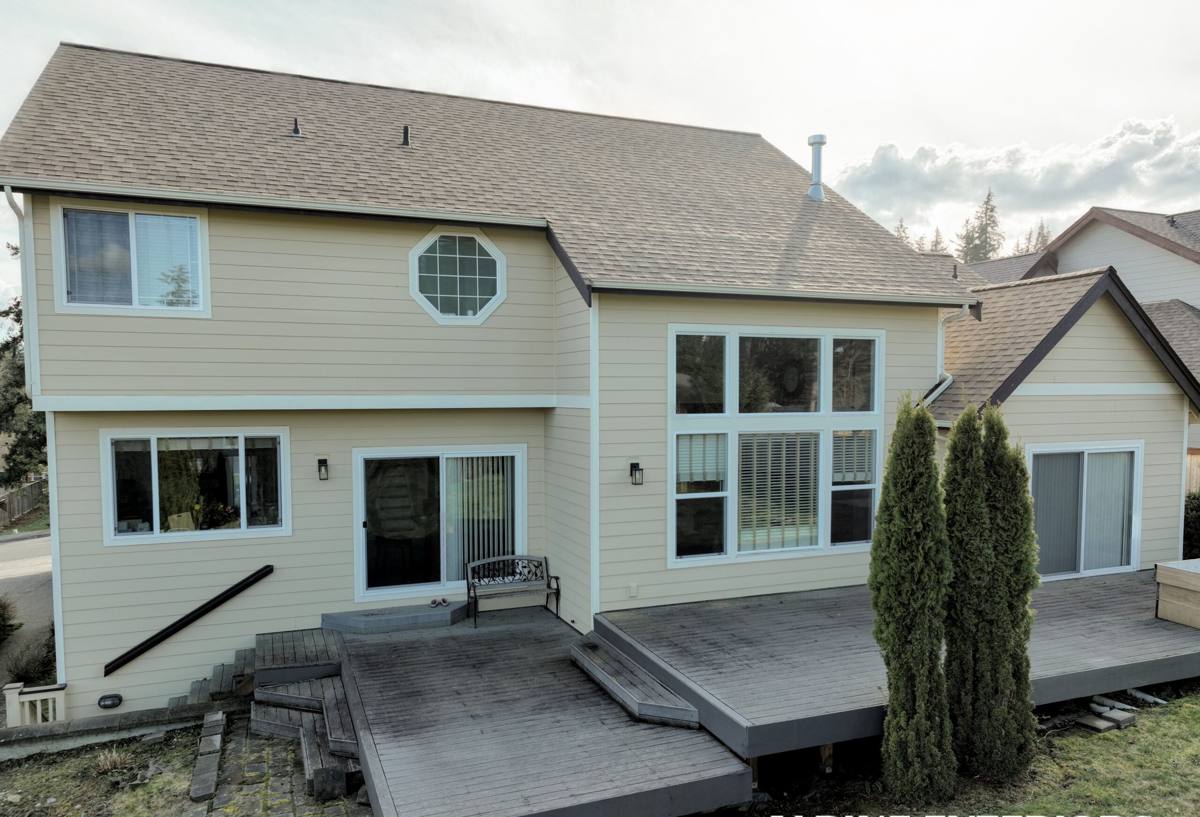
What Northwest Washington Weather Does to a Deck
Three things drive almost every deck failure we see in this area:
- Moisture that never fully dries out. Between rain, fog, and shade from trees, a lot of Everson properties have decking and framing that stays damp for days at a time, especially on north- and east-facing sides of the house.
- Salt-laced air. Even inland from the water, prevailing marine air carries enough salt to accelerate corrosion on cheap fasteners, hinges, and hardware over the years.
- Moss and algae. Anything that holds moisture against a surface — flat boards, poor drainage, tight board spacing — becomes a moss farm by year two if it isn't addressed at the design stage.
None of this means a deck can't work here — it means the material choices and the framing details have to account for it from day one, not get patched later.
Choosing the Right Decking Material
There's no single "best" decking material — there's a best material for your budget, your maintenance appetite, and how much sun or shade your deck actually gets. Here's how the common options stack up for an Everson property:
| Material | Moisture/Moss Resistance | Maintenance | Typical Lifespan Here |
|---|---|---|---|
| Pressure-treated fir/hem-fir | Good if sealed regularly | Annual cleaning + resealing every 2-3 years | 15-20 years |
| Western red cedar | Naturally rot- and insect-resistant, but surface still needs care | Cleaning + oil/stain every 2-3 years | 20-25 years |
| Capped composite | Excellent — won't absorb moisture into the core | Occasional wash, no sealing/staining | 25-30+ years |
| Uncapped/first-gen composite | Weaker — can absorb moisture at cut edges over time | More frequent cleaning to prevent surface mold | 15-20 years |
For most Everson homeowners, we steer the conversation toward capped composite or well-detailed cedar, because both handle the damp/shade combination without turning into a moss magnet. Pressure-treated fir is still a legitimate, budget-friendly choice — it just needs an honest maintenance commitment from the homeowner, and we say so up front instead of letting it be a surprise in year three.
A Word on Board Spacing and Orientation
Gapping boards correctly and running them to encourage water off the surface — rather than pooling between boards — makes a bigger difference in moss growth than the material itself in a lot of cases. This is a design decision, not an afterthought, and it's one of the first things we look at when planning a deck for a shaded or low-airflow yard.
Substructure and Framing: Where Decks Actually Fail First
Almost every deck failure we've been called out to inspect started underneath — not on the visible surface. The framing, ledger connection, and footings take the brunt of Whatcom County's wet-dry cycles, and they're the parts a homeowner can't see to check.
What a correctly built substructure includes
- Ledger board flashed and fastened to keep water from tracking behind the siding and into the house rim joist — a common rot point on older Everson homes with wood siding
- Joist tape or a moisture barrier on top of framing lumber to stop water from sitting in fastener holes
- Corrosion-resistant, code-rated hardware and fasteners — the marine air here is hard on standard-grade metal over 10-15 years
- Footings sized and depth-set for the local frost line and soil conditions, not just poured to minimum
- Adequate airflow underneath the deck so the substructure can actually dry out between rain events
A deck can look great for the first two or three years even with shortcuts in the framing. The problems show up later — soft spots, rust streaks, a ledger board that's quietly rotting behind the flashing — and by then the fix is a lot more expensive than doing it right the first time.
Railings, Stairs, and Code Requirements
Whatcom County follows the Washington State building code for deck guardrails, stair rise/run, and baluster spacing, and permits are typically required for decks above a certain height or attached to the structure — we handle that paperwork as part of the job so you're not chasing it down yourself. Beyond the legal minimums, we pay attention to a few things that matter specifically here:
- Railing materials that won't pit or streak from salt-laced rain (powder-coated or stainless hardware over bare steel)
- Stair treads with enough texture or drainage grooving to stay safe when wet — which, in this climate, is most of the year
- Post bases that shed water instead of trapping it against the wood or composite post
Our Process, Start to Finish
We keep the process straightforward because a deck is a big enough investment without added confusion:
- On-site walkthrough. We look at sun/shade exposure, drainage, existing structure (if it's a rebuild), and how the deck will actually get used.
- Design and material selection. We talk through decking, railing, and layout options against your budget and maintenance preference — no upselling toward the priciest option if it doesn't fit your situation.
- Written estimate. Clear scope, materials, and price before anything is scheduled.
- Permitting. We pull what's required with Whatcom County so the deck is built to code and won't cause issues at resale.
- Demo (if replacing an old deck) and framing. This is where the moisture-management details — flashing, joist tape, fastener grade — get built in, not bolted on later.
- Decking, railing, and finish work. Board spacing, fastening method, and railing install to spec.
- Final walkthrough. We go over care and maintenance specific to the material you chose before we consider the job done.
Maintenance Checklist for Everson Decks
Whatever material you choose, a little seasonal attention goes a long way in this climate. A realistic yearly routine looks like this:
- Sweep off leaves and debris regularly through fall — trapped organic matter is what feeds moss and mildew
- Rinse or wash the surface at least once or twice a year, more often in shaded areas
- Check fastener heads and railing hardware annually for early rust or corrosion, especially on older or lower-grade hardware
- Reseal or restain wood decking every 2-3 years (composite doesn't need this)
- Confirm gaps between boards haven't closed up from swelling or debris buildup, which blocks drainage
- Check under the deck once a year for airflow blockages — stored items or overgrown landscaping can trap moisture against the framing
Why Hiring a Crew That Already Works in Everson Matters
A deck built for a drier inland climate, or built by a crew that doesn't normally work this far north in Whatcom County, often misses the details that matter here — the flashing details that keep the marine air and constant rain from working into the framing, the material choices that resist moss instead of feeding it, the fastener grade that won't be rusting by year eight. We work Ferndale, Everson, and the surrounding Whatcom County communities regularly, so these aren't special accommodations — they're just how we build a deck by default.
We're also the crew you can actually call five or ten years from now if something needs a look, rather than a company that only worked this area for one season.
Get a Straightforward Estimate
If you're planning a new deck or replacing one that's showing its age, we'll come out, look at your specific site conditions, and give you a clear, no-pressure estimate — including honest input on which material actually makes sense for your yard's sun, shade, and drainage. Use the form below to get started.