 Ferndale
 Windows Built for the Wet Side of Whatcom County
The Cordata area sits in one of the wettest corners of Washington, and windows here take a different kind of beating than they would on the east side of the state. Salt-tinged air off the Sound, months of driving rain, and a moss season that seems to stretch longer every year all work on wood, seals, and flashing in ways that dry-climate windows simply weren't built for. Ferndale Siding installs custom windows for homes throughout this part of Whatcom County, and almost every job starts with the same conversation: the windows didn't fail overnight, they failed slowly, from moisture that had nowhere to go.
A window that's "custom" isn't a luxury upsell — for a lot of homes in this area, it's the only way to get a window that actually fits, seals, and drains correctly. This page covers what that means in practice, what a correct installation looks like in a marine climate, and how our process works from the first look at your home to the final walkthrough.
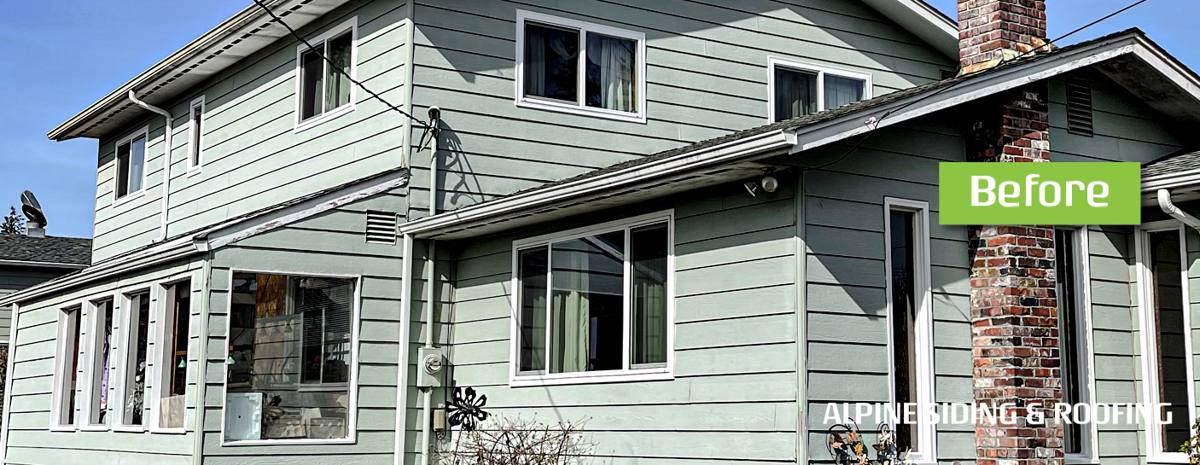
What "Custom" Actually Means
Stock window sizes assume a perfectly square, standard opening. Plenty of homes in and around Cordata don't have that — older houses have settled slightly out of square over the decades, additions were often framed to whatever lumber was on hand, and some homes have architectural details like bay windows, angled openings, or oversized picture windows that simply don't come off a shelf. Custom manufacturing means the window is built to the actual opening, not the other way around.
That matters more than people expect. A window that's slightly undersized for its opening gets shimmed and packed with extra sealant to make up the gap — and that gap is exactly where water finds its way in during a hard winter storm. A properly sized custom unit doesn't need to rely on caulk to do a framing job's work.
Common custom situations we run into locally
- Older homes with settled or slightly out-of-square framing
- Additions or remodels where the rough opening doesn't match a standard size
- Bay, bow, or picture windows that need to match an existing roofline or trim detail
- Replacing a single oddly-shaped window without disturbing the surrounding siding
- Matching trim profiles and sightlines across a whole elevation, not just one opening
Signs Your Current Windows Are Losing the Battle
Because moisture damage is gradual, most homeowners notice the symptoms years before they connect them to the windows. Here's what we look for during an assessment, and what you can check yourself before calling anyone out.
- Fogging or a permanent haze between the panes — the seal has failed and the gas fill is gone
- Sills or the wood trim around the frame that feel soft, spongy, or show dark staining
- Windows that are hard to open, close, or lock, especially after a wet stretch
- Visible moss, algae, or green staining creeping onto the frame or sill from nearby siding or trim
- Condensation forming on the inside of the glass regularly, even in mild weather
- A noticeable draft near the frame edge when it's windy, or a heating bill that keeps climbing
- Caulk around the frame that's cracked, shrunk, or pulling away from the siding
Any one of these on its own isn't necessarily an emergency. Several of them together on the same window, especially on a wall that takes direct weather, usually means the window's service life is running out.
Frame Material: What Holds Up in This Climate
There's no single "best" window material — the right choice depends on the home, the budget, and how much maintenance you want to take on. In a climate with this much rain and humidity, moisture behavior matters more than it would somewhere drier.
| Material | Moisture Behavior | Maintenance | Typical Lifespan |
|---|---|---|---|
| Vinyl | Won't rot; seams and welded corners are the weak point if not installed correctly | Low — occasional cleaning | 20–30 years |
| Fiberglass | Very stable in wet/dry cycling, resists warping | Low | 30–40+ years |
| Wood (clad exterior) | Interior wood needs the exterior cladding to stay intact; exposed wood is vulnerable | Moderate to high | 20–30 years, more with upkeep |
| Aluminum | Doesn't rot but conducts cold and can condense heavily without a thermal break | Low | 20–30 years |
We don't push one material on every job. What we won't do is install a product in a way that ignores how it handles moisture over time — that's a maintenance headache we're not willing to hand a homeowner just to save an install a few minutes.
The Installation Detail That Actually Prevents Leaks
Because we're a siding contractor first, we look at window installation as part of the whole wall assembly, not an isolated swap. Most window failures we get called out for weren't caused by a bad window — they were caused by water getting behind a correctly-made window because the flashing or sequencing was wrong.
What correct installation involves
- A sloped sill pan under the opening so any water that does get in drains back out, not into the wall
- Flashing tape and building paper or house wrap layered shingle-style — upper layers overlapping lower ones — so water always sheds downward and outward
- Sealant used at the right points, not as a substitute for proper flashing
- Integration with the existing siding so the window's water management ties into the wall's, instead of fighting it
- Insulation packed correctly around the frame without over-compressing it, which can bow the frame and affect the seal
Skip any one of these steps and the window can look perfect for years while water quietly works into the framing behind it. That's the failure mode we see most often on older homes in this area — a window that looks fine from the outside with rot developing underneath.
Our Process, Start to Finish
- On-site assessment: we look at the existing windows, framing condition, and siding around each opening — not just measure and quote.
- Product selection: we walk through material, glass package, and style options based on the home and your budget, not a one-size pitch.
- Custom order: units are built to your actual openings, which typically takes a few weeks of lead time depending on the manufacturer.
- Install day: old windows come out, we inspect the framing for hidden rot or moisture damage before anything new goes in, then flash, set, and seal each unit correctly.
- Trim and finish: interior and exterior trim is finished to match the surrounding siding and casing.
- Walkthrough: we test operation, check seals, and go over care and warranty coverage before we consider the job done.
What Actually Drives the Cost
Window quotes vary a lot from home to home, and it's usually not about the brand — it's these factors:
| Factor | Why It Matters |
|---|---|
| Size and quantity | More or larger openings mean more material and labor |
| Frame material | Vinyl, fiberglass, and clad-wood carry different material costs |
| Glass package | Double-pane vs. triple-pane, and Low-E coatings, affect both price and performance |
| Accessibility | Second-story or hard-to-reach openings take longer and need more equipment |
| Hidden damage | Rot or moisture damage found once the old window comes out adds repair time |
| Trim and siding work | Matching trim profiles or patching siding around a resized opening adds scope |
We'd rather walk you through these line items honestly than give a number that doesn't hold up once we're into the job. Any changes to scope get discussed before we act on them, not after.
Why Hire a Crew That Already Works in Cordata
A lot of window problems in this part of Whatcom County trace back to work done by someone unfamiliar with how this climate treats a wall assembly over time — a caulk-heavy install that looked fine on a dry day, or a window sized without accounting for how the home had settled. Working regularly in this area means we've seen how the local housing stock ages, what typically fails first, and how to sequence a window job so it holds up through another wet season, not just past the final inspection.
It also means we're not disappearing after the invoice is paid. If a seal ever seems off or you notice a draft two winters from now, you're calling a crew that's still local and still standing behind the work — not chasing down an installer who worked the area for one season and moved on.
Ready to Talk About Your Windows?
If your windows in the Cordata area are fogging, drafting, or just starting to show their age, we're happy to take a look and give you an honest read on what's going on — no pressure, no upsell script. Fill out the form below for a free estimate and we'll get back to you to schedule a time to come out.