 Ferndale
 Deck Repair Built for Everson's Climate, Not a National Checklist
A deck in Everson takes a different kind of beating than a deck in a dry climate, and it shows in the repairs we get called out for. Whatcom County's combination of salt-tinged coastal air, long stretches of driving rain, and a moss season that can run from October through May doesn't just make a deck look tired faster — it works its way into joints, fastener holes, and end-grain cuts where water sits and never fully dries out. A generic repair that ignores that reality tends to fail again within a season or two. Ours doesn't, because we're not guessing at what this climate does to lumber and hardware — we see it on every job.
This page is specifically about deck repair for homes in and around Everson, in Ferndale's service area. It's not a rundown of every deck service we offer — it's a straight explanation of what local decks actually need, what a correct repair looks like, and how we run the job from first look to final walkthrough.
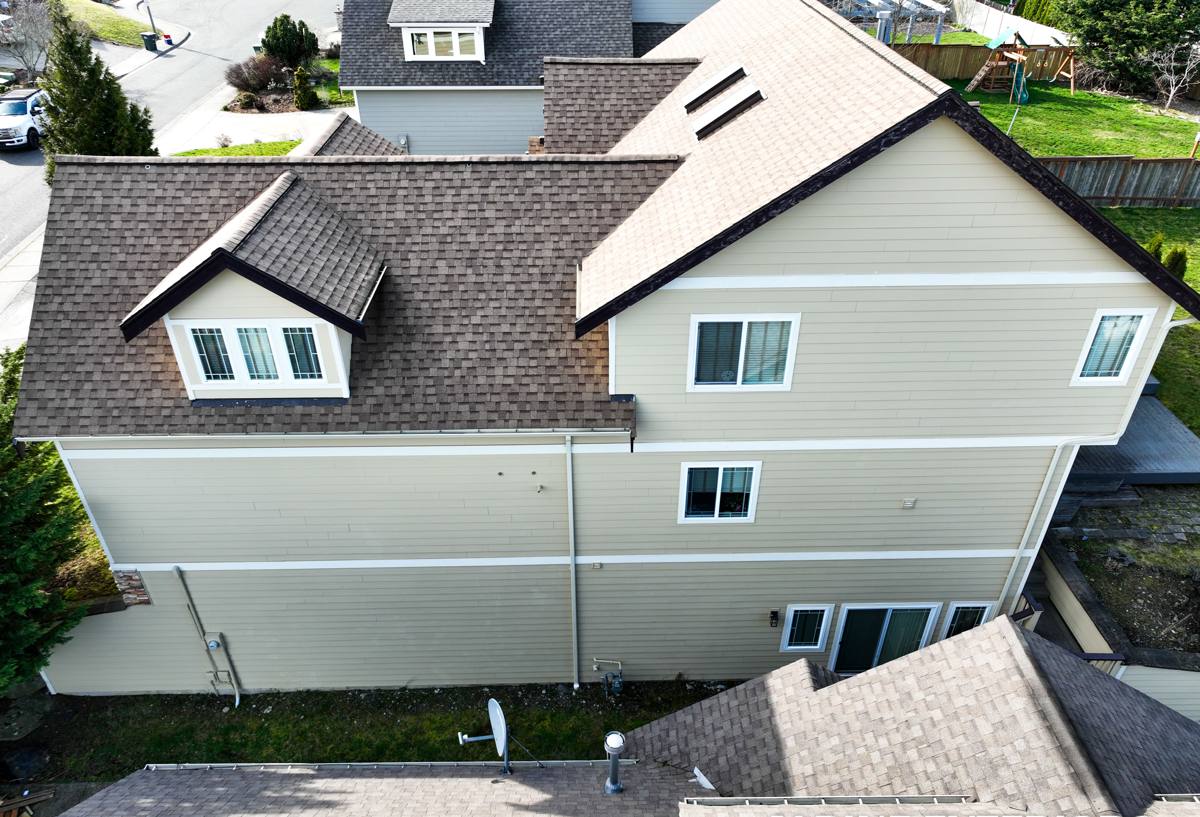
What the Local Climate Does to a Deck
Three climate factors drive most of the repair calls we get in this part of Whatcom County:
Salt Air
Proximity to Puget Sound means airborne salt reaches inland further than most homeowners expect. Salt accelerates corrosion in fasteners, joist hangers, and any exposed metal hardware. Once a nail or screw starts rusting, it loses holding strength and can stain the surrounding wood — often the first visible sign that something underneath needs attention.
Driving Rain
Wind-driven rain doesn't just fall on a deck's surface — it gets pushed sideways into board gaps, under flashing, and against the house where the deck ledger attaches. That ledger connection is one of the most common failure points we find, because water intrusion there is hard to see until the damage is advanced.
A Long Moss Season
Moss and algae thrive in the shade and damp that define fall through spring here. Beyond looking bad, moss holds moisture directly against the decking surface, which speeds up rot in wood decks and can make composite surfaces dangerously slick. Left alone through a full moss season, what starts as a surface issue can become a structural one.
Common Deck Problems We See in Everson Homes
| Problem | What Causes It | Why It Matters |
|---|---|---|
| Soft or spongy decking boards | Trapped moisture under moss or debris, poor drainage between boards | Early sign of rot; can progress to a fall-through hazard |
| Rusted or failing fasteners | Salt air corrosion, incompatible metal hardware | Reduces structural holding strength, stains wood |
| Ledger board separation or rot | Water intrusion where deck meets house, missing or failed flashing | Ledger failure is a primary cause of deck collapse |
| Loose or wobbly railings | Post base rot, corroded connectors, freeze-thaw cycling | Safety issue and a common code violation on resale |
| Discolored, slick surface | Moss and algae buildup during wet months | Slip hazard, accelerates surface wear |
| Cracked or splitting boards | Repeated wet-dry cycling, sun exposure between rains | Creates entry points for water into the board core |
What a Correct Deck Repair Actually Involves
Inspection Before Anything Else
We start underneath, not on top. Surface staining or a soft board is often just the visible edge of a larger moisture problem. We check ledger board attachment, joist condition, post bases, and the flashing details where the deck meets the house — because those are the areas where a cosmetic patch will hide a structural problem instead of fixing it.
Structural Repairs Come First
If joists, beams, or the ledger board show rot or fastener failure, that gets addressed before any decking is replaced. Reattaching boards to a compromised frame just resets the clock on the same failure.
Flashing and Water Management
Given how much of our repair work traces back to water intrusion at the ledger, proper flashing isn't optional here — it's the single detail that determines whether a repair lasts five years or fifteen.
Fastener Selection
We use fasteners and hardware rated for the corrosion these conditions cause. Mixing incompatible metals, or using standard hardware in a salt-air environment, is a shortcut that shows up as rust stains and loosened boards within a year or two.
Board Replacement and Finish
Damaged boards are replaced individually where possible rather than resurfacing the whole deck unnecessarily — it keeps costs honest and avoids replacing wood that still has useful life left. Any finish or sealant goes on once the substrate is confirmed dry and sound.
Our Deck Repair Process
- On-site assessment — we inspect the full structure, not just the area you called about, since deck problems in this climate rarely stay isolated.
- Written scope and estimate — you see exactly what's being repaired and why before any work starts.
- Structural repair — joists, ledger, posts, and framing addressed first if needed.
- Decking and railing repair or replacement — matched to the existing material where reasonable, or discussed with you if a section is due for full replacement.
- Hardware and flashing upgrade — corrosion-resistant fasteners and proper water management details installed.
- Final walkthrough — we show you what was fixed and flag anything worth watching going forward.
Repair or Replace? How We Help You Decide
Not every deck problem calls for full replacement, and not every repair is worth doing on a deck that's past its practical lifespan. We walk homeowners through this honestly rather than defaulting to the bigger job.
| Factor | Leans Toward Repair | Leans Toward Replacement |
|---|---|---|
| Extent of rot | Isolated to a few boards or one framing section | Widespread through joists, ledger, and multiple posts |
| Age of the deck | Under 10-15 years, built to a reasonable standard | Original construction is old or was undersized to begin with |
| Fastener condition | Localized corrosion, easily replaced hardware | Widespread rust throughout the connection points |
| Code compliance | Railings and structure already meet current standards | Railing height, spacing, or footing doesn't meet code |
| Budget priority | Extending usable life at lower cost | Wanting a long-term reset rather than repeated repairs |
Materials and Hardware: Our Standard
We use stainless or hot-dip galvanized fasteners rated for coastal-adjacent exposure, and we're selective about mixing metals in a single connection point — dissimilar metals in contact with each other corrode faster in damp, salt-influenced air, which is exactly the environment Everson sits in. For decking material, both wood and composite have a place depending on the homeowner's priorities.
Wood decking, properly maintained, holds up well here but requires more consistent upkeep — cleaning, sealing, and moss control on a yearly cycle. Composite decking cuts down on that maintenance burden and resists rot by design, but it isn't maintenance-free: moss and algae still grow on its surface in our wet months, and it needs periodic cleaning to stay slip-resistant. We'll walk you through the honest trade-offs for your specific deck rather than pushing one material as a default.
Timing Deck Repair Around Whatcom County's Seasons
Late spring through early fall is the ideal window for deck repair here, since dry, stable weather lets structural repairs, sealants, and finishes cure properly. That said, urgent structural issues — a soft ledger connection or a wobbly railing post — shouldn't wait for the "right" season. We can stabilize or repair safety issues year-round; it's the cosmetic and finish work that benefits most from drier weather. Scheduling a repair before moss season sets in each fall is one of the most effective things a homeowner can do to keep a small problem from becoming a structural one by spring.
Maintenance Checklist for Everson Deck Owners
- Sweep debris and standing leaves off the deck surface regularly, especially in fall
- Clean visible moss and algae before it spreads across boards
- Check for soft spots by walking the deck and pressing on boards near the house and stair landings
- Look at fastener heads for rust staining or loosening
- Inspect the area where the deck meets the house for gaps, staining, or soft siding
- Confirm railings and posts are solid, with no movement when pushed
- Reseal wood decking on the manufacturer's recommended cycle, typically every 1-2 years in this climate
- Clear gutters and downspouts near the deck so runoff isn't draining directly onto it
Why Hire a Crew That Already Works in Everson
Deck repair advice that works in a dry inland climate doesn't automatically translate to Whatcom County. A crew unfamiliar with how salt air and sustained moss season affect fasteners and framing here can under-spec hardware or miss the water intrusion patterns that are common locally. We work this area regularly, which means we're not learning the local climate on your job — we already know where water tends to collect on a ledger connection, which fastener grades hold up, and how aggressive the moss growth gets by late winter. That local familiarity translates directly into a repair that's scoped correctly the first time, instead of a callback next season.
If you've got a soft spot, a wobbly railing, or a deck that just needs an honest look before winter, we're happy to come take a look. Use the form below to request a free, no-pressure estimate — we'll tell you exactly what we find and what it would take to fix it right.