 Ferndale
 Coastal Air Is Rough on Windows — Here's Why
Homes around Lummi Nation sit close to the water, and that proximity to Bellingham Bay and the Strait of Georgia shapes everything about how a window ages here. Salt-laden air corrodes exposed hardware faster than it would a few miles inland. Wind-driven rain off the water finds any weak seam in a window's flashing or sealant and pushes moisture in sideways, not just down. And Whatcom County's long, wet stretch of the year keeps wood trim, sills, and cladding damp for weeks at a time, which is exactly the environment moss and mildew need to take hold.
None of that means windows in this area are doomed to fail early. It means the materials, the installation details, and the maintenance expectations have to match the actual conditions instead of a generic spec sheet written for a drier climate. That's the difference between a window that looks fine for a year and one that holds up for decades.
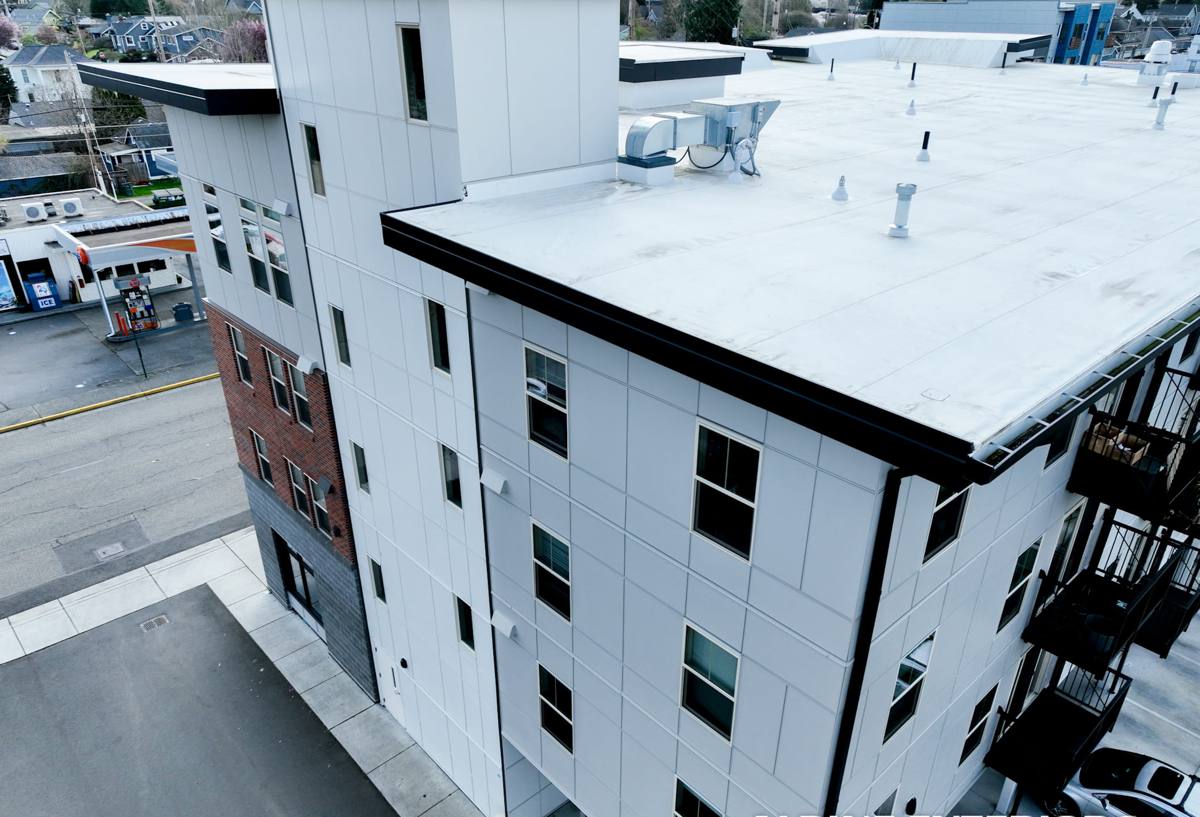
What "Custom" Really Means on These Homes
"Custom windows" gets used loosely, but on the ground it usually means one of a few real situations:
- An opening that isn't a standard manufactured size — common in older homes, additions, or houses that have settled over the years
- A non-rectangular shape, like an arched top or an angled gable window
- Matching a specific sightline, grid pattern, or trim profile so a replacement doesn't look out of place next to original windows
- A performance requirement driven by exposure — a window facing open water or prevailing wind needs a different spec than one tucked on a sheltered side
Custom work means measuring the actual opening, not ordering off a size chart, and it means making a judgment call on materials and glazing based on which direction that window faces and how much weather it actually takes.
Materials That Hold Up in Salt Air and Driving Rain
There's no single "best" window material for every house — it depends on exposure, budget, and how much upkeep the homeowner wants to do. Here's how the common options compare for this specific climate:
| Material | Salt Air Behavior | Moisture Resistance | Upkeep |
|---|---|---|---|
| Vinyl | Won't corrode; hardware is the weak point over time | Good when installed with proper flashing | Low — occasional cleaning |
| Fiberglass | Very stable, resists pitting and corrosion | Excellent; dimensionally stable in wet-dry cycles | Low |
| Aluminum-clad wood | Cladding protects the exterior, but any breach exposes wood underneath | Good if seams and joints are sealed correctly | Moderate — watch for cladding damage |
| Bare wood | Poor without diligent upkeep | Struggles in prolonged damp conditions | High — regular repainting and sealing |
We don't push bare wood exteriors in this kind of exposure as our default recommendation — not because wood is a bad material, but because keeping unclad wood properly sealed on a home that takes wind-driven rain off the water is a maintenance commitment most homeowners underestimate. If someone wants the look of wood, cladding it in aluminum or fiberglass on the exterior face while keeping a wood interior is usually the more honest long-term answer.
Glass and Hardware Details That Matter Here
Beyond the frame material, a few details make a real difference in this climate: stainless or corrosion-resistant hardware instead of standard-grade fasteners, dual or triple-pane glazing to cut down on interior condensation during cold, damp stretches, and weep holes that are actually positioned to drain — not just present on paper.
The Installation Details That Actually Prevent Failures
Most window problems we get called out for aren't the window itself — they're the installation around it. This is where a rushed job shows up years later as rot, staining, or leaks.
- Flashing sequence — house wrap, flashing tape, and the window's nailing flange have to be layered so water is always directed outward, never trapped behind the siding
- Sill pan — a proper sloped sill pan under the window gives any water that does get past the glazing somewhere to go besides into the wall framing
- Sealant placement — caulking the top of a window on the exterior can actually trap moisture that gets in from below; sealant needs to go where it stops water, not everywhere
- Shimming and squaring — an out-of-square window stresses the frame and seals over time, which is a common cause of premature failure on otherwise good windows
We check all of this on every install, not just the "does it open and close" basics. It takes longer than a quick swap-and-caulk job, but it's the difference between a window that's still sealed tight in ten years and one that needs attention in two.
Our Process, Start to Finish
- On-site assessment — we look at the actual opening, current condition of framing and trim, and which direction the window faces relative to prevailing wind and rain
- Measuring and spec'ing — for true custom sizes or shapes, we take precise measurements and work out material and glazing options that fit both the budget and the exposure
- Removal and inspection — once the old window comes out, we check the framing underneath for rot or moisture damage before anything new goes in
- Flashing and sill pan installation — this happens before the new window is set, not as an afterthought
- Setting, shimming, and sealing — squared, properly fastened, and sealed in the right spots
- Interior and exterior trim — finished to match the surrounding siding or trim style
- Walkthrough and cleanup — we show the homeowner the finished work and clean the site before we leave
Signs Your Current Windows Are Already Losing the Fight
A lot of window problems in this area develop slowly, so it helps to know what to look for before a small issue turns into a framing repair:
- Fogging or moisture between panes of double-glazed units — a sign the seal has failed
- Soft or discolored trim or sill wood, especially on the side facing open water or wind
- Visible moss or dark streaking on the frame or nearby siding
- Drafts you can feel even with the window fully latched
- Difficulty opening, closing, or locking due to swelling or warping
- Corrosion or stiffness in hardware, hinges, or locks
- Peeling paint or bubbling finish around the window frame
Any one of these on its own might just need a repair. Several at once, especially on an older window, usually means it's time to talk about replacement before the surrounding wall framing gets involved.
What Drives the Cost of a Custom Window Project
Every home is different, so exact pricing depends on a site visit, but these are the main factors that move the number up or down:
| Factor | Why It Matters |
|---|---|
| Standard size vs. true custom opening | Custom-sized or shaped units cost more to manufacture and take longer to source |
| Frame material | Vinyl is typically the most budget-friendly; fiberglass and clad-wood cost more upfront but often need less upkeep |
| Glazing package | Double vs. triple pane, and any low-E or impact-resistant upgrades, add cost but improve comfort and durability |
| Condition of existing framing | Rot or water damage found during removal adds repair work before the new window goes in |
| Exposure and orientation | Windows facing open wind and water may warrant a higher-spec install for the long run |
| Number of windows | Doing several at once typically brings down the per-window labor cost |
As a broad range, straightforward custom window installations in this area often run somewhere in the low-to-mid hundreds per window on the low end, up into four figures per window for larger, higher-spec, or true custom-shaped units. A firm number only comes after we've actually measured the opening and seen the condition of what's behind the old window.
Why Local Experience in This Area Actually Matters
A crew that has already worked windows in and around Lummi Nation knows which orientations tend to take the worst of the weather, what kind of framing and construction is common in homes of a certain age here, and how the local moisture cycle behaves through the year. That's not something you can fully substitute with a generic install checklist. It means fewer surprises during the job and a spec that's actually matched to how this particular stretch of coastline treats a window, instead of a one-size-fits-all approach built for a drier part of the state.
It also means being straightforward about trade-offs — telling a homeowner when a lower-maintenance material makes more sense than the one they originally had in mind, rather than just selling whatever's easiest to install.
If you're weighing a window replacement or a true custom window project for a home near Lummi Nation, we're happy to take a look and walk you through the options honestly. Use the form below to request a free, no-pressure estimate.