 Ferndale
 Why Bellingham Roofs Need a Different Approach
Bellingham sits close enough to the water that salt-laden air is a real factor in how a roof ages, and it sits under enough cloud cover and rainfall that moisture management matters more here than in most of the country. Add in the tree canopy that shades so many Whatcom County neighborhoods and you get long moss seasons that run from fall through spring. A roof that would hold up fine in a dry inland climate can start showing problems within a few years in this environment if it wasn't specified and installed with these conditions in mind. Metal roofing, done correctly, handles all three of these stresses better than most alternatives — but "done correctly" is doing a lot of work in that sentence, and it's where a lot of installs fall short.
We install metal roofing on homes throughout Ferndale and the surrounding Whatcom County communities, including Bellingham, and the patterns we see are consistent: the roofs that perform well are the ones where the contractor treated fastener selection, underlayment, and drainage detailing as seriously as the panel itself. This page walks through what that actually looks like.
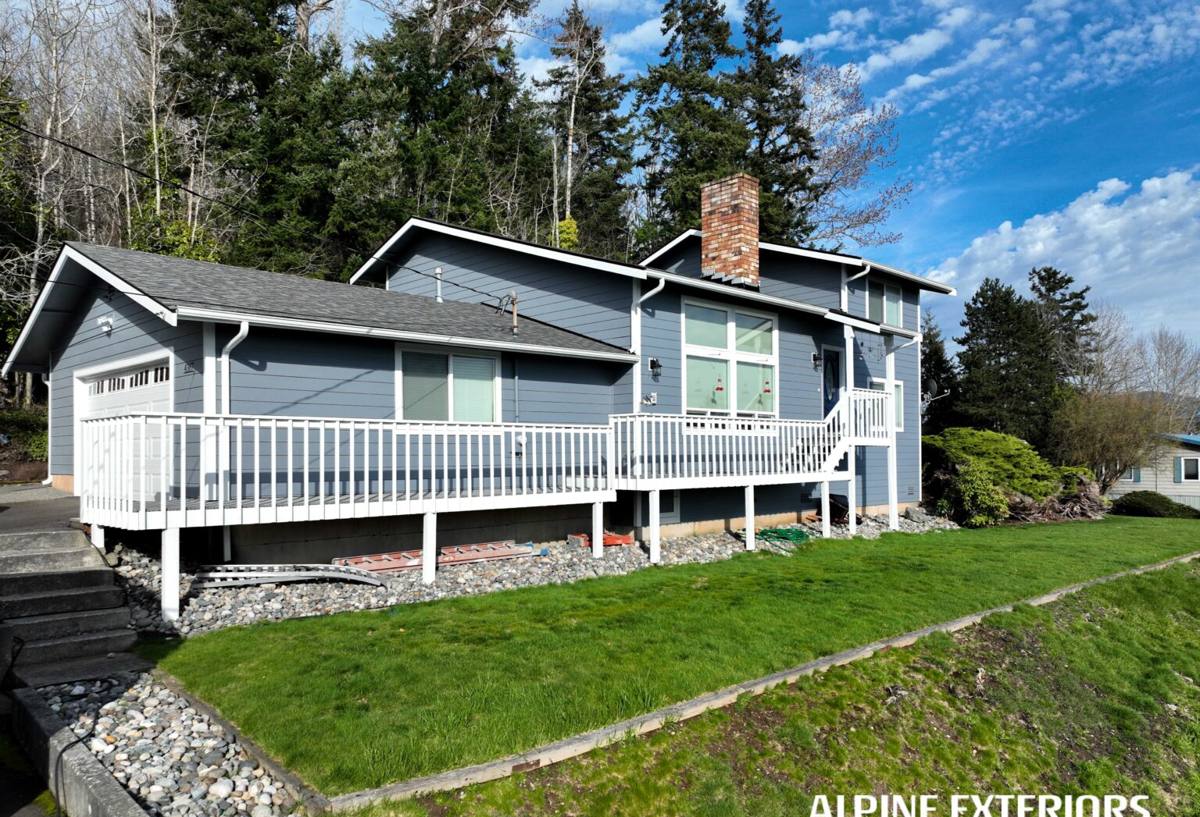
What Salt Air, Rain, and Moss Actually Do to a Roof
Salt Air and Corrosion
Coastal and near-coastal air carries fine salt particles that settle on exposed metal and accelerate corrosion, especially at cut edges, fastener heads, and anywhere the protective coating has been scratched or compromised during installation. This isn't unique to oceanfront property — homes several miles inland can still see accelerated wear compared to a dry climate, particularly on lower-grade or improperly coated materials. The practical takeaway is that material selection and edge protection matter more here than they would in, say, eastern Washington.
Driving Rain
Bellingham gets a lot of rain, and a fair amount of it doesn't fall straight down — wind-driven rain finds its way under laps, around penetrations, and into any gap that a fair-weather installation might get away with. A metal roof's water-shedding performance depends almost entirely on lap design, fastener pattern, and flashing detail. Get those wrong and you don't get a leak on day one — you get one two or three winters later, once the small errors compound.
Moss and Sustained Moisture
Shaded roof sections, north-facing slopes, and areas near overhanging trees stay damp longer through our wet season, which is exactly the environment moss and algae favor. On composition roofing, moss growth degrades granules and shortens roof life. Metal doesn't feed moss the way asphalt shingles do, and there's nothing for spores to root into on a smooth painted or coated surface, but moss and organic debris can still accumulate in valleys, at panel overlaps, and behind snow guards or other roof-mounted hardware — so design details still matter, even on a material that resists growth better overall.
Why Metal Performs Well Here — When It's Specified Right
Metal roofing's advantages line up well with what this climate demands, but only when the system is matched to the conditions:
- Steep water-shedding profile: Standing seam and many panel profiles move water off the roof quickly, which matters when rain is frequent and sometimes wind-driven.
- Nothing for moss to anchor into: A smooth metal surface doesn't give organic growth the foothold that granular roofing materials do.
- Long service life against a wet climate: With the right coating system, metal roofing resists the slow degradation that constant moisture causes in other materials.
- Coating and finish options matter more near the coast: Not every finish is equally resistant to salt exposure, and we account for that in what we recommend.
None of this is automatic. A metal roof installed with the wrong fastener type, inadequate underlayment, or careless flashing work will still fail early in this climate — sometimes faster than a well-installed asphalt roof would have. The material is only as good as the installation.
What a Correct Metal Roof Installation Involves
Underlayment and Moisture Barrier
Given how much rain this area sees, we don't treat underlayment as an afterthought. A high-temperature synthetic or ice-and-water-shield underlayment at eaves, valleys, and penetrations gives the roof a real second line of defense if wind-driven rain ever gets past the panel laps — which, over the life of a roof, it eventually will at some point, even on a well-built system.
Fastener and Panel Material Selection
In a coastal-influenced climate, fastener corrosion is often the first visible sign of a roof aging poorly. We match fastener metallurgy to the panel material to avoid galvanic corrosion (where two dissimilar metals in contact accelerate each other's breakdown), and we favor concealed-fastener panel systems where possible, since exposed fastener heads are the most common failure point on lower-end metal roofs.
Flashing, Valleys, and Penetrations
Every place a roof plane changes direction, or a vent, chimney, or skylight breaks the surface, is a spot where water pressure concentrates during heavy rain. Correct flashing detail — proper laps, sealant used as a backup rather than a primary seal, and metal-to-metal contact where it should exist — is what actually keeps a roof dry, far more than the panel type itself.
Ventilation
Attic and roof deck ventilation prevents condensation from building up underneath the roof deck, which is a real risk in a consistently damp, mild climate like ours. Poor ventilation can trap moisture that rots decking or promotes mold, regardless of how good the roof surface is.
Material and Finish Options: A Straightforward Comparison
| Option | Typical Strengths | Trade-offs in This Climate |
|---|---|---|
| Standing seam steel (concealed fasteners) | Excellent water-shedding, long lifespan, clean appearance | Higher upfront cost; installation is more labor-intensive and installer skill matters a lot |
| Exposed-fastener metal panels | Lower cost, faster install | Fastener seals need maintenance over time; more vulnerable to leaks as gaskets age in a wet climate |
| Aluminum panels | Naturally corrosion-resistant, good choice closer to salt air | Softer material, can dent more easily; typically costs more than steel |
| Galvanized/Galvalume steel | Strong, widely available, good coating options | Cut edges need proper sealing or touch-up to prevent edge corrosion |
We don't push one system on every home. The right choice depends on the roof's exposure, slope, budget, and how long the homeowner plans to stay in the house. We'll walk through the honest trade-offs for your specific roof rather than defaulting to whatever's easiest to install.
Our Process for a Bellingham Metal Roof Project
- On-site assessment: We look at slope, exposure, tree cover, existing decking condition, and any current problem areas before recommending a system.
- Material and finish selection: Based on the assessment, we recommend panel type, gauge, and coating suited to the home's specific exposure to weather and salt air.
- Tear-off and deck inspection: We check the roof deck for rot or soft spots before anything new goes down — a common source of surprise problems on older Whatcom County homes.
- Underlayment and flashing installation: This is where most of the long-term performance is decided, and we don't rush it.
- Panel installation: Proper fastener spacing, panel alignment, and lap sequencing for correct water flow.
- Final inspection and walkthrough: We review the completed roof with the homeowner and explain any maintenance recommendations specific to the site.
Maintenance: What Bellingham Homeowners Should Actually Do
Metal roofs are lower-maintenance than most alternatives, but "low-maintenance" isn't "no-maintenance" in this climate. A short seasonal checklist goes a long way:
- Clear leaves, needles, and debris from valleys and gutters, especially heading into fall storms.
- Check for moss or algae buildup in shaded valleys or behind roof-mounted fixtures once or twice a year.
- Look at exposed fastener heads (if your system has them) for early signs of rust or gasket wear.
- Keep overhanging branches trimmed back to reduce shading, debris, and physical contact with the roof surface.
- After major windstorms, a quick visual check for lifted panels or damaged flashing is worth the ten minutes it takes.
What Cost Depends On
We don't quote prices without seeing the roof, but a few factors consistently drive cost up or down on metal roofing projects in this area:
| Factor | Effect on Cost |
|---|---|
| Panel system (exposed vs. concealed fastener) | Concealed-fastener standing seam typically costs more upfront but reduces long-term maintenance |
| Roof complexity (valleys, dormers, penetrations) | More cuts, flashing, and labor time on complex rooflines |
| Tear-off and deck repair needs | Rot or damage found under old roofing adds material and labor |
| Material gauge and coating grade | Heavier gauge and higher-grade coatings cost more but hold up longer against salt exposure |
| Accessibility and roof pitch | Steep or hard-to-access roofs require more setup, safety equipment, and time |
Why Local Experience Matters for This Job
A metal roof installed by a crew that's used to a drier or more moderate climate can still look fine on the day it's finished. The problems that show up from getting flashing details, underlayment, or fastener selection wrong in a place like Bellingham tend to surface years later, after the warranty conversation has already happened and the crew that installed it isn't easy to reach anymore. Working across Ferndale, Bellingham, and the rest of Whatcom County day in and day out means we're not guessing at how a roof will hold up against this specific combination of salt air, rain, and moss — we're building to conditions we deal with on every job.
If you're considering a metal roof for a Bellingham home, we're happy to walk the roof with you, talk through material options honestly, and give you a straightforward estimate — no pressure, no upsell. The form below is the easiest way to get that started.