 Ferndale
 Windows Built for Nooksack's Climate, Not a Generic Spec Sheet
Nooksack sits inland from the Salish Sea but still catches the same weather pattern that defines exterior work across Whatcom County: long stretches of driving rain from fall through spring, salt-tinged air moving in off the water on windier days, and a moss season that seems to start earlier every year. Windows in this area don't fail because of one big storm. They fail slowly, from years of moisture finding its way past a flashing detail that was never quite right, or from a frame material that couldn't keep up with the freeze-thaw swings we get between the valley floor and the foothills nearby.
When we install windows in Nooksack, we're not just setting a unit into a rough opening and caulking the edges. We're building a moisture management system around each window — one that assumes water will hit the wall and plans for where it goes next. That mindset is the difference between a window that looks fine for two years and one that performs for twenty.
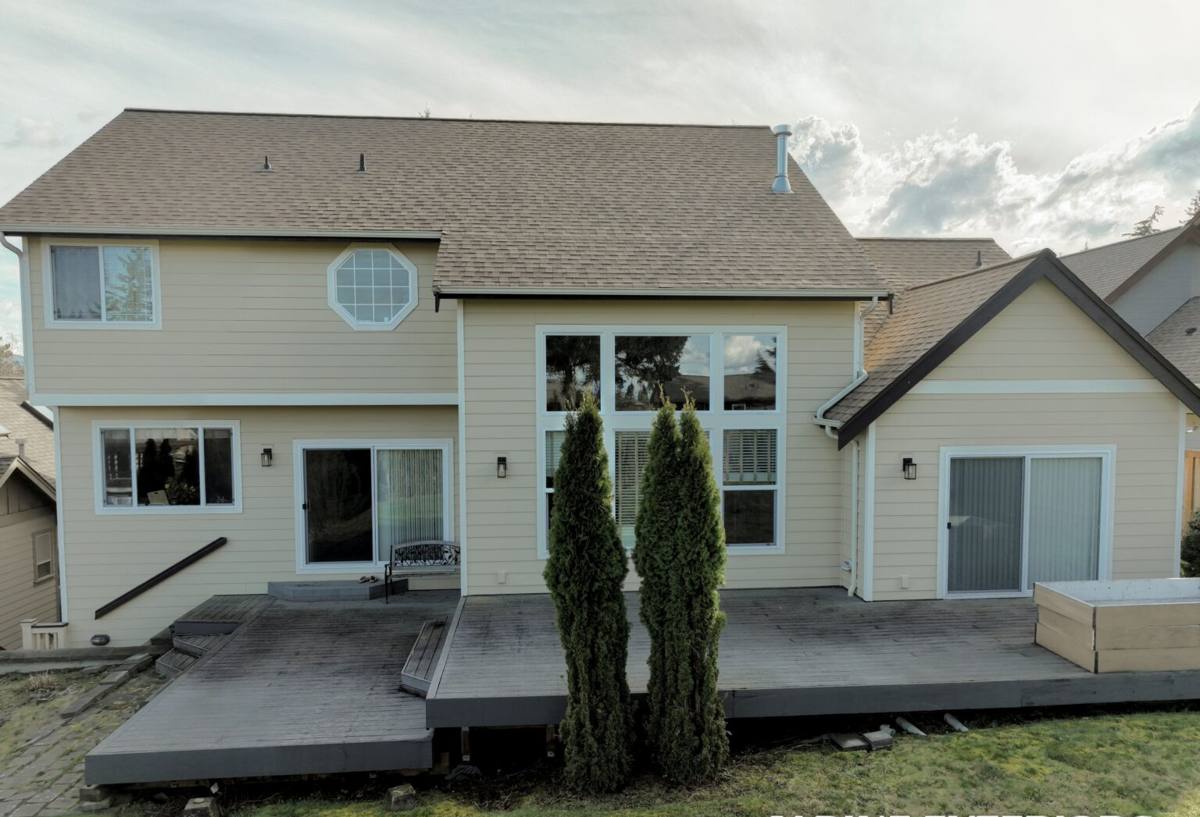
What Local Homes Actually Need From a Window Installation
Moisture Management Comes First
Most window failures we get called out to inspect aren't glass or hardware problems — they're water intrusion problems around the frame. In a climate with as much sustained rain as Whatcom County sees, the flashing, house wrap integration, and sill pan details matter more than the brand of window you choose. A premium window installed with a lazy flashing job will underperform a mid-range window installed correctly, every time.
Wind and Driving Rain Exposure
Nooksack doesn't get the direct coastal wind load some of our Ferndale and Blaine jobs see, but it still catches enough wind-driven rain to push water sideways into any gap in the weather-resistive barrier. That means proper head flashing with an integrated drip cap, correctly lapped house wrap, and sealant used only where it belongs — not as a substitute for flashing, but as a secondary line of defense.
Moss and Organic Growth Around Openings
Moss doesn't just grow on roofs here. It takes hold in shaded, damp corners around window trim and sills, especially on north-facing walls or under overhangs that don't get much sun. Once moss establishes itself against wood trim or compromised caulk lines, it holds moisture against the surface constantly, which accelerates rot. Good trim detailing and the right sealant choice reduce the surfaces where moss can get a foothold in the first place.
Condensation and Interior Humidity
Homes in this area are sealed up tight for a good chunk of the year, which raises interior humidity and puts more condensation load on window glass and frames. Proper installation — including correct sizing of the rough opening and appropriate insulation around the frame — reduces cold spots where condensation collects and eventually causes interior sill damage.
Our Window Installation Process
- On-site assessment. We look at existing window condition, wall assembly, sun/shade exposure, and any current signs of water intrusion or rot before quoting anything.
- Removal and opening inspection. Old windows come out carefully so we can inspect the rough opening, sheathing, and house wrap underneath. This is where hidden rot or old flashing mistakes usually surface.
- Repair before install. Any soft sheathing, compromised framing, or failed house wrap gets repaired first. Installing a new window over a bad substrate just hides the problem for a few more years.
- Sill pan and flashing installation. We install a sloped sill pan to direct any water that gets past the window back outside, then integrate head and side flashing with the house wrap in proper shingle-lap order — water always sheds down and out, never trapped behind a seam.
- Window setting and shimming. The unit is set plumb, level, and square, shimmed correctly at load points so the frame doesn't rack over time and the sash operates smoothly for years.
- Insulation and air sealing. Gaps around the frame are insulated appropriately — not overpacked, which can bow the frame — and air-sealed to control drafts and condensation.
- Exterior trim and sealant. Trim is reinstalled or replaced, with sealant applied only at the joints designed to be sealed, not as a blanket fix for a flashing shortcut.
- Final check. We verify operation, check for square and level, and walk the exterior with the homeowner before calling the job done.
Choosing the Right Window Material for This Area
There's no single "best" window material — there's a best fit for the exposure and budget of a specific home. Here's how the common options actually perform under Whatcom County's rain-heavy, moss-prone conditions.
| Material | Moisture Resistance | Maintenance | Typical Lifespan |
|---|---|---|---|
| Vinyl | Good — won't rot, seams are the weak point | Low | 20-30 years |
| Fiberglass | Excellent — stable in wet/dry cycles | Low | 30-40 years |
| Wood (clad exterior) | Good if cladding stays intact | Moderate to high | 20-30 years, cladding-dependent |
| Aluminum | Fair — prone to condensation without thermal break | Low | 20-25 years |
We don't push one material on every job. A shaded, moss-prone north wall calls for different priorities than a sun-exposed south elevation. Part of our estimate conversation is walking through which material makes sense for each specific opening on your home, not just handing over a single house-wide recommendation.
Common Mistakes We Find on Older Nooksack Homes
- No sill pan flashing — water that gets past the window sits directly on bare sheathing
- Caulk used in place of proper flashing at the head of the window
- House wrap cut but never re-integrated with the window flange, leaving a gap water can enter
- Trim installed tight against the siding with no drainage gap, trapping moisture
- Rough openings sized too tight, forcing installers to skip shimming and insulation steps
- Old storm windows left in place over failing primary windows, hiding condensation damage
None of these are visible from the street. They show up years later as soft trim, stained interior sills, or a window that suddenly won't latch properly. Catching them during a replacement is far cheaper than dealing with the structural repair that follows if they go unaddressed.
Signs Your Windows Need Attention
Homeowners in Nooksack usually notice one of these before calling us:
- Fogging or condensation between double-pane glass that won't clear
- Visible moss or dark staining on exterior trim near the window
- Drafts you can feel even with the window fully latched
- Wood trim that feels soft or spongy when pressed
- Windows that are difficult to open, close, or lock
- Peeling paint or bubbling on interior sills, which often points to trapped moisture
Any one of these on its own might just mean the window needs attention. Several at once, especially paired with soft trim, usually means water has been getting behind the frame for a while.
Cost Factors for Window Installation in This Area
Pricing varies by project, but the main factors that move the number for Nooksack-area homes are consistent:
| Factor | Why It Matters |
|---|---|
| Number and size of openings | Larger and more numerous windows increase material and labor |
| Existing rot or flashing repair | Hidden damage found during removal adds necessary repair scope |
| Material choice | Vinyl, fiberglass, and clad-wood carry different upfront costs |
| Access and site conditions | Second-story or hard-to-reach openings take more time and equipment |
| Trim and siding integration | Matching existing trim profiles or siding can add finish work |
We'd rather walk a homeowner through these factors in person than throw out a broad number that doesn't reflect the actual condition of their home. That's what the estimate visit is for.
Why Hire a Crew That Already Works Nooksack and the Ferndale Area
Window installation done right depends on understanding how a specific climate behaves against a specific wall assembly, not just following a generic manufacturer instruction sheet. A crew that regularly works Whatcom County homes already knows what a Nooksack-area rough opening tends to look like once the old window comes out, what moss patterns to expect on shaded elevations, and which flashing details actually hold up through a full wet season here — not in a showroom, but on a real house exposed to real weather.
That familiarity shows up in the small decisions during an install: where to add extra flashing on a north-facing wall, which trim gap detail sheds water instead of holding it, and when a rough opening needs repair before a new window goes in at all. It's the difference between a crew installing a product and a crew solving the actual moisture problem the climate creates.
Get a Free, No-Pressure Estimate
If your windows in the Nooksack area are showing signs of age, drafts, or moisture damage, we're happy to take a look and walk you through what we find — no obligation, no pressure. Use the form below to request a free estimate, and we'll get back to you to schedule a time that works.