 Ferndale
 Windows Take a Different Kind of Beating in Point Roberts
Point Roberts sits on its own small peninsula, surrounded by Boundary Bay and the Strait of Georgia, and that location changes what a window has to survive. Homes here face near-constant marine air, wind-driven rain off the water, and a long stretch of the year where moss and mildew have every reason to take hold. It's a different exposure profile than you'd find a few miles inland in Ferndale proper, and it's why windows that would last two or three decades in a sheltered subdivision can start failing early out here.
We're a Ferndale-based crew, and Point Roberts is part of our regular Whatcom County service area. That matters more than it might sound like, because this community has a quirk almost no other job site in the county has: it's a U.S. exclave, reachable only by driving through Canada or by boat. A contractor who doesn't already plan around that reality tends to under-schedule, under-deliver on materials, or quietly avoid the area altogether. We don't, because we've built our routine around it.
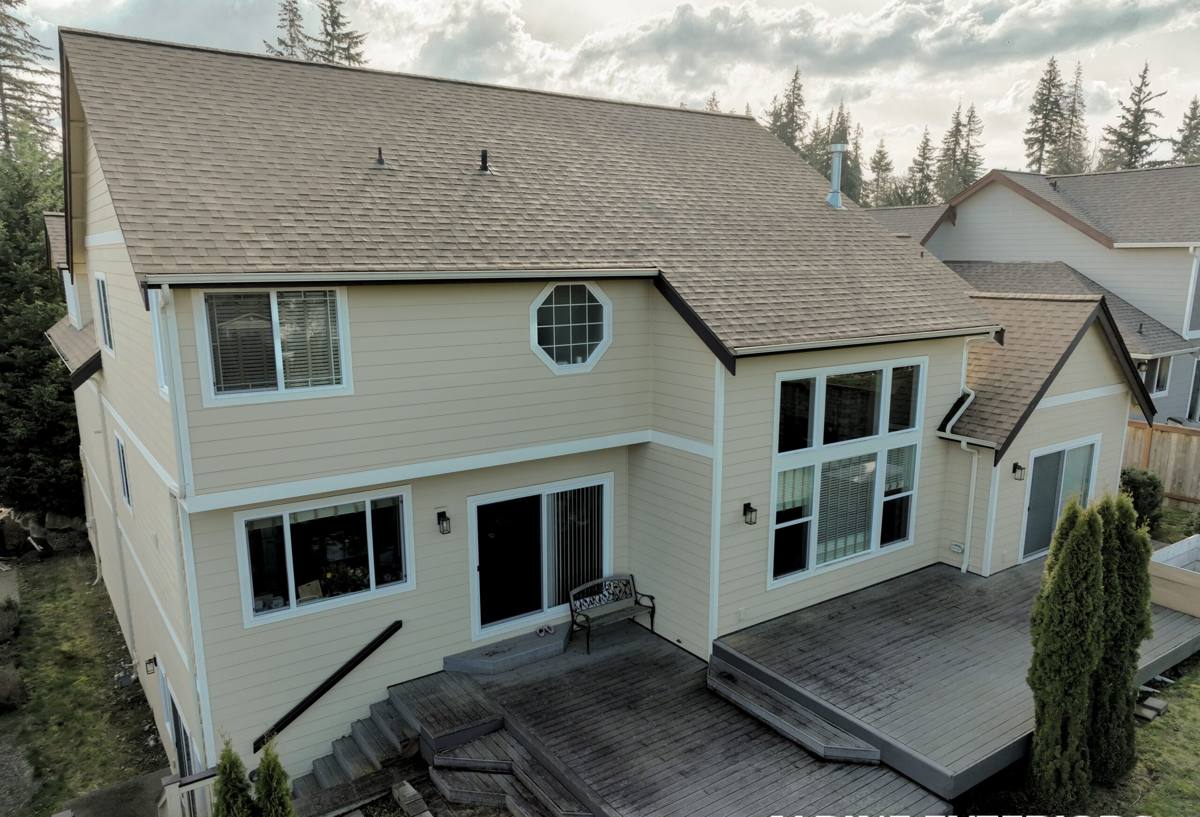
What Salt Air and Marine Exposure Actually Do to a Window
Salt-laden air doesn't just sit on the glass — it works into every seam, fastener, and finish on a window assembly. Over time it can:
- Corrode aluminum hardware, cranks, and low-quality cladding fasteners faster than in a dry inland climate
- Break down exterior caulking and sealant, opening tiny gaps that let wind-driven rain behind the trim
- Accelerate finish failure on painted wood sills and frames, especially on the west- and south-facing walls that catch the weather off the water
- Feed moss and algae growth on north-facing and shaded elevations, which holds moisture against the frame far longer than it should sit there
None of this means windows are doomed here — it means the material choice, the flashing details, and the sealant work have to be done with this exposure specifically in mind, not treated like a generic install.
Signs a Point Roberts Home Needs Window Replacement, Not Just a Repair
Some window problems are cosmetic and some are structural. The honest answer is usually somewhere in between, and it depends on what's happening at the frame and the wall behind it. Watch for:
- Fogging or a visible haze between panes on double-glazed units — the seal has failed and the gas fill is gone
- Soft or spongy wood at the sill or bottom corners of the frame
- Persistent moss or black staining on the frame that comes back within weeks of cleaning it off
- Drafts you can feel with your hand near the frame on a windy day, even with the window latched
- Difficulty opening, closing, or locking that's gotten worse over the last year or two
- Visible daylight or gaps where the frame meets the siding or trim
A single fogged pane on an otherwise sound window is often a repair. Soft framing, chronic moisture staining on the wall inside, or a whole elevation of windows showing the same wear is usually telling you the assemblies themselves are past their service life for this climate.
Why Chronic Moisture Gets Ignored Until It's Expensive
Marine climates are forgiving in the sense that small leaks rarely cause dramatic damage right away — water finds its way in slowly, over seasons, not all at once. That's actually the danger. A window that's let a small amount of moisture behind the trim for two or three wet seasons can mean hidden rot in the sheathing or framing that isn't visible until the interior finish or the siding around it is opened up. Catching window failure early, before it's had years to work on the wall behind it, is the difference between a window job and a window-plus-wall-repair job.
Choosing Window Materials for This Climate
There's no single "best" window material — there's a best fit for this exposure and this budget. Here's how the common options actually perform in a salt-air, high-moisture environment like Point Roberts:
| Material | Salt Air / Moisture Behavior | Maintenance | Typical Fit |
|---|---|---|---|
| Vinyl | Won't corrode or rot; performance depends heavily on the quality of the frame and weatherstripping | Low — occasional cleaning | Good value, wide use on both mains and secondary homes |
| Fiberglass | Very stable in temperature swings and moisture; holds paint and finish well over time | Low to moderate | Strong long-term choice for exposed elevations |
| Aluminum-clad wood | Good exterior protection, but cladding seams and fasteners need to be detailed carefully near salt air | Moderate | Where a wood interior look is wanted with better exterior durability |
| Bare wood | Highest maintenance burden in this climate; finish failure and rot risk are real without a strict repaint schedule | High | Historic or architectural matches only, going in with eyes open |
We don't push one brand as a universal answer, because the honest trade-offs are different for a shaded north wall than for a wall taking direct weather off the water. What we will do is tell you plainly where a cheaper frame or a lower-grade cladding is likely to cost you more in five years than it saves you today.
What a Correct Window Replacement Actually Involves
Swapping a window is easy to do poorly and easy to describe well on paper. The parts that actually determine whether it holds up through another decade of Whatcom County winters are mostly invisible once the trim goes back on:
- Removing the old unit and inspecting the rough opening and sill for hidden rot before anything new goes in
- Repairing or replacing any compromised framing or sheathing found at that stage — not covering it up
- Installing proper flashing at the head and sill so water is directed out and away from the wall, not just sealed over
- Using sealants and tapes rated for the exposure, applied in the sequence that actually sheds water rather than trapping it
- Shimming and fastening the new unit so it operates correctly and doesn't rack over time
- Finishing interior and exterior trim so the whole assembly looks intentional, not patched
Skipping the flashing and sequencing details is the single most common way window jobs fail early in this climate — the new window itself can be excellent and still let water in behind it if the wall wasn't prepped and flashed correctly.
How We Run a Point Roberts Project
Because Point Roberts is only reachable by crossing into Canada and back, or by water, we plan these jobs differently than a job three miles from our Ferndale shop. That means:
- Confirming full material counts, hardware, and trim before we ever load the truck — running back for a forgotten part isn't a quick trip here
- Grouping window work with any other exterior tasks on the same property where it makes sense, to cut down on repeat crossings
- Scheduling around the border crossing and any documentation needs, so your install day isn't held up by logistics that have nothing to do with the actual work
- Being upfront about timeline, since weather and crossing conditions can occasionally shift a start date more than they would for a job on this side of the line
This is the part that separates a crew that's willing to drive out once for an estimate from a crew that actually treats Point Roberts as regular service territory. We do the latter, and it shows up in how few surprises there are once we're on site.
What Affects the Cost of a Window Replacement Here
| Factor | Why It Moves the Price |
|---|---|
| Window material and glazing package | Vinyl, fiberglass, and clad-wood carry different material costs; upgraded glass packages add cost but pay back in comfort and condensation resistance |
| Number and size of openings | More openings or larger units mean more material, labor, and disposal |
| Condition of the existing framing | Hidden rot or moisture damage found during removal adds repair scope before the new window can even go in |
| Access and site logistics | Elevation, existing landscaping, and the exclave logistics noted above can add planning time |
| Trim and finish work | Matching existing exterior trim details or upgrading trim material changes the finish labor |
We'll walk through these specifics for your home before giving you a number — broad ranges without seeing the actual openings and framing condition aren't useful to either of us.
A Simple Maintenance Checklist Once New Windows Are In
- Rinse salt residue and grime off frames and glass a few times a year, more often on elevations facing the water
- Clear moss and organic buildup from frames and sills before it has a chance to hold moisture against the material
- Check exterior caulking annually for cracking or separation, especially after a hard winter
- Operate every window through its full range at least once a season so hardware doesn't seize
- Watch for condensation between panes — it's the earliest sign of seal failure, and it's easier to address before it spreads to more units
New windows, installed correctly, should need very little from you beyond this. If you're doing more than occasional cleaning and a yearly caulk check, something in the installation or the unit itself likely needs a second look.
Why Local Experience with This Specific Community Matters
Point Roberts homeowners deal with a few things most contractors never have to think about: the border logistics, the intensity of the marine exposure, and the reality that a botched job is genuinely harder to have corrected quickly by someone else. Hiring a crew that already treats this community as part of its normal route — rather than a special trip — means fewer scheduling surprises, materials ordered right the first time, and installation details that already account for what this climate does to a window over the following ten or twenty years. We've built our process around exactly that, and we're glad to explain our reasoning on any part of it before you commit to anything.
If you're weighing repair versus replacement, or just want a straight answer on what your current windows can realistically handle out here, we're happy to take a look. Reach out for a free, no-pressure estimate — the form below goes straight to our team.