 Ferndale
 Windows Built for Where Semiahmoo Actually Sits
Homes near Semiahmoo take weather from a direction most inland Whatcom County houses never see. The water brings salt-laden air that settles on frames and hardware year-round, driving rain comes in sideways during winter storms instead of falling straight down, and the long gray stretch from October through April keeps everything damp long enough for moss and algae to get a foothold on anything that doesn't drain and dry properly. Windows sit right at the center of that exposure. They're the first thing to show pitting on hardware, the first place water finds a bad seal, and often the last thing homeowners think to check until a sill is already soft.
Replacing windows on a Semiahmoo-area home isn't the same job as replacing them on a house twenty miles inland. The product selection, the flashing details, and the sequencing all need to account for salt exposure and wind-driven rain, not just standard Pacific Northwest drizzle. This page is about that specific job — what it takes to get it right in this particular pocket of Whatcom County.
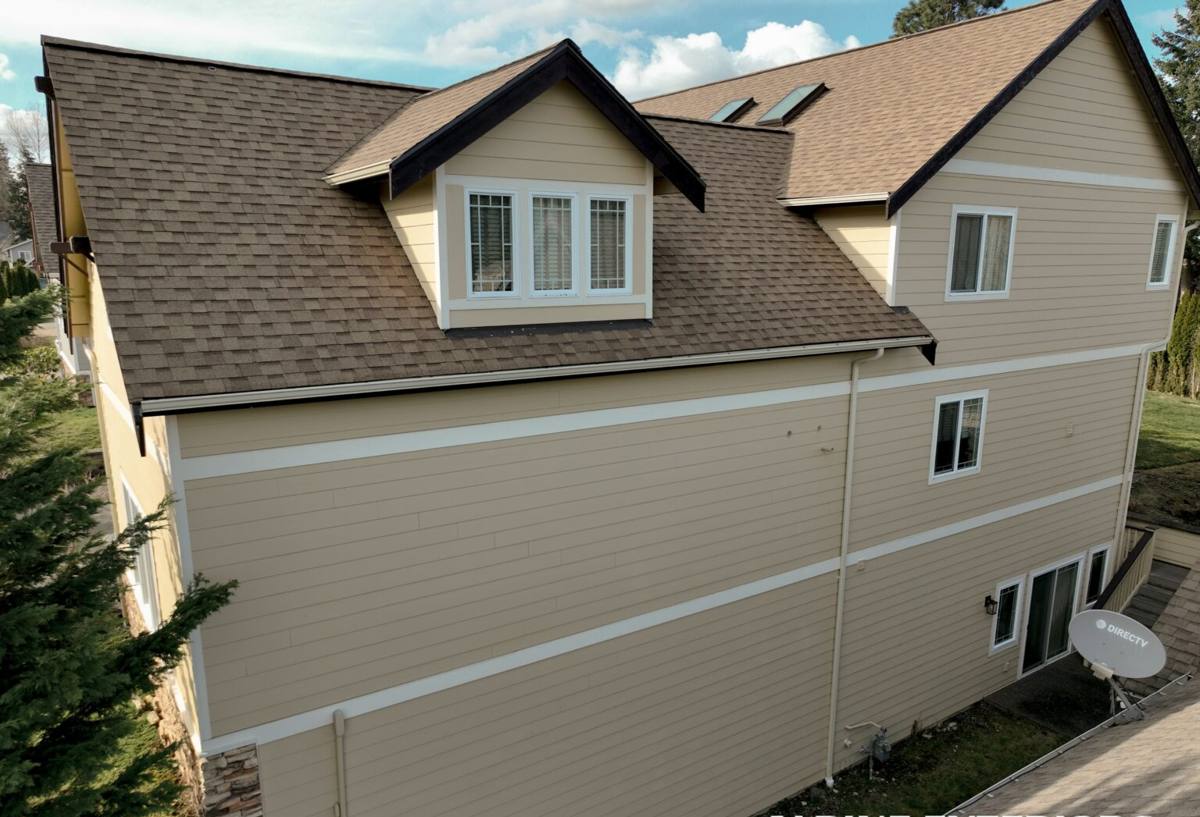
What Salt Air and Marine Exposure Actually Do to a Window
Salt air doesn't just look corrosive — it's chemically aggressive to a lot of the hardware and fasteners used in standard window assemblies. Left unaddressed over years, it shows up in a few predictable ways:
Hardware and Fastener Corrosion
Cranks, locks, hinges, and screws that aren't rated for coastal exposure start showing white or rust-colored corrosion well before the glass or frame shows any wear. Once hardware seizes or a lock won't fully engage, the window's weatherseal is compromised even if the frame looks fine.
Finish and Seal Breakdown
UV exposure combined with salt residue accelerates the breakdown of exterior finishes and the rubber or vinyl weatherstripping that keeps water out. A seal that would last 15-20 years inland can start failing measurably sooner this close to the water.
Moss, Algae, and Trapped Moisture
Whatcom County's long wet season means anything with a horizontal ledge — a sill, a mulled joint, a poorly sloped sub-sill — collects organic growth. That growth holds moisture against the frame and finish far longer than clean runoff would, which is exactly the condition that rots wood components and delaminates poor-quality composites.
Signs a Semiahmoo Home's Windows Need Replacing, Not Just Repair
Not every symptom means full replacement. But a few signs point to the frame and seal system being past the point where caulk and weatherstripping fix the problem:
- Visible fogging or a permanent haze between panes — the seal on the insulated glass unit has failed
- Soft or spongy wood at the sill or lower corners of the frame
- Persistent moss or black staining on the sill that returns within weeks of cleaning
- Drafts you can feel even with the window fully latched
- Hardware that's corroded to the point of not locking flush
- Condensation forming on the interior frame or drywall around the window, not just the glass
- Paint or finish that's bubbling or peeling specifically around the window opening, not the wider wall
If you're only seeing one or two of these on an otherwise sound window, a repair or reseal may be worth trying first. If you're seeing several together, especially wood softness or interior condensation, that's usually water already inside the wall assembly — replacement is the honest recommendation at that point.
What a Correct Window Replacement Job Involves Here
The window itself is only part of the job. In a coastal, high-rain environment, the installation details matter more than the product label. A correct replacement includes:
Opening Inspection Before Anything Goes In
Once the old window is out, the rough opening gets inspected for hidden rot, prior water damage, or missing house wrap before a new unit ever goes in. Installing a new window over a compromised opening just hides the problem behind new trim.
Proper Flashing and Drainage Path
Flashing tape and pan flashing need to shed water down and out, never trap it against the sheathing. This is the single most common point where budget installs fail in wind-driven rain conditions — a window that's caulked in but not properly flashed will eventually leak, just not right away.
Sill Pan Under the Window
A sill pan gives any water that does get past the sash somewhere to go besides straight into the wall. On homes taking direct weather off the water, this isn't optional — it's the difference between a nuisance drip and hidden rot five years later.
Correct Sealant, Not Just More Sealant
The right sealant in the right location, left to cure properly, matters more than a heavy bead everywhere. Over-caulking a window can actually trap moisture that needs to drain out through the designed weep path.
Choosing Window Materials for a Coastal Whatcom County Home
Material choice matters more here than in a drier or more sheltered location. Here's how the common options hold up against salt air, wind-driven rain, and a long moss season:
| Material | Coastal/Salt Air Performance | Moisture & Moss Resistance | Maintenance |
|---|---|---|---|
| Vinyl | Good — won't corrode; hardware quality varies by manufacturer | Good if drainage details are correct | Low; occasional cleaning |
| Fiberglass | Very good — dimensionally stable, resists salt-driven expansion/contraction | Very good | Low |
| Aluminum-clad wood | Fair to good depending on clad quality; cut edges and joints are vulnerable points | Fair — wood core still needs the seal intact | Moderate |
| Bare wood | Poor without diligent upkeep — most exposed to salt and moss-driven rot | Poor without regular refinishing | High |
| Aluminum (non-clad) | Fair — prone to pitting and corrosion over time near salt water | Fair | Moderate |
We steer most Semiahmoo-area customers toward vinyl or fiberglass for this reason — not because wood or clad-wood windows are bad products, but because a coastal, high-moss climate asks a lot of any finish or seal, and the maintenance burden on wood-based options is real and ongoing. If you want the look of wood, low-maintenance composite and clad options can get close without the upkeep.
Glass Package Considerations
Beyond frame material, ask about the glass package. Low-E coatings and the right gas fill help with energy performance year-round, but on a home taking direct exposure off the water, argon-filled dual pane or triple pane units with a durable spacer system are worth the upgrade — the spacer is often the first point of seal failure in cheaper units.
Our Window Replacement Process
- On-site assessment. We look at each window individually — some may need replacement, others may just need better flashing or a reseal.
- Measurement and product selection. We measure for accurate ordering and talk through material, glass package, and hardware options suited to your exposure.
- Removal and opening inspection. Old units come out carefully, and we check the rough opening for hidden damage before moving forward.
- Flashing, sill pan, and drainage detailing. This is where a correct install is decided — done before the new window ever goes in.
- Installation and air/water sealing. The window is set plumb and square, shimmed correctly, and sealed with the right materials in the right locations.
- Interior and exterior trim finish. Trim is finished to match your home, and the site is cleaned up.
- Final walkthrough. We check operation, locks, and seals with you before we consider the job done.
Cost Factors for Semiahmoo Window Replacement
Every home is different, so we don't quote sight-unseen — but these are the main factors that move the price on a typical job:
| Factor | Why It Matters |
|---|---|
| Number and size of windows | More or larger openings mean more material and labor |
| Material (vinyl, fiberglass, clad-wood) | Product cost varies significantly by material and manufacturer |
| Condition of the rough opening | Hidden rot or framing damage adds repair time before the new window goes in |
| Glass package | Upgraded Low-E coatings, gas fill, or triple pane add cost but improve performance |
| Access and height | Second-story or hard-to-access windows take more labor and equipment |
| Trim and finish work | Matching existing trim or upgrading finish adds scope |
We'll walk your specific windows with you and give you real numbers, not a rough guess based on square footage.
Why a Crew That Already Works Semiahmoo Homes Matters
A contractor who works this specific stretch of coastline regularly knows things a crew from further inland has to learn the hard way: which exposures take the worst of the wind-driven rain, how aggressively salt air degrades certain hardware finishes, and how much of a head start moss gets on a north-facing sill compared to a south-facing one. That knowledge shows up in small decisions — which sealant to use, how deep to detail the flashing, which hardware finish will actually hold up — that don't show up on a spec sheet but show up in how the window performs five and ten years out.
It also matters for permitting and scheduling. We're familiar with what Whatcom County and local jurisdictions expect for window replacement work, and we plan installs around weather windows that make sense for this area rather than assuming every day is a good install day.
Maintaining Your Windows After Replacement
New windows installed correctly should need very little from you, but a coastal environment rewards a bit of regular attention:
- Rinse salt residue off exterior frames and glass a few times a year, especially after storms
- Clear moss or debris from sills and tracks before it builds up and holds moisture
- Check that weep holes along the bottom of the frame are clear and draining
- Lubricate hardware periodically per the manufacturer's recommendation
- Inspect exterior caulking annually and have any cracked or missing sealant addressed promptly
- Watch for condensation between panes, which signals a seal failure worth addressing early
If your Semiahmoo-area home has windows showing their age — or you're just not sure whether what you're seeing is a simple fix or a sign of something bigger — we're happy to come take a look. Estimates are free, there's no pressure, and you'll get a straight answer about what your windows actually need.