 Ferndale
 Storm Damage Roof Repair Built for Sudden Valley's Terrain
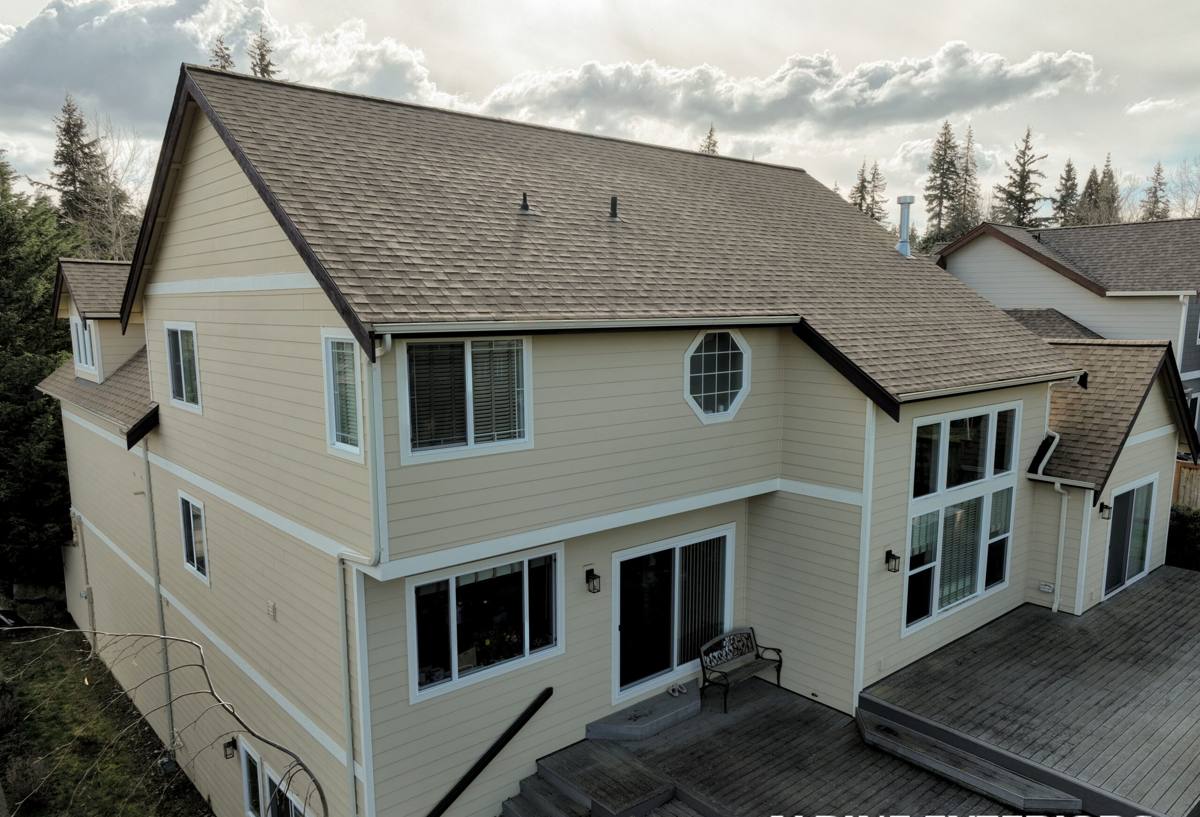
Sudden Valley sits up against the hills east of Lake Whatcom, which means homes here take weather differently than a house out on the flat lowland closer to Bellingham Bay. Tree cover is heavier, elevation changes are sharper, and wind moving across the lake and up through the valley can gust in directions that surprise people who haven't lived through a full winter here. When a storm rolls through Whatcom County, Sudden Valley roofs often show damage that's easy to miss from the ground — a lifted shingle tab tucked under a fir branch, a bruised ridge cap, flashing that's been walked on by debris but hasn't failed yet. We repair storm damage roofs across Ferndale and the surrounding area, and Sudden Valley's mix of tree exposure, moisture, and terrain is a pattern we've learned to read.
This page covers what storm damage actually looks like on a Sudden Valley roof, what a correct repair involves, and why calling a crew that already understands this specific neighborhood matters more than it might seem.
Why Sudden Valley Roofs Take a Different Kind of Beating
Salt Air and Driving Rain
Whatcom County sits close enough to the Salish Sea that salt-laden air reaches inland with the prevailing weather, and it settles on roofing metal, fastener heads, and flashing seams over time. Combine that with the driving rain that comes through during a real Pacific storm — rain that hits roofs at an angle instead of falling straight down — and you get water finding its way into laps and seams that would stay dry in a calmer climate. Storm damage doesn't always announce itself as a missing shingle. Sometimes it's a seal that's been compromised just enough that the next sideways rain gets underneath.
A Long Moss Season
Sudden Valley's tree cover and the shaded, damp conditions typical of this part of Whatcom County add up to a moss season that runs long — often most of the year on north-facing slopes and shaded sections of roof. Moss holds moisture against the roofing surface, which softens shingle mat over time and can work its way under tabs that a storm has already loosened. A roof that took wind or debris damage during a storm and then sits through weeks of moss growth before repair is a roof that's accumulating problems faster than the original damage alone would cause.
Wind Behavior Near the Lake and Hills
Wind that funnels along Lake Whatcom and up through the valley doesn't always match the general forecast for the area. Gusts can hit a roof from an angle the original installation wasn't necessarily optimized for, which is part of why we see damage patterns in Sudden Valley — lifted ridge caps, stressed hip lines — that look different from what we find on a flat, open lot elsewhere in Ferndale.
What Storm Damage Actually Looks Like
Most homeowners call us after an obvious event — a branch comes down, a section of shingles is visibly missing, or a ceiling stain shows up after a big storm. But a meaningful share of storm damage is quieter than that. Here's what we look for on a post-storm inspection:
- Shingle tabs that are lifted, cracked, or creased but still technically in place
- Granule loss concentrated in patches, which shows up as bare, shiny spots on asphalt shingles
- Flashing around chimneys, vents, and valleys that's been bent, separated, or had its sealant compromised
- Ridge cap shingles that are loose or missing, often the first thing to go in a straight-line wind event
- Debris strikes — dents, punctures, or gouges from branches, cones, or wind-blown material
- Soft spots in the decking underneath, usually found only once shingles are pulled back
- Gutter and downspout damage that's redirecting water somewhere it shouldn't go
- Moss intrusion at any of the above points, which accelerates once a seal is broken
Some of these are visible with binoculars from the ground. Others require actually getting on the roof, which is part of why a proper storm damage inspection isn't a quick driveway assessment.
Our Process for Sudden Valley Storm Repairs
1. Inspection, Not Guesswork
We walk the roof, not just look at it from the ground. That includes checking flashing points, valleys, ridge lines, and the areas most exposed to whatever direction the storm came from. We also check the attic side when there's any sign water may have gotten through, since a stain or damp spot in the attic tells us more about the real extent of damage than the shingle surface alone.
2. A Clear, Honest Scope
After the inspection, we tell you what we actually found — not an upsell list. If the damage is contained to a section that can be repaired without a full re-roof, we say so. If we find decking rot or a pattern of damage that suggests the roof's underlying condition is a bigger issue than the storm event itself, we explain why and show you what we're basing that on.
3. Repair Matched to the Original System
We match shingle type, color, and exposure as closely as possible so a repaired section doesn't stand out like a patch. Flashing gets replaced, not just resealed, when it's been compromised — sealant over damaged flashing is a short-term fix that tends to fail again in the next hard rain.
4. Documentation for Insurance
Storm damage repairs are often tied to an insurance claim. We document what we find with photos and a written scope before starting work, which gives you something concrete to work with when you're dealing with an adjuster.
Repair vs. Replacement: How We Make the Call
| Factor | Points Toward Repair | Points Toward Replacement |
|---|---|---|
| Extent of damage | Isolated to one slope or section | Spread across multiple slopes or the whole roof |
| Roof age | Under 10-12 years, otherwise sound | Nearing or past expected service life |
| Decking condition | Solid, no rot found | Soft spots or rot discovered under damaged shingles |
| Shingle match availability | Same or close product still available | Discontinued product, repair would visibly mismatch |
| Moss/moisture history | Isolated issue, otherwise well-maintained | Long-term moss damage found beyond the storm event |
None of these factors decide things alone — it's the combination that tells us whether a repair will genuinely hold up or whether we'd be patching a roof that's already telling you it needs more.
Why It Matters That We Already Work Sudden Valley
A roofing crew that mostly works flatter, more open parts of Ferndale can still do competent work, but they're guessing at some of what a Sudden Valley property throws at a roof — the tree debris load, the shaded moss patterns, the way wind behaves coming off the lake and through the terrain. We've repaired storm damage on roofs throughout this neighborhood and the surrounding Whatcom County area, and that experience shows up in small ways: knowing which slopes to check first, recognizing moss damage that's older than the storm itself, and not being surprised by flashing conditions that are typical here but unusual elsewhere.
It also matters for access. Sudden Valley properties often have driveways, tree cover, and roof pitches that require the right equipment and a crew that isn't figuring out safe staging for the first time on your roof.
What to Do Right After a Storm
- Do a ground-level visual check for obvious debris, missing shingles, or damaged gutters — don't get on the roof yourself
- Check the attic and ceilings for new stains, damp spots, or drips
- Photograph anything visible from the ground or a window for your records
- Avoid tarping or attempting DIY repairs on a steep or wet roof — this is where secondary injuries happen
- Call for an inspection before the next rain event if you suspect any damage, even minor
- Hold off on signing anything with a storm-chasing contractor who showed up unsolicited after the weather event
A Note on Storm-Chasing Contractors
After any significant Whatcom County storm, it's common for out-of-area crews to canvass neighborhoods offering fast repairs. Some do fine work. But a contractor with no ongoing presence in Ferndale or Sudden Valley has no reason to stand behind a repair a year or two down the line, and moss-related and flashing issues in this climate often don't show themselves until well after the first season. We'd rather you get a second opinion than sign with whoever knocked on the door first.
Get a Free, No-Pressure Estimate
If your Sudden Valley home took storm damage — or you're just not sure and want a second set of eyes before the next rain — reach out for a free estimate. We'll walk the roof, tell you honestly what we find, and give you a clear scope with no pressure to sign anything on the spot. The form below gets you started.