 Ferndale
 Decks Built for Sumas' Weather, Not Just Its View
Sumas sits out toward the Canadian border in Whatcom County, and like the rest of our service area it gets the full Pacific Northwest treatment: long stretches of driving rain from fall through spring, a marine air mass that carries salt and moisture off the Strait even this far inland, and shaded, damp corners of the yard where moss and algae take hold and never really let go. A deck built here isn't just a place to put a barbecue and some chairs — it's an outdoor structure that has to shed water fast, resist rot at every joint, and keep its fasteners from corroding for a couple of decades. We build decks for homes around Sumas the way we'd want one built for our own place: with the climate treated as the main design input, not an afterthought.
This page is specifically about custom deck building for the Sumas area. If you're comparing materials, wondering what a correctly built deck actually involves, or trying to figure out why a local crew matters more here than it would in a drier climate, this is written for you.
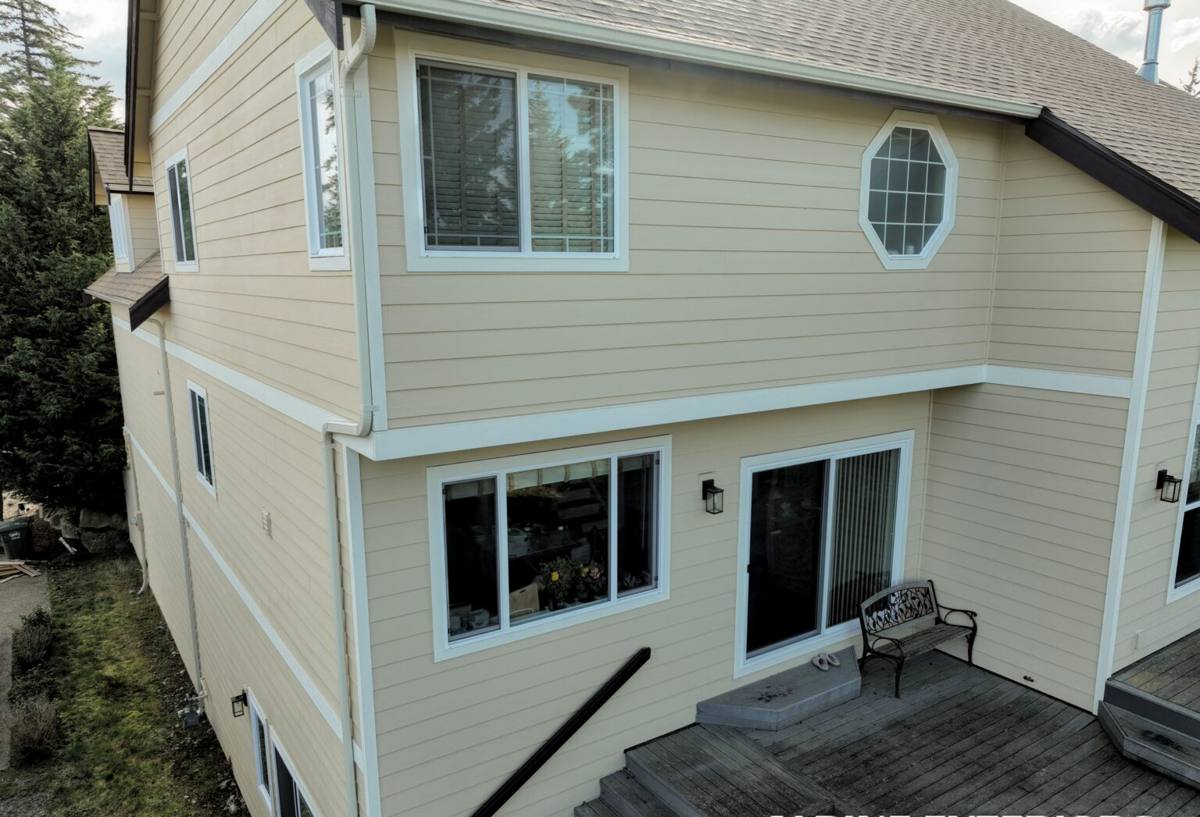
What Local Decks Are Up Against
Moisture and a Long Moss Season
Whatcom County doesn't get a hard dry season the way inland climates do. Decking that stays damp for days at a time — especially on the north or shaded side of a house, or under tree cover — grows moss and algae faster than most homeowners expect. That growth isn't just cosmetic; it holds moisture against the wood or composite surface, and on wood decking in particular it accelerates rot in fastener holes and board ends if it's never cleaned off.
Salt Air and Fastener Corrosion
Homes closer to the water and the flats around Ferndale get a steady dose of salt-laden air, and it travels further inland on windy days than most people assume. Salt air speeds up corrosion on anything less than a properly rated fastener — screws, joist hangers, bolts, and flashing all need to be matched to that exposure, not just picked off the shelf because they're cheaper.
Freeze-Thaw and Footing Depth
Whatcom County winters aren't brutal, but we do get freeze-thaw cycles, and footings that aren't poured below the frost line can heave slightly over a few winters. That's enough to throw a deck out of level, crack a footing, or put stress on the ledger connection at the house — problems that show up two or three years after a shortcut was taken, not on day one.
Choosing the Right Decking Material
There's no single "best" decking material — there's the right material for your budget, your exposure, and how much upkeep you actually want to do. Here's how the common options compare for a wet, shaded Whatcom County lot:
| Material | Moisture Behavior | Maintenance | Typical Lifespan |
|---|---|---|---|
| Pressure-treated fir/hem-fir | Resists rot when properly sealed and drained; end cuts need re-treating | Annual cleaning, re-sealing every 1-2 years | 15-20 years with upkeep |
| Cedar | Naturally rot- and insect-resistant, but greys and softens if left unsealed in constant damp | Cleaning plus staining/sealing every 1-2 years | 15-25 years with upkeep |
| Capped composite | Doesn't absorb water or rot; can still grow surface algae in shade if not cleaned | Occasional wash, no sealing or staining | 25-30+ years |
| Uncapped/first-gen composite | More prone to moisture absorption at cut edges and surface mildew than capped composite | Regular cleaning; watch cut edges | 15-20 years |
For homeowners who don't want a recurring maintenance chore, we generally steer people toward capped composite for the decking surface, especially in shaded spots that stay damp longer. For homeowners who want the look and feel of real wood and are willing to keep up a cleaning and sealing schedule, cedar still holds up well here — it's a legitimate choice, not a compromise, as long as the upkeep happens on schedule. What we avoid recommending is uncapped composite or bargain-grade decking boards in constantly shaded, damp locations; the moisture behavior just isn't a good match for that exposure, and we'd rather tell a homeowner that up front than sell a product that'll disappoint them in a few years.
Framing Material: This Part Isn't Optional
Whatever decking surface you choose, the framing underneath — joists, beams, posts — should be pressure-treated lumber rated for ground contact where it's near soil, with corrosion-resistant hardware throughout. This is the part of the deck nobody sees after it's built, and it's also the part that determines whether the deck is still solid in fifteen years.
What a Correctly Built Deck Actually Involves
Footings Below Frost Depth
Footings get dug and poured to the depth required by code for our area, not just deep enough to "feel solid." This is what keeps the deck from heaving or settling unevenly over multiple freeze-thaw winters.
Ledger Flashing Done Right
If the deck attaches to the house, the ledger board connection is the single most important — and most commonly rushed — detail on the whole project. It needs proper flashing that sheds water away from the house's structure, not just a bolted board with caulk smeared over the top. Water intrusion at a bad ledger connection is one of the most expensive repairs a homeowner can face, because it can rot framing and sheathing behind the siding before anyone notices.
Fasteners and Hardware Matched to the Climate
Structural screws, joist hangers, and hidden fastener systems all need to be rated for exterior, corrosion-prone use — not interior-grade hardware that happens to be cheaper. In a salt-air, high-moisture climate, this is where corners get cut on lower-bid jobs, and it's the kind of shortcut that doesn't show up until the hardware starts failing years later.
Drainage and Airflow Underneath
A deck built low to the ground, or over a patio or walkway, needs a plan for where water goes once it passes between the boards. Proper spacing, grading beneath the deck, and in some cases a drainage system under the surface keep water from pooling against footings or framing.
Railings Built to Code
Railing height, baluster spacing, and guard requirements are set by code for a reason — they're a safety feature, not a design afterthought. We build to the current code requirements for our jurisdiction on every project, whether or not the local building department requires a permit for that specific structure.
Our Process, Start to Finish
- Site visit and design conversation. We look at sun and shade exposure, drainage, how the deck ties into the house, and what you actually want to use the space for.
- Material selection. We walk through the honest trade-offs between wood and composite options for your specific spot on the property — not a one-size-fits-all pitch.
- Permitting and structural planning. We handle what needs to be submitted to the county or city, including footing depth and ledger attachment details where applicable.
- Framing. Footings, posts, beams, and joists go in first, with corrosion-resistant hardware throughout and attention to drainage beneath the structure.
- Decking, railing, and finish work. Surface boards, code-compliant railings, stairs, and any trim or fascia go on last.
- Final walkthrough. We go over the finished deck with you, including what maintenance it'll need and roughly when.
Permits and Local Code
Deck permitting requirements vary depending on the deck's height, size, and whether it's attached to the house, and setback rules can differ by property and jurisdiction within Whatcom County. We handle the permit process as part of the job rather than leaving it to the homeowner to sort out, and we won't build a structural deck off the books just because a homeowner would rather skip the paperwork — it's not worth the risk to your home's structure or your ability to sell the house down the road with an unpermitted addition attached to it.
What Maintenance Actually Looks Like Here
Every deck in this climate needs some upkeep — the question is how much, and how often. A realistic yearly checklist for a Sumas-area deck:
- Sweep debris and standing leaves off the surface regularly, especially in fall when they trap moisture against the boards
- Wash down the surface at least once a year to remove moss, algae, and pollen buildup — more often on shaded sections
- Check and clear the gaps between boards so water keeps draining instead of pooling
- For wood decking, re-seal or re-stain on the schedule the product calls for, typically every 1-2 years
- Inspect railings, stairs, and ledger flashing once a year for loose hardware or early signs of water intrusion
- Trim back overhanging vegetation that keeps sections of the deck shaded and slow to dry
None of this is complicated, but skipping it is exactly how a deck that should last twenty-five years starts having problems at year eight.
Why a Crew That Already Works Sumas Matters
A deck builder who works this specific corner of Whatcom County regularly already knows which details matter most for local lots — how much shade a given exposure tends to hold moisture, what the permitting process looks like for this jurisdiction, and which materials actually hold up against the salt air and moss growth homeowners here deal with year after year. That's different from general deck-building experience picked up in a drier climate or a different part of the country. It also means we're not a stranger if something needs a warranty check a few years down the road — we're still working in the area, and we stand behind what we built.
If you're planning a new deck or replacing an old one that's showing its age, we're happy to come take a look and walk through your options — no pressure, no obligation. Fill out the form below and we'll set up a free estimate.