 Ferndale
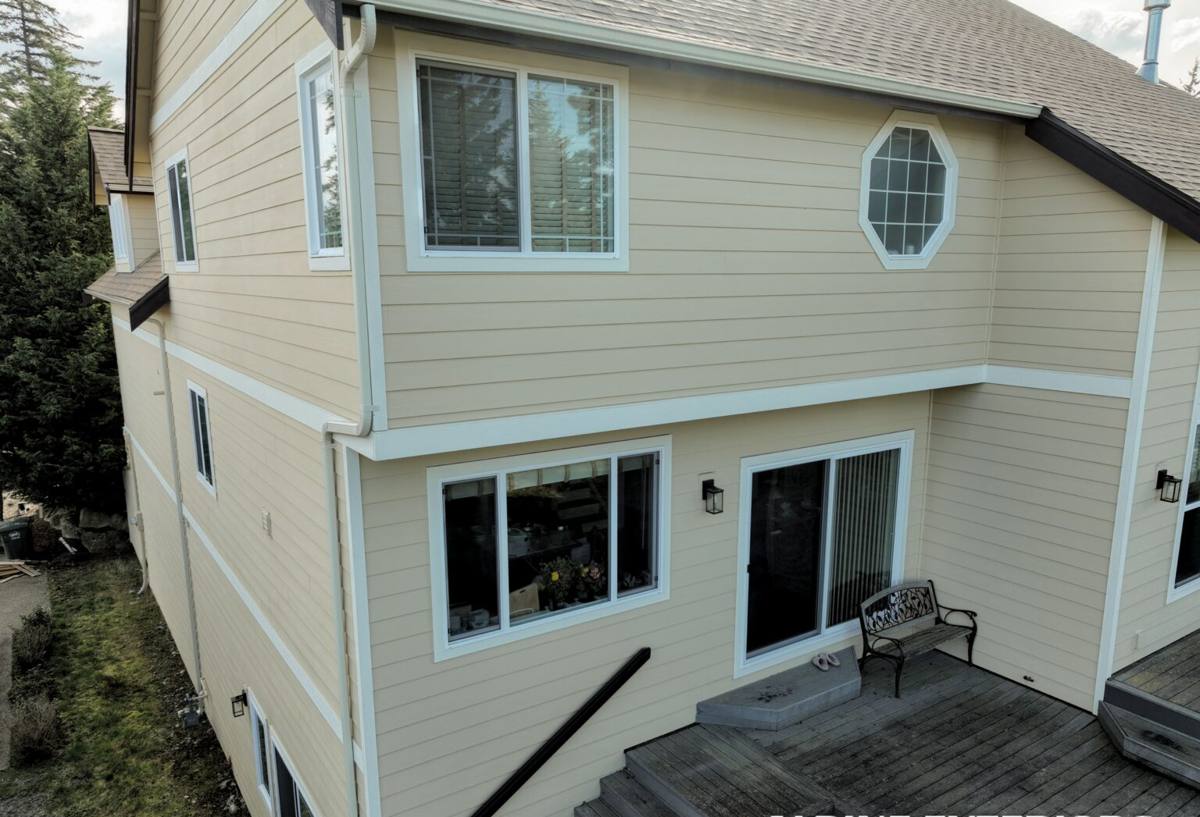
 Siding Installation in Sumas: What This Corner of Whatcom County Puts Homes Through
Sumas sits at the edge of Whatcom County, tucked against the Canadian border in the Nooksack River valley. It's a different setting than the coastal parts of our service area, but the underlying problem is the same one every home here deals with: moisture that doesn't let up. Whether it rolls in as marine air off the Sound, settles as valley fog, or just sits as months of steady drizzle, water is the constant that determines whether a siding job lasts fifteen years or fifty.
Homes in and around Sumas also deal with more temperature swing and wind exposure than you'd get closer to the water — valley air tends to pool cold in winter, and open farmland means less wind-breaking than a denser neighborhood offers. None of that is exotic weather. It's just persistent, and persistent is exactly what wears out the wrong siding material or a poorly executed installation.
Why Siding Fails Faster in This Part of the County
Most siding problems we get called out for aren't dramatic. They're slow. A few things specific to this area speed that process up:
Long Moss and Mildew Season
Shaded, north-facing walls and anything near tree lines or fence lines stay damp for weeks at a stretch through fall, winter, and spring. Any siding product with seams, gaps, or a porous surface gives moss and mildew somewhere to take hold. Once it's established, it holds moisture against the wall even longer, which compounds the problem year over year.
Driving Rain and Wind-Driven Water
Rain here rarely falls straight down. Wind pushes it sideways into wall assemblies, which means the water management behind the siding — the weather-resistive barrier, the flashing, the way each course laps the one below it — matters as much as the siding material itself. A beautiful product installed with sloppy flashing details will still let water in.
Freeze-Thaw and Temperature Swing
Sumas gets colder snaps than the immediate coast, and valley cold air can linger. Materials that absorb moisture and then freeze are prone to cracking, warping, or delaminating over repeated cycles. This is one of the biggest reasons we're selective about what we'll put on a wall out here.
What a Correct Siding Installation Actually Involves
Siding is a system, not just a finish layer. A correct installation in this climate includes:
- A continuous, properly lapped weather-resistive barrier behind the siding — no gaps, no shortcuts around windows and penetrations
- Correct flashing at every window, door, deck ledger, and roof-to-wall intersection, installed so water sheds outward, not into the wall cavity
- Proper fastening — the right nail type, spacing, and depth for the specific product, following the manufacturer's published requirements
- Correct clearances from grade, roof lines, decks, and patios so siding isn't sitting in standing water or trapped humidity
- Factory-primed or factory-finished cut edges sealed correctly, since a raw cut edge is often where moisture problems start
- Proper caulking and sealant only where the manufacturer specifies it — over-caulking traps moisture just as badly as under-caulking lets it in
Skip any one of these and the siding material almost doesn't matter — water will find its way in eventually. This is where most siding failures actually start, regardless of brand.
Why We Install Only James Hardie Fiber Cement
We don't install vinyl, LP SmartSide, Cemplank, Allura, or raw wood siding, and we're upfront about why. Each of those products has real strengths, but each also comes with a trade-off — moisture sensitivity at cut edges, a maintenance schedule that's easy to fall behind on, or a warranty structure that leaves gaps — that we've decided isn't worth carrying on a home in this climate.
James Hardie fiber cement is non-combustible, holds its shape and finish through the kind of wet-dry, freeze-thaw cycling that Whatcom County produces, and comes with a factory-applied ColorPlus finish that's baked on rather than field-painted. Hardie also engineers its product lines by climate zone, so the boards specified for the Pacific Northwest are formulated for our moisture profile rather than a one-size-fits-all approach. It's backed by a transferable warranty that matters if you sell the home. We install it because, installed correctly, it's the product we're comfortable standing behind for the long haul — not because it's the only siding on the market.
Our Installation Process
| Stage | What Happens |
|---|---|
| Assessment | We walk the home, check existing siding and sheathing condition, and look at moisture-prone areas — shaded walls, ground contact points, roof-wall intersections |
| Tear-off & sheathing check | Old siding comes off; we inspect the sheathing underneath for rot or water damage before anything new goes up |
| Weather barrier & flashing | A continuous water-resistive barrier goes on, followed by flashing at every window, door, and penetration |
| Hardie installation | Boards are installed to manufacturer fastening and clearance specs, with factory ColorPlus finish protecting cut ends where required |
| Trim & detail work | Corners, trim, and transitions are finished so water sheds away from the wall at every joint |
| Final walkthrough | We walk the finished job with you before calling it done |
What Affects the Cost of Siding Installation in Sumas
| Factor | Why It Matters |
|---|---|
| Home size and wall complexity | More square footage, gables, and dormers mean more material and more cutting/fitting labor |
| Existing siding removal | Tear-off adds labor, and hidden sheathing damage found underneath can add repair cost |
| Sheathing and framing repairs | Rot found behind old siding has to be fixed before new siding goes up — this is common on older homes with a history of moisture issues |
| Siding profile chosen | Lap siding, shingle-style panels, and vertical board-and-batten all price differently in material and labor |
| Trim and detail work | Homes with more windows, corners, and architectural detail take more time to flash and finish correctly |
| Site access | Rural and larger lots common around Sumas can affect staging and scaffolding logistics |
We give a firm, itemized estimate after seeing the home in person — broad ranges without an assessment aren't useful to anyone.
Signs Your Sumas Home Needs New Siding
- Persistent moss, algae, or dark streaking that comes back within a season of cleaning
- Soft or spongy spots when you press on the siding, especially near the bottom courses
- Visible warping, cupping, or gaps between boards
- Paint that's peeling or bubbling repeatedly, even after being redone
- Rising energy bills that track with drafts or cold spots along exterior walls
- Cracked or missing caulking at trim and window edges
- Siding that's original to a home more than 25-30 years old, particularly wood or older composite products
Any one of these on its own might just need a repair. Several together usually mean the underlying water management has failed and it's time to talk about full replacement.
Why It Matters to Hire a Crew That Already Works in Sumas
A lot of siding problems trace back to a crew that installed a product the way they'd install it anywhere, without accounting for the wall's actual exposure — how much shade it gets, how the wind hits it, how close it sits to grade. A crew that's already worked homes in this part of Whatcom County has seen which walls stay damp longest, which details tend to get skipped by installers who don't know the area, and what a home here actually needs to hold up.
Local experience also means fewer surprises with permitting and inspection timing, and a crew that's reachable if a question comes up five or ten years down the road — not a name you found once and never heard from again.
Caring for James Hardie Siding After Installation
One of the practical advantages of fiber cement is how little upkeep it demands compared to wood or vinyl. That said, a few habits keep it performing at its best in this climate:
- Rinse the siding once or twice a year, focusing on shaded or north-facing walls where moss and mildew take hold first
- Keep gutters clear so water isn't overflowing directly onto or behind the siding
- Trim back vegetation and keep mulch beds from piling against the bottom edge of the siding
- Touch up any caulking that cracks or separates at trim joints before the next wet season
- Have any impact damage or lifted boards looked at promptly — small issues are easy to fix, water intrusion behind the wall is not
If your Sumas home is due for new siding, or you're just trying to figure out whether what you have is still doing its job, we're happy to take a look. Reach out for a free, no-pressure estimate using the form below.