 Ferndale
 Asphalt Shingle Roofing Built for Marietta's Conditions
Marietta sits close enough to Bellingham Bay and the Nooksack River delta that homes here deal with a specific mix of weather most inland Whatcom County roofs never see. Salt-laden air off the water, long stretches of driving rain through fall and winter, and a moss season that can run eight months or more all put steady pressure on a roof. Asphalt shingle roofing is still one of the most practical, cost-effective choices for this stretch of Ferndale, but only when it's installed with those specific stressors in mind. A roof spec'd for a dry inland climate and dropped onto a Marietta home without adjustment will show problems years before it should.
This page covers what a correctly built asphalt shingle roof looks like for a Marietta property, what we actually do differently because of the local climate, and why working with a crew that already understands this neighborhood's conditions matters more here than in most parts of the county.
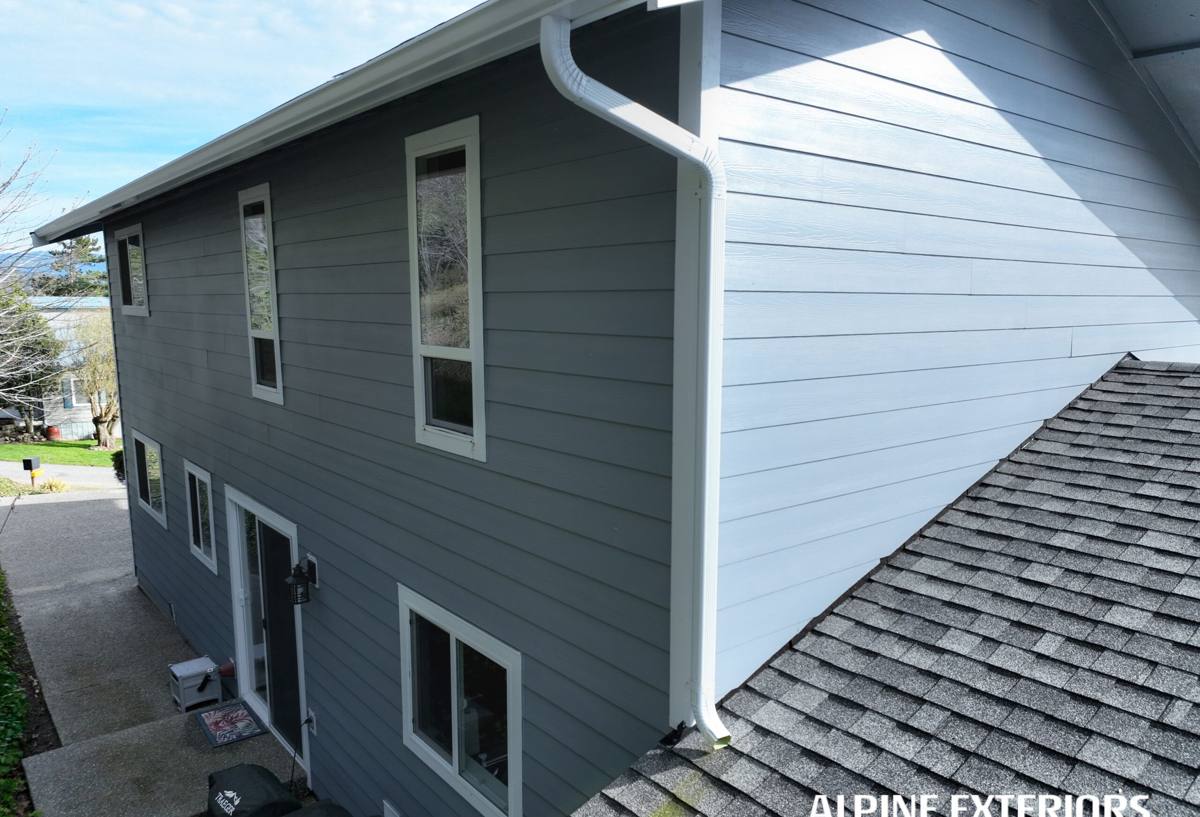
Why Marietta's Climate Is Tougher on Shingles Than It Looks
Salt Air and Metal Fatigue
Homes closer to the water take on airborne salt that settles on roofing metal — flashing, drip edge, vent stacks, nail heads exposed at the surface. Over years, that salt exposure accelerates corrosion on lower-grade or unprotected metal components faster than the shingles themselves wear out. A roof can have plenty of life left in the shingle field while the flashing around it is already failing, which is exactly how leaks start at chimneys, valleys, and wall intersections rather than in the open field of the roof.
Driving Rain and Wind-Driven Water
Marietta gets its share of storms that push rain sideways off the water, not just straight down. Standard nailing patterns and minimal underlayment overlaps that pass in calmer conditions can let wind-driven rain find its way up under shingle tabs and through fastener penetrations. This is a wind and water-intrusion issue as much as a materials issue, and it's addressed through installation technique, not just product selection.
Moss, Shade, and Moisture Retention
Between the tree cover common in this part of Ferndale and the region's damp, mild winters, moss has a long growing season here. Moss holds moisture directly against the shingle surface, which shortens shingle life, degrades granule protection, and can lift tabs enough to let water underneath. North-facing slopes and roof sections shaded by mature trees are usually the first to show it.
What a Correct Asphalt Shingle Job Actually Involves
A shingle roof is a system, not a single product. Getting a roof to actually perform in Marietta's conditions comes down to several layers working together, each one doing a specific job:
- Deck inspection and repair — any soft, delaminated, or water-stained sheathing gets replaced before anything new goes down. Shingles installed over a compromised deck fail regardless of quality.
- Ice and water shield at vulnerable zones — eaves, valleys, and roof-to-wall transitions get a self-adhering waterproof membrane, not just felt, since these are the points where wind-driven rain and ice most often force water backward under the shingle line.
- Synthetic underlayment across the field — a water-resistant secondary barrier under the shingles themselves, providing backup protection if wind or moss-driven moisture ever gets past the shingle surface.
- Corrosion-resistant flashing and fasteners — given the salt air near the water, we use flashing and fastener materials rated for coastal exposure rather than standard-grade options that corrode faster in this environment.
- Proper nailing pattern and shingle exposure — matched to local wind exposure, not just manufacturer minimums, since under-nailing is one of the most common causes of blow-off in storm-prone areas.
- Ventilation that matches the attic — balanced intake and exhaust venting keeps moisture from condensing inside the attic, which matters as much for shingle longevity from underneath as weather resistance matters from above.
Choosing the Right Shingle for a Marietta Roof
Not every asphalt shingle product is a good fit for a home exposed to salt air and heavy moss pressure. We generally steer homeowners toward algae-resistant shingle lines — ones manufactured with copper-releasing granules specifically to slow moss and algae growth — because standard shingles without that protection tend to show streaking and moss colonization noticeably sooner in this climate. It's a modest cost difference upfront that pays for itself in reduced maintenance and a longer-looking roof.
| Shingle Type | Typical Lifespan Locally | Moss/Algae Resistance | Wind Rating Fit for Marietta |
|---|---|---|---|
| Standard 3-tab | 15-20 years | None built in | Lower — not our first recommendation this close to the water |
| Standard architectural | 20-25 years | Minimal unless treated | Good with proper nailing |
| Algae-resistant architectural | 25-30 years | Built-in copper granules | Good, our typical recommendation |
| Premium/designer architectural | 30+ years | Built-in, strongest option | Excellent |
Lifespan figures above are general ranges, not guarantees — actual performance depends on installation quality, ventilation, tree cover, and maintenance, all of which matter as much as the shingle itself.
How We Approach a Marietta Re-Roof or New Install
1. On-Site Assessment
We walk the roof and attic, not just look at it from the ground. That means checking deck condition, existing ventilation, flashing condition around chimneys and valleys, and how much moss or shade pressure the specific slopes are dealing with.
2. A Written Scope, Not a Vague Estimate
You get a clear breakdown of what's being replaced, what underlayment and flashing materials are being used, and why — so you're not guessing what "roofing package" actually means.
3. Tear-Off and Deck Repair
Old material comes off down to the deck so we can actually see what's underneath, rather than layering over problems that will keep working their way through.
4. System Installation in the Right Order
Ice and water shield at vulnerable areas, synthetic underlayment across the field, corrosion-resistant flashing, shingles installed to the correct nailing pattern and exposure, then ridge and hip caps and ventilation components.
5. Final Walkthrough
We review the finished roof with you, including where valleys, flashing, and vents are located, so you know what to keep an eye on going forward.
Maintenance That Actually Extends Roof Life Here
A well-installed shingle roof in Marietta still needs periodic attention given the local moss and moisture conditions. This isn't a heavy maintenance list — just the handful of things that make a real difference:
- Keep gutters clear, especially before the fall rains, since clogged gutters push water back under the shingle edge
- Have moss physically removed (not just chemically treated) from shaded slopes every year or two before it builds up
- Trim back overhanging branches where practical to reduce shade and debris buildup on the roof
- Have flashing and roof penetrations checked periodically, especially if the home is within a mile or two of the water
- Address any interior ceiling staining immediately rather than waiting — it's almost always cheaper to catch early
Signs a Marietta Roof Needs Attention Now
Some warning signs are easy to miss from the ground, but a few are worth checking for directly:
- Granules collecting in gutters or at downspout outlets, which signals accelerating shingle wear
- Dark streaking or thick moss growth, particularly on north-facing or shaded slopes
- Curling, cupping, or lifted shingle tabs, especially after a windy storm season
- Rust staining around flashing, vent stacks, or exposed fasteners
- Any interior water staining on ceilings or in the attic, even if it seems minor
Why Local Roofing Experience Matters in Marietta Specifically
A lot of roofing problems in this part of Whatcom County don't come from bad materials — they come from a roof built to a generic spec that never accounted for salt exposure, wind direction off the water, or how long moss season really runs here. A crew that already works Marietta and the surrounding Ferndale area knows which flashing grades hold up near the water, which slopes on a given lot orientation tend to hold moss longest, and how local wind patterns actually behave during a storm, not just what a manufacturer's install guide assumes for an average climate. That local knowledge shows up in fewer callbacks and a roof that's still performing well a decade or two later.
Get a Straightforward Estimate
If you're dealing with an aging shingle roof in Marietta, seeing early moss growth, or just planning ahead, we're happy to take a look and give you an honest read on where things stand. There's no pressure and no obligation — just a clear assessment and a straightforward estimate using the form below.