 Ferndale
 Why Window Installation Works Differently Near Bellingham Bay
Windows in Bellingham and Ferndale don't fail the way they do in drier parts of the country. Out here, the enemy isn't one big storm — it's the steady combination of salt-laden air off Bellingham Bay, wind-driven rain that hits siding and window trim sideways instead of straight down, and a moss season that can stretch from October well into spring. A window that's caulked and shimmed correctly in Spokane can still leak in Whatcom County if the installer didn't account for how water actually moves here.
That's the core difference between a window installation that looks fine on day one and one that still performs in year eight: how the flashing, sill pan, and trim details are handled before the window ever gets caulked in. Everything else — brand, style, glass package — matters less than getting that part right.
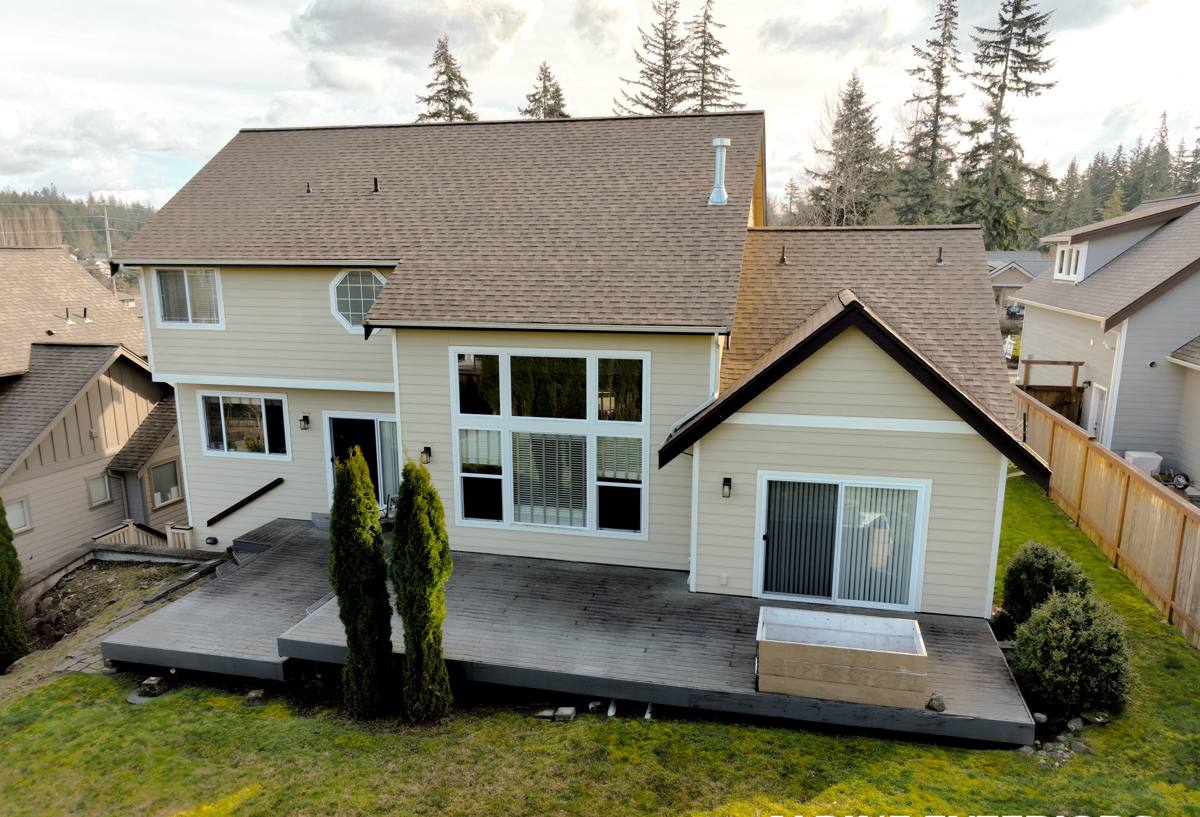
Signs Your Current Windows Are Losing the Fight
Most window failures in this area show up slowly, as staining, drafts, or sticking sashes, long before anyone notices actual rot. If you're seeing any of the following, it's worth having the window and the wall around it looked at, not just the glass:
- Soft, discolored, or bubbling trim or drywall below or beside a window
- Fogging or a permanent haze between the panes (a sign the seal has failed)
- Green or black growth on the sill, trim, or the siding directly under the window
- Windows that are noticeably harder to open, close, or lock than they used to be
- A cold draft near the frame even with the window fully latched
- Visible daylight or gaps around the frame from outside
- Condensation forming on the inside of the glass regularly through fall and winter
Any one of these can be minor. Several together, especially on the walls that face prevailing weather, usually means water has been getting behind the frame for a while — moss and algae staining under a window is one of the most reliable early warnings we see in this climate.
What a Correct Window Installation Actually Involves
Removal and Inspection
Pulling the old window is when we find out what's really going on. Sheathing and framing around Bellingham and Ferndale windows can look fine from inside and still be soft or water-stained once the trim comes off, especially on north- and west-facing walls that catch the most driving rain. We check the framing, sill, and sheathing before anything new goes in — installing a new window over damaged framing just hides the problem for another few years.
Flashing and Water Management
This is the step that actually determines whether the window will still be dry in ten years. A proper installation layers a sill pan to catch and direct any water that gets past the window itself, then integrates window flashing tape with the house wrap or weather-resistive barrier in the correct shingle-lap order — top piece overlapping the one below it, always working water downward and outward. Skipping or rushing this step is the single most common cause of the hidden rot we find behind older windows in this area.
Insulation and Air Sealing
The gap between the window frame and the rough opening needs to be filled with a material that stays flexible and doesn't compress or trap moisture — not stuffed with fiberglass, which holds water against the frame. Done right, this step also cuts drafts and makes a real difference in heating bills through our long, damp winters.
Exterior Trim and Siding Tie-In
Because we install siding as well as windows, we pay close attention to how the trim, flashing, and siding all meet at the window opening. This joint is one of the most common failure points on a house — if the siding installer and the window installer aren't coordinating the flashing details, water finds the seam between their work. Handling both trades ourselves removes that gap.
Choosing the Right Window for Salt Air and Constant Moisture
Material choice matters more here than in drier climates, mainly because of two things: corrosion from salt-carried air and the near-constant moisture load on hardware, weep holes, and seals. There's no single "best" window for every house — it depends on your budget, the style of the home, and how much upkeep you want to take on.
| Material | Moisture & Salt Air Performance | Maintenance | Typical Cost Range |
|---|---|---|---|
| Vinyl | Very good — won't corrode or rot; weep holes need to stay clear | Low — occasional cleaning | Lower |
| Fiberglass | Excellent — dimensionally stable, resists warping in wet-dry cycles | Low | Higher |
| Aluminum | Fair — durable but hardware and frames can pit or corrode near the coast over time | Moderate | Mid-range |
| Wood (clad or unclad) | Requires careful detailing — unclad wood is vulnerable to Whatcom County's wet winters | High — regular painting/sealing on exposed wood | Higher |
For most Bellingham and Ferndale homes, we steer clients toward vinyl or fiberglass frames specifically because of how well they hold up against salt air and constant damp without added upkeep. We'll still install other materials when that's what a homeowner wants or the home's style calls for it — we just make sure the client understands the maintenance commitment that comes with it, particularly for exposed wood trim in a marine climate.
Energy Performance in a Marine Climate
Whatcom County doesn't get extreme heat, but it does get a long, damp, moderately cold heating season, and single-pane or aging double-pane windows lose a lot of heat through both the glass and the frame. A couple of specs matter more here than elsewhere:
- U-factor — measures how well the window resists heat loss; lower is better for our winter-heavy climate
- Low-E coatings — help control heat loss without darkening the glass noticeably
- Condensation resistance — a real consideration here, since interior condensation on cold glass is common in humid coastal homes and can contribute to mold if it runs down onto the sill repeatedly
A well-installed, properly rated window doesn't just cut your heating bill — it reduces the amount of condensation dripping onto the sill and trim all winter, which is one of the quieter causes of rot we see in older homes.
Our Process, Start to Finish
- On-site assessment — we look at existing windows, framing condition, and how water and wind actually hit each elevation of your home
- Product and material discussion — honest input on what fits your budget and the exposure of each wall, not just a sales pitch for the most expensive option
- Written estimate — clear scope, materials, and price before any work starts
- Removal and inspection — old windows come out, framing gets checked for hidden moisture damage
- Flashing, insulation, and installation — sill pans, properly lapped flashing tape, air sealing, and precise shimming
- Trim and siding integration — exterior details finished to shed water, matched to your home's existing siding where it ties in
- Walkthrough and cleanup — we show you the finished work and leave the site clean
What Affects the Cost of a Window Installation
There's no honest flat rate for window installation — too many variables change the labor and material involved. The main factors we weigh when pricing a job:
| Factor | Why It Matters |
|---|---|
| Number and size of windows | More openings and larger units mean more material and labor |
| Condition of existing framing | Rotted sheathing or studs found during removal require repair before the new window goes in |
| Window material and glass package | Vinyl, fiberglass, aluminum, and wood carry different material costs; upgraded glass adds cost |
| New construction vs. retrofit/insert | Full-frame replacement (removing exterior trim and flashing) costs more than an insert into an existing frame, but is often the right call on older, damp-prone openings |
| Trim and siding tie-in complexity | Matching or repairing siding around the new opening adds time on more detailed elevations |
We'll always tell you which of these apply to your project during the estimate, rather than leaving cost drivers as a surprise once work has started.
Why a Crew That Already Works Bellingham and Ferndale Matters
Window installation isn't a product you buy off a shelf — it's a set of judgment calls about flashing sequence, sill design, and material choice that have to match the specific exposure of your house. A crew that works Whatcom County regularly already knows which elevations on a typical local home take the worst of the driving rain, how fast moss and algae establish themselves on north-facing trim, and how salt air factors into hardware and frame decisions over the life of the window. That local knowledge shows up in fewer callbacks and windows that are still performing well past year one.
We also handle both siding and windows, which matters at exactly the point where most water problems start: the seam between the window trim and the surrounding siding. When one crew is responsible for both, there's no gap in accountability if something doesn't seal right.
If your windows in Bellingham or Ferndale are drafty, fogged, stained, or just overdue, we're happy to take a look and give you a straightforward, no-pressure estimate — no obligation, just an honest read on what your home actually needs. Use the form below to get started.