 Ferndale
 Siding Repair in Nooksack: What This Climate Actually Demands
Nooksack sits in a part of Whatcom County where siding rarely fails all at once. It fails in slow motion — a cracked caulk joint here, a soft spot behind a downspout there — until one wet winter turns a small problem into a real one. The same marine-influenced climate that defines the whole Ferndale service area is at work here: salt-tinged air moving in off the water, driving rain that hits siding sideways during fall and winter storms, and a moss season that can stretch eight months or more in shaded, north-facing spots. None of that is dramatic on its own. Together, over years, it's exactly the kind of slow, steady exposure that finds every weak point in a wall system.
That's the lens we bring to every siding repair call in Nooksack: not "patch what's visible," but "find out why this spot failed before anything else does." A repair that skips that step usually needs to be redone in two or three years.
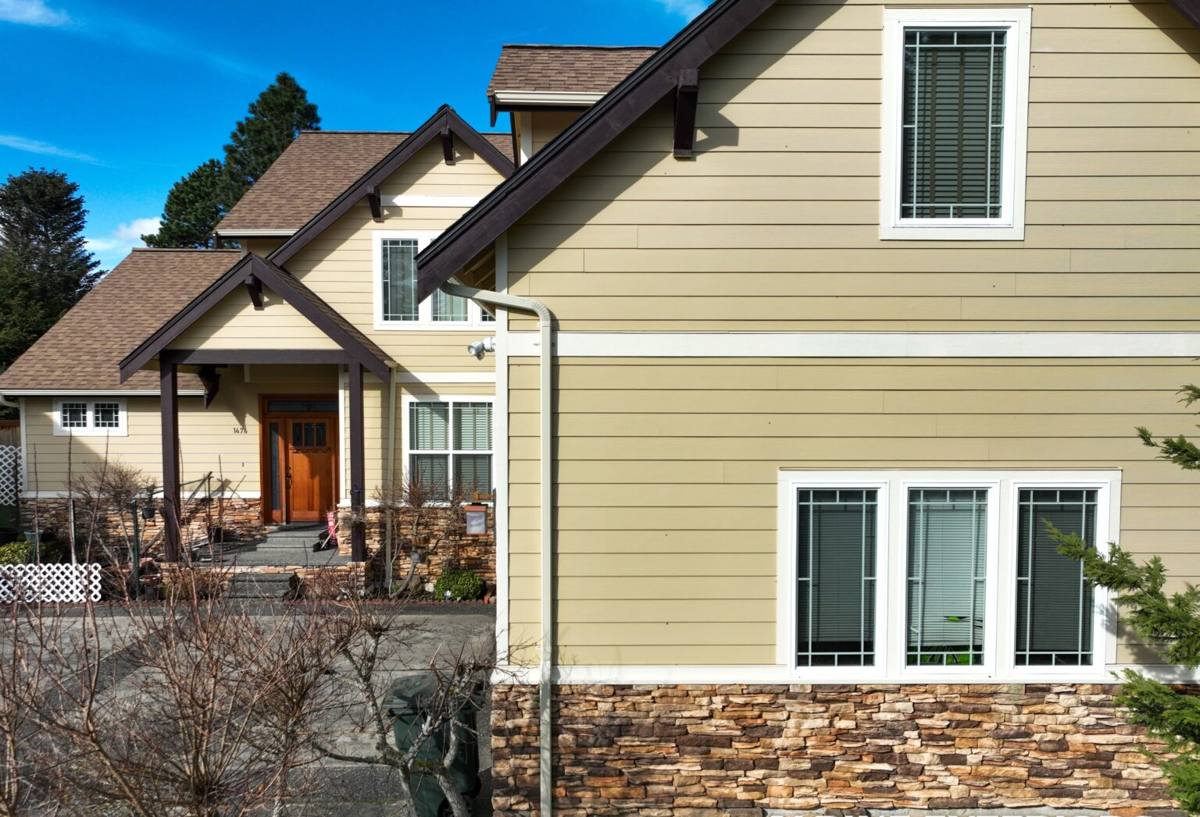
Signs a Nooksack Home Needs Siding Repair
Most siding damage announces itself quietly. Homeowners often live with early warning signs for a season or two before calling anyone, which is understandable — but the earlier a repair happens, the smaller and cheaper it usually is. Watch for:
- Soft or spongy spots when you press on siding near the bottom courses, corners, or under windows
- Visible cracks at butt joints or along panel edges, especially after a hard freeze
- Peeling, bubbling, or flaking paint — often a sign moisture is trapped behind the surface, not just weathering
- Persistent moss or dark algae streaking on shaded walls, fences lines, or under overhangs
- Gaps opening up at trim boards, window casings, or corner boards
- Staining or discoloration that tracks downward from a specific point, like a nail head or a seam
- Higher-than-expected heating bills, which can point to moisture-saturated insulation behind failed siding
- A musty smell in an interior room that shares a wall with a suspect area of siding
Any one of these on its own might be minor. Two or three in the same area, especially on a wall that takes the brunt of winter storms, is worth a real inspection.
What a Correct Siding Repair Actually Involves
Finding the Water Path, Not Just the Symptom
Cracked or stained siding is a symptom. The actual problem is almost always a path water found into the wall — a failed caulk joint, a nail driven too tight, flashing that was never installed or was installed short, or a butt joint that was never properly sealed and back-flashed. Replacing the visible board without correcting that path just delays the next failure. Our approach starts with figuring out how water got in, not just where it's showing up.
Checking What's Behind the Siding
Once a section is opened up, we look at the sheathing, house wrap, and framing behind it. In Nooksack's damp winters, a siding problem that's gone unaddressed for a year or more can mean the wood behind it has already started to soften. A repair that reinstalls new siding over compromised sheathing isn't a real repair — it's a cosmetic fix on top of a structural problem that will keep growing.
Matching Materials Correctly
We install James Hardie fiber cement exclusively, so repairs on Hardie siding are straightforward — we can source the same plank profile and, in most cases, a close ColorPlus factory-finish match. Where an exact factory match isn't available for an older run of product, we'll talk through options honestly, including whether it makes more sense to repair on a less visible elevation or repaint the affected section to blend.
Flashing, Caulking, and Fastening — Done to Spec
A huge share of siding repairs we see trace back to shortcuts taken the first time: face-nailing where blind-nailing was called for, missing kick-out flashing above a roofline, or caulk used to bridge a gap that should have been flashed. We repair to the manufacturer's actual installation spec, not just to "look right" from the ground.
When It's Not Hardie: Repairing Other Siding Materials
Plenty of homes in Nooksack were built with vinyl, LP SmartSide, cedar, or other materials we don't install new. We're upfront about this: if you call us for a repair on non-Hardie siding, we'll take an honest look and tell you what we see. Small, isolated repairs — a cracked vinyl panel, a localized area of rot on a cedar wall — are often reasonable to patch, and we'll say so.
Where we draw the line is patching a material that's failing broadly. Vinyl that's warped across multiple walls, LP with widespread edge swelling, or cedar with rot recurring in several spots isn't a repair problem — it's a material and moisture-management problem that a patch won't solve. In those cases we'll tell you plainly that repair is a short-term move, and walk you through what a full re-side in James Hardie would look like, with zero pressure either way. You decide what's right for your budget and timeline; our job is to give you an honest read, not a sales pitch.
Our Siding Repair Process in Nooksack
1. On-Site Inspection
We look at the affected area and the surrounding siding, roofline, and grading — most siding failures aren't isolated events, and the cause is often a step or two away from where the damage shows.
2. Diagnosis and Written Plan
Before any siding comes off, we tell you what we think is happening and why, and what the repair will involve. If we need to open a section to confirm, we'll explain that too.
3. The Repair Itself
This includes correcting the underlying cause — flashing, caulking, fastening, or sheathing — not just swapping the damaged board.
4. Finish Matching and Cleanup
We match material and finish as closely as the product line allows, and we clean up job debris, including old caulk, cut-offs, and fasteners, before we call it done.
5. What to Expect Afterward
A correct repair should hold up the same way the original installation would — we're not interested in a fix that looks fine for one dry summer and opens back up the next wet season.
Repair vs. Replacement: What Actually Drives the Decision
Homeowners often ask us to just give a number for "repair vs. replace" without realizing how much the right answer depends on the extent and cause of the damage. Here's the honest breakdown:
| Factor | Repair Usually Makes Sense | Replacement Is Worth Discussing |
|---|---|---|
| Extent of damage | Isolated to one or two areas | Recurring in multiple locations across the home |
| Age of siding | Under 15–20 years, otherwise sound | Nearing or past typical service life |
| Underlying material | James Hardie or well-maintained material with a clear, correctable cause | Vinyl, LP, or cedar showing widespread wear across multiple walls |
| Sheathing/framing condition | Dry, intact behind the damaged section | Soft, stained, or damp in more than one opened area |
| Cost range (broad, varies by scope) | Roughly a few hundred to a couple thousand dollars for isolated patch work | A full re-side is a larger investment, typically priced per project after inspection |
These are general patterns, not a quote — every home is different, and the only way to know which category yours falls into is a proper inspection.
Why Hire a Crew That Already Works in Nooksack
Siding repair is one of those jobs where local familiarity matters more than most homeowners expect. A crew that regularly works Whatcom County knows what this climate does to a wall over a decade, not just what a manufacturer's spec sheet says on paper. We've seen how driving winter rain finds gaps that stay bone-dry in July, and how moss establishes itself fastest on north- and west-facing walls that don't get much sun exposure in this region. That context shapes where we look first and what we flag as a risk versus a non-issue.
There's also a practical side: a local crew can typically respond faster for an inspection, doesn't need to travel far for a follow-up if something needs a second look, and has a reputation in the area worth protecting — which matters when you're trusting someone to open up your walls.
Keeping Repaired Siding in Good Shape
A repair is only as good as what happens after it. A short maintenance checklist goes a long way in this climate:
- Keep gutters clean and downspouts directed away from siding — clogged gutters are one of the most common causes of repeat siding damage
- Trim back vegetation and tree limbs that keep a wall shaded and damp longer than it needs to be
- Rinse moss and algae buildup off siding gently once or twice a year rather than letting it establish
- Walk the exterior after major storms and check caulk joints at trim, windows, and corners for cracking
- Address small issues — a hairline crack, a loose piece of trim — before the next wet season, not after
Get an Honest Look at Your Siding
If you're seeing early signs of trouble on your Nooksack home, or you've got a section of siding that's clearly failed, we're happy to come take a look. We'll tell you what we actually see — including if the honest answer is "this is a small fix" — and we'll never install anything other than James Hardie fiber cement, because it's what we're willing to put our name behind. Reach out for a free, no-pressure estimate using the form below.