 Ferndale
 Storm Damage Roof Repair for Cordata Homes
Cordata sits close enough to Ferndale that homes here take the same beating our crews see across the rest of Whatcom County: wind off the Strait, driving rain that comes in sideways more often than straight down, and a moss season that never really ends. When a storm rolls through, the damage isn't always obvious from the driveway. A few lifted shingles, a soft spot where flashing pulled loose, or a slow leak that only shows up during the next hard rain can sit unaddressed for months and turn into a much bigger repair. This page covers what storm damage roof repair actually looks like for a Cordata home, what we check for, and how our process works when you call us in after a storm.
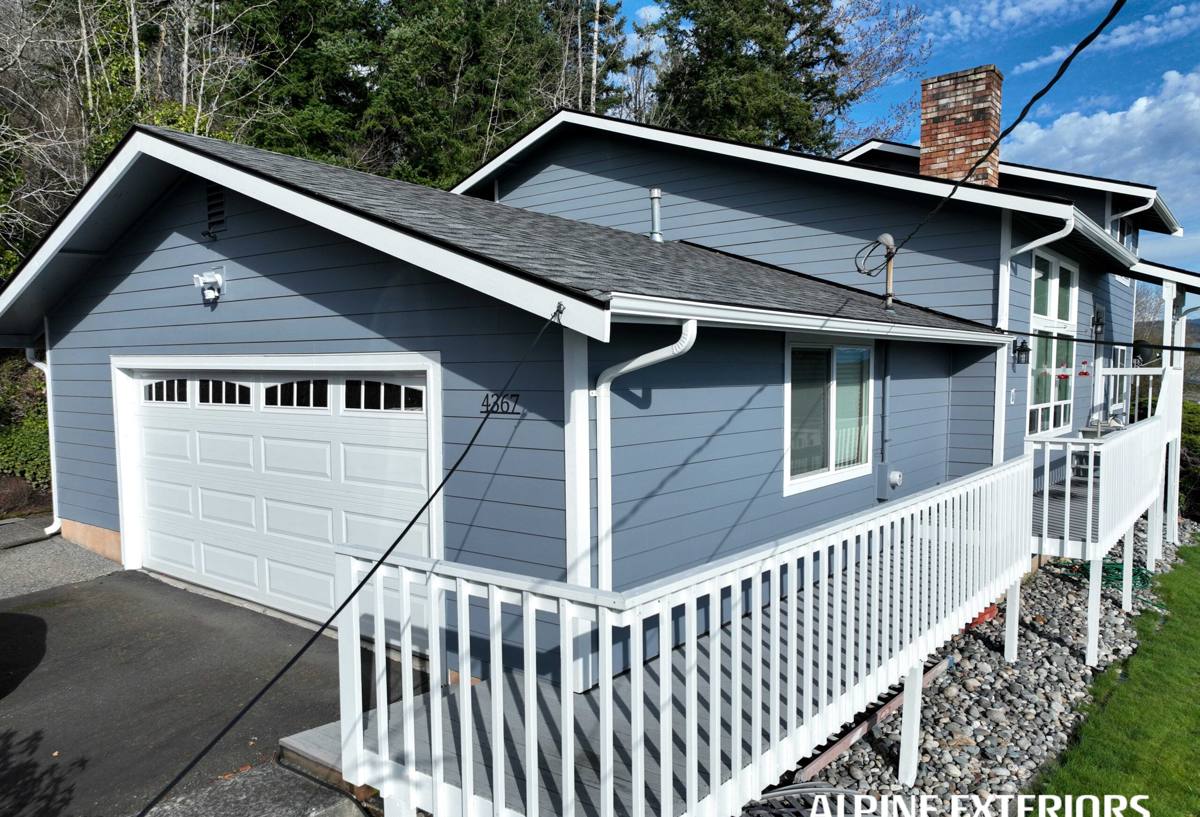
What Whatcom County Storms Do to a Roof
Storm damage in this part of Washington isn't usually one dramatic event. It's the accumulation of several ordinary-looking storms hitting a roof that's already carrying moss, saturated underlayment, or worn flashing. A few patterns we see repeatedly on homes in and around Cordata:
Wind and Uplift
Sustained wind gusts during winter storms can lift shingle edges just enough to break the seal strip without tearing the shingle off completely. The roof looks intact from the ground, but water now has a path underneath the shingle course. Repeated wind events widen that gap over time.
Driving Rain
Rain that comes in at an angle behaves differently than straight-down rain. It pushes water sideways into laps, valleys, and any place flashing meets a wall, chimney, or vent pipe. A roof that would shed a light rain fine can leak under wind-driven rain if the flashing details aren't tight.
Moss and Trapped Moisture
Whatcom County's long, damp shoulder seasons are ideal moss-growing weather. Moss holds water against the roofing material far longer than open air would, and it works its way under shingle tabs and into granule layers. A storm that wouldn't hurt a clean roof can push a moss-covered one past its limit, because the surface is already saturated before the rain even starts.
Salt Air
Being close to the water means metal components — flashing, fasteners, vent caps — corrode faster here than they would further inland. Corroded fasteners back out over time, and corroded flashing seams open up gaps that wind-driven rain finds immediately.
Signs Your Roof May Have Storm Damage
Most storm damage doesn't announce itself with an obvious hole. Here's what we tell Cordata homeowners to watch for after a significant windstorm or heavy rain event:
- Shingles that look curled, lifted at the edges, or out of alignment with the rest of the roof plane
- Granules collecting in gutters or at the base of downspouts
- Water stains on ceilings or upper walls, especially near chimneys, skylights, or where two roof planes meet
- Soft or spongy spots when walking the attic, or daylight visible through the roof deck
- Flashing that looks bent, separated, or missing around vents, chimneys, and wall intersections
- Moss buildup that's noticeably thicker or has spread into new areas since last season
- Gutters pulling away from the fascia or sagging under debris weight
Any one of these on its own might be minor. Two or three together, especially after a named storm system, is worth a professional look before the next rain event finds the weak spot for you.
What a Correct Storm Damage Repair Actually Involves
A repair that only addresses the visible symptom tends to fail again within a season or two. A correct repair traces the water's actual path, not just where it showed up inside the house. That usually means:
- Locating the true entry point. Water often travels along the underside of the deck before it drips somewhere visible, so the interior stain and the exterior damage are rarely in the exact same spot.
- Checking the underlayment condition around the damaged area, not just the shingles on top of it. If the underlayment is saturated or torn, replacing shingles alone won't solve the problem.
- Assessing the roof deck for soft or delaminated plywood where sustained moisture has gotten in.
- Rebuilding flashing details correctly at any penetration involved, rather than just caulking over the old flashing, which is a short-term fix at best.
- Matching materials as closely as reasonably possible so the repair doesn't stand out or create a new weak seam next to the old roofing.
Our Storm Damage Repair Process
1. Inspection and Honest Assessment
We walk the roof, check the attic if accessible, and identify every point where water could be getting in — not just the spot you called about. We'll tell you plainly if it's a repair situation or if the damage points to a bigger issue with the roof's overall condition.
2. Documentation
If you're planning to file an insurance claim, we document the damage with enough detail to support that process. We're not an insurance adjuster and won't promise a claim outcome, but we can give your insurer accurate information about what we found and what it will take to fix it.
3. The Repair Itself
We remove and replace only what's actually compromised — damaged shingles, affected underlayment, and any flashing that's no longer sealing properly. We don't upsell a full roof replacement when a targeted repair will genuinely hold.
4. Cleanup and Follow-Up
Job site debris, old materials, and stray fasteners get cleared from the yard and gutters before we leave. If we spot something else developing — early moss regrowth, a soft area worth watching — we'll flag it so you're not caught off guard next storm season.
Repair vs. Replace: How We Think Through It
Not every storm-damaged roof needs full replacement, but some do. The table below outlines the general factors that push a decision one way or the other. It's a starting point for the conversation, not a substitute for an actual inspection.
| Factor | Leans Toward Repair | Leans Toward Replacement |
|---|---|---|
| Extent of damage | Isolated to one section or penetration | Spread across multiple roof planes |
| Roof age | Well within expected lifespan | Already near or past typical service life |
| Deck condition | Solid, no soft spots found | Soft or delaminated decking in multiple areas |
| Underlayment | Dry and intact outside the damaged zone | Widespread saturation or age-related breakdown |
| Storm history | First significant damage in years | Repeat damage in the same areas storm after storm |
When a roof lands in the middle of that table, we'll walk you through the trade-offs honestly, including the rough cost range for each path, so you can make the call with full information.
Materials and Methods for This Climate
Given how much moisture and moss pressure Cordata roofs deal with, we pay close attention to a few details that matter more here than they would in a drier climate:
- Flashing material and fit. Properly formed and lapped flashing at every penetration, sized and installed so water sheds away from the joint rather than pooling at it.
- Ventilation. A roof deck that can't breathe holds moisture longer, which accelerates rot and gives moss more to grow on. We check that intake and exhaust venting are actually balanced, not just present.
- Fastener corrosion resistance. Given the salt air off the Strait, we use fasteners rated to hold up to that exposure rather than standard hardware that corrodes and backs out early.
- Underlayment quality. In a region that gets this much sustained damp weather, the underlayment is doing real work, not just serving as a formality under the shingles.
We don't push a specific shingle brand as a blanket answer. What matters more is correct installation — proper nailing pattern, correct exposure, sealed laps — because even a premium product installed loosely will underperform a mid-range product installed right.
Why a Local Crew Matters for Storm Repair
Storm damage repair rewards familiarity with how a specific area's weather actually behaves. A crew that regularly works Ferndale and the surrounding Whatcom County communities, including Cordata, has already seen how wind direction off the water tends to hit roofs in this area, which flashing details fail first in this climate, and how fast moss regrows here compared to drier parts of the state. That local pattern recognition means less guesswork during the inspection and a repair that accounts for what's likely to hit that roof again next winter, not just what caused this particular leak.
It also means a shorter response time when storm damage needs attention before the next system moves in. Waiting weeks for a crew to travel in from outside the county gives water more time to keep working on an already-compromised spot.
Get a Free, No-Pressure Estimate
If a recent storm left you with a stain on the ceiling, missing shingles, or just a nagging feeling that something's not right up there, we're happy to take a look. The estimate is free, there's no pressure to book anything on the spot, and you'll get a straight answer about whether you're looking at a repair or something bigger. Use the form below to get started.