 Ferndale
 Roofing in the Cordata Area: A Different Climate Than Most Roofers Admit
Homes in the Cordata area sit close enough to the Salish Sea and the marine weather that rolls off it to face a roofing climate most manufacturers' warranty documents were not really written for. Whatcom County gets a long, wet shoulder season on either side of winter, salt-laden air drifting inland off the water, and enough shade and moisture overlap to grow moss on almost any roof surface that isn't actively shedding water and light. None of that is dramatic on its own. It's the combination, repeated year after year, that shortens the life of a roof that was installed without those specifics in mind.
A new roof installation in Cordata isn't just "put shingles on a house." It's a system decision — underlayment, ventilation, flashing details, and material choice all have to work together to handle sustained damp conditions rather than just shedding the occasional heavy rain. This page covers what that actually looks like, and what to expect if you're planning a new roof for a Cordata-area home.
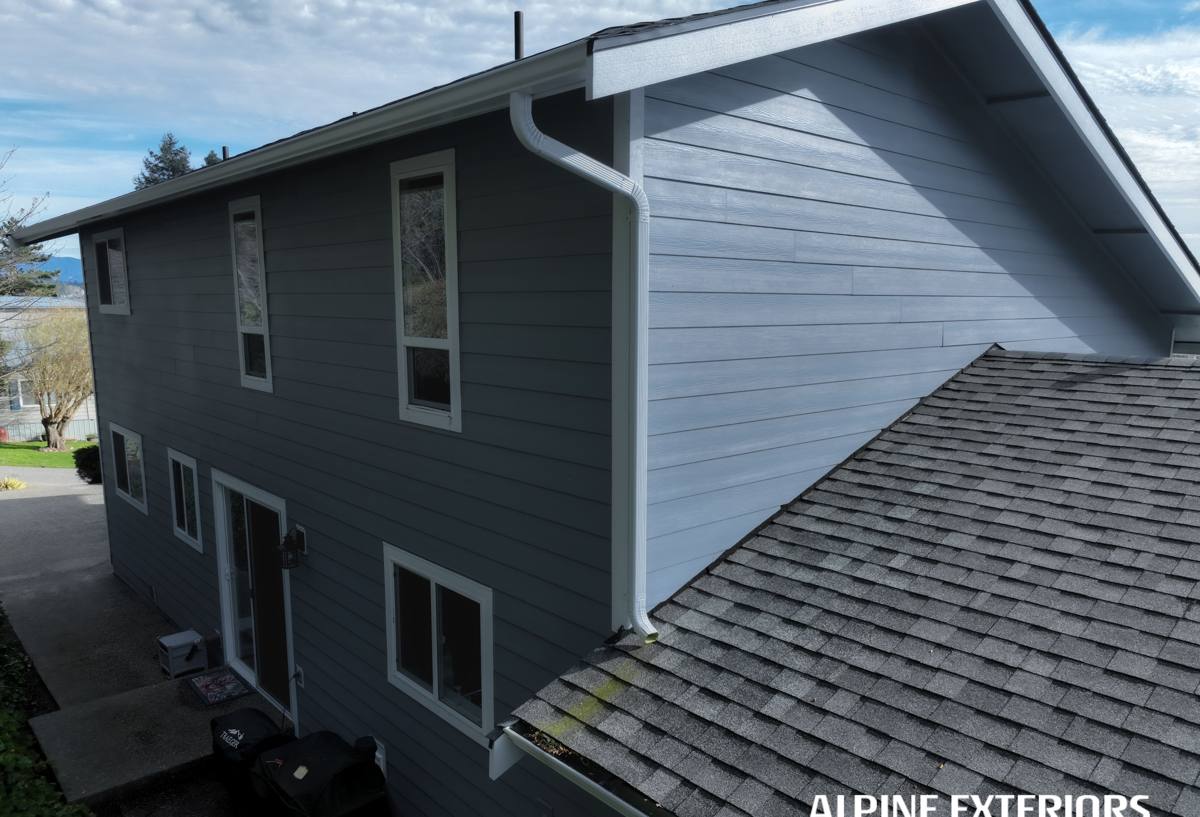
What Salt Air, Driving Rain, and Moss Season Actually Do to a Roof
Salt Air
Airborne salt doesn't damage asphalt shingles the way it corrodes bare metal, but it accelerates the breakdown of exposed metal flashing, fasteners, and any unpainted or poorly coated metal components — ridge vents, drip edge, valley metal, pipe boots with metal collars. Over years, this shows up as premature rust streaking, loosened fasteners, and small leak points that trace back to a flashing detail rather than the shingles themselves.
Driving Rain
Whatcom County storms often bring rain sideways, not just straight down. That matters because a roof only needs to shed water well when it's falling vertically — wind-driven rain gets pushed up under shingle tabs, into exposed nail heads, and through any gap in the underlayment or flashing that a calmer climate could get away with. Roofs built to a bare-minimum spec tend to leak first at valleys, chimney flashing, and low-slope transitions during these events.
Moss Season
Cordata's tree cover and marine humidity give moss a long growing window, not just a few weeks in spring. Moss holds moisture against the roof surface, works its way under shingle edges as it grows, and adds weight and organic debris that trap even more water. Left unaddressed, moss growth is one of the most common reasons a roof fails a decade or more before its rated lifespan.
Signs a Cordata Home May Need a New Roof, Not Another Repair
- Shingles that are cupping, curling at the edges, or losing granules in visible patches
- Moss or dark streaking that keeps returning within a season or two of cleaning
- Soft spots or sagging visible along the roofline or in the decking from inside the attic
- Daylight visible through the roof deck, or damp insulation, when viewed from the attic
- Repeated leaks at different spots each winter rather than one consistent trouble area
- A roof that's 20+ years old on asphalt shingles, or showing granule loss consistent with end-of-life wear
- Rising energy bills tied to poor attic ventilation or insulation gaps at the roofline
One or two of these can often be handled with a repair. Several at once, especially on an older roof, usually means repair costs start competing with the price of doing it right the first time.
What a Correct New Roof Installation Includes
A roof that's actually built for this climate is more than shingles nailed to a deck. The components below are where a properly installed roof and a bare-minimum one diverge the most, and they're mostly invisible once the job is finished.
Deck Inspection and Repair
Before anything goes down, the decking underneath the old roofing gets inspected for rot, soft spots, or delamination — especially around valleys and eaves where trapped moisture does the most damage over time. Roofing over a compromised deck is one of the most common ways a "new roof" fails early.
Ice and Water Shield at Vulnerable Points
Self-adhering waterproof membrane at eaves, valleys, and around roof penetrations gives a second line of defense exactly where wind-driven rain and moss-related water intrusion tend to find their way in.
Synthetic Underlayment
A full synthetic underlayment layer, rather than older felt paper, holds up better to the extended wet exposure common during a multi-day install and provides more consistent water resistance underneath the shingles for the life of the roof.
Balanced Attic Ventilation
Intake at the eaves and exhaust at the ridge, sized to the attic's actual square footage, keeps moist air from condensing against the underside of the deck. Poor ventilation is a major contributor to both premature shingle failure and hidden deck rot.
Corrosion-Resistant Metal Flashing and Fasteners
Given the salt air exposure, flashing, drip edge, and fasteners rated for coastal or marine conditions hold up longer than standard-grade materials, particularly at valleys, chimneys, and any metal-to-metal joint.
Proper Shingle Nailing and Sealing
Correct nail placement and count per shingle, installed within the manufacturer's temperature and adhesive sealing requirements, is what actually keeps shingles locked down against driving wind and rain rather than relying on the adhesive strip alone.
Roofing Material Options for a Cordata Home
| Material | Typical Lifespan | How It Handles This Climate |
|---|---|---|
| Architectural Asphalt Shingles | 25–30 years | Good balance of cost and performance; benefits from algae-resistant granules given the moss and moisture exposure here |
| Standard 3-Tab Shingles | 15–20 years | Lower upfront cost but less wind resistance and shorter service life under sustained wet, windy conditions |
| Standing Seam Metal | 40–60 years | Sheds water and moss growth very effectively; higher upfront cost, needs coastal-rated fasteners and coatings |
| Synthetic/Composite Shingles | 30–50 years | Resists moisture and algae well; material and installation cost sits above standard asphalt |
Most Cordata-area homes we work with land on architectural asphalt with algae-resistant granules — it holds up well against moss regrowth and driving rain at a cost that fits most roof budgets. Metal is worth a serious look for homeowners planning to stay long-term or dealing with heavy tree cover and persistent moss.
What Drives the Cost of a New Roof
| Factor | Why It Matters |
|---|---|
| Roof size and number of planes | More square footage and complexity (valleys, dormers, hips) means more material and labor time |
| Existing layers to remove | Tear-off of old roofing adds labor and disposal cost versus a bare deck |
| Deck repair needs | Rotted or soft decking found during tear-off has to be replaced before new roofing goes down |
| Material choice | Asphalt, metal, and composite options carry different material and labor costs |
| Ventilation and flashing upgrades | Bringing older ventilation or flashing up to a proper standard adds cost but pays off in roof lifespan |
| Roof pitch and access | Steep or hard-to-access roofs take longer and require more safety setup |
Because every one of these varies by house, we don't quote a number without walking the roof first — but we'll always explain what's driving the price, not just hand over a total.
Our Installation Process
- On-site inspection. We assess the current roof, deck condition, ventilation, and any trouble spots specific to your property.
- Written estimate. A clear breakdown of materials, scope, and cost — no vague allowances.
- Tear-off and deck check. Old roofing is removed and the deck is inspected and repaired as needed before anything new goes down.
- Underlayment and waterproofing. Ice and water shield at vulnerable areas, synthetic underlayment across the full deck.
- Flashing and ventilation install. Corrosion-resistant flashing and a balanced intake/exhaust ventilation system.
- Roofing material installation. Installed to manufacturer specification for nailing pattern, exposure, and sealing.
- Final walkthrough. We review the completed roof with you, including cleanup and any warranty paperwork.
Why Hiring a Crew That Already Works in Cordata Matters
A roofing crew that regularly works Cordata and the surrounding Ferndale area already knows which details matter here — how much ventilation a given attic style actually needs in this humidity, where moss tends to take hold first on a north-facing slope under tree cover, and which flashing and fastener grades hold up against the salt air drifting in off the water. That's not something a crew based well outside the region necessarily brings with them, and it's the difference between a roof that looks right on install day and one that still performs correctly five wet winters later.
Local presence also matters after the install. If a wind event or a heavy moss season causes a problem, a crew that's still working in the area is easier to reach and faster to respond than one that was passing through for a single job.
Choosing a Roofer for a New Roof Installation: What to Check
- Washington State contractor license and current bonding/insurance, verifiable on request
- A written estimate that itemizes materials, underlayment, ventilation, and labor — not just a lump sum
- Manufacturer certification for the shingle or roofing system being installed, if warranty coverage matters to you
- A clear explanation of how they'll handle deck repair if rot is found during tear-off
- Local references or completed work you can see in the Ferndale and Whatcom County area
- A straightforward answer on ventilation plans — a roofer who skips this question is skipping a step that affects roof life
If you're weighing a repair against a full new roof for a Cordata-area home, or just want an honest read on how much life is left in your current roof, we're glad to take a look. We offer free, no-pressure estimates — use the form below to get started.