 Ferndale
 Storm Damage Roofing Built for Fairhaven's Coastal Exposure
Fairhaven sits close enough to Bellingham Bay that its homes take on a different kind of weather stress than roofs just a few miles inland. Salt-laden air off the water, driving rain that comes in sideways during winter storms, and a moss season that can run eight months or longer all put extra demands on a roof system. When a windstorm rips shingles loose or a heavy rain event finds a weak spot, that damage doesn't sit quietly until spring — it spreads, especially in a marine climate that rarely gives a roof much time to dry out between storms.
We work storm damage repairs throughout Whatcom County, and Fairhaven's waterfront-adjacent homes get a specific kind of attention from us because the exposure is genuinely different. This page covers what storm damage actually looks like on a Fairhaven roof, what a correct repair involves, and how we approach the work so it holds up through the next storm season, not just until the next inspection.
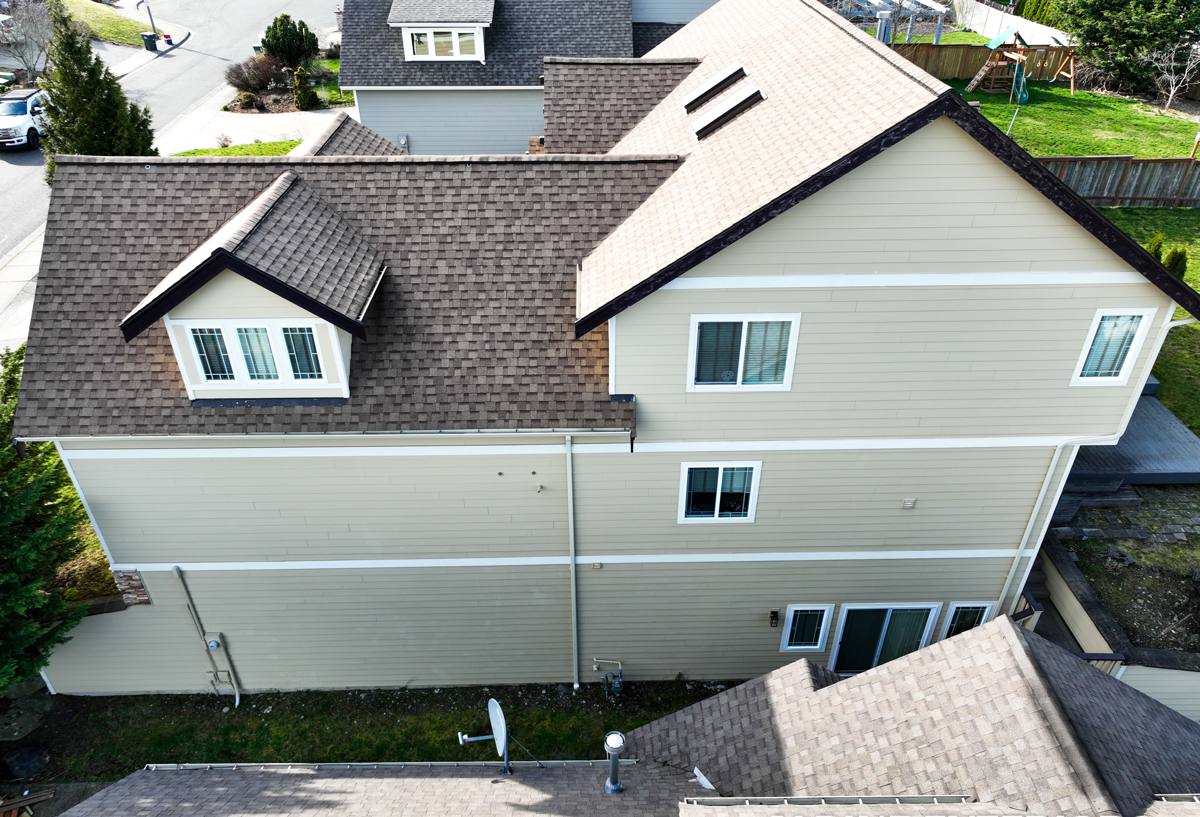
Why Fairhaven Roofs Take a Different Kind of Beating
Salt Air and Metal Fatigue
Homes closer to Bellingham Bay are exposed to airborne salt that settles on roofing metal — flashing, fasteners, gutters, and any exposed hardware. Over years, that salt exposure accelerates corrosion on lower-grade metal components faster than it would on an inland roof of the same age. A storm doesn't create that corrosion, but it exploits it — a flashing seam that was already weakening from salt exposure is far more likely to fail under wind-driven rain than one that's had no coastal exposure at all.
Driving, Wind-Driven Rain
Storms coming off the water tend to push rain horizontally, not just down. That matters because a roof system designed to shed water vertically can still leak under wind-driven rain if the underlayment, flashing laps, or shingle sealing aren't installed with that reality in mind. Water gets forced up under shingle edges and into any gap that a calmer rain would never reach.
Long Moss Season
Whatcom County's damp, mild climate keeps moss and algae growth active for most of the year, and Fairhaven's tree cover and moisture levels are no exception. Moss holds water against the roof surface, works its way under shingle tabs, and lifts materials just enough to create an entry point. A storm that wouldn't have caused damage on a clean, moss-free roof can cause real damage on one where moss has already been prying at the shingles for a season or two.
What Storm Damage Actually Looks Like
Not all storm damage is obvious from the ground. Some of it is, and some of it takes an experienced eye to catch before it turns into a bigger problem.
- Missing or lifted shingles — often visible from the ground after a windstorm, but the true extent (adjacent shingles with broken seals) usually isn't.
- Creased or bruised shingles — wind can fold a shingle without tearing it off; it may look intact but no longer sheds water correctly.
- Flashing separation — around chimneys, vents, skylights, and roof-to-wall transitions, where salt-air corrosion and wind stress combine.
- Granule loss — heavy rain and hail-like debris can strip protective granules, leaving asphalt exposed to UV and moisture.
- Gutter and downspout damage — bent, pulled-away, or clogged gutters that stop draining correctly and push water back toward the fascia and roof edge.
- Soft spots or staining in the attic — the first sign of a leak that hasn't shown up on the ceiling yet.
- Moss intrusion at damaged edges — moss that's found its way under a lifted shingle after storm exposure, accelerating rot underneath.
Damage that isn't repaired promptly rarely stays the same size. A small opening lets in a small amount of water after one storm, and a larger amount after the next, especially in a climate where the next rain event is never far off.
What a Correct Storm Repair Involves
Assessment Before Any Work Starts
We start with a full roof inspection, not just a look at the obvious damage. Storm events often cause secondary damage — a shingle blown off in one spot can indicate wind uplift stress on the surrounding field, and that needs to be checked even if it looks fine from a distance. We also check the attic side when accessible, since interior signs of moisture often tell us more about how far water has traveled than the exterior does.
Matching Repair to Actual Damage
Storm repair isn't one-size-fits-all. Some damage is a straightforward shingle replacement. Some requires re-flashing a whole section. Some — particularly when moss has been undermining the roof for a while before the storm hit — requires addressing the moss and any rotted decking underneath before a shingle repair will actually hold. We tell you honestly which category your roof falls into rather than defaulting to the smallest, cheapest fix if it won't actually solve the problem.
Flashing and Sealing Done for Wind-Driven Rain
Given how much of Fairhaven's storm damage traces back to wind-driven rain rather than straight-down rain, we pay particular attention to flashing laps, shingle nailing patterns, and sealant work at penetrations. A repair that would hold up fine in a calmer inland setting can still fail here if it isn't detailed for horizontal water intrusion.
Corrosion-Resistant Materials Where It Matters
For flashing, fasteners, and other exposed metal components in coastal-adjacent repairs, we favor materials with better corrosion resistance rather than the cheapest available option. It costs a little more up front and saves you from redoing the same repair in a few years once salt exposure eats through lower-grade metal.
Our Repair Process, Step by Step
- Initial contact and scheduling — we get a repair crew out promptly, especially when active leaking is involved.
- Full roof and attic inspection — documenting all storm-related damage, not just the visible piece.
- Written explanation of findings — what's damaged, what caused it, and what repair options make sense.
- Temporary protection if needed — for active leaks or exposed decking, we can stabilize the area to prevent further water intrusion while a full repair is scheduled.
- Repair work — shingle, flashing, decking, or gutter repair matched to the actual damage found.
- Moss and debris cleanup — clearing growth and debris from the repaired area and surrounding roof surface so it isn't working against the repair from day one.
- Final walkthrough — confirming the repair with you before we consider the job finished.
Repair vs. Replacement: How We Help You Decide
Storm damage sometimes reveals a roof that's near the end of its service life rather than one with an isolated problem. We're upfront about that distinction because it changes what makes financial sense.
| Factor | Points Toward Repair | Points Toward Replacement |
|---|---|---|
| Roof age | Under roughly 15 years | Nearing or past typical service life for the material |
| Extent of damage | Isolated to one section or a few areas | Widespread across multiple roof planes |
| Underlying condition | Decking and structure sound elsewhere | Signs of rot, prior leaks, or moss damage in several areas |
| Granule loss / wear | Localized to storm-affected area | General wear visible across the whole roof |
| Repair history | First significant repair | Repeated repairs to the same or nearby areas |
We'll always give you a repair option when it's a genuinely sound long-term fix. We won't recommend replacement just because it's a bigger job — but we also won't patch a roof that's clearly telling us it's done, since that just delays a bigger repair bill and risks interior damage in the meantime.
Working With Insurance on Storm Damage
Many storm damage repairs in this area are at least partially covered by homeowners insurance, particularly when the damage traces to a specific wind or storm event. We can document the damage clearly — photos, a written assessment, and a scope of repair — so you have what you need for a claim. We're not a public adjuster and won't promise a specific claim outcome, but we make sure the documentation on our end is thorough and accurate.
Preventing the Next Round of Storm Damage
Once a storm repair is done, a few maintenance habits go a long way toward keeping Fairhaven's climate from creating the same problem again:
- Schedule moss treatment and removal on a regular cycle rather than waiting until growth is heavy.
- Keep gutters and downspouts clear so wind-driven rain has somewhere to go besides under the roof edge.
- Have flashing and exposed metal checked periodically for early corrosion, especially on homes closer to the water.
- Trim back tree limbs that hold moisture against the roof or that could come down in the next windstorm.
- Get a post-storm visual check after any significant wind event, even if nothing looks obviously wrong.
Why Local Storm Repair Experience Matters
A roofing crew that mainly works drier, inland areas can still do competent shingle work, but they may not instinctively account for wind-driven rain angles, salt-air corrosion timelines, or how aggressively moss behaves in a coastal Whatcom County microclimate. We work Fairhaven and the surrounding Ferndale area regularly, which means we're not guessing at how this specific combination of salt air, storm patterns, and moss pressure behaves over time — we've seen how it plays out on real roofs, storm season after storm season, and we build our repairs around that.
If a recent storm has left your Fairhaven roof with missing shingles, a leak, or damage you're not sure how to assess, we're glad to take a look. Reach out for a free, no-pressure estimate using the form below, and we'll give you a straight answer on what's needed and what it'll take to fix it right.