 Ferndale
 Siding Installation in Custer: What This Corner of Whatcom County Demands
Custer sits close enough to Birch Bay and the Strait of Georgia that salt-laden air is a regular part of the weather, and far enough into Whatcom County's agricultural flatlands that wind has nothing to slow it down before it hits a house. Add in the long stretch of gray, wet months that define a Pacific Northwest winter and spring, and you have a climate that is genuinely tough on exterior siding — not in a dramatic, one-storm-and-it's-ruined way, but in a slow, cumulative way that shows up five, ten, fifteen years down the road as swelling, staining, cracking, or paint failure.
Homes here need siding that can shrug off repeated wetting and drying cycles, resist the corrosive effect of salt air on fasteners and finishes, and hold its color and shape through months of overcast, moisture-heavy weather without feeding the moss and algae that thrive in shaded, damp conditions. That's a different set of priorities than a siding installation in a dry inland climate, and it's why we approach every Custer project as a climate problem first and a cosmetic upgrade second.
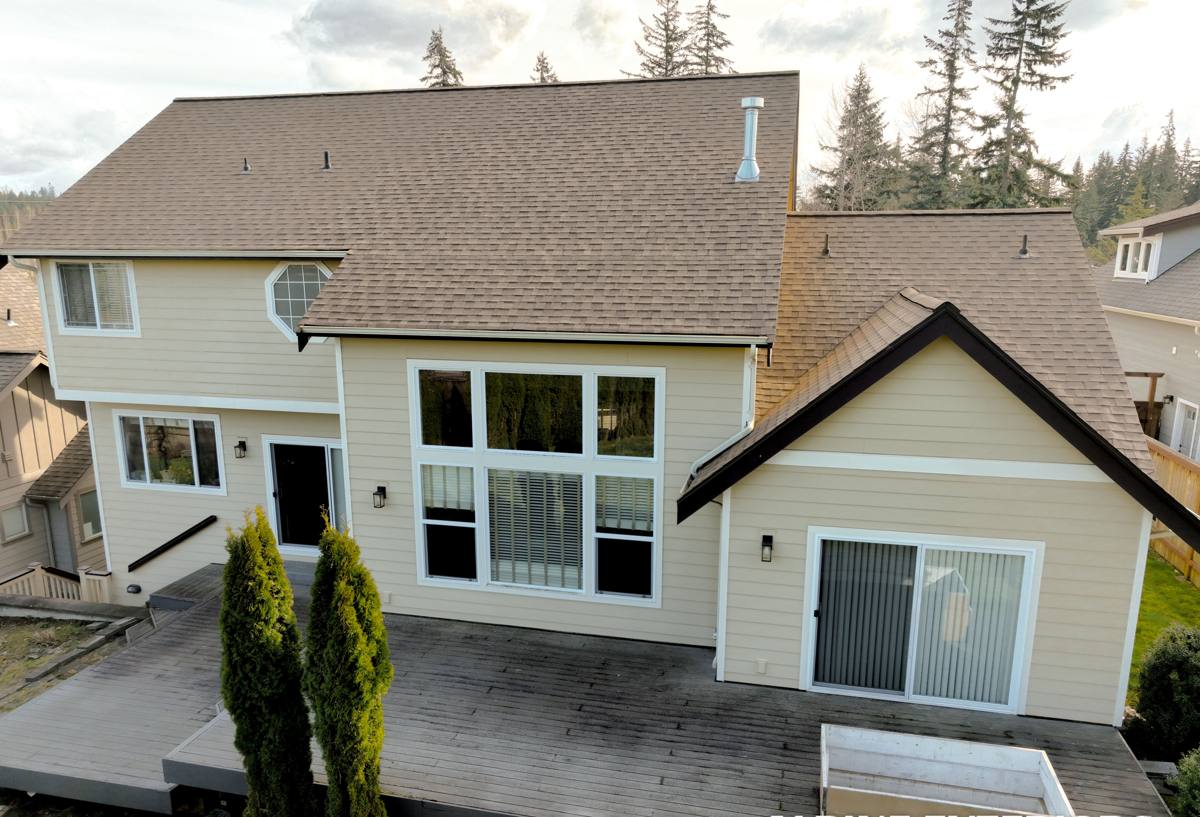
What a Correct Siding Installation Actually Involves
Siding installation is often talked about like it's just fastening boards to a wall, but the material itself is only part of the story. Most siding failures we get called out to inspect in this region aren't failures of the siding product — they're failures of the assembly behind it. A correct installation is a system, and every layer of that system matters as much as the visible finish.
The Parts You Don't See
- A weather-resistive barrier installed with proper laps and no gaps, so water that gets past the siding has a way to drain out instead of soaking into the sheathing
- Flashing at every window, door, and roofline transition, integrated with the water-resistive barrier rather than just caulked over the top
- A drainage gap or rainscreen strategy that lets moisture and moist air move out from behind the siding instead of sitting against the wall
- Correct fastener type, spacing, and depth — under- or over-driven fasteners are one of the most common causes of early siding problems we see
- Manufacturer-specified clearances at grade, decks, patios, and roof lines, so siding never sits in standing water or constant splash-back
None of that is visible once the job is done, which is exactly why it matters who does the work. Two houses can look identical from the street and have completely different lifespans behind the paint.
Why We Install Only James Hardie Fiber Cement
We made a decision, as a company, to install one siding system: James Hardie fiber cement. We don't offer vinyl, LP SmartSide, primed wood, or the other fiber cement brands on the market, and we get asked why fairly often. The honest answer is that after years of installing and repairing siding in this climate, Hardie is the product we've seen hold up the most consistently against salt air, sustained rain exposure, and the moss and algae growth that shaded, damp Whatcom County lots tend to produce.
Fiber cement is non-combustible, which matters more every year as wildfire smoke and ember exposure become a regular summer concern even on the wet side of the state. James Hardie's ColorPlus factory-applied finish is baked on under controlled conditions rather than painted on-site, which gives it more consistent coverage and better fade resistance than field-applied paint, and it comes backed by a real, transferable warranty. Their HardieZone system also engineers specific product lines for different climate exposures, which is a level of climate-specific engineering most competing products don't offer.
That doesn't mean other products are without merit — vinyl is inexpensive and low-maintenance in mild conditions, and engineered wood has genuine fans. But we've watched enough of those materials struggle with the specific combination of salt exposure, driving rain, and moss-friendly shade that this region produces that we stopped installing them. We'd rather do one thing well than offer five options and let a homeowner unknowingly pick the one that struggles here.
Choosing the Right Hardie Product Line for a Custer Home
James Hardie isn't a single product — it's a family of siding profiles, and picking the right one depends on the home's exposure, style, and budget.
Common Options for This Area
- HardiePlank lap siding — the most common choice, available in several exposure widths and textures, and the closest match to traditional lap siding aesthetics
- HardiePanel vertical siding — often used for accent gables, garages, or a more modern look, and effective at shedding driving rain when detailed correctly
- HardieShingle — a shingle-style profile for homes wanting a more textured, traditional look without the maintenance burden of real cedar shingles
- HardieTrim — matching trim boards that hold up to the same wet-dry cycling as the field siding, instead of mismatched wood trim that rots first
For homes with more direct wind and moisture exposure — open lots without much windbreak, which describes a fair number of properties around Custer — we lean toward smoother, tighter-lapped profiles and pay extra attention to caulk joints and butt seams, since those are the first places sustained wind-driven rain finds a way in.
Our Installation Process
The steps don't change much from job to job, but the care taken at each one is what separates a siding job that lasts twenty-plus years from one that starts showing problems in five.
- Assessment and tear-off — we remove existing siding and inspect the sheathing and framing underneath for rot, moisture damage, or prior installation shortcuts before anything new goes on
- Repair and prep — any compromised sheathing gets replaced, not covered over, since siding installed over damaged substrate fails regardless of how good the siding itself is
- Weather barrier and flashing — the water-resistive barrier and all flashing details go in first, integrated as a single drainage system rather than isolated pieces
- Furring or rainscreen installation where the assembly calls for it, to keep siding ventilated and drying properly between rain events
- Siding installation — Hardie boards are cut, fastened, and fitted to manufacturer spec, with attention to clearances at grade, roofs, decks, and penetrations
- Trim, caulking, and touch-up — factory-finish touch-up paint is used only where cuts expose raw material, keeping the ColorPlus finish intact everywhere else
- Final walkthrough — we review the completed work with the homeowner before considering the job finished
Cost Factors for Siding Installation in Custer
Every home is different, but the same handful of factors drive most of the cost variation we see on projects in this area.
| Factor | Why It Matters Here |
|---|---|
| Home size and wall complexity | More corners, gables, and dormers mean more cuts, flashing, and labor time |
| Condition of existing sheathing | Rot or moisture damage found during tear-off adds repair scope before new siding can go on |
| Product line and profile | Shingle-style and specialty trim cost more than standard lap profiles |
| Site exposure | Open, wind-exposed lots often warrant tighter detailing and extra flashing attention, which adds labor |
| Access and site conditions | Long driveways, tight lot lines, or landscaping can affect staging and material handling |
| Color and finish selection | Factory ColorPlus finishes have a wide range; some premium colors and textures carry a modest upcharge |
We give straightforward, itemized estimates so homeowners can see exactly what's driving the number rather than a single lump figure.
Signs a Custer Home May Need New Siding
Because moisture-driven siding failure is gradual, a lot of homeowners live with early warning signs for years before addressing them. Worth checking for:
- Persistent moss, algae, or dark streaking on shaded or north-facing walls that pressure washing only temporarily removes
- Soft spots, bubbling, or visible warping in existing siding, especially near ground level or under downspouts
- Paint that's peeling or chalking faster than expected, which can signal moisture trapped behind the siding
- Visible gaps or separation at seams, corners, or trim boards
- A noticeably higher heating bill, which can point to a compromised weather barrier letting conditioned air escape
- Interior signs like musty smells or staining near exterior walls, which sometimes trace back to a siding or flashing failure rather than a roof leak
Why It Matters to Hire a Crew That Already Works This Area
Siding installation isn't a generic skill applied the same way everywhere. A crew that mostly works drier inland climates can do a technically fine installation that still underperforms in Custer, simply because the assumptions about drainage, fastener corrosion resistance, and moss-prone shading are different here. Working regularly in Whatcom County means we're not guessing at how much wind-driven rain a given orientation gets, or which product lines and profiles actually hold up against the salt air rolling in off the water — we're applying what we've already seen play out on homes nearby.
It also means we're a known, findable local business if a warranty question or a maintenance question comes up years after the job — not a crew that worked through the area once and moved on.
Ready to Talk About Your Home?
If you're considering new siding for a home in Custer, we're happy to take a look, walk the exterior with you, and give you a straightforward, no-pressure estimate. There's a form below — reach out and we'll get you scheduled.