 Ferndale
 Window Replacement in Custer: A Different Job Than It Looks
Custer sits in the open, wind-exposed northern reach of Whatcom County, closer to saltwater and farmland than to the shelter of denser neighborhoods. That exposure changes what a window replacement job needs to hold up to. A window that performs fine in a protected in-town lot can fail years early out here, where salt-laden air off the water, near-constant winter rain, and a long moss season all work on a home's exterior at once. Replacing windows in Custer isn't just swapping old glass for new — it's matching the product and the install to a specific set of conditions.
We work on homes throughout this part of Whatcom County regularly, and the patterns repeat: aluminum frames pitted and stiff from salt exposure, wood sills soft from years of standing water, and sliders that used to open easily now dragging on swollen or corroded tracks. None of that is unusual for the area — it's just what happens to windows that weren't specified or installed with this climate in mind.
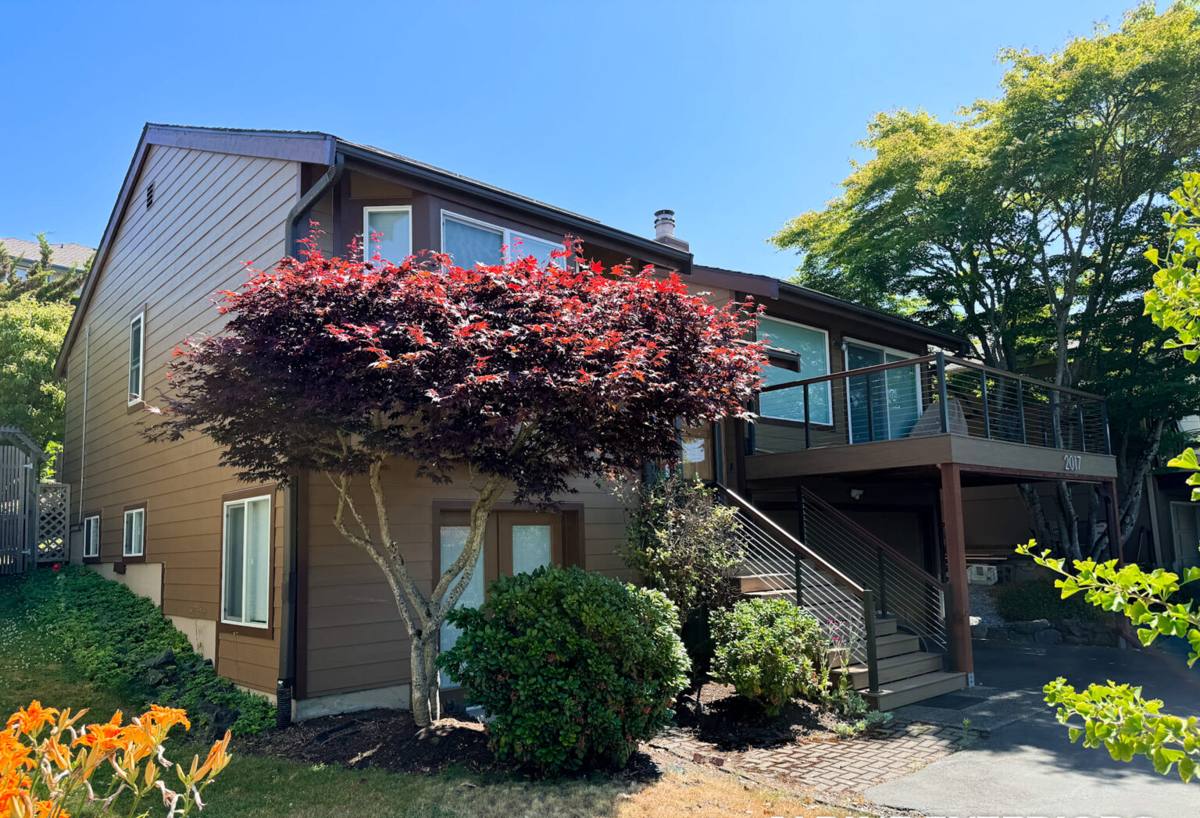
What Salt Air, Rain, and Moss Actually Do to a Window
Salt Air
Airborne salt accelerates corrosion on metal components — aluminum frames, hinges, cranks, and screws — long before the glass itself fails. Once corrosion starts, moving parts bind, weatherstripping compresses unevenly, and the seal around the sash stops doing its job. That's when drafts and moisture intrusion show up, often years before a homeowner notices anything wrong with the glass.
Driving Rain
Wind-driven rain doesn't just fall on a window, it gets pushed sideways into every gap in the flashing and trim. Older installations, especially ones done without a proper sill pan or with caulking as the only line of defense, let water track behind the frame and into the wall cavity. By the time it shows up as a stain on interior trim, the damage has usually been building for a while.
Moss and Algae
A long, wet moss season means anything horizontal — sills, exterior trim, the tops of frames — stays damp for extended stretches. Moss and algae hold moisture against wood and painted surfaces, which is exactly the condition that leads to rot and finish failure. Windows facing north or shaded by trees are usually the first to show it.
Signs a Custer Home Needs Window Replacement, Not Just a Repair
Not every problem window needs full replacement — sometimes weatherstripping, glazing, or hardware can be fixed. But certain signs mean the frame or seal itself has failed and repair is just delaying the inevitable:
- Fogging or a visible film between panes (the seal on the insulated glass unit has failed)
- Soft or discolored wood at the sill or bottom corners of the frame
- Windows that are difficult to open, close, or lock due to swelling or corrosion
- Visible daylight or a noticeable draft around the frame when it's windy
- Paint or finish that keeps failing in the same spot no matter how often it's touched up
- Green or black growth on sills or lower frame sections that returns shortly after cleaning
- A noticeable jump in heating costs with no other explanation
What a Correct Window Replacement Job Actually Involves
The window itself is only part of the job. Most failures we get called out to fix trace back to installation shortcuts, not a bad product. A correct replacement in this climate includes:
Proper Flashing and Sill Pan Detailing
Water needs a way out if it ever gets behind the window, which it eventually will in a climate like this. That means a sloped sill pan and flashing that integrates with the home's existing weather-resistive barrier — not just a bead of caulk around the edges.
Sealant Chosen for the Conditions
Not all sealants perform the same in constant damp and temperature swings. We use products rated for exterior, high-moisture applications, and we don't rely on sealant alone to do a flashing detail's job.
Insulation Around the Frame
The gap between the new window and the rough opening needs to be filled with an appropriate low-expansion insulating material — packed too tight, it can bow the frame; left too loose, it's a thermal and air leak.
Material Matched to Exposure
A window on a wind-exposed, salt-affected wall doesn't need the same spec as one tucked under an eave on a sheltered side of the house. Hardware finish, frame material, and even glass coatings can be chosen differently depending on where the window sits.
Choosing a Window Material for Custer's Climate
There's no single "best" window material — the right choice depends on exposure, budget, and how much upkeep you want to do. Here's how the common options compare for a salt-air, high-rain environment:
| Material | Salt Air / Moisture Resistance | Maintenance | Typical Lifespan | Best For |
|---|---|---|---|---|
| Vinyl | Good — won't corrode or rot | Low | 20–30 years | Most homes; best value for exposed walls |
| Fiberglass | Very good — dimensionally stable, resists warping | Low | 30–40+ years | High-exposure walls, larger openings |
| Wood-clad | Fair — clad exterior helps, but any breach exposes wood core | Moderate to high | 20–30 years with upkeep | Homes prioritizing interior wood appearance, sheltered exposures |
| Bare aluminum | Poor in salt air — prone to corrosion and pitting | Moderate | Varies widely | Generally not our recommendation for this area |
We're upfront about that last row: bare aluminum frames are common in older Custer-area homes because they were inexpensive and widely used decades ago, but they simply don't hold up well once salt air gets into the metal. It's not that the product was made poorly — it's a maintenance and corrosion trade-off that's hard to justify once you've seen a few decades of it firsthand out here.
Our Process for a Custer Window Replacement
- On-site assessment — we look at each window's exposure (sun, wind, rain direction), the condition of the surrounding trim and wall, and any signs of existing water intrusion.
- Measurement and product selection — exact measurements per opening, then a material and glass package recommendation based on that window's specific exposure, not a one-size answer for the whole house.
- Removal — old windows come out carefully to check the condition of the rough opening and sheathing underneath before anything new goes in.
- Repair as needed — if rot or water damage is found behind the old window, we address it before installing the new one. Installing over a compromised opening just hides a bigger problem.
- Installation — sill pan, flashing integration, proper shimming and squaring, low-expansion insulation, and exterior sealant rated for this climate.
- Finish work and cleanup — interior and exterior trim finished to match, job site cleaned, old windows hauled off.
- Final walkthrough — every window operated and checked before we consider the job done.
Why a Crew That Already Works in Custer Matters
Window replacement isn't a one-spec-fits-all trade, and a crew that mostly works drier, more sheltered areas can miss details that matter here. We're used to the specific combination Custer throws at a building envelope: salt exposure off the water, open-field wind, and a moss season long enough to punish any shortcut in flashing or sealant. That familiarity shows up in small decisions — where we add extra flashing, which sealant we reach for, which side of the house gets upgraded hardware — that a generic install wouldn't necessarily account for.
It also matters for practical reasons: knowing the area means fewer surprises on drive time, better ability to schedule around this region's weather windows, and a working knowledge of what Whatcom County expects for permitting on window projects.
What Affects the Cost of a Window Replacement Project
Every home is different, but the main cost drivers on a Custer window job are consistent:
- Number and size of windows — larger openings and specialty shapes cost more than standard sizes
- Material — vinyl is generally the most economical, fiberglass costs more upfront but often needs less long-term upkeep
- Glass package — double vs. triple pane, low-E coatings, and gas fill all affect price and performance
- Condition of the rough opening — rot repair or structural work behind an old window adds cost but shouldn't be skipped
- Access and site conditions — second-story or hard-to-reach windows take more labor
- Full-frame vs. insert replacement — insert (pocket) replacement is less invasive and less costly; full-frame is sometimes necessary when a frame is damaged or you're changing window type or size
We'll walk through these factors specific to your home during an on-site look, rather than quoting a number sight unseen — the right approach for one window on a sheltered wall can be different from what's needed on the exposed side of the same house.
Keeping New Windows Performing Once They're In
A correctly installed window still benefits from a little seasonal attention in this climate. Rinsing sills and tracks periodically helps keep moss and algae from taking hold, and checking exterior caulking once a year catches small cracks before they become water paths. None of this is heavy maintenance — it's the kind of upkeep that extends the life of a good installation by years, especially on walls that take the brunt of the weather coming off the water.
If you're dealing with old, failing, or drafty windows in Custer and want a straightforward look at your options, we're happy to come out, walk the exterior with you, and give you a clear, no-pressure estimate — no obligation, just an honest assessment of what your home actually needs.