 Ferndale
 Building Decks That Actually Hold Up in Lynden
Lynden homeowners ask us for a lot of the same things: more usable outdoor space, a deck that doesn't turn green by November, and something that looks right against a Whatcom County farmhouse, craftsman, or newer build. What most people don't realize until they've owned a deck through a few Northwest winters is that the difference between a deck that lasts fifteen years and one that needs major repair in five almost never comes down to the decking boards themselves. It comes down to what's underneath, how the water is managed, and what fasteners were used to put it together.
We build custom decks throughout the Ferndale and Lynden area, and we design every one of them around the same reality: this region gets long stretches of driving rain, a moss season that can run from fall through spring, and enough moisture in the air year-round that anything left untreated or poorly flashed will fail early. A deck built the way it's built in a drier climate simply doesn't hold up here.
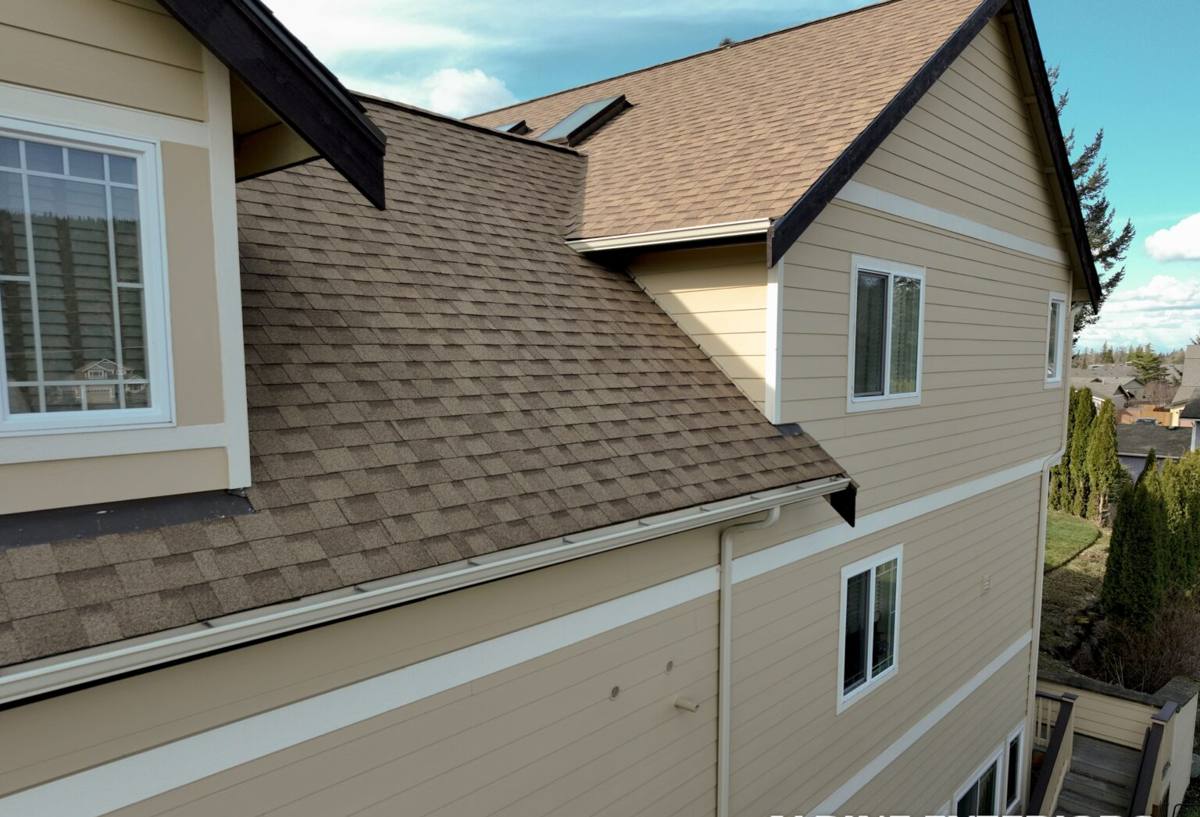
What Whatcom County Weather Does to an Ordinary Deck
Water is the enemy of every deck, and in Lynden it doesn't let up. Driving rain gets pushed sideways by wind and finds its way into ledger board connections, post bases, and any joint that wasn't properly flashed. Once water sits in those spots instead of draining away, you get rot in the framing long before the surface boards show any obvious damage.
Moss is the other big issue. A long moss season means any horizontal wood surface that stays shaded or doesn't dry out between rains becomes a growing surface for moss and algae. Beyond looking bad, moss holds moisture against the wood and makes boards slick and dangerous underfoot. Decks near mature trees or on the north or east side of a house are especially prone to this, and Lynden's tree cover and cooler, damp mornings make it worse than in drier parts of the state.
Salt-laden air moving in off the Strait and Bellingham Bay reaches inland across Whatcom County more than people expect, and it accelerates corrosion on any exposed metal — fasteners, brackets, railing hardware. A deck that looks fine on the surface can have rusting joist hangers or corroding screws doing damage you can't see until something fails.
The Three Failure Points We See Most
- Ledger board attachment to the house without proper flashing, leading to hidden rot where the deck meets the structure
- Standard fasteners and connectors that weren't rated for coastal-influenced, high-moisture exposure
- Decking installed tight to the house or without gaps for drainage, trapping water and moss growth against siding and framing
Choosing the Right Decking Material for This Climate
There's no single "best" decking material — there's a best material for your budget, your maintenance appetite, and how much sun or shade your deck gets. Here's how the common options actually perform in Lynden's conditions.
| Material | How it handles moss/moisture | Maintenance | Typical lifespan here |
|---|---|---|---|
| Pressure-treated wood | Needs regular sealing or moss control; absorbs moisture if not maintained | Annual cleaning, re-stain/seal every 2-3 years | 10-15 years with upkeep |
| Cedar | Naturally moisture- and rot-resistant, but still grows moss without cleaning | Periodic cleaning and oil/sealant | 15-20 years with upkeep |
| Composite decking | Doesn't absorb water or rot; still needs occasional washing to prevent surface moss/algae film | Low — occasional wash, no sealing | 25-30 years, backed by manufacturer warranty |
| PVC/capped composite | Fully sealed surface, best moisture resistance, easiest to keep moss-free | Lowest — soap and water rinse | 25-30+ years, backed by manufacturer warranty |
We install both quality wood and composite/PVC systems depending on what a homeowner wants. Our professional standard is that whatever material we use, it has to be paired with correct substructure work and drainage — a premium composite deck built over a poorly flashed, poorly drained frame will still develop problems, just underneath instead of on the surface.
What a Correctly Built Deck Involves
A deck is a structure, not just a surface, and in this climate every layer matters.
Footings and Framing
Footings need to be sized and set to local frost depth and soil conditions, not guessed at. Framing lumber should be rated for ground contact or exterior exposure where it's in contact with concrete or soil, and joist spacing should account for the actual decking material chosen — composite and PVC boards often have different span requirements than wood.
Ledger Board and Flashing
Where the deck attaches to the house is the single most important detail on the whole project. It needs proper flashing that directs water out and away from the house sheathing, not just caulk and a hope. This is the spot we see fail most often on decks that weren't built by people used to working in wet climates.
Fasteners and Hardware
Given the corrosion risk from moisture and coastal-influenced air, we use hot-dip galvanized or stainless connectors and coated deck screws rated for exterior and ground-contact exposure — not the cheapest box of screws available. This is a small cost difference at build time and a major difference in how the deck ages.
Drainage and Airflow
Board spacing, ledger flashing, and grading beneath the deck all need to work together so water moves away from the structure instead of pooling. Decks built low to the ground or over uneven grading need extra attention here, or you end up with standing moisture and premature rot in the substructure.
Our Process, Start to Finish
- On-site assessment — we look at your yard's grade, sun/shade exposure, proximity to trees, and how the deck will tie into your house before recommending anything.
- Design and material selection — we walk through wood versus composite/PVC options honestly, based on your budget and how much upkeep you want to deal with long-term.
- Permitting — decks of most sizes in Whatcom County require a permit; we handle that process so it's not on you to figure out.
- Build — footings, framing, ledger flashing, decking, and railings, in that order, with inspections at the structural stages.
- Final walkthrough — we go over the finished deck with you, including what maintenance (if any) the material requires.
Railings, Stairs, and Hardware Choices
Railings and stairs take the most direct weather exposure on a deck since they're vertical and fully exposed to driving rain. We steer homeowners toward railing systems and hardware rated for exterior, high-moisture use, and we're upfront when a particular railing style or fastener choice will mean more upkeep down the road. That's a maintenance and moisture-behavior conversation, not a brand-bashing one — some products simply require more attention in this climate than others, and we'd rather tell you that before you buy than after.
Keeping a Lynden Deck in Good Shape
Whatever material you choose, a little seasonal attention goes a long way in this climate.
- Sweep leaves and debris off the deck regularly in fall — trapped organic matter feeds moss and holds moisture
- Wash the deck surface at least once or twice a year to remove early moss and algae growth before it takes hold
- Check that gaps between boards haven't filled with debris that blocks drainage
- Inspect railings and stair connections yearly for looseness or corrosion at fastener points
- For wood decks, reseal or re-stain on the schedule recommended for your species and finish
- Keep nearby shrubs and tree branches trimmed back to let the deck surface dry between rains
Why a Crew That Already Works in Lynden Matters
Deck-building advice you find online is often written for a different climate. A framing detail that's fine in a dry region can be the reason a Lynden deck rots out early. We work throughout Whatcom County and Ferndale, so the flashing details, fastener choices, and material recommendations we give you come from what actually holds up here — not a generic national playbook. That local familiarity also means we know how our work needs to handle wind-driven rain off the water, the shaded, moss-prone yards common around Lynden, and the freeze-thaw swings that show up most winters.
Getting Started
If you're planning a new deck or replacing one that's showing its age, we're happy to come take a look and talk through what makes sense for your yard, budget, and how much maintenance you want to take on. There's no pressure and no cost to get an estimate — just a straight conversation about what a deck built right for Lynden's weather actually involves. Fill out the form below to get started.