 Ferndale
 Custom Windows Built for Sumas, Washington
Sumas sits near the Canadian border in Whatcom County, and like the rest of our service area it deals with a long wet season, driving rain that comes in sideways during winter storms, and a moss season that seems to stretch longer every year. Homes here need windows that can handle sustained moisture exposure without letting it find a way inside. Ferndale Siding has worked on homes throughout Whatcom County, and Sumas comes with its own mix of older farmhouses, mid-century homes, and newer builds — each with different window needs depending on age, framing material, and how well the original installation was flashed and sealed.
Custom windows aren't just about picking a style out of a catalog. They're about matching the window to the opening, the wall assembly, and the weather the house actually faces. A window that performs fine in a dry inland climate can fail early here if it's not installed with the right flashing, sealants, and drainage path.
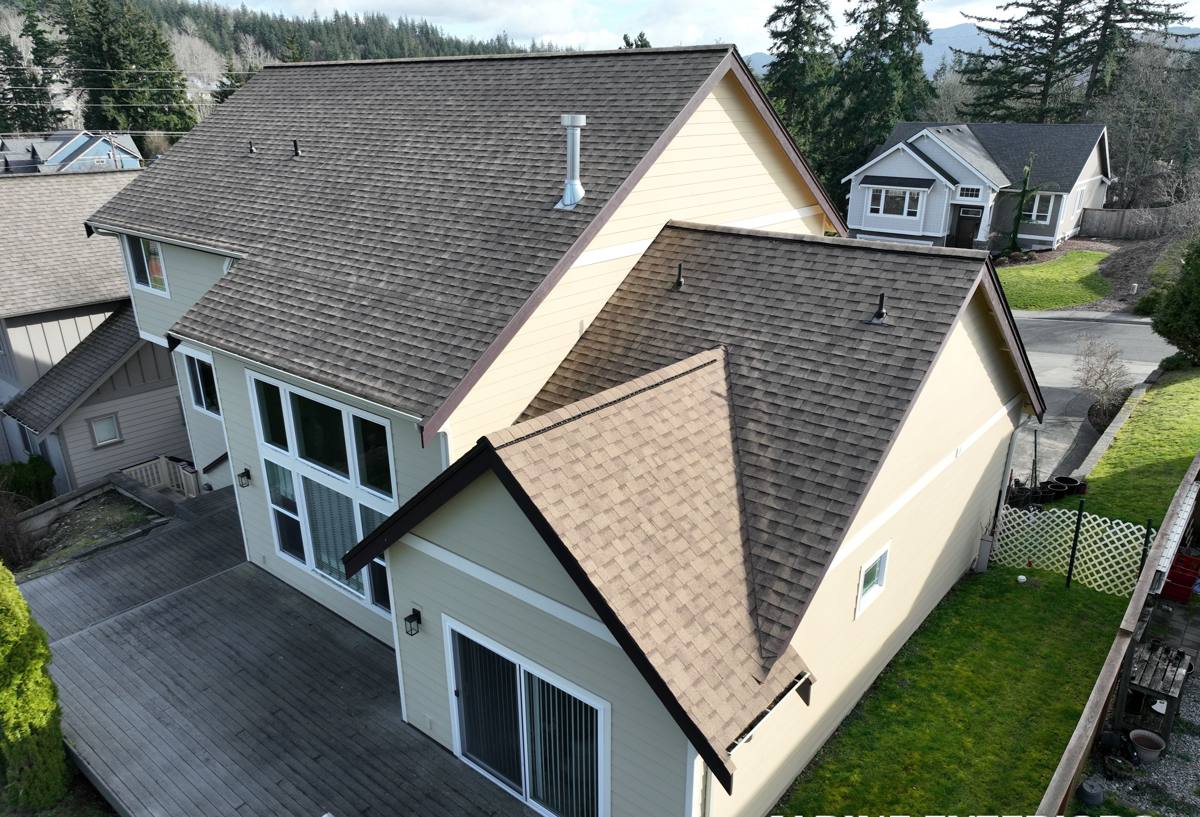
Why Whatcom County's Climate Is Hard on Windows
The Pacific Northwest's marine climate isn't just "rainy" — it's rain that sits. Extended cloud cover keeps humidity high for weeks at a time, and driving rain during winter storms pushes water at window assemblies from angles a lot of installations were never designed for. Add in the moss and algae growth that thrives in shaded, damp conditions, and you've got a climate that punishes shortcuts.
What This Means for Window Performance
- Wood-framed windows without proper sealing absorb moisture and can rot from the inside out, often before any damage shows on the surface
- Poor flashing details let water track behind the window trim and into the wall cavity, which can go unnoticed for years
- Condensation between panes signals a failed seal — common in older double-pane units nearing the end of their service life
- Moss and organic growth on sills and tracks trap moisture against the frame and accelerate wear
- Wind-driven rain finds gaps that a light drizzle never would, which is why installation quality matters as much as the window itself
Homes closer to the coast also deal with salt-laden air that can accelerate corrosion on hardware and fasteners over time. While Sumas is further inland, the same general principle applies across our service area: materials and hardware need to be rated for sustained moisture exposure, not just occasional rain.
Signs Your Sumas Home Needs New Windows
Most homeowners don't think about their windows until something goes wrong — a draft, a fogged pane, or a window that's become difficult to open. Catching the early signs saves money and prevents damage to the surrounding wall structure.
What to Look For
- Visible condensation or fogging between the glass panes (a sign the seal has failed)
- Soft or discolored wood trim around the window frame
- Drafts you can feel even when the window is fully closed and locked
- Windows that are hard to open, close, or lock — often a sign the frame has shifted or swollen
- Rising heating bills without an obvious cause
- Visible gaps between the window frame and the siding or trim
- Moss, algae, or persistent black staining on sills and lower frames
Any one of these on its own might just mean routine maintenance. Several together usually mean the window assembly has been letting moisture in for a while, and it's worth having someone take a real look rather than just caulking over the symptoms.
What a Correct Window Installation Actually Involves
Custom window work is mostly about what happens before the window ever gets set in the opening. A quality window installed poorly will still leak. A mid-range window installed correctly will often outperform it.
The Steps That Matter Most
- Accurate measurement — custom windows are built to the exact opening, not a standard size forced to fit. This starts with precise field measurements, accounting for any settling or squaring issues in the existing opening.
- Removing and inspecting the old window — this is often where hidden problems show up: soft sheathing, old water staining, or flashing that was never done right the first time.
- Repairing the opening — any rot or water damage gets addressed before the new window goes in. Installing a new window over a compromised opening just hides the problem temporarily.
- Flashing and weather barrier integration — this is the single most important step for long-term performance. Flashing needs to shed water down and out, layered correctly with the house wrap so water is always directed away from the framing.
- Setting and shimming the window — the window needs to sit level, plumb, and square, with even reveals, so it operates smoothly and seals consistently for its full lifespan.
- Sealing and insulating — low-expansion foam or backer rod and sealant around the frame, sized correctly so it insulates without bowing the frame inward.
- Exterior trim and finishing — trim gets sealed and finished in a way that sheds water rather than trapping it against the wall.
Skipping or rushing any one of these steps is how a brand-new window ends up with the same moisture problems as the one it replaced, just a few years later instead of decades.
Choosing Window Materials for This Climate
There's no single "best" window material — the right choice depends on budget, maintenance tolerance, and how exposed the window is to weather. Here's how the common options compare for a Whatcom County home.
| Material | Moisture Resistance | Maintenance | Typical Lifespan |
|---|---|---|---|
| Vinyl | Very good — won't rot or corrode | Low — occasional cleaning | 20-30 years |
| Fiberglass | Excellent — dimensionally stable in wet/dry cycles | Low | 30-40+ years |
| Wood (clad exterior) | Good on the exterior, but interior wood still needs protection | Moderate — periodic finishing/sealing | 20-30 years with upkeep |
| Aluminum | Fair — prone to condensation without thermal breaks | Low | 20-30 years |
For a climate with this much sustained moisture, we generally steer homeowners toward vinyl or fiberglass unless there's a strong reason to keep a wood-look exterior. It's not that wood windows can't perform well here — it's that they demand more consistent upkeep to keep performing well, and that's a real cost homeowners should factor in before choosing based on looks alone.
Glass Package Considerations
Beyond the frame material, the glass package matters just as much for comfort and energy performance. Double-pane, low-E coated glass with an argon gas fill is the standard baseline for this region — it cuts down on heat loss during the cold, wet months and reduces solar heat gain in summer. Triple-pane options exist and offer marginally better insulation, but the added cost doesn't always pencil out for a typical Sumas home unless you're dealing with a particularly exposed or noisy location.
Why Hire a Crew That Already Works This Area
Window installation looks straightforward from the outside, but the details that determine whether it lasts are all things you can't see once the trim goes back on. A crew that regularly works Whatcom County homes has already seen how local wall assemblies are built, what flashing details actually hold up through a real wet season, and where older homes in this area tend to have hidden moisture issues around window openings.
That familiarity matters. It means fewer surprises during the job, fewer callbacks after the fact, and an installation approach that's been tested against this specific climate rather than a generic install process built for a drier region.
Our Process for Sumas Homeowners
What to Expect
- An in-person assessment of your current windows and the condition of the surrounding trim and framing
- A straightforward walkthrough of material and glass options that fit your home and budget — no upselling to products you don't need
- Accurate custom measurements for each opening
- A clear timeline and honest expectations about weather-dependent scheduling
- Removal of old windows with inspection of the opening before anything new goes in
- Proper flashing, sealing, and finishing on every window, every time — not just the ones that are easy to see
- A final walkthrough so you know exactly what was done and how to maintain it going forward
We treat every window the same way regardless of whether it's on the front of the house or tucked in the back — the ones you don't see are just as likely to leak if they're not done right.
Maintaining Your Windows After Installation
Even a well-installed window benefits from basic upkeep, especially given how long the wet season runs here. A few simple habits go a long way toward protecting your investment.
- Clear debris and moss from sills and tracks a couple times a year, especially after fall leaf drop
- Check exterior caulking annually and touch up any cracked or peeling sections
- Keep gutters and downspouts clear so water isn't dumping directly onto window areas
- Operate windows periodically even in winter to keep hardware and weatherstripping from sticking or seizing
- Watch for early signs of seal failure (fogging) so it can be addressed before it becomes a bigger issue
None of this is complicated, but skipping it is how minor issues turn into expensive ones over a few wet seasons.
Get a Free, No-Pressure Estimate
If your windows in the Sumas area are showing their age, letting in drafts, or just due for an honest look, we're happy to come take a look and walk you through your options. There's no pressure and no obligation — just a straightforward assessment from a crew that knows what this climate does to windows and how to build an installation that actually holds up to it. Fill out the form below to get started.