 Ferndale
 Why Sandy Point Decks Wear Out Faster Than Most
Sandy Point sits right up against the water, which is exactly what makes it a great place to live and a hard place to keep a deck in good shape. Homes here take salt air straight off the water almost every day of the year, and that salt gets into everything — fastener heads, joist hangers, the end grain of boards, even the finish on composite decking. Add Whatcom County's long wet season and the moss that comes with it, and a deck that would last fifteen years in a drier inland spot can start showing real problems in half that time.
Most of the decks we get called out to repair in Sandy Point aren't failing because the homeowner did anything wrong. They're failing because the deck was built to a generic spec that didn't account for constant salt exposure, driving wind-blown rain, and shade-heavy corners that never fully dry out. A correct repair here isn't just "replace the bad board" — it's understanding why that board went bad in the first place so the same spot doesn't fail again next winter.
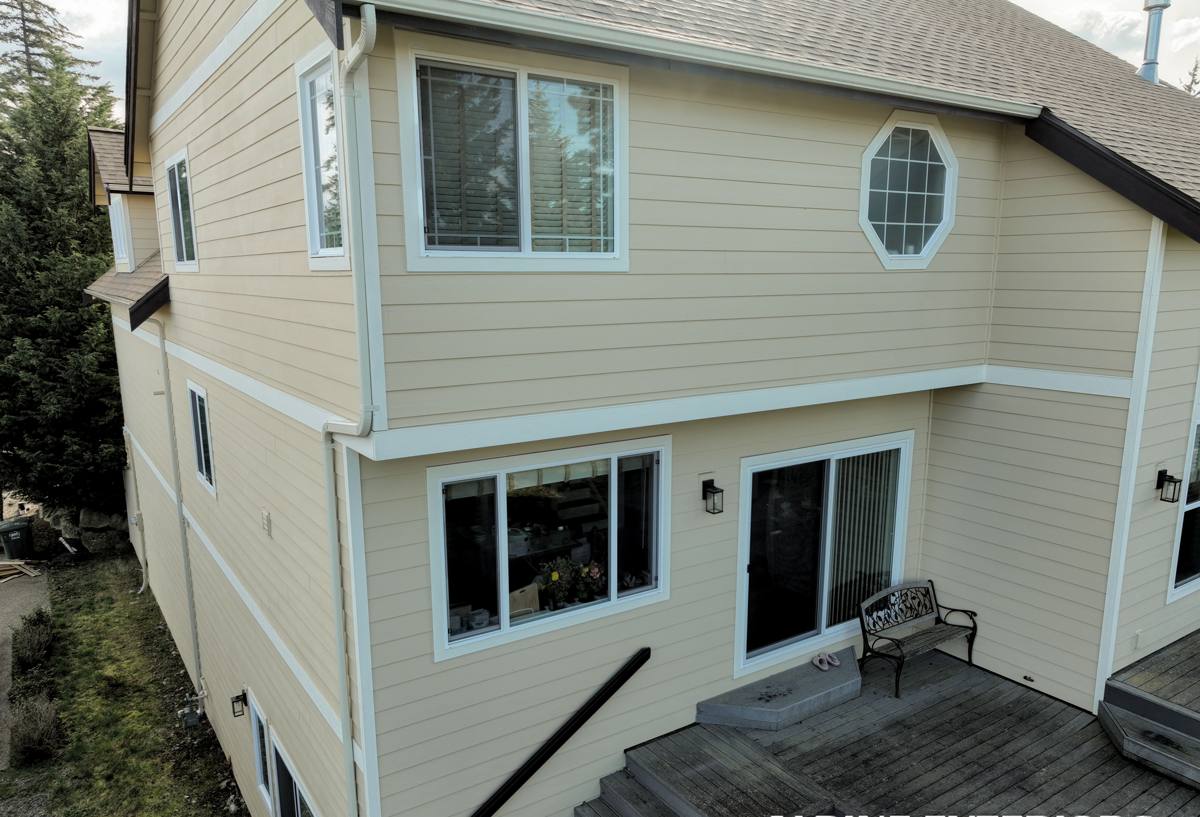
Signs Your Deck Needs Attention
Cosmetic vs. Structural
Not every problem means a full rebuild. Graying wood, surface mildew, and a rough or splintery feel on old decking are cosmetic — annoying, but not dangerous. What we're actually watching for is anything that affects the deck's ability to hold weight or shed water correctly. Those are two very different conversations, and a straight answer about which one you're having is the whole point of an honest inspection.
What We Check
- Soft or spongy spots underfoot, especially near the house or at board ends
- Rust streaking or dark staining around fasteners and joist hangers
- Gaps opening up where the deck ledger meets the house wall
- Railing posts that flex or wiggle when pushed
- Moss or standing water in low spots that never seem to dry out
- Stair stringers that feel bouncy or uneven
- Visible cracking or splitting running along the length of a board, not just surface checking
If you're seeing more than one or two of these, it's worth getting a look before another wet Whatcom County winter works on it further.
What a Correct Deck Repair Actually Involves
Framing and Ledger First
The framing underneath is what actually holds the deck up, and it's the part homeowners can't see. Salt-laden air corrodes fasteners and hardware faster than fresh inland air does, so a repair that just swaps decking boards but leaves corroded joist hangers or a compromised ledger connection is a repair that will need doing again soon. We check the ledger-to-house flashing every time, because that's the single most common point where water gets trapped against a structure long enough to rot it from the inside.
Decking, Fasteners, and Flashing
Once the frame is sound, the surface work is straightforward but has to be done with the right materials. That means stainless or coated fasteners rated for coastal exposure, not standard hardware that will rust and stain within a season or two. It means flashing tape or metal flashing at any point where a board or post meets a horizontal surface that can hold water. And it means gaps between boards sized correctly for drainage and for the wood or composite's expansion and contraction — too tight, and water sits; too wide, and the deck feels unfinished and things fall through.
Railings and Stairs
Railings and stair connections take a lot of load and a lot of weather, and they're often the first thing to loosen because the posts are usually the tallest, most exposed wood on the whole structure. We check post-to-frame connections separately from the decking repair itself — a wobbly rail is a safety issue, not a cosmetic one, and it's cheap to fix now versus after someone leans on it.
Repair or Replace? The Real Cost Factors
Nobody wants to pay for a full deck rebuild if a targeted repair will genuinely hold up. The honest answer depends on how much of the structure is affected versus how much is just surface wear. Isolated board or hardware repairs are usually a modest cost — a few hundred dollars for a small, contained fix. Once rot has reached the framing or ledger, or a large percentage of the decking needs replacing at once, the math often shifts toward a full deck rebuild running into the low thousands, simply because you're paying for access and labor either way, and it's wasteful to do it twice.
| Factor | Favors Repair | Favors Replacement |
|---|---|---|
| Framing condition | Solid, dry, no rot at ledger | Soft spots, rust-through, ledger separation |
| Extent of damage | A few isolated boards or fasteners | Widespread across most of the surface |
| Deck age | Under 10-12 years, built to a decent spec | Original deck already patched multiple times before |
| Material | Good-quality wood or composite still sound underneath | Older pressure-treated lumber past its service life |
| Design issues | None — problem is wear, not layout | Poor drainage, no ledger flashing, undersized framing from the start |
An honest contractor will tell you when repair is the right call even if replacement pays more — and will also tell you when repair is just delaying a bigger bill down the road.
Materials That Actually Hold Up Near Salt Water
Wood Decking
Cedar and pressure-treated lumber both work in a salt-air environment, but only with consistent maintenance — sealing or staining on a regular schedule, and prompt attention to any spot where the finish has worn through. Skip a couple of maintenance cycles this close to the water and the wood ages fast; salt accelerates the breakdown of exposed grain in a way inland decks don't experience.
Composite Decking
Composite holds up well against moisture and doesn't need staining, which is a real advantage for a low-maintenance waterfront property. The trade-off is upfront cost and the fact that composite still depends entirely on correct framing and drainage underneath — composite boards don't rot, but the wood frame supporting them still can if it's not detailed correctly. We install composite when a homeowner wants to get off the maintenance treadmill, and we're upfront that it's a bigger investment than staying with wood.
Fasteners and Hardware
This is the detail that gets skipped most often on lower-bid repairs. Standard galvanized fasteners will show rust bleed within a couple of seasons this close to the water. Stainless steel or marine-rated coated fasteners cost more per piece but are the difference between a repair that lasts and one that reopens the same problem.
Moss, Algae, and Drainage
Whatcom County's moss season runs long, and a deck with poor airflow underneath or low spots that hold water is exactly what moss and algae need to take hold. Beyond looking bad, a mossy deck surface gets slick and dangerous in wet weather, and moss holds moisture directly against the wood or composite surface, which speeds up wear underneath it. Part of any repair we do includes looking at why moisture is collecting where it is — a drainage or airflow fix is often cheaper than repeatedly cleaning and repairing the same damp corner every year.
- Keep gaps between boards clear of debris so water can actually drain through
- Trim back vegetation that shades the deck and keeps it damp longer than the rest of the yard
- Check that under-deck airflow isn't blocked by skirting, storage, or landscaping
- Address moss at the first sign of it rather than after it's established — it's much easier to remove early
- Have low or ponding spots evaluated rather than just resealed over and over
How Our Repair Process Works
Inspection
We start by getting underneath the deck as well as walking the surface — most of what actually determines repair versus replacement is out of sight from the top. We check the ledger connection, joist condition, post bases, and any spots where water has clearly been sitting.
A Plan You Can Actually Understand
We walk you through what we found, what's cosmetic, and what's structural, and we give you a clear scope before any work starts — no surprise add-ons once we've opened things up, unless we find something genuinely unexpected, in which case we stop and talk to you before proceeding.
The Work Itself
Repairs are done with fasteners and flashing detailed for coastal exposure, not whatever happens to be on the shelf. Where framing needs attention, we fix that before touching the surface, because covering up a compromised frame with new decking just hides the problem for the next owner or the next repair crew to find.
Cleanup and Walkthrough
We clean the site, haul away old material, and walk the finished repair with you so you know exactly what was done and what to keep an eye on going forward.
Why Local Sandy Point Experience Matters
A deck repair crew that only works inland jobs will often use the same materials and details they'd use anywhere else in Washington — and those details are frequently undersized for what a waterfront property in Whatcom County actually experiences. A crew that already works in Sandy Point knows which corners of a deck typically fail first because of prevailing wind and rain direction, knows that standard hardware doesn't last here, and isn't guessing about how long a repair needs to hold up against salt air and driving rain. That local pattern recognition is what keeps a repair from becoming a recurring expense.
If you've got a deck in Sandy Point that's showing wear, soft spots, or just isn't draining the way it should, we're happy to take a look. We'll give you a straight assessment of what's actually going on and a free, no-pressure estimate for fixing it right — just fill out the form below.