 Ferndale
 Windows Built for Fairhaven's Coastal Climate
Fairhaven sits close enough to the water that its homes take a different kind of weather beating than houses further inland in Whatcom County. Salt-laden air off Bellingham Bay works on metal hardware and exposed fasteners. Driving rain off Puget Sound finds every gap in a tired window frame. And the long, damp moss season that defines a Pacific Northwest winter keeps north- and west-facing walls wet for weeks at a stretch. Window replacement here isn't just about swapping out old glass for new — it's about choosing materials and installation details that hold up to this specific mix of conditions, year after year.
A lot of Fairhaven's housing stock includes older craftsman and character homes with original wood-frame windows that have simply reached the end of their service life. Others are newer builds where builder-grade vinyl windows are starting to fog, stick, or let in drafts well before they should. Either way, the fix isn't generic. It has to account for the specific exposure of the home — which wall faces the weather, how much shade and moss buildup the siding sees, and how the existing wall assembly manages moisture.
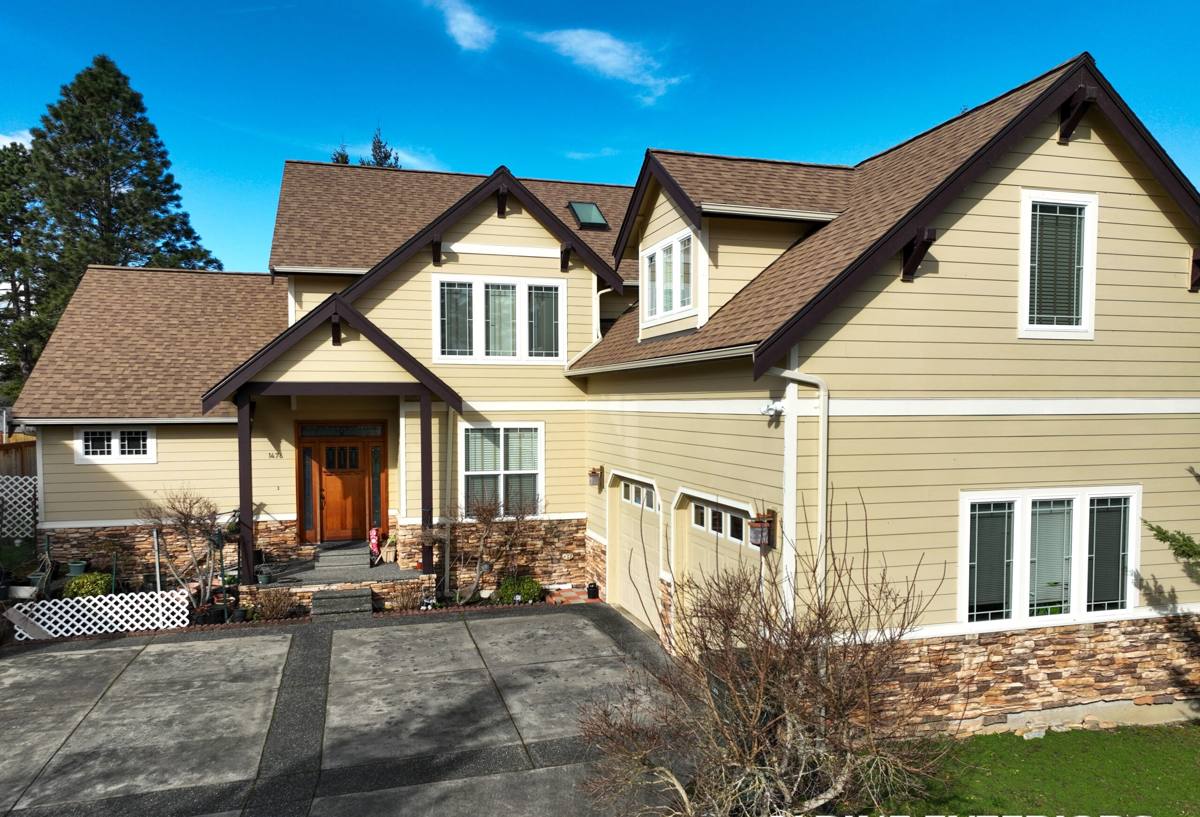
What Salt Air and Driving Rain Actually Do to a Window
Salt Air and Hardware
Coastal air carries fine salt particulate that settles on window hardware, screen frames, and exposed fasteners. Over years, this accelerates corrosion on lower-grade hinges, locks, and cranks — especially on the west- and south-facing sides of a home that catch the prevailing weather. Windows with marine-grade or corrosion-resistant hardware hold up noticeably better in this environment than the cheapest stock options.
Driving Rain and Water Intrusion
Wind-driven rain doesn't just hit a window head-on — it gets pushed sideways and upward into any gap in the flashing, sill, or frame. This is where most window failures actually start: not in the glass itself, but in water finding its way behind the frame and into the wall cavity. A window that looks fine from the outside can still be allowing slow water intrusion that rots sheathing and framing for years before it shows up as a stain or soft spot inside.
Moss and Prolonged Dampness
Whatcom County's moss season means shaded and north-facing walls stay damp far longer than sun-exposed ones. Moss and algae hold moisture against siding and window trim, which keeps wood components wet and speeds up rot around window openings that aren't properly flashed and sealed. This is a big reason why the trim and flashing detail around a new window matters as much as the window unit itself.
Signs a Fairhaven Home Needs Window Replacement
- Visible fogging or moisture between panes of double- or triple-glazed glass — the seal has failed
- Soft, discolored, or crumbling wood trim or sill around the window frame
- Windows that are difficult to open, close, or lock, especially on rain-exposed walls
- Noticeable drafts or cold spots near windows even when they're fully closed
- Paint that's bubbling or peeling on interior or exterior trim near the window opening
- Higher heating bills than similar-sized homes nearby, with no other clear cause
- Visible gaps between the window frame and the surrounding wall or siding
- Moss or dark staining building up directly above or beside a window
Any one of these on its own might not mean a full replacement is needed. But a combination of two or three — especially fogged glass paired with soft trim — usually means the window and its surrounding assembly are both due for attention.
Frame Material Choices for a Wet, Salt-Exposed Climate
Not every frame material performs the same way in Fairhaven's conditions. Here's how the common options compare for a coastal Whatcom County home:
| Frame Material | Moisture Performance | Maintenance | Best Fit |
|---|---|---|---|
| Vinyl | Good — won't rot, resists moisture well | Low; occasional cleaning | Most homes prioritizing value and low upkeep |
| Fiberglass | Excellent — very stable, minimal expansion/contraction | Low | Homes with heavy sun/rain cycling or larger window openings |
| Wood | Requires diligent upkeep to prevent rot in this climate | High; regular painting/sealing | Historic-character homes where original wood look matters |
| Wood-Clad (wood interior, metal/vinyl exterior) | Good — exterior shell protects the wood | Moderate | Character homes wanting a wood interior look with less exterior upkeep |
| Aluminum | Fair — prone to condensation and corrosion near salt air unless thermally broken | Moderate | Rarely our first recommendation this close to the water |
For a lot of Fairhaven's older character homes, we lean toward fiberglass or wood-clad options when the homeowner wants to preserve a traditional look without taking on the maintenance burden that solid exterior wood carries in this climate. For straightforward, budget-conscious replacements, quality vinyl still performs well as long as the installation detailing is done right — which matters more than the material itself.
What a Correct Installation Actually Involves
The window unit is only part of the job. The flashing, sealing, and integration with the existing wall are what determine whether the replacement actually solves the moisture problems this climate creates. A correct installation includes:
Removing and Inspecting, Not Just Covering Over
We remove the old window fully rather than installing a smaller replacement unit inside the existing frame. That lets us actually see the condition of the framing, sheathing, and sill underneath — which is often where the real damage is hiding, especially on walls that have had years of moss and dampness sitting against them.
Sill Pan Flashing
A sloped sill pan directs any water that does get past the window back out, rather than letting it pool at the bottom of the opening. This is one of the most commonly skipped details in lower-end window replacements, and it's one of the most important ones for a driving-rain climate like this.
Proper Flashing Sequence Around the Opening
Flashing tape and building paper have to be layered correctly — like shingles — so that water sheds outward and downward at every layer, never getting trapped behind the siding. Done out of sequence, flashing can actually trap water against the framing instead of directing it away.
Sealing and Insulating the Gap
The gap between the new window frame and the rough opening gets sealed with appropriate low-expansion foam or backer rod and sealant — enough to stop air and water infiltration without bowing the frame out of square, which can affect how the window operates.
Exterior Trim and Caulking
Exterior trim gets properly caulked at all the joints where water could otherwise work its way in, with attention to the top of the window where driving rain hits hardest.
Our Process, Start to Finish
- On-site assessment. We look at each window's exposure, current condition, and the state of the surrounding trim and wall assembly — not just the glass.
- Honest recommendation. We tell you which windows genuinely need replacement now, which can wait, and which material and glass options make sense for your home's exposure and budget.
- Clear, written estimate. No surprise add-ons once work has started — if we find something during removal that changes scope, we explain it before proceeding.
- Careful removal and inspection. Old windows come out fully so we can check the framing and sheathing underneath before anything new goes in.
- Correct flashing and installation. Sill pan, flashing sequence, insulation, and sealing done in the right order — not shortcuts that look fine on install day and fail two winters later.
- Trim and finish work. Interior and exterior trim finished to match your home, with attention to the caulking and sealing details that keep water out long-term.
- Final walkthrough. We check operation, seals, and finish with you before calling the job done.
Glass and Energy Performance Considerations
For a Whatcom County home, glass selection affects both comfort and long-term condensation issues. Double-pane windows with a low-E coating are the standard baseline for this climate — they cut heat loss and reduce interior condensation on cold, damp days. Triple-pane glass adds further insulation value and can be worth it on north- or west-facing rooms that take the brunt of the weather, though it comes at a higher upfront cost and added weight, which matters for larger openings or older framing.
Argon or krypton gas fill between panes improves insulation performance further, and it's a standard feature on most quality replacement windows today rather than a premium upgrade. What matters more than chasing the highest-spec glass is matching the glass package to how that particular window is exposed — a small bathroom window on a sheltered wall doesn't need the same spec as a large picture window facing the prevailing rain.
Cost Factors to Understand Before You Get Quotes
| Factor | Why It Affects Price |
|---|---|
| Frame material | Fiberglass and wood-clad typically cost more upfront than vinyl but can reduce long-term maintenance |
| Window size and type | Larger openings, custom shapes, or operable styles (casement, awning) cost more than standard double-hung |
| Extent of rot or damage found | Repairing damaged framing or sheathing behind an old window adds labor and material cost |
| Number of windows done at once | Bundling multiple windows in one project generally reduces per-window labor cost |
| Trim and finish complexity | Matching historic trim profiles or custom exterior finishes takes more time than standard trim |
| Glass package | Triple-pane, specialty coatings, or tempered/safety glass requirements add cost |
We'd rather walk you through these factors honestly during the estimate than give a number that doesn't reflect what your specific windows and walls actually need. Broad ranges without seeing the home in person don't serve you well — every Fairhaven property we look at has its own combination of exposure, age, and existing condition.
Why a Locally Experienced Crew Matters Here
Window replacement done wrong in this climate doesn't usually fail on install day — it fails two or three winters later, when water that was never properly flashed out finally works its way into the wall. A crew that regularly works Fairhaven and the surrounding Ferndale area knows which walls take the worst of the weather, how moss buildup affects a given exposure, and where corners tend to get cut on lower-end installations. That local pattern recognition is hard to replace with a generic install checklist, and it's the difference between a window that looks good for a season and one that actually performs for the next twenty years.
We also understand the character of Fairhaven's older homes — a lot of them have trim details and proportions worth preserving, even when the window unit itself needs to be modern. Matching that look while upgrading the performance underneath is a balance we pay attention to on every job, not an afterthought.
Get a Straight Answer About Your Windows
If you're dealing with drafty, foggy, or hard-to-operate windows in Fairhaven, we're happy to take a look and give you an honest assessment — no pressure, no inflated scope. Request a free estimate using the form below and we'll walk you through what your home actually needs.