 Ferndale
 Why Sudden Valley Asks More of Its Siding
Sudden Valley sits along Lake Whatcom, tucked into tree cover that keeps homes shaded for long stretches of the day. That's part of what makes the neighborhood beautiful, and it's also exactly what makes siding fail faster here than it does on an open lot in town. Between the moisture that collects under a forest canopy, the driving rain that blows through Whatcom County most of the year, and the salt-laden marine air that reaches inland from Bellingham Bay and the Puget Sound, siding on a Sudden Valley home is under near-constant low-grade attack. None of it is dramatic. It's slow — a little more moisture retention each winter, a little more moss each spring — and it adds up over a decade in ways that show up as soft trim boards, peeling paint, and siding that needs replacing years before it should.
This page is about one thing: what it takes to get fiber cement siding right on a Sudden Valley home, and why the climate here changes some of the decisions along the way.
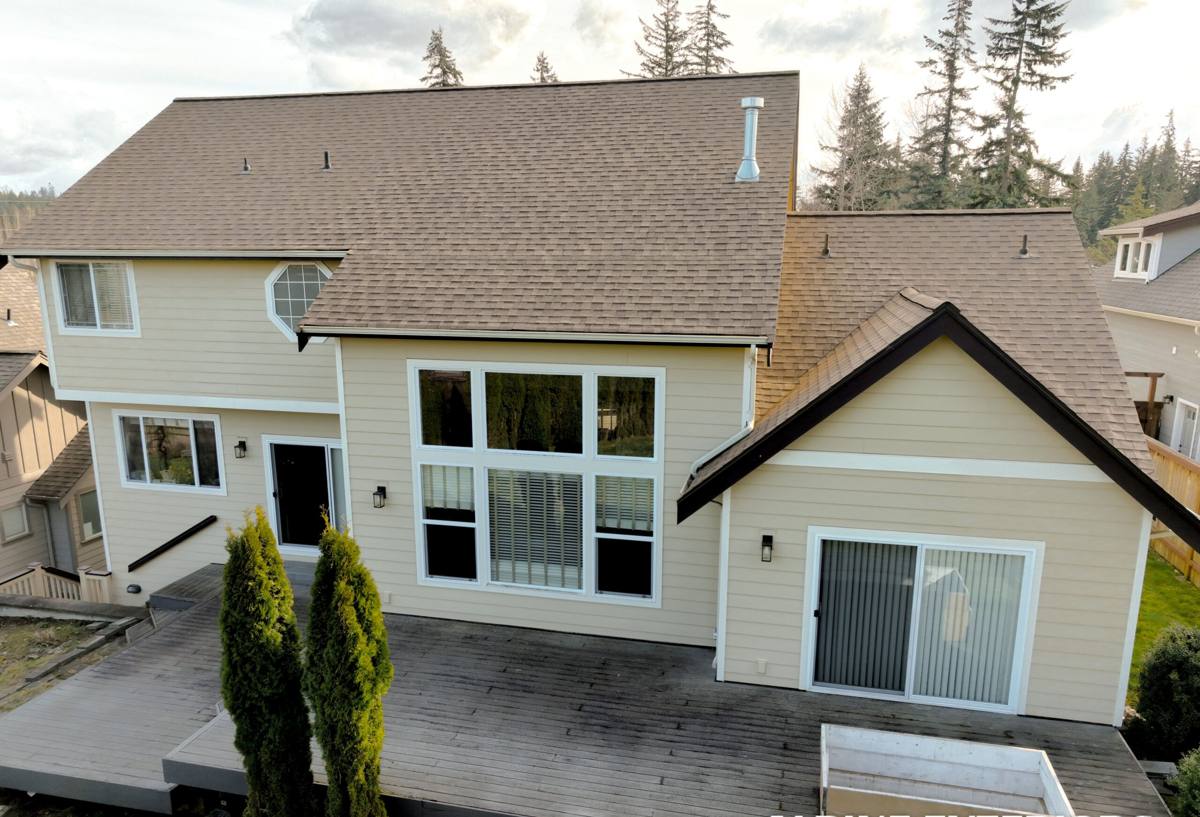
What the Lake Whatcom Climate Does to Siding Over Time
Moss and Shade
Moss doesn't grow because siding is bad — it grows because moisture sits somewhere long enough to let it. Shaded, tree-lined lots like most of what you find in Sudden Valley slow down drying time after every rain. On the north and east-facing walls especially, siding can stay damp for days at a stretch during the fall and winter. Moss and algae take hold in exactly that kind of environment, and once established they hold even more moisture against the wall, which accelerates whatever's happening underneath — wood rot in old cedar, swelling in engineered wood, or, if it's fiber cement, just a longer cleaning list.
Moisture Cycling
Whatcom County doesn't get extreme cold, but it does get a lot of wet-to-dry cycling — rain, then a dry spell, then rain again — for months on end. Siding materials that absorb water expand and contract with that cycle. Over years, that repeated swelling and shrinking is what causes paint to crack, seams to open up, and butt joints to separate. It's a slower failure mode than a single storm, which is part of why it's easy to underestimate until the damage is already done.
Marine Air and Coastal Drift
Whatcom County's climate is a marine one — moisture-heavy air moves inland off the water, carrying a small but steady salt load with it. That air reaches lakeside and inland neighborhoods too, not just waterfront lots on the Sound. Salt exposure isn't the dominant factor in siding wear the way it is on an oceanfront home, but combined with the moisture and shade Sudden Valley already deals with, it's one more reason the wrong material or a sloppy install shows its age faster here than in a drier, sunnier part of the state.
Why We Only Install James Hardie Fiber Cement Here
We don't install vinyl, LP SmartSide, primed spruce, cedar, or other fiber cement brands. That's a standard we hold everywhere we work, and it matters more, not less, in a climate like Sudden Valley's. Fiber cement is cement, sand, and cellulose fiber — it doesn't rot, it isn't a food source for moss the way untreated wood can be, and it doesn't warp or delaminate the way engineered wood products can when moisture gets past the paint film. James Hardie backs its siding with a factory-applied ColorPlus finish that's baked on rather than field-painted, which matters directly here: a factory finish holds up to repeated wet-dry cycling and UV exposure far longer than a field-applied coat, and it means the color and the substrate are both under one manufacturer's warranty instead of you managing two separate products (siding and paint) that fail on different timelines.
None of this means other products are junk. Vinyl is inexpensive and low-maintenance in the right setting; wood has a look some homeowners want and are willing to maintain for. But we've made a professional call that in a climate that punishes moisture retention and shade the way Whatcom County does, fiber cement installed correctly is the material that holds its line, its color, and its warranty the longest with the least ongoing intervention. That's the product we stand behind, and it's the only one we put our install crews' time into.
What a Correct Fiber Cement Job Actually Involves
Fiber cement siding is only as good as the install underneath it. Most of the siding failures we get called out to inspect in older homes — Hardie or otherwise — trace back to installation shortcuts, not the material itself. In a wet, shaded neighborhood like Sudden Valley, those shortcuts fail faster because there's less margin for error.
Drainage Plane and Flashing
Correct installation starts behind the siding, not at it. A weather-resistant barrier, properly lapped and taped, plus correctly flashed windows, doors, and any wall penetrations, gives water a way out if it ever gets behind the cladding — which, in a climate this wet, it eventually will at some point in the siding's life. Skipping or rushing this step is invisible on installation day and expensive five years later.
Fastening and Gaps per Manufacturer Spec
James Hardie publishes specific requirements for fastener placement, board overlap, and clearance gaps at trim, corners, and the ground. Those specs exist because fiber cement needs room to move slightly with temperature and moisture, and because gaps left too tight trap water instead of shedding it. We install to Hardie's published spec, full stop — it's also what keeps the manufacturer's warranty intact if you ever need to use it.
Caulking and Paint Touch-Up Done Right
Cut ends and any field-touched areas need to be sealed and painted with compatible products, not just caulked over. In a high-moisture environment, an unsealed cut edge is one of the fastest ways water gets into the board itself.
Choosing the Right Hardie Line and Color for This Neighborhood
James Hardie engineers its siding by climate zone, and Whatcom County falls into the HZ5 zone, built to handle sustained moisture and freeze-thaw cycling rather than dry heat. That's the line we spec for Sudden Valley homes as a default, not an upsell — it's simply the version of the product designed for the conditions the home actually sits in.
Color matters here too, more than homeowners usually expect. Darker ColorPlus finishes show less visible moss staining between cleanings on shaded, north-facing walls, while lighter colors make any biological growth more obvious sooner — which some homeowners actually prefer, since it flags a cleaning that's due before growth gets established. Either way, ColorPlus's factory finish gives you a harder, more UV- and moisture-stable surface than a field-applied paint job, which is the bigger factor in how the color holds up over time regardless of which shade you pick.
Fiber Cement vs. Other Siding Materials in This Climate
| Factor | James Hardie Fiber Cement | Vinyl | Wood / Engineered Wood |
|---|---|---|---|
| Moisture behavior | Doesn't absorb or swell; sheds water at correctly installed seams | Doesn't absorb, but can warp or gap in temperature swings | Can absorb and swell; prone to rot without diligent upkeep |
| Moss/algae resistance | Non-organic surface; moss cleans off without damaging the board | Moss sits on surface but doesn't damage material | Moss growth can trap moisture against organic material, accelerating decay |
| Finish durability | Factory-baked ColorPlus finish, long fade/wear resistance | Color is through-body but can fade and chalk over time | Field-applied paint/stain needs recoating every few years |
| Fire resistance | Non-combustible | Combustible, can melt or deform near heat | Combustible |
| Typical lifespan when installed to spec | 30+ years | 20-30 years | Varies widely with maintenance; often 15-25 years |
Our Installation Process, Start to Finish
- On-site assessment: we walk the home, check existing siding and sheathing condition, and note shade patterns, drainage issues, and any trim or flashing already showing wear.
- Tear-off and inspection: once old siding is off, we inspect the sheathing and weather barrier underneath for hidden moisture damage before anything new goes up.
- Weather barrier and flashing repair or replacement: any compromised house wrap, window flashing, or penetrations get corrected before siding begins — this is the step that determines how the house performs in year ten, not year one.
- Installation to Hardie's published spec: correct fastener pattern, board overlap, and clearance gaps at grade, trim, and corners.
- Trim, caulking, and touch-up: cut edges sealed and finished per manufacturer guidance.
- Final walkthrough: we go over the finished job with you before calling it done.
What Sudden Valley Homeowners Should Budget For
| Cost Factor | Why It Moves the Price |
|---|---|
| Home size and wall complexity | More square footage and more corners, dormers, and gables mean more material and labor time |
| Condition of sheathing underneath | Hidden rot or moisture damage found during tear-off adds repair work before new siding can go up |
| Trim and accessory scope | Fascia, soffits, and trim boards replaced at the same time affect both cost and how uniform the final look is |
| Access and site conditions | Sloped, wooded, or tight lots common around the lake can add setup and staging time |
| Product line and color | HZ5-engineered boards and ColorPlus finish options vary modestly in price by profile and color |
Maintenance Checklist for Long-Term Performance
- Rinse siding annually, focusing on shaded north- and east-facing walls where moss establishes first
- Keep gutters and downspouts clear so water isn't overflowing directly onto wall sections
- Trim back tree branches and brush holding foliage tight against the siding, which slows drying
- Inspect caulking at trim, windows, and corners every year or two and re-seal where it's cracked or gapped
- Address any soft or discolored trim promptly — it's cheaper to fix a small area than to redo a whole wall section
- If your property is part of a homeowners' association, confirm exterior color or material approval requirements before work begins
Why Hire a Crew That Already Works This Neighborhood
Sudden Valley isn't a typical subdivision — the tree cover, the lake proximity, and the site access on a lot of these properties are all a bit different from siding a house on a flat, open lot elsewhere in Whatcom County. A crew that's worked here before knows to expect longer drying times between rain events, knows what shaded-wall moss patterns tend to look like when they inspect a tear-off, and doesn't get caught off guard by a driveway or lot that needs a different staging plan than usual. That familiarity doesn't show up as a line item on an estimate, but it shows up in how smoothly the job runs and how the finished siding performs five and ten years out.
If you're weighing a siding replacement in Sudden Valley, we're happy to walk the property, look at what's actually happening with your current siding, and give you a straight answer on what it would take to do it right — no pressure, no hard sell. Reach out below for a free estimate.