 Ferndale
 Why Lummi Island Decks Wear Out Faster Than You'd Expect
If you own a home on Lummi Island, you already know your deck doesn't age the way a deck would on the east side of Whatcom County. Being surrounded by saltwater changes everything about how wood, fasteners, and even composite decking hold up over time. Salt air carries fine moisture and mineral content that settles into open wood grain, corrodes metal fasteners from the inside out, and speeds up the breakdown of finishes and sealers. Add in the long stretch of driving rain that defines a Pacific Northwest fall and winter, plus a shaded or north-facing deck's tendency to grow moss well into what should be the dry season, and you've got a structure that's working harder than a similar deck fifteen miles inland.
We're a Ferndale-based crew, and Lummi Island is part of our regular service area — not a special trip. That matters more than it sounds, and we'll explain why later in this page. First, let's talk about what actually goes wrong with island decks, and what a proper replacement should address.
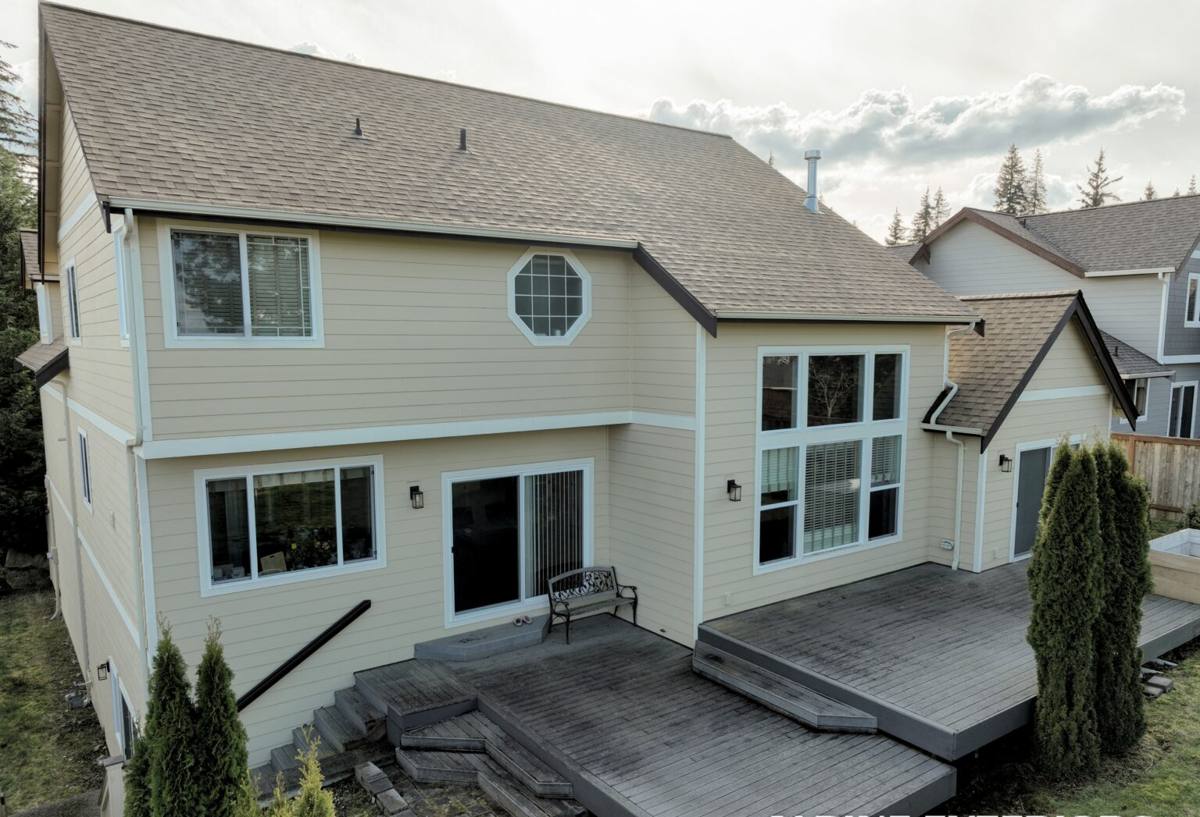
How to Tell a Deck Needs Replacement, Not Just Repair
Homeowners often call us thinking they need a few boards swapped, and sometimes that's true. But there's a point where patching a deck costs more in labor over time than starting fresh — and on a salt-exposed island lot, that point tends to arrive sooner than people expect.
- Soft or spongy spots in the decking, especially near the house or at board ends
- Rust streaking around fastener heads or visible corrosion on structural brackets
- A ledger board (where the deck attaches to the house) that shows staining, gaps, or soft wood
- Posts or footings that feel loose, or a deck that has visible sway when walked on
- Persistent moss or algae growth that keeps returning within weeks of cleaning
- Railings that flex more than a firm push should produce
Any one of these on its own might be a repair. Two or three together, especially involving the framing rather than just the surface boards, usually means the deck has reached the end of its useful life and a full replacement is the more honest recommendation.
Decking Material Options for This Climate
There's no single "best" decking material — there's a best material for your specific exposure, budget, and how much upkeep you're willing to do. On an island property with salt air and heavy seasonal rain, we weigh those trade-offs differently than we would for a dry, inland lot.
| Material | How It Handles Salt Air & Moisture | Maintenance | Typical Lifespan |
|---|---|---|---|
| Pressure-treated wood | Good if properly sealed and re-sealed; end grain and fastener points are the weak spots | Annual cleaning, re-sealing every 1-2 years | 10-15 years |
| Cedar | Naturally moisture-resistant but still needs sealing near saltwater; grays without finish | Sealing every 1-2 years to hold color and repel moisture | 15-20 years |
| Capped composite | Excellent — the cap resists moisture absorption and won't corrode | Occasional washing; no sealing or staining | 25-30+ years |
| PVC decking | Fully synthetic, essentially immune to salt and moisture damage | Lowest maintenance of the group | 25-30+ years |
We install all of these depending on what a homeowner wants, but we'll be straight with you: on a shaded, wind-exposed, or waterfront lot, we lean toward capped composite or PVC for the field decking simply because they don't give salt air and standing moisture anything to work with. Wood is a completely legitimate choice too — it just asks more of you in return, in the form of regular sealing. That's a maintenance conversation, not a quality judgment on wood as a material.
Fasteners and Hardware Matter as Much as the Boards
We use stainless steel or coated fasteners rated for coastal exposure, along with structural hardware built for wet-use environments. This is one of the most common corners cut on older decks — standard hardware store fasteners will rust and weaken well before the decking itself fails, and once that happens the boards are only as secure as the metal holding them down.
What's Underneath Matters More Than What You See
A deck replacement done right isn't just new boards on old framing. On Lummi Island in particular, we pay close attention to:
- The ledger board connection — properly flashed where the deck meets the house, since this is the single most common source of hidden water damage on any deck
- Footings and posts — checked for rot, movement, or undersized bearing for the deck's actual size and use
- Joist spacing and hangers — upgraded to current code where the existing framing falls short, especially on older decks built before current wind and load standards
- Ventilation underneath — low-clearance or enclosed decks trap moisture and encourage rot and moss growth in the framing where you can't see it
Replacing the surface boards over compromised framing just hides the real problem for a few more years. We evaluate the structure first and tell you honestly what needs to happen below deck level, not just on top of it.
Our Deck Replacement Process
- On-site assessment — we walk the existing deck, check the framing and ledger connection, and talk through what you actually use the space for
- Material and layout discussion — decking type, railing style, and any changes to size or footprint
- Permitting — handled on our end where required; Whatcom County and local building codes apply to structural deck work
- Demolition and disposal — old decking, railing, and any compromised framing removed and hauled off
- Framing repair or rebuild — footings, posts, joists, and ledger flashing brought up to a standard that will actually hold up to island conditions
- Decking and railing installation — installed with corrosion-resistant fasteners and correct spacing for drainage and material expansion
- Final walkthrough — we go over the finished deck with you, including care and maintenance specific to whatever material you chose
What Affects the Cost of a Deck Replacement
We're not going to quote a number on a page — every deck is different, and quoting blind does homeowners a disservice. What we can do is explain what actually moves the price up or down, so an estimate makes sense when you get one.
| Factor | Why It Matters |
|---|---|
| Deck size and footprint | More square footage means more material, fasteners, and labor hours |
| Decking material chosen | Composite and PVC cost more up front than pressure-treated wood, but less over the deck's life in maintenance |
| Condition of the existing framing | Framing that needs rebuilding, not just resurfacing, adds significant labor and material cost |
| Height and access | Elevated decks or decks with limited access for equipment take longer to build safely |
| Railing style | Cable, glass, and composite railing systems cost more than standard baluster railing |
| Ferry and access logistics | Material delivery and scheduling around the ferry is part of any island project — we factor this in as a normal part of the job, not a surprise add-on |
Maintaining a New Deck in a Salt Air, High-Rain Climate
Whatever material you choose, a little seasonal attention goes a long way toward getting the full lifespan out of your new deck. A simple checklist we give our Lummi Island customers:
- Sweep debris and standing leaves off the deck regularly, especially under trees or in shaded corners where moss takes hold first
- Rinse salt residue off the surface periodically, particularly on decks with direct water exposure or frequent wind off the water
- For wood decking, plan on resealing on a 1-2 year cycle rather than waiting until it visibly needs it
- Check railing posts and stair connections once a year for any looseness
- Keep gutters and downspouts near the deck clear so runoff isn't draining directly onto or under the structure
- Address any soft spots or discoloration early — on this coastline, small problems don't stay small for long
Why It Matters That We're a Ferndale Crew Already Working Lummi Island
Deck work on an island isn't the same logistical job as deck work on the mainland, even a few miles away. Material deliveries have to be planned around the ferry schedule. Crew time has to account for the crossing. A contractor who treats Lummi Island as an occasional out-of-territory job will often price that uncertainty into your estimate, or worse, underestimate it and let it show up as delays partway through the project.
Because we're based in Ferndale and already do regular work throughout Whatcom County including Lummi Island, that logistics planning is routine for us, not a special case. We also know the specific way this coastline treats decking — which materials hold up, which fastener choices matter, and where moss and moisture tend to concentrate on shaded or waterfront lots. That's knowledge that only comes from doing the work here repeatedly, not from a general contractor picking up an island job once a year.
Ready for an Honest Look at Your Deck?
If your deck is showing its age — soft boards, rust stains, persistent moss, or just a general sense that it's not as solid as it used to be — we're happy to come take a look. We'll give you a straight assessment of whether you're looking at repair or replacement, walk through material options that make sense for your specific spot on the island, and put together a free, no-pressure estimate. Fill out the form below to get started.